Electrifying industrial heat without overloading the grid
Guest/partner contributor
Posted on: 25 June 2026
The SUSHEAT project is integrating thermal energy storage with high temperature heat pumps, renewables, and digital control to electrify industrial heat.
Electrifying industrial heat is widely recognised as a cornerstone of Europe’s decarbonisation strategy.
Yet for many sectors, the challenge is not only about replacing fossil fuels with cleaner technologies. It is about ensuring that electrified systems can operate reliably, cost-effectively and – crucially – without placing additional strain on already evolving energy systems.
Industrial processes depend on stable and continuous heat supply, often at medium to high temperatures. Simply replacing fossil fuel boilers with electrically driven solutions risks shifting the pressure from fuel markets to electricity grids. As electrification accelerates, peak demand, price variability and infrastructure constraints are becoming part of the equation. The question, therefore, is not only how to electrify industrial heat, but how to do so in a way that remains compatible with broader energy system dynamics.
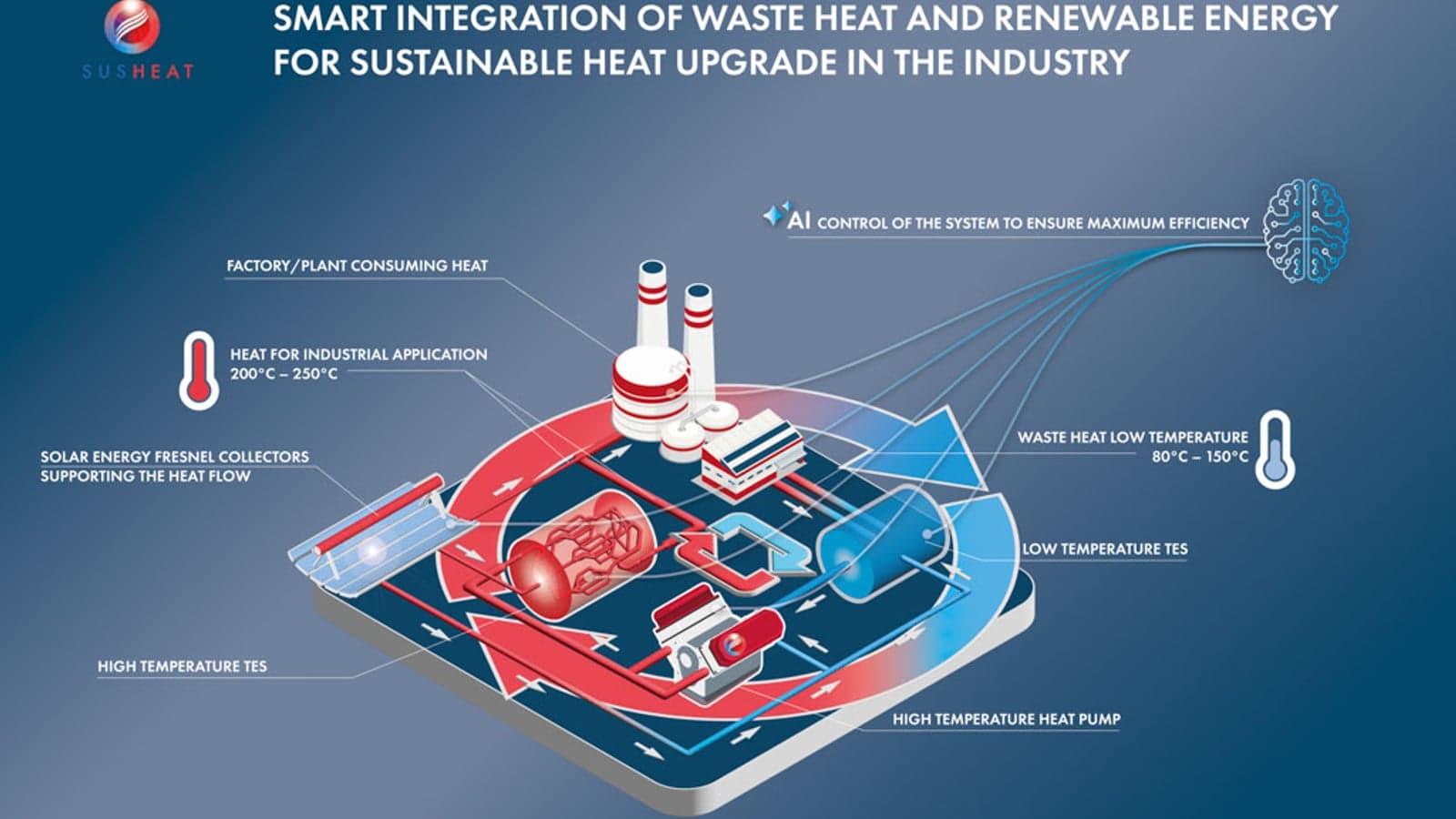
This is precisely the challenge addressed by the SUSHEAT project. Rather than focusing solely on heat generation technologies, SUSHEAT develops an integrated system that combines high temperature heat pumps, thermal energy storage, renewable energy sources and digital control into a flexible heat supply concept.
The objective is not just decarbonisation, but a more adaptable and system-aware way of producing industrial heat.
Bridging the gap between supply and demand
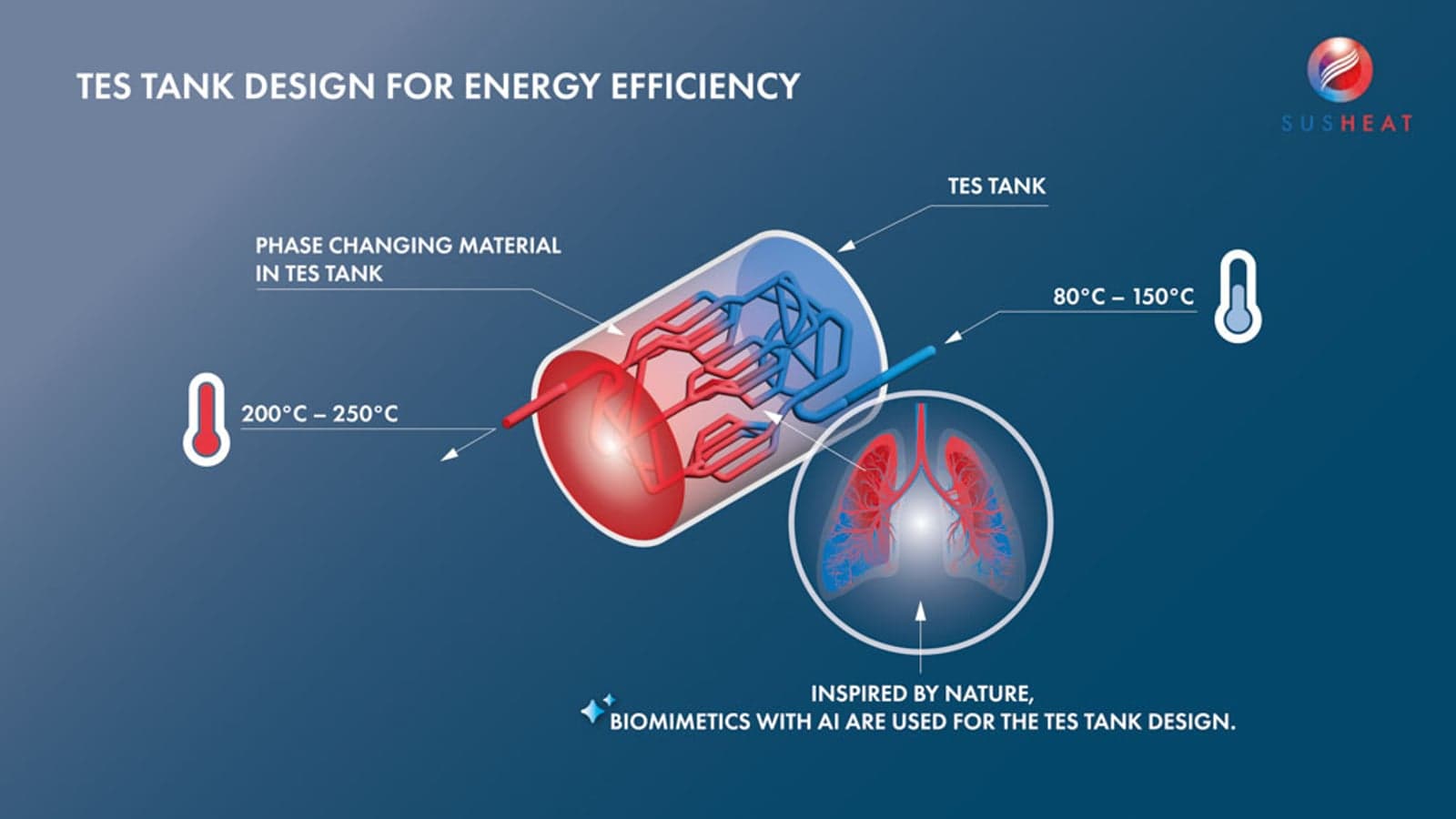
At the heart of this approach lies the idea of flexibility. Industrial heat demand is relatively stable, but the availability and cost of energy – particularly electricity and renewables – are not. Bridging this mismatch requires the ability to store and shift energy in time. This is where thermal energy storage (TES) plays a central role within the SUSHEAT architecture.
In the SUSHEAT system, thermal energy storage enables the decoupling of heat generation from heat consumption. Waste heat, solar thermal energy or ambient sources can be captured, upgraded where necessary using a high temperature heat pump, and stored for later use. This allows heat to be produced when energy is available or economically favourable and delivered when required by the industrial process.
The implications of this are significant. Instead of operating in a strictly demand-driven mode, industrial systems gain the ability to shift energy use in time. This supports load shifting away from peak electricity periods, reduces instantaneous demand on the grid and helps stabilise plant operations.
In addition, by smoothing consumption profiles, thermal storage contributes to reducing exposure to electricity price fluctuations, a key concern for many industrial operators.
Thermal energy storage as a driver of electrification
Previous discussions around thermal storage in industrial applications have often focused on its economic benefits – particularly its role in mitigating energy price volatility. While this remains highly relevant, the SUSHEAT approach highlights a broader system perspective. Thermal storage is not only a financial buffer; it is also a mechanism for making industrial electrification more compatible with energy infrastructure.
This becomes particularly important as renewable energy sources are integrated into industrial systems. Solar thermal, for instance, can provide direct process heat or contribute to storage when available, but its intermittency requires balancing. Thermal energy storage allows this renewable input to be utilised effectively, ensuring that excess heat is not wasted and that supply can be stabilised over time.
Smart control for real world performance
However, flexibility is not achieved by storage alone. It requires intelligent coordination across the system. Within SUSHEAT, this is enabled by the control and Integration twin – a digital layer that continuously monitors system conditions and optimises operation. By analysing demand profiles, energy prices and resource availability, the system dynamically determines when to store heat, when to release it, and when to supply it directly to the process.
This integration of storage and digital control transforms the role of industrial heat systems. Instead of passively consuming energy, they become active participants in the energy ecosystem, capable of responding to external signals and contributing to system stability. For industry, this means that electrification can be pursued without compromising process reliability, while also improving cost predictability and operational resilience.
Rethinking industrial heat for a flexible energy future
Thermal energy storage, when embedded within a broader system design as in SUSHEAT, offers a way to align industrial heat decarbonisation with energy system needs. By enabling heat to be produced, stored and delivered independently of instantaneous energy conditions, it supports a transition where industrial processes and energy systems evolve together.
For energy professionals, the takeaway is clear: the success of industrial electrification will depend not only on efficiency gains or emissions reductions, but on the ability to operate flexibly within a dynamic energy landscape.
In this context, thermal storage is emerging as a central element in making electrified industrial heat both viable and scalable.
About the author
Cliò E. Agrapidis is an EU Project Consultant at RTDS Group and Communication Manager for the SUSHEAT project. She supports EU-funded projects in exploitation, innovation management, dissemination and proposal development, drawing on over 10 years of academic research in physics and a background in science communication.
Related tags
Most popular
Join the community for freeAnd get access to all content
Related projects
Susheat
+3
1 May 2023 - 30 April 2027
View project