Horizon Europe: Five hot hydrogen projects
Areti Ntaradimou
Posted on: 5 August 2022
Five hydrogen projects highlighted, focussing on the EU Commission's hydrogen strategy explores to decarbonize the European energy sector.
The EU Commission's hydrogen strategy explores the ways in which renewable hydrogen - so-called 'green' hydrogen - can help decarbonise the European energy sector.
Although hydrogen accounts for less than 2% of Europe's present energy consumption, it does result in high CO2 emissions, since 96% of its production is through natural gas.
Renewable hydrogen, however, is clean and can be obtained via electrolysis. That means using renewable electricity to split water into hydrogen and oxygen.
According to estimations by the commission and EU leaders, green hydrogen will play a key role in decarbonising sectors where other alternatives might be unfeasible or more expensive.
Therefore, a strategy on hydrogen was created by the EU Commission, which the various parliaments of the EU approved and adopted across the continent.
The strategy is basically a strategic road map on how hydrogen can help decarbonise the EU economy in a cost-effective way.
It is also in line with the European Green Deal, and contributes to the post-COVID-19 economic recovery.
The strategy on hydrogen listed 21 action points, most of them implemented in the second quarter of 2022.
The following EU-funded projects are invested in solving the hydrogen puzzle, in order to facilitate the decarbonisation of Europe.
Green Hysland
This project aims to accomplish three different tasks in one go. First, to deploy a full functioning hydrogen ecosystem on the island of Mallorca.
Second, to deliver a roadmap towards 2050 that compiles a long-term vision for the development of a widespread H2 economy in Mallorca and the Balearic Region.
And third, to provide a blueprint for decarbonization of island economies and an operational example of the contribution of H2 towards the energy transition and the 2050 net-zero targets.
In addition, the Green Hysland project's development of replication experiences and business models are foreseen in five other EU islands - Madeira, Tenerife, Aran, Greek Islands and Ameland in the Netherlands - and beyond in Chile and Morocco.
Have you read?
Horizon Europe: Five flexibility projects
Horizon Europe: Five energy storage projects
Zero Emission Hydrogen Turbine Center: A closed loop of the energy future
H2Haul
The aim of this project is to deploy 16 zero-emission fuel cell trucks in four European countries: Belgium, Germany, Switzerland and France.
In addition, part of the H2Haul project is to install new high-capacity hydrogen refuelling stations that will provide reliable, low-carbon hydrogen supplies to the trucks.
The scope of the project is to create a range of valuable information that will be widely disseminated to truck operators, retail sector representatives, policymakers and the hydrogen industry.
JIVE
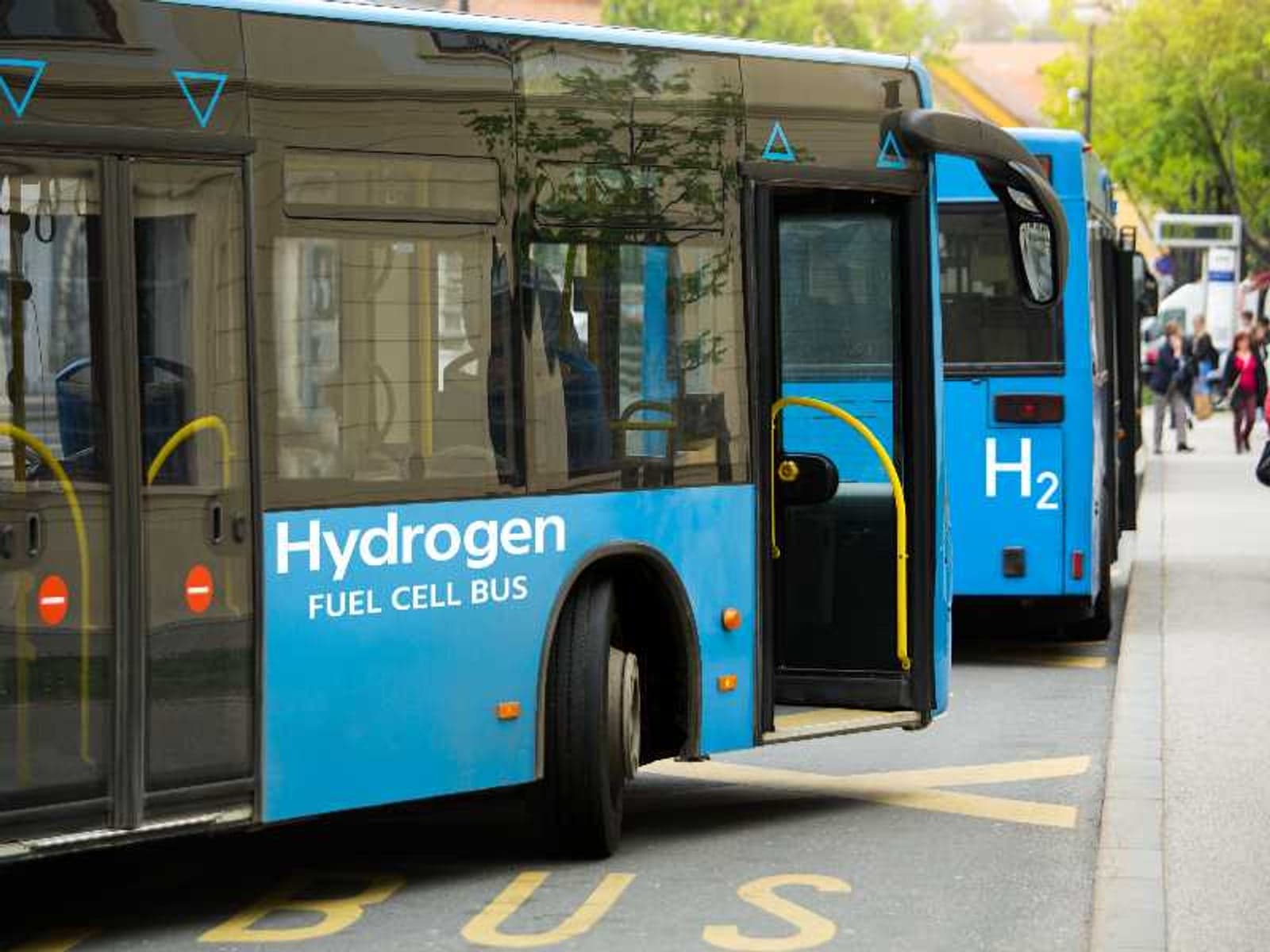
This project seeks to deploy 139 new zero-emission fuel cell buses and associated refuelling infrastructure across five countries.
JIVE was launched in 2017 and shortly after, in 2018, was followed by JIVE 2, which has a similar aim. Both are active today.
Together, the two projects are hoping to deploy more than 300 new zero-emission fuel cell buses in seven countries.
The overall objective of the JIVE projects is basically to advance the commercialisation of fuel cell buses through the large-scale deployment of vehicles and infrastructure.
The hope is that by the end of the projects, fuel cell buses will be commercially viable for bus operators to include in their fleets without subsidy.
And in addition, that local and national governments feel empowered to regulate for zero-emission propulsion for their public transport systems.
EVERYWH2ERE
The main scope of this project is to leverage fuel cell and hydrogen technologies and make hydrogen affordable to sustainably operate everywhere in European cities.
The goal of EVERYWH2ERE is to basically replace diesel with fuel cell gensets.
In other words, the main objective of the project is to demonstrate easy-to-transport 'plug and play' fuel cell gensets. Demonstration results will be capitalized for replication, business model, environmental and logistic analysis.
More about the EU Projects Zone
HyPSTER
Officially launched in January 2021, the project aims to use salt cavern storage to connect hydrogen injection by electrolysis to industrial and mobility uses.
HyPSTER, which stands for Hydrogen Pilot STorage for large Ecosystem Replication, is the first EU supported large scale Green H2 Underground Storage Demonstrator.
It has the potential of producing 400 kg of hydrogen per day, which is the equivalent of the consumption of 16 hydrogen buses.
During the first stage of the project, it is expected that 3 tons of green hydrogen will be stored for future use.