How AI can give ageing grids millisecond resilience
Guest/partner contributor
Posted on: 9 March 2026
In 2025 we spoke of AI as a forecasting assistant; it now has to become the nervous system that bridges the velocity gap between physics and decision-making, writes Bala Vinayagam of Qualitrol.

For most of my career, we treated the grid like a patient, reliable piece of infrastructure. We planned with comfortable margins, replaced assets on fixed schedules, and trusted that the laws of physics would behave predictably. That era ended somewhere around 2024.
Today, the grid has become kinetic, a high-velocity system where ageing copper and steel must dance at digital speed with variable renewables, surging data-centre loads, and millions of EVs and heat pumps. In Ireland, data centres already take more than 20% of national electricity and are heading for nearly a third by the end of 2026. In the Pearl River Delta, similar pressures are building. In Germany’s industrial regions and Singapore’s tightly constrained networks, the pattern is the same.
The IEA now expects global electricity demand to grow 3.6% a year through 2030, which is 50% faster than the previous decade. At least 3,000GW of renewable projects (1,500 GW already advanced) sit in global interconnection queues, waiting for a grid that can actually accept them.
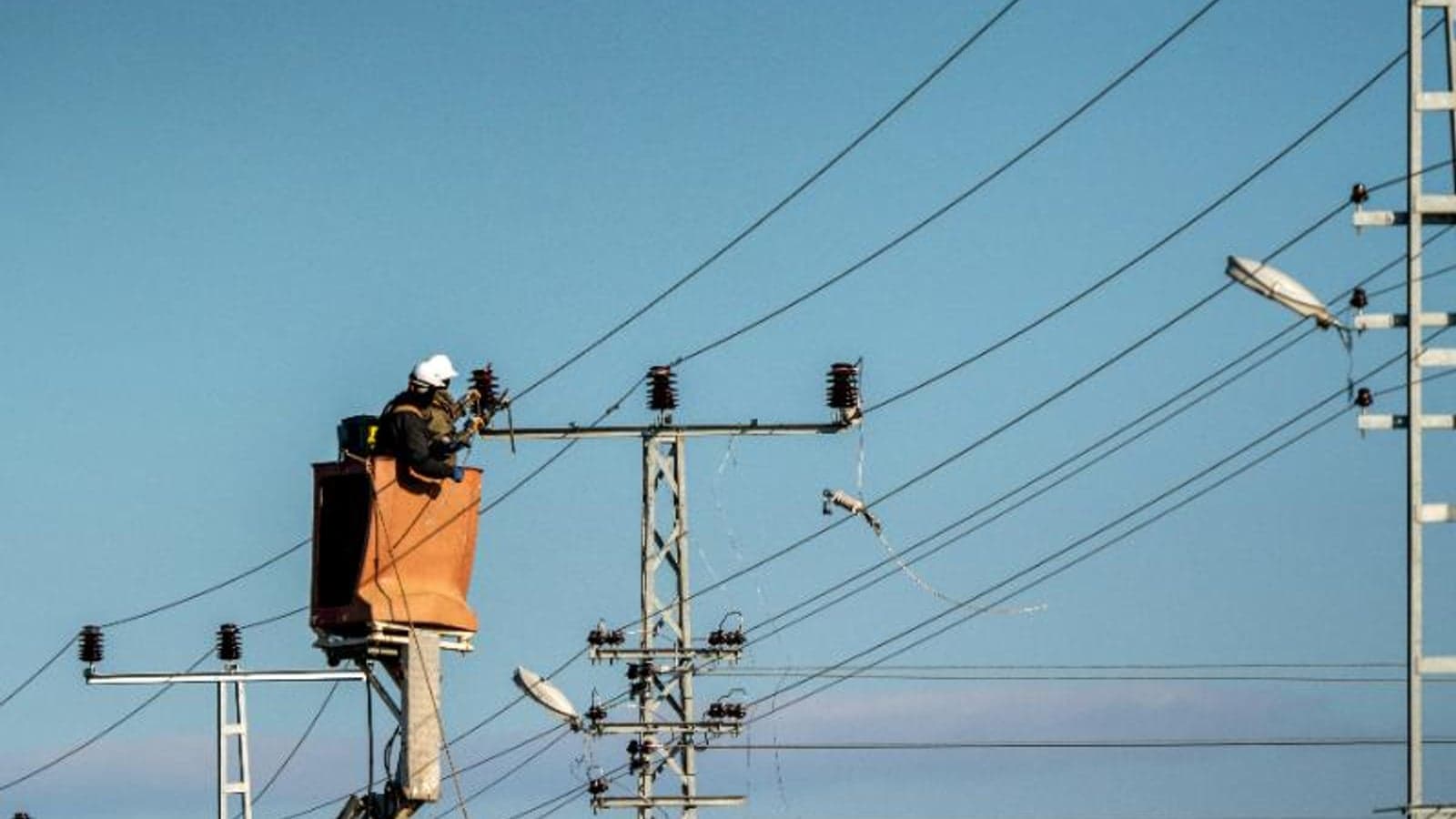
In the United States, 70% of transmission lines and power transformers are over 25 years old. In Europe, more than 40% of the grid infrastructure is over 40 years old, with nearly half reaching the end of its technical life by 2030. These assets were designed for one-way, predictable flows. They are now being asked to handle bidirectional volatility and megawatt-scale ramps that can appear in seconds.
The velocity gap is real, and it is widening
I have heard the same story from operators whether I am in a control room overlooking the North Sea or one managing monsoon-driven solar drops in Southeast Asia. A thick bank of clouds rolls in, offshore wind or utility-scale solar collapses, and at the exact same moment, evening EV charging or factory ramp hits peak. The frequency swing happens in milliseconds. Traditional SCADA alarms fire after the fact. Human reaction times, no matter how experienced, simply cannot close that gap across thousands of nodes at once.
In 2025, we still spoke of AI as a forecasting assistant. By 2026, it has to become the nervous system that bridges the velocity gap between physics and decision-making.
From asset health to asset survivability
At Qualitrol, we see this shift every day. It is no longer enough to know whether a transformer is within rating. We need to know whether it can survive the next 30 minutes of stress given yesterday’s thermal history, today’s ambient conditions, and tomorrow’s expected renewable surge.
AI is now being embedded directly into the hardware, grid-forming inverters, STATCOMs, and battery systems, so the muscles of the grid can feel and react at electron speed. It reads dissolved-gas trends, partial-discharge signatures, vibration patterns, and heat gradients in real time. It does not just predict failure; it helps the asset stay alive by influencing dispatch decisions before the operator even sees the alarm.
We are managing the physical survivability of the most complex machine humanity has ever built while accelerating the biggest energy transition in history.
This is where the economics get interesting.
Building new transmission lines still takes 7 to 10 years in most markets. We do not have that time. Grid-enhancing technologies, especially AI-driven dynamic line rating, are already delivering 20 to 30% extra capacity on existing lines in real deployments across Europe, the Nordics, and the United States. One recent project in the American Midwest showed average gains of 61% on certain 345kV corridors. That is silicon delivering what copper would take a decade and billions to achieve.
Explainability is not optional
As we hand millisecond decisions to algorithms, trust becomes a safety requirement, not a nice-to-have. Operators with 25 to 30 years of experience need to see the causal chain: why is the system recommending this reroute or this storage dispatch? White-box approaches that show confidence levels and physical reasoning are moving from research labs into live control rooms. Regulators in Europe, Asia, and North America are all watching this space closely; the first frameworks are already appearing.
We are also seeing the rise of energy parks, which are co-located generation, storage, and high-load users (data centres, green hydrogen, manufacturing) that manage their own internal balance while acting as shock absorbers for the wider grid. AI makes these islands of resilience possible and profitable.
Have you read?
How data centre-driven power demand is shaping big tech power plays
AI demonstrates data centre demand management
What grid leaders must do in 2026
The pilot era is over. The questions we need to answer together, whether you operate in Vienna, Johannesburg, or Jakarta, are practical:
- Where exactly have decision cycles already outrun human scale?
- How do we deploy explainable AI that operators trust and regulators can audit?
- How do we layer these capabilities onto legacy systems without creating new cyber or stability risks?
- And how do we use the 20 to 30% latent capacity that already exists in our lines and transformers to buy time while we build the grid of the 2030s?
The copper and steel will always be the backbone. But in this kinetic era, intelligence is what keeps the system standing. We are no longer just keeping the lights on. We are managing the physical survivability of the most complex machine humanity has ever built while accelerating the biggest energy transition in history.
The sensors are deployed. Computing power is affordable. The algorithms work today. The only thing left is the decision to treat AI as core reliability infrastructure, not an optional digital project.
The moment is now.
About the author:
President of Qualitrol, Bala Vinayagam has more than 20 years of leadership and deep expertise in grid digitisation, power-system engineering, and energy automation.
Prior to Qualitrol, Vinayagam held progressive senior leadership roles at Schneider Electric, where he led decentralised energy management initiatives and advanced digital power technologies for utilities and industrial customers worldwide. Earlier, he built his career at GE Vernova (Grid Solutions) across product management, business development, and regional leadership, driving grid automation initiatives globally.
Bala holds an M.Sc. in Electrical and Computer Engineering from the University of Saskatchewan and a Ph.D. in Electrical and Computer Engineering from the University of Western Ontario, Canada.
Latest in Digitalisation
All articlesPartner content
+1
Digital water management: Empowering utilities with scientific decision-making
As urban water distribution networks continue to expand and water resource management becomes increasingly complex, water utilities are facing growing operational challenges.
- Guest/partner contributor
- 03/07/2026