Why advanced time series data is pivotal for enhancing APAC's offshore wind resources
Guest/partner contributor
Posted on: 13 February 2025
APAC’s unique offshore wind climate poses challenges for developers seeking to implement accurate wind resource modelling| making advanced time series data critical.

The unique characteristics of APAC’s wind climate and geographic conditions pose significant challenges for developers seeking to implement accurate wind resource modelling in the early stages of their project development, highlighting the importance of advanced time series data.
By Anna Rivera Jové, Youwind Renewables
With the rapid expansion of offshore wind energy as part of the renewable energy transition, it has become increasingly clear that there is no ‘one-size-fits-all’ approach to offshore wind development.
Region-specific nuances must be considered from the earliest stages of development, beginning with the surveying of potential wind farm sites.
The Asia-Pacific (APAC) is a prime example of a region that is rapidly emerging as a global hub for offshore wind development, presenting a wealth of opportunities as well as local challenges.
Traditional modelling approaches, particularly those developed for European markets, such as Weibull distribution, often fall short in capturing the complexity of wind patterns in APAC.
A key innovation is the use of high-resolution, long-term time series data, which provides unparalleled insights into wind behaviour and frequency distributions in specific regions over time. Handling these complex datasets, however, can be daunting for smaller developers. To counter this, innovative new IT solutions must be utilised by developers in the region to effectively make full use of the data, ensuring it can be utilised to provide the most accurate resource assessments from the earliest stages of project development.
Have you read?
Project AEROSUB to develop robots for offshore wind O&M
Green light for contruction to start on Baltica 2 offshore wind farm
Developers face limitations when relying on traditional wind resource modelling
One of the most significant limitations of traditional wind resource modelling is the reliance on the Weibull distribution – a widely used continuous probability distribution that models wind resource patterns.
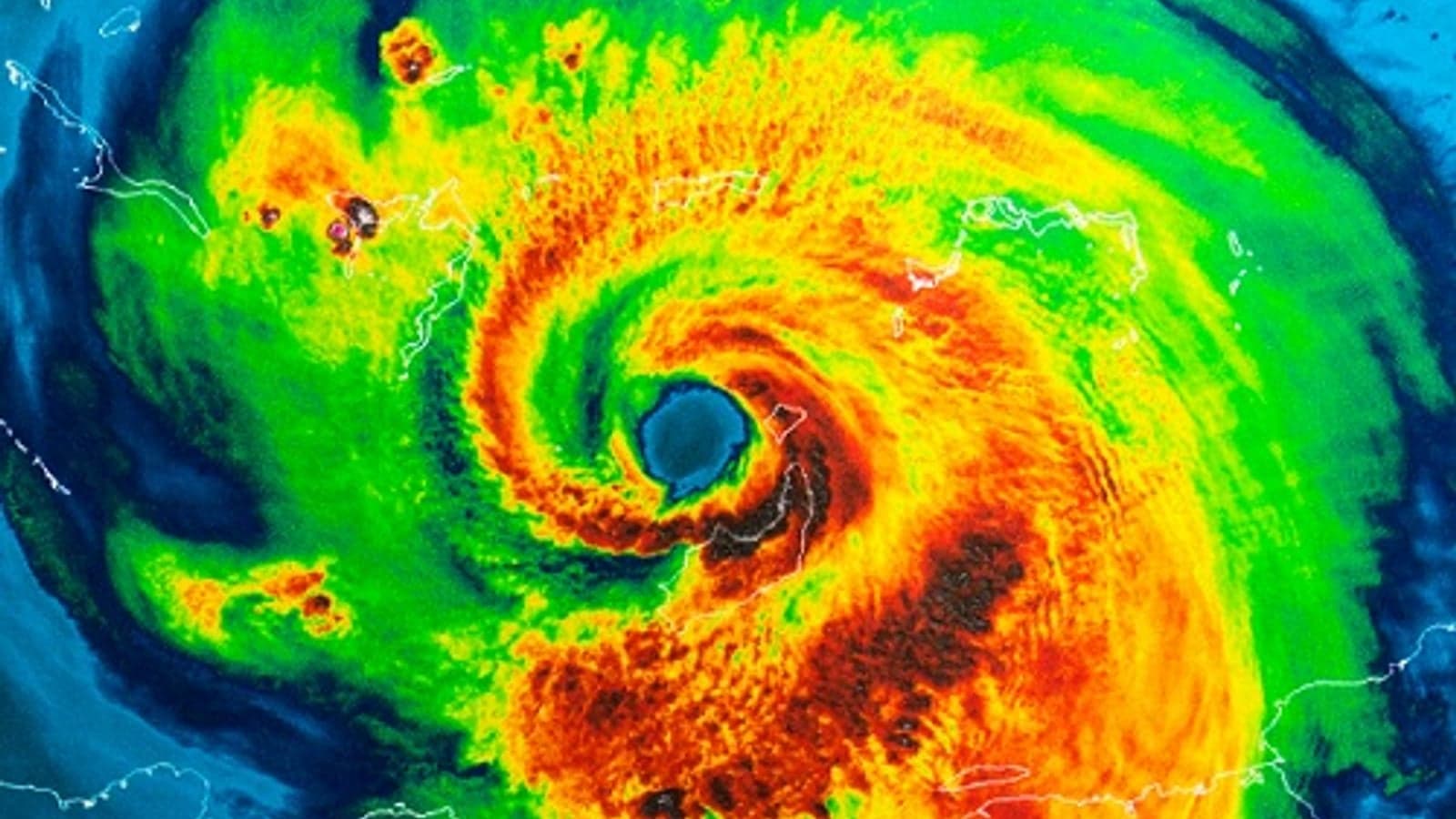
This statistical approach fails to capture the nuances of APAC’s wind climate, where historical measured data proves that it is not the most representative model. For instance, the region is subject to extreme weather events such as typhoons, which can cause significant deviations from the patterns assumed by Weibull models.
These deviations can result in misleading mean wind speed calculations, ultimately affecting Annual Energy Production (AEP) estimates. In such cases, traditional modelling can lead to both overestimation and underestimation of energy yields.
The limitations of the Weibull distribution highlight the need for more granular and representative data. Time series data addresses this gap by providing continuous records of wind speed, direction, and turbulence over extended periods. This level of detail is particularly critical in APAC, where wind conditions can vary dramatically across seasons and locations.
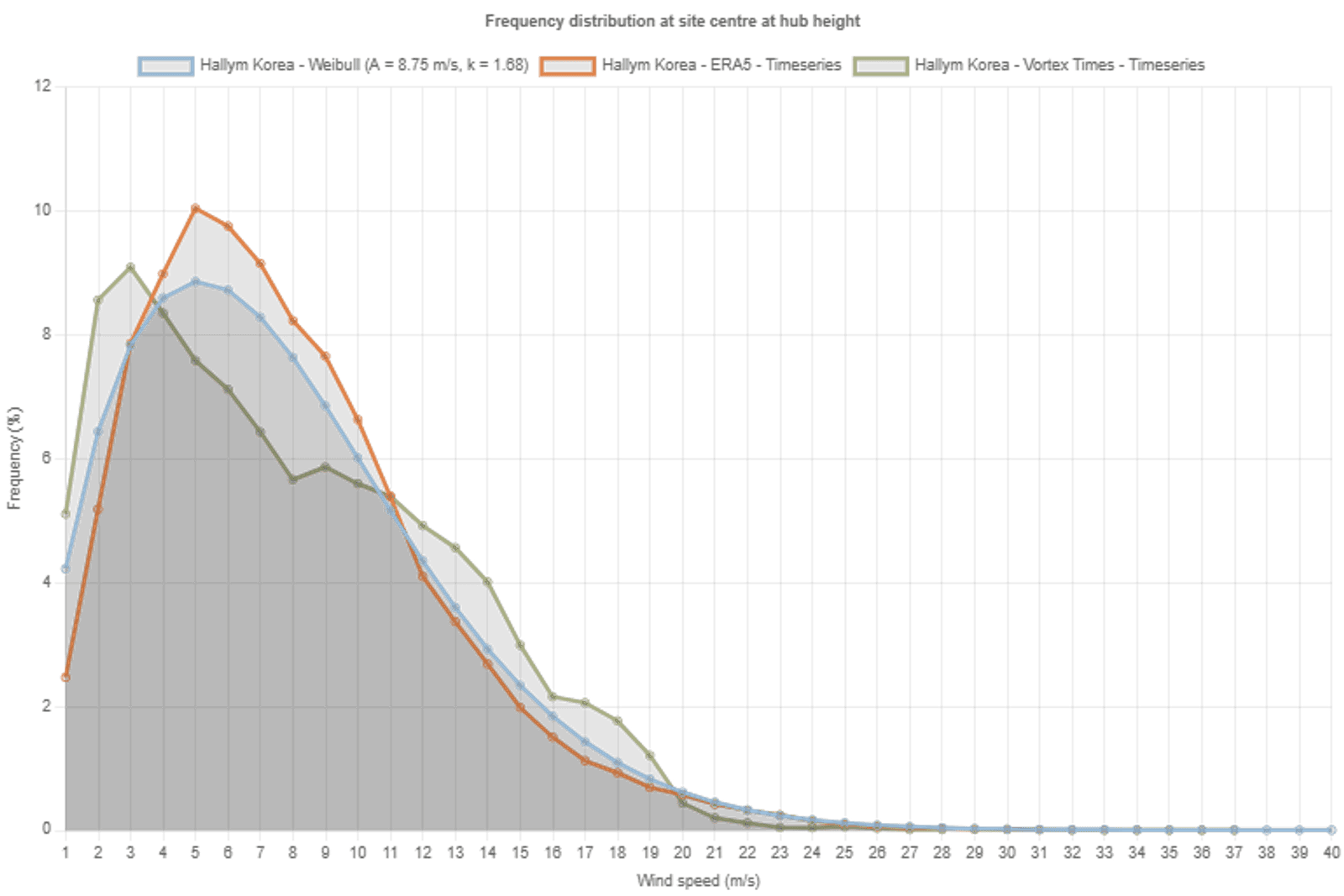
For example, a case study conducted in South Korea highlights the stark differences in AEP estimates produced by various modelling approaches (Figure 1). The study compared three methods: the Weibull distribution as baseline for this comparison, ERA5 “freemium” time series data, and high-resolution premium data provided by Vortex.
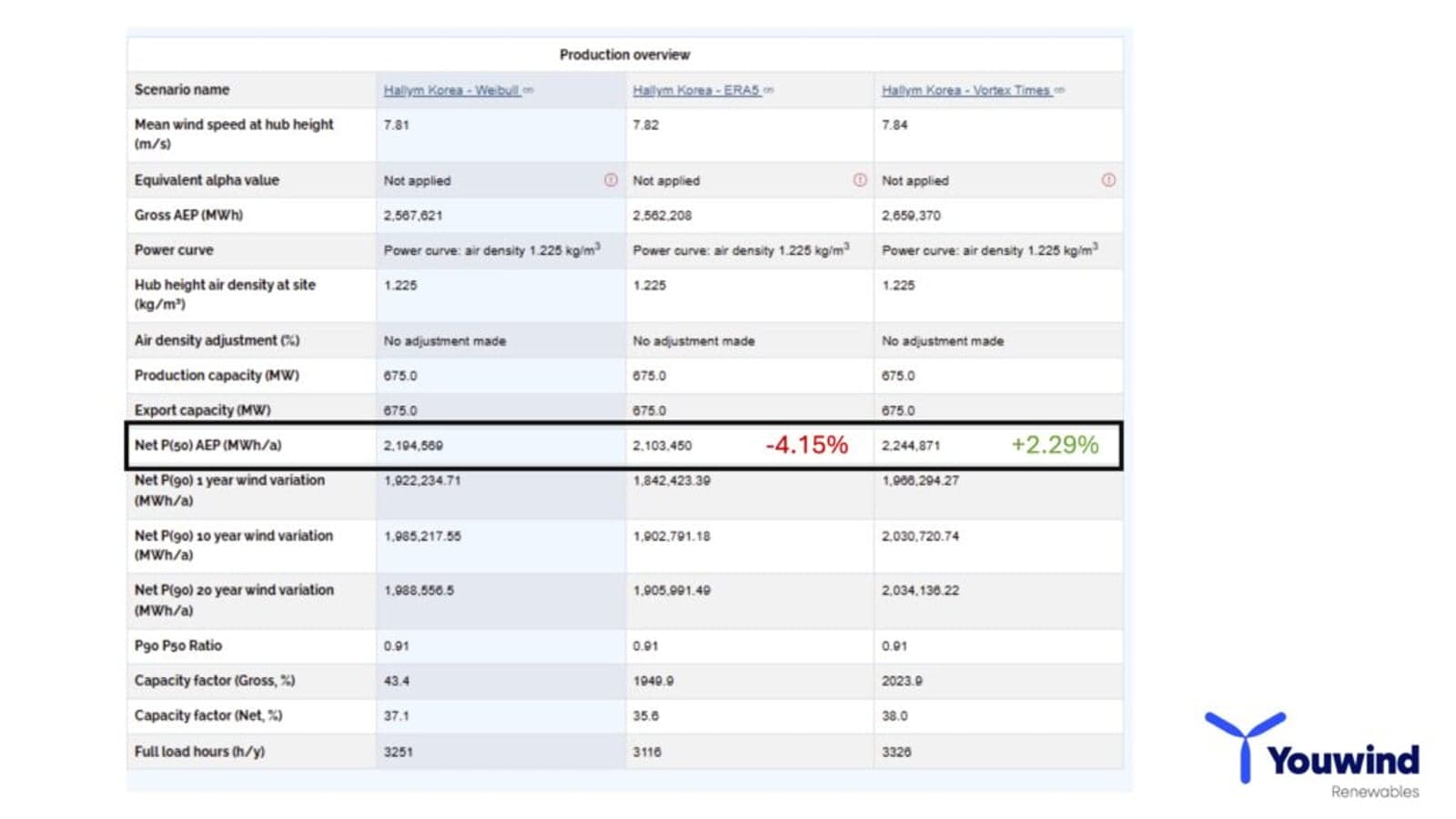
The ERA5 data showed a -4.15% net AEP deviation compared to the Weibull distribution, while the premium data recorded a +2.29% net AEP (Figure 2). These significant variations demonstrate how important it is for developers to utilise the most in-depth, granular data early in the development process to achieve the most accurate wind resource assessments – in this case, Vortex’s time series data, which is both long-term and high-resolution.
The technology behind advanced time series data
Creating high-resolution, long-term time series data is no small feat. The vast computational demands of such datasets have historically limited their availability. Long-term models often prioritise coverage at the expense of detail, while high-resolution models are typically confined to short timeframes due to their intensive computational requirements. Bridging this gap requires innovative approaches that balance precision and efficiency.
One solution involves leveraging advanced numerical weather prediction models, such as the Weather Research and Forecasting (WRF) model. This model forms the backbone of many time series datasets by simulating atmospheric conditions over large geographical areas. A baseline WRF simulation can generate 20 years of data, with this data spread over 10-minute intervals, producing a strong foundation for wind resource assessments. However, while this approach captures regional wind patterns with reasonable accuracy, it may miss micro-scale details that are crucial for site-specific analysis.
To enhance the granularity of these datasets, a second simulation called WRF-LES is employed. The WRF-LES focuses on capturing fine-scale atmospheric details, such as turbulence, which are critical for understanding wind behaviour at the turbine level. Due to its high computational cost, this simulation is typically limited to shorter periods (around six months to one year). By combining insights from both the baseline WRF simulation and the WRF-LES, developers can create datasets that are both comprehensive and detailed.
Also of interest: Clean power tech costs to fall to record lows in 2025 says BloombergNEF
The baseline simulation provides a long-term perspective on wind trends, capturing seasonal variables, while the micro-scale insights from the WRF-LES are used to refine this dataset, filling in the gaps with higher-resolution information. This approach optimises computational resources while delivering the detailed data needed for accurate performance modelling. Key variables such as wind speed, direction, and turbulence are recorded in 10-minute intervals, ensuring that the data reflects the complex realities of APAC’s wind regimes.
The benefits of integrating advanced time series data into offshore wind development
The benefits of high-resolution and long-term time series data extend beyond improved AEP estimates.
These datasets also play a crucial role in layout optimisation and wake modelling. Time series data enables developers to simulate wake effects with greater accuracy, allowing for more effective turbine placement and operational strategies. This level of precision is particularly valuable in APAC, where offshore projects often have to deal with challenging site conditions.
Another benefit of advanced time series data is in de-risking investment decisions. Offshore wind projects require substantial upfront capital, and their financial viability depends on the accuracy of yield projections. High-resolution datasets provide a more reliable basis for these projections, reducing uncertainty and enhancing the bankability of projects. Reliable data not only facilitates project financing but also supports compliance with local permitting requirements.
However, the initial costs of generating and accessing long-term high-resolution time series datasets can be a barrier for smaller developers. Moreover, the complexity of managing and interpreting large volumes of data requires specialised expertise and software tools.
To address these issues, there is a growing need for industry collaboration and knowledge sharing. Developers must also embrace innovative software tools that ensure these complex datasets can be easily used in the early stages of the project lifecycle, thus lowering the entry barriers for advanced wind resource modelling and enabling broader adoption across the region.
Conclusion
In conclusion, the transition to high-resolution, long-term time series data represents a paradigm shift in wind resource modelling and therefore yield estimates. For developers in APAC, this approach offers a pathway to more accurate and reliable yield assessments, tailored to the region’s unique wind conditions.
By addressing the limitations of traditional methods, embracing advanced simulations, and easily accessing these simulations with the use of wind project development software, the industry can unlock the full potential of offshore wind in APAC, driving progress toward a sustainable energy future.