How do you choose the suitable communication technology for your smart water meters?
Guest/partner contributor
Posted on: 6 June 2025
LAISON Technology, a specialist in smart water metering solutions, offers a comprehensive range of communication options to meet diverse application scenarios.
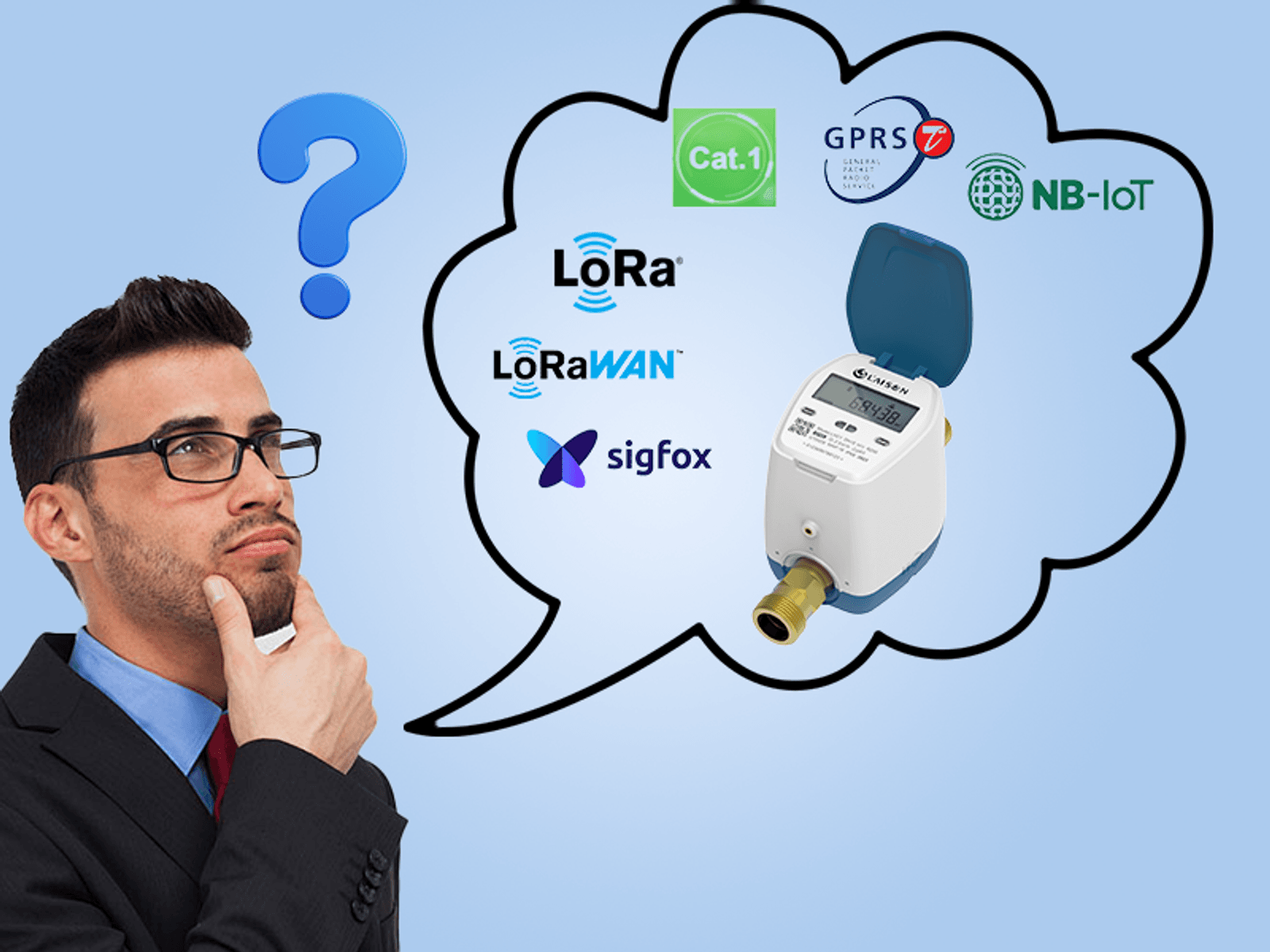
LAISON Technology, a specialist in smart water metering solutions, offers a comprehensive range of communication options including LoRa, LoRaWAN, GPRS, NB-IoT, Cat 1, Sigfox, Bluetooth, etc. to meet diverse application scenarios. Here’s a brief look at the leading technologies used in our smart water meters.
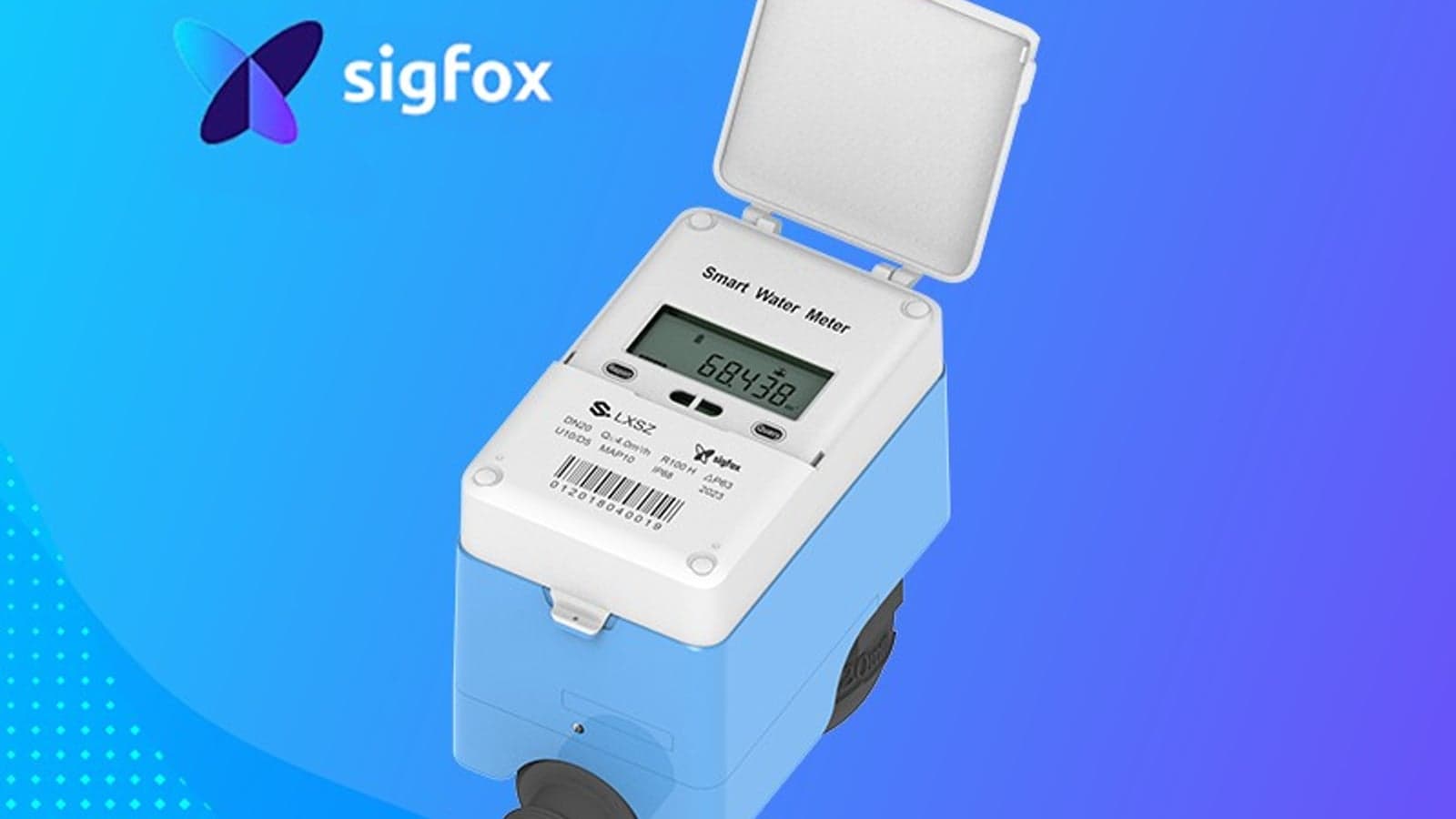
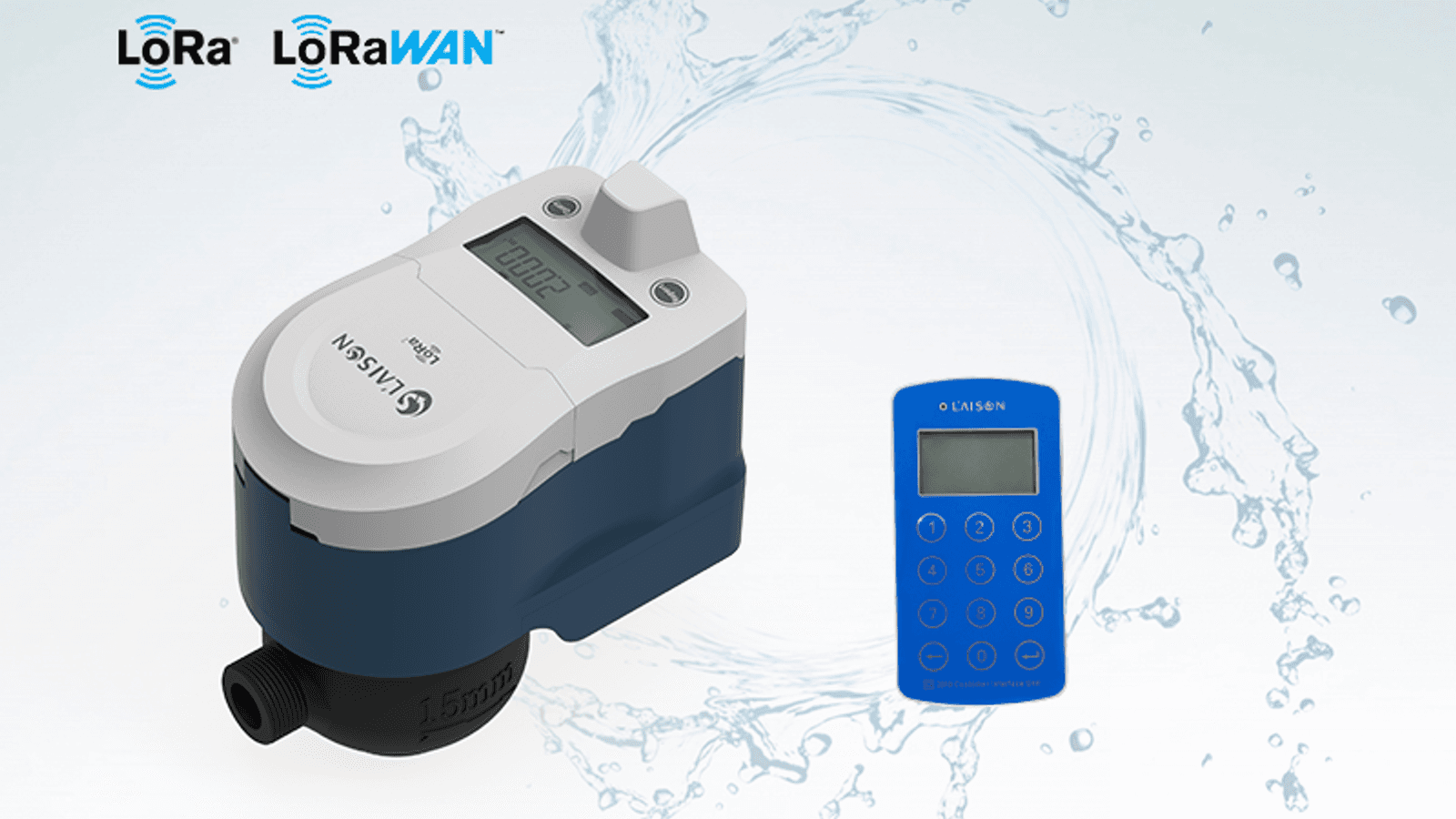
LoRa / LoRaWAN
Advantages:
- Long transmission range (up to several kilometers)
- Low power consumption, ideal for battery-powered meters
- Private network deployment possible (LoRa)
- Support both AMR and AMI remote data collection
Limitations:
- Requires installation of gateways for full network coverage
- Bandwidth is limited, not suitable for high data volume
Best for:
Remote or rural areas, utilities looking for private or hybrid network options
GPRS
Advantages:
- Wide network coverage in areas with existing 2G infrastructure
- Mature technology with stable performance
Limitations:
- Higher power consumption compared to LPWAN
- SIM and Data Bundle costs may apply
- Gradual phase-out in some countries due to 2G network shutdowns
Best for:
Regions with stable 2G networks and where real-time data is needed
NB-IoT
Advantages:
- Deep indoor signal penetration
- Extremely low power consumption and long battery life
- Supported by most major telecom operators
Limitations:
- Dependent on local telecom operator’s NB-IoT coverage
- SIM and Data Bundle costs may apply
Best for:
Urban areas, high-rise buildings, underground meter installations
Cat 1 (LTE Category 1)
Advantages:
- Operates on 4G LTE networks, with global telecom support
- Supports higher data rates and more complex applications
- Lower latency compared to NB-IoT or GPRS
- Ideal balance of performance and power for IoT
Limitations:
- Higher power consumption than NB-IoT or Sigfox
- Slightly higher cost of module and connectivity
Best for:
Real-time applications, mobile meters, or where 4G networks are widely available
Sigfox
Advantages:
- Ultra-low power consumption
- Low cost of connectivity and devices
- Long battery life (up to 10+ years)
Limitations:
- Requires Sigfox network coverage in the region
- Very limited data payload (suitable only for small packets)
Best for:
Low-data applications with strong focus on battery longevity
Bluetooth
Advantages:
- Direct, short-range communication via mobile device
- No need for external network infrastructure
- Supports AMR remote data collection via Hand Held Unit (HHU)
- Useful for field technicians during setup or maintenance
Limitations:
- Smartphone is required
Best for:
Prepaid metering scenarios, in areas with high smartphone penetration and user engagement
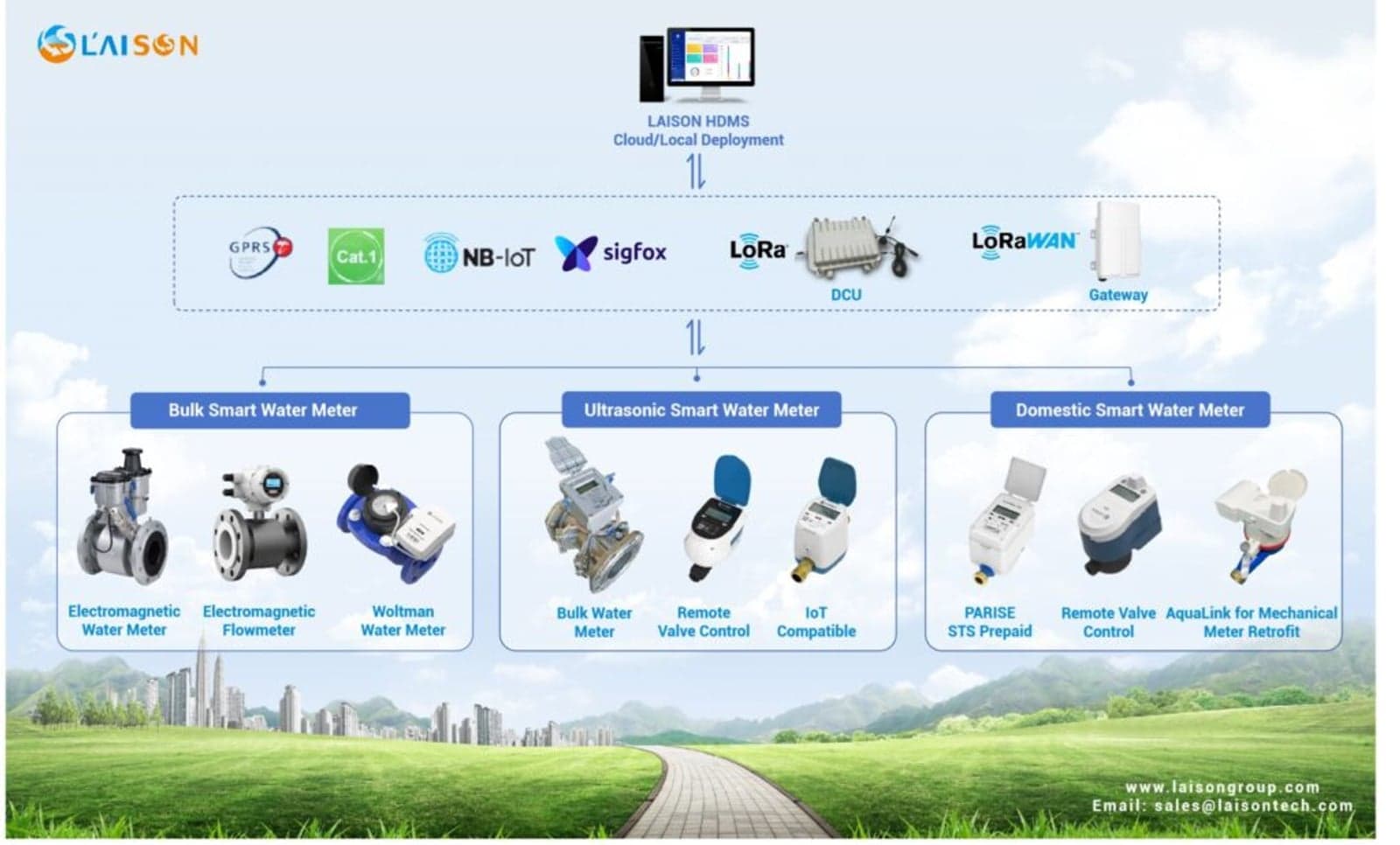
By supporting a full spectrum of communication technologies, LAISON smart water meters ensure flexible deployment, easy integration, and future-ready connectivity for utilities worldwide.
Whether it's for dense urban areas, remote rural communities, or complex network topologies, LAISON provides the right solution to ensure accurate, efficient, and timely water data management.
Empowering smarter utilities through smarter communication—this is the LAISON way.