How legislation is reshaping the data centre industry
Guest/partner contributor
Posted on: 17 October 2025
Environmental legislation is driving sustainable data centre growth, writes David Knox.
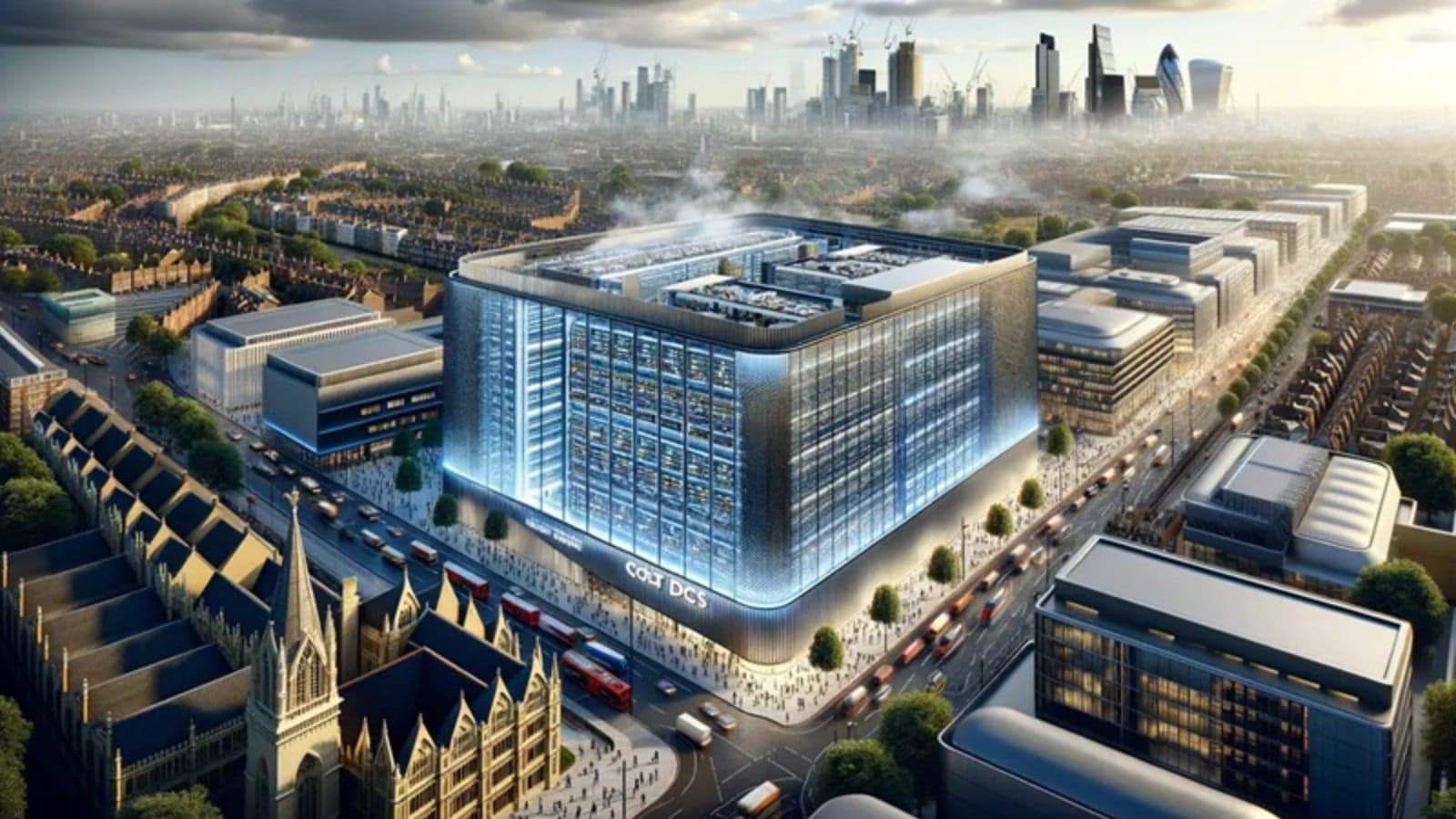
Data centres are a cornerstone of today’s connected world. They house the physical infrastructure behind critical digital services, from cloud computing to artificial intelligence, enabling the capabilities that support modern economies.
Yet, as global demand for digital services grows, so does the urgency to address their environmental impact. Providers are tasked with meeting expanding capacity needs while reducing emissions, conserving resources, and aligning operations with ambitious sustainability objectives.
Across the globe, environmental legislation is becoming more stringent as policymakers work to tackle climate change and accelerate the transition to low-carbon economies. The data centre industry, due to its high energy intensity and expanding scale, is increasingly in the spotlight.
Recent updates to the European Union’s Energy Efficiency Directive (EED) introduce more detailed and regularised reporting requirements for energy consumption within data centres.
Alongside this, the expansion of the Corporate Sustainability Reporting Directive (CSRD) will require companies to publish standardised, audited data on a range of environmental, social and governance (ESG) metrics.
These developments are designed not just to regulate, but to increase transparency and accountability across the industry.
Such frameworks are more than compliance mechanisms. When well implemented, they serve to align the industry’s growth with climate objectives and create a level playing field where all operators are held to consistent standards.
Have you read?
Energy and water use of Google’s AI is less than thought
Energy efficiency needs a culture shift to scale at speed
In the UK, environmental regulation continues to evolve in parallel with EU developments. The Energy Savings Opportunity Scheme (ESOS), for instance, shares many of the same goals and reporting expectations as the EED.
From a practical standpoint, this alignment offers continuity for global operators and reinforces the UK’s position as a market with strong environmental governance.
Environmental performance
Despite regulatory divergence in some areas post-Brexit, the direction of travel is broadly the same: higher standards, accelerated reporting timelines, and an increased emphasis on measurable environmental performance.
Achieving environmental targets in data centres begins at the design stage. Decisions around cooling systems, energy infrastructure and refrigerant use made during the early planning process have a long-term impact on sustainability outcomes.
For example, the type of refrigerant selected can significantly influence a facility’s global warming potential over its 20–30-year lifespan.
Once a facility is built, retrofitting these core systems is costly, complex and disruptive. This underscores the importance of lifecycle thinking - designing facilities not just for performance, but for environmental resilience and long-term compliance.
Standardising around high-performing design models, particularly those that meet or preferably exceed regulatory benchmarks in leading regions, offers one route for operators to de-risk long-term compliance across multiple markets.
Operational targets
Alongside design, operators are increasingly being held to specific operational performance targets. One example is the EU’s requirement for data centres to achieve an average Power Usage Effectiveness (PUE) of under 1.3 within two years of becoming operational.
While achievable, this benchmark can present challenges depending on how quickly a site reaches full capacity. The accelerating demand from AI and high-density compute workloads may help shorten ramp-up timelines, but not all workloads scale uniformly.
Providers will need to work closely with customers and regulators to ensure energy efficiency goals are met without compromising performance or flexibility.
A key requirement of emerging legislation is the ability to report accurately on energy usage, emissions, and data flows. However, concerns around data privacy and commercial sensitivity remain a barrier to open reporting in some cases.
To enable consistent compliance across the industry, clearer guidance and standardised reporting protocols may be needed, particularly for anonymised or aggregated data sets. Building trust among stakeholders, including customers and regulators, will be essential in resolving these issues and achieving data transparency at scale.
Also of interest:
Iberdrola backs quantum computing in Basque Country
E-fuels to supply backup power for German data centres
Embedding sustainability
Design and compliance frameworks can only take sustainability efforts so far. Ultimately, a data centre’s environmental performance is its design, as well as its daily operations and maintenance standards upheld on site.
Achieving and maintaining low PUE values, minimising refrigerant leakage, reducing water consumption and implementing circular waste practices such as hardware recycling are all essential parts of the long-term sustainability equation. Operational excellence must be embedded across the lifecycle, from commissioning to end-of-life asset management.
Waste reduction, particularly the ambition to achieve zero waste to landfill, requires not just policies, but robust, consistent execution. This includes responsible recycling and reuse strategies for decommissioned IT equipment and materials.
Environmental legislation is not simply a set of hurdles to overcome. It is an opportunity to lead. By embedding sustainability into design, prioritising transparency, and holding operations to high standards, data centre providers will not only meet regulatory pressures but also turn this into a competitive advantage.
Progress will come from surpassing efficiency targets, integrating circular design principles, and building trust through transparent, verifiable data sharing. Sustainability should be embraced as a continuous commitment across the operational lifecycle rather than a final goal.
As the digital economy continues its rapid growth, so too must the commitment to building infrastructure that is both high-performing and environmentally sustainable.
Regulation defines the baseline – but the industry’s future leaders will be those who move beyond compliance, advancing with a clear strategy, accountable actions, and measurable results.
David Knox is Global Director of Energy & Sustainability at Colt DCS

Latest content
+3
360 sustainability: Steps businesses can take to implement circularity
Businesses that adopt circularity now will not only proactively prepare to comply with future regulations but also position themselves as leaders and build a competitive advantage, writes Frédéric Godemel, EVP of Energy Management at Schneider Electric.
- Guest/partner contributor
- 16/09/2025
Partner content
+2
Innovations to accelerate the decarbonisation journey
ABB’s Marco Tellarini, Senior Vice-President – EMEA Region, Electrification Service, delves into the innovations that are enabling utility and industrial customers to accelerate their decarbonisation.
- Enlit Editorial Team
- 22/10/2024