How Swedish, US and UK utilities are furthering V2G tech
Yusuf Latief
Posted on: 25 April 2026
Announcements from PG&E, Vattenfall and UK Power Networks show how the EV continues to be further integrated into the power system.
Utilities PG&E in the US, Vattenfall in Sweden and UK Power Networks have all recently announced updated initiatives to further integrate EVs as electrical assets as demand on the power grid only continues to increase.
Electricity systems across Europe and the US are undergoing rapid change, with rising demand and a growing share of weather-dependent generation.
This increases the need for flexible resources that can help balance supply and demand in real time. One way to do so is through the use of bidirectional charging – also known as vehicle-to-grid (V2G) – which allows EVs to not only draw power from the grid, but also feed electricity back when needed.
Three utilities across the US, Sweden and UK have recently announced milestones to make use of this technology.
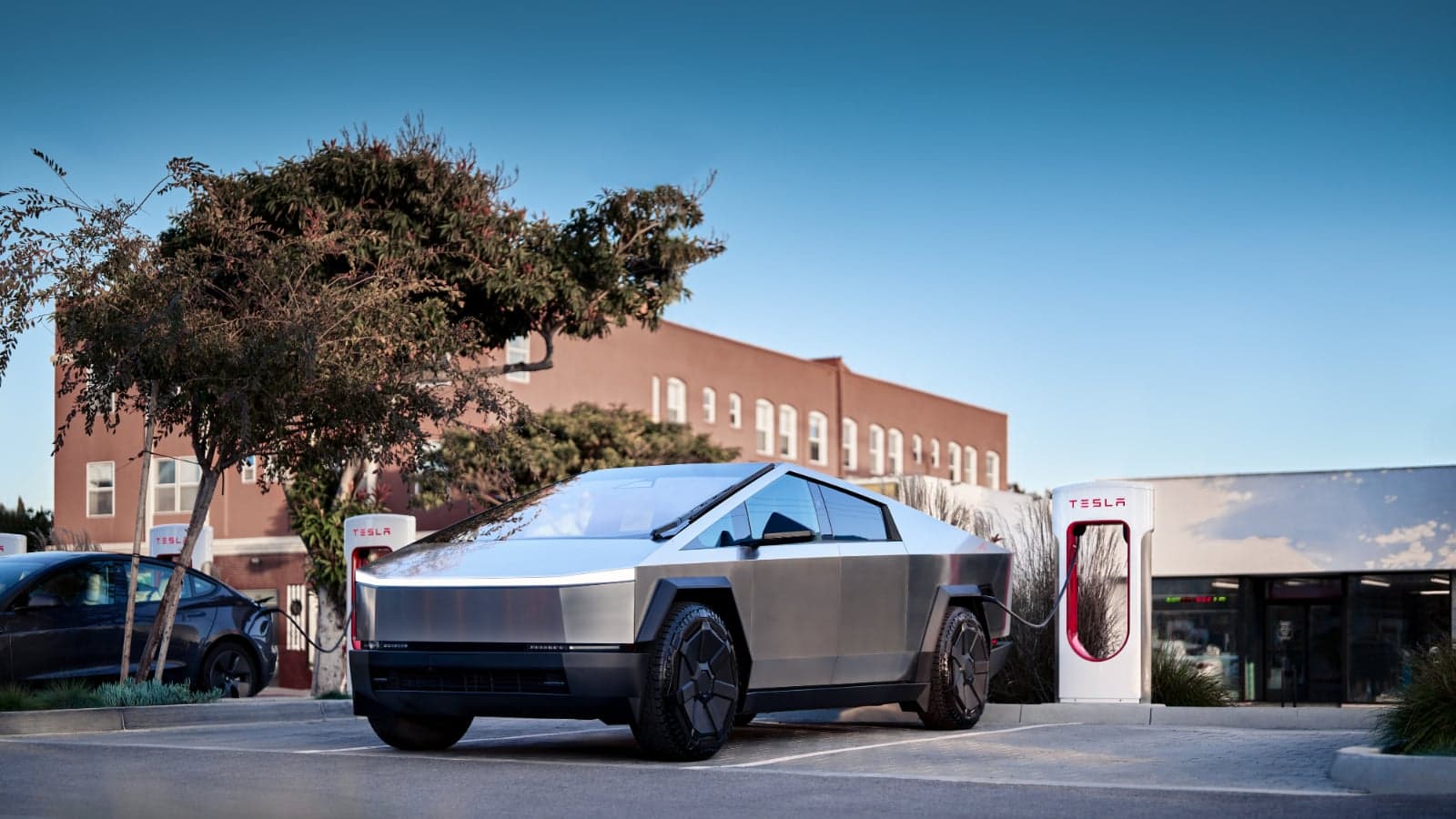
V2G with a cybertruck
PG&E in a release says that Tesla’s participation marks a major milestone for bidirectional EV integration in California, which has the highest penetration of EVs in the US.
PG&E customers who own a Cybertruck can utilise its V2X programme to instal Powershare Home Backup and activate Powershare Grid Support. With these, customers can use their vehicle to power their home in an outage and earn money by selling power back to the electric grid during grid events.
By welcoming Tesla into our residential V2X programme, we're expanding customer choice while making California's grid more flexible, resilient, and affordable.
This marks the first alternating current (AC) V2G application approved for customers in California, enabling vehicles to connect using much simpler equipment rather than specialised direct current (DC) infrastructure.
Commenting in a release was Jason Glickman, Executive Vice President of Strategy and Growth, PG&E: "Electric vehicles can do more than move people—they can help power homes and support the grid.
"By welcoming Tesla into our residential V2X programme, we're expanding customer choice while making California's grid more flexible, resilient, and affordable."
Customers enrolled in PG&E's residential V2X pilot may be eligible for up to $4,500 in incentives applied toward bidirectional enabled equipment such as the Tesla Universal Wall Connector and Powershare Gateway and utility interconnection costs. PG&E adds that there are additional incentives for participating in planned grid or backup power events and staying enrolled through the end of the pilot programme.
During periods of high electricity demand, enrolled vehicles may export power in response to grid signals, helping balance supply and demand while providing customer compensation.
Tesla's Grid Support functionality and its Powershare platform coordinates energy export through software enabled grid programmes, including PG&E's Emergency Load Reduction Program (ELRP).
Participation is opt in, event based, and designed to work around customers' daily mobility, so customers maintain full control over driving needs and backup preferences.
Adding the Tesla Cybertruck and Powershare products expands the growing list of approved V2X technologies, which already includes vehicles from Ford and GM, and strengthens the role of EVs as mobile energy assets, not just transportation.
More on V2G:
Europe’s EV boom needs intelligence more than chargers
How a Finnish tech company is turning EVs into a virtual power plant
Vattenfall’s new pilot
Vattenfall’s new pilot project builds on the results of a one-year V2G project carried out with the Stenberg housing cooperative in Hudiksvall. Following that initial validation phase, the partners are now moving towards a broader rollout in real-world conditions.
The project includes the installation of around 200 bidirectional chargers, supported by Energy Bank’s software platform for optimising and aggregating charging. As energy partner, Vattenfall will enable the aggregated flexibility to participate across different energy and flexibility markets.
Commenting in a release was Magnus Berg, Head of Customer Products & Solutions at Vattenfall: “The results so far show that bidirectional charging can play an important role in an energy system with more fossil-free electricity.
“Through this collaboration, we are exploring how aggregated EV batteries can provide flexibility and support balance and stability in the power system. If the battery can support the grid while also generating revenue, it could improve the economics and value of owning an electric car and contribute to continued electrification.”
This project shows that [EVs] can also become an active and valuable part of the energy system.
The rollout will take place in Sweden’s electricity price areas SE3 and SE4, covering central and southern parts of the country.
Around 200 EV owners – both households and fleet operators – will participate in the pilot. Participants retain control over their vehicles and will receive compensation linked to the flexibility and energy optimisation they provide.
Said Klas Boman, Project Owner at Energy Bank: “Electric cars are often seen only as a means of transport.
“This project shows that they can also become an active and valuable part of the energy system. Together with Vattenfall and Volkswagen, we are deploying the technology at real scale and taking an important step toward a new market where mobility and energy meet.”
The pilot project will run until 2028 and is intended to generate insights into how bidirectional charging can be integrated into the electricity system at scale.
UK Power Networks connection requests
British utility UK Power Networks in March announced what they call a UK-first innovation to unlock the power of V2G technology.
Specifically, while working with Octopus Energy, UK Power Networks said in March that it became the first network operator in the UK to approve new connection requests automatically within seconds, including for EV chargers that enable V2G.
According to the company in a release, installing any low carbon technology, such as an EV charger or solar panels, in the UK requires approval from the local network operator.
While the national average for automatic approvals is 11%, UK Power Networks already approves 80% of LCT applications instantly – whether submitted online or via paper forms processed by AI. That same approach is now being applied to V2G.
Commenting to Enlit media at the time was Ashley Southgate, LCT Strategic Project Manager at UK Power Networks:
“In 2022 UK Power Networks launched the industry-first Smart Connect platform to instantly approve connections for the vast majority of new EV chargepoints and solar panels.
“We updated this system so it recognises V2G bundles as one safe, tested package. We supported Octopus with completing the Energy Networks Association’s type testing process and set clear export/import limits, so Smart Connect can now make an instant decision without any manual checks. This removes delays just like our process for normal EV chargers.”
UK Power Networks current trials give manufacturers a chance to test their equipment, and the utility says it will make sure everything is in place for a smooth scale-up, including coordinating any cabling upgrades that are needed.
We want customers to be able to connect whatever low carbon technologies they want to the network, and use them in the way they want.
UK Power Networks also helped Octopus Energy teams meet all the necessary safety and technical standards.
Trials are already happening with EV owners in Amersham, Worthing and Enfield, with more expected to join in the coming months.
Said Southgate: “We want customers to be able to connect whatever low carbon technologies they want to the network, and use them in the way they want.
“Markets provide a way for us to give customers choice, while continuing to deliver an efficient electricity network. Embracing new technologies like V2G helps us understand better what customers want and how we can accommodate it most effectively.
“What makes this work so exciting is that it’s about innovation and collaboration as much as technology.
“By working closely with Octopus Energy, we’ve been able to safely approve V2G connections automatically - a UK first. It’s a real step forward in showing how networks can enable innovation while maintaining high safety and performance standards.”