How a Finnish tech company is turning EVs into a virtual power plant
Yusuf Latief
Posted on: 4 December 2025
Synergi's Co-Founder Harri Iisakka explains how they build a business by aligning smart EV charging with power grid congestion and consumer incentives.
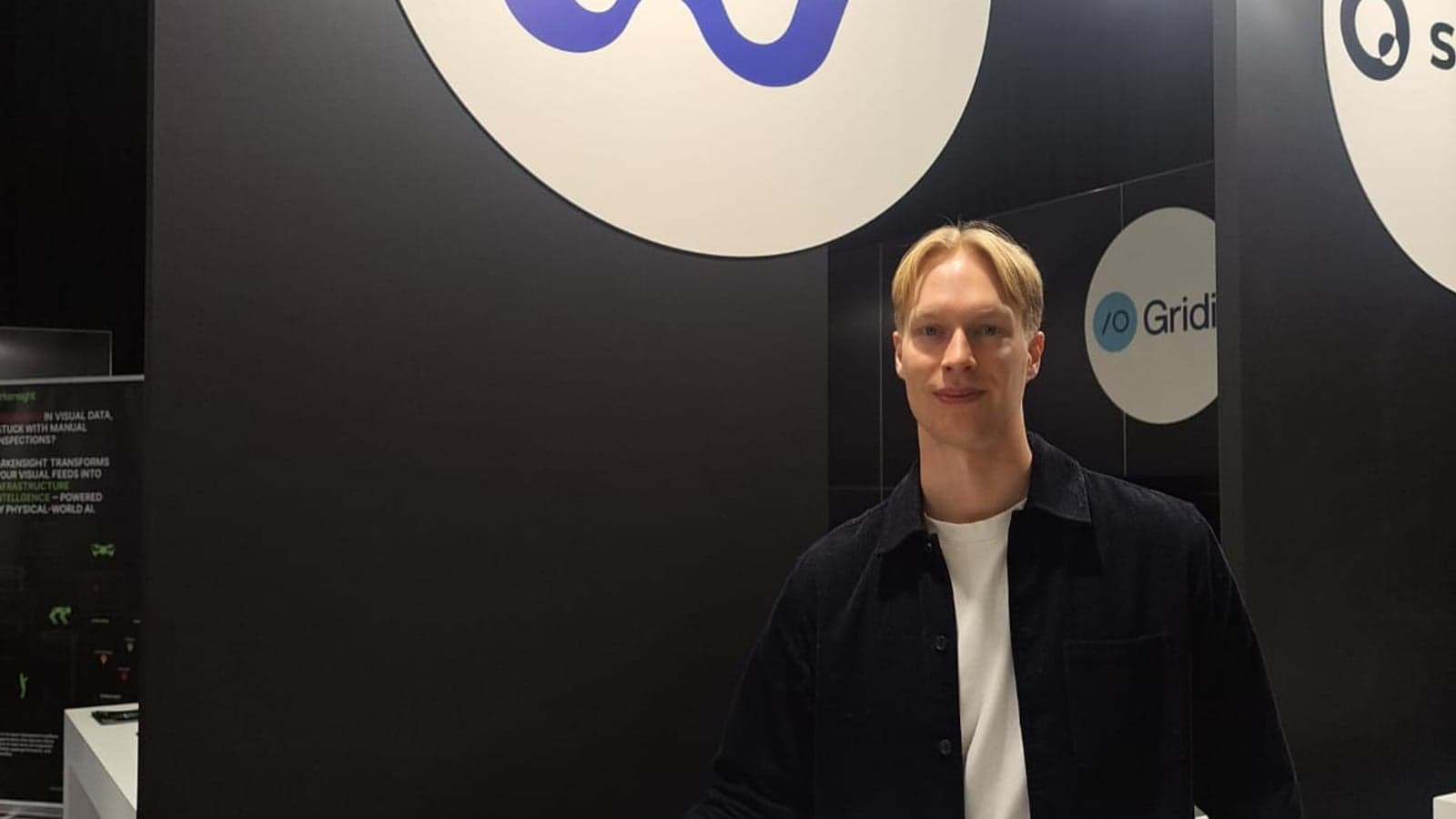
Tech company Synergi earlier this year announced Finland's first EV virtual power plant. Yusuf Latief caught up with the company's co-founder during Enlit Europe to find out how it works and what it can do to support the power grid.
Synergi has built early momentum in a space Europe is now watching closely: turning home EV chargers into real-time grid assets.
Traditionally, smart charging has optimised charging based on hourly market prices, but Synergi’s new service looks to go further.
The company, which offers a free smart-energy app used by more than 10,000 households, in November launched a smart-charging service, calling it the country’s first EV-based virtual power plant (VPP), aiming to push into deeper flexibility by coordinating thousands of vehicles in real time.
With the initiative, EV charging is shifted to the cheapest and least congested hours, while charging pauses or restarts automatically when the grid is strained. Drivers earn rewards based on both charging duration and energy consumption in kWh.
According to Harri Iisakka, the service is already doing real balancing work in the Finnish ancillary markets:
Says the company's co-founder: “Synergi’s VPP participates in the Finnish ancillary services, helping the Finnish TSO, Fingrid, keep the grid in balance.” He adds that the platform also helps utilities procure energy more accurately, making more renewables usable in practice.
That coordination happens through a mix of partnerships across the electricity value chain. Iisakka describes it as “a pan-European effort involving many players like entsoe, OEMs, local TSOs and utilities, not to mention households who are eager to contribute to a greater good.”
Participation from just one third of the national EV fleet could provide approximately 280MW of capacity, potentially rivalling nuclear production in Finland.
Managing volatility
Synergi’s approach aligns with a broader shift across the continent.
Grid operators have been looking for new ways to manage volatility, while households search for ways to reduce bills and potentially earn from demand response.
By 2030, the EU is expected to face a 60GW capacity shortfall during peak demand periods due to electrification.
At the same time, Europe is estimated to have up to 100GW of untapped demand response potential. Bringing households into flexibility markets could save as much as €2.7 billion ($3.1 billion) per year in avoided generation capacity investments.
It is within these parameters that Synergi pitches its tech, tapping into a market with massive capacity potential.
Said Iisakka: “Participation from just one third of the national EV fleet could provide approximately 280MW of capacity, potentially rivalling nuclear production in Finland.”
Indeed, this 280MW of capacity is comparable to a third of the net generation capacity of Olkiluoto 1 nuclear power plant, says Synergi, roughly equating the electricity consumption of more than 100,000 households.
Synergi’s model
Synergi’s smart charging service was piloted with over 100 EV drivers earlier this year.
Pilot results demonstrated that the reward system improved the driver's charging experience and that grid balancing events did not interfere with their routines.
Iisakka explained: “What's been really exciting with the launch of the rewards, as we have communicated to EV drivers, is that the more or the longer you're plugged in, the more you earn.
“With this, we've seen the average plug-in time increase by three hours already. That's been really amazing to see: with those small incentives, we can then change the user behaviour, and that's helped get everybody to contribute to the greater good.”
Indeed, Synergi’s pilot shows these incentives encouraged users to plug in earlier and stay connected longer, helping to maximise the availability and capacity of energy flexibility. Users set a desired charging completion time in the app, and grid balancing happens automatically within that time window.
It's so important that we can know what load we have under control, how reliable and how fast it is.
Real-time response
Key to the model’s success, says Iisakka, is ensuring that it can respond reliably to grid needs in real time, especially considering sudden peaks or drops in renewable generation.
This boil down to data and real time management: “That gets into the centre of everything, especially working with distributed assets.
“It's so important that we can know what load we have under control, how reliable and how fast it is. I think it all comes down to a few factors.”
First, he says, “we need to learn really well which vendors work best, and then which might work a bit poorly. Then, taking those learnings into account in our own models. Finally, just having enough assets under control.
“Then the errors will be cancelled out with large mass.”
Synergi’s app currently supports all major EV brands, including Tesla, BMW, Volkswagen, Volvo, Audi, Hyundai, ŠKODA, and more.
Vehicles are connected via the manufacturer’s cloud services using the user’s credentials, meaning that households do not need to buy special chargers or pay for installation work to start charging at home and earning rewards.
More insights from Enlit Europe:
Grids face new energy trilemma of security, resilience and adaptation
Europe’s industrial competitiveness depends on smarter energy systems
Addressing the million-dollar AI question for the energy workforce
Vehicle-to-grid and scalability
Currently, grid balancing via Synergi’s model operates only by starting or stopping charging—energy is never fed back from the car battery into the grid.
However, Iisakka says that the company is still considering vehicle-to-grid (V2G) technologies:
“We're looking at V2G on a monthly basis and following what's happening.”
However, he says, barriers yet abound:
“The market is quite slow due to OEMs, which hardware and software supports it, and then also with EV chargers and DSO support.
“Yet I believe that within a bit longer term, say in a couple of years, we would be really excited to also welcome V2G, which would then give even more opportunities for VPPs, such as Synergi's.”
Aside from V2G, Synergi plans to expand the service to include heating, cooling, and home battery systems, with a broader rollout across Europe in the future.
Rewards through their programme are available for EV drivers in Finland, but Iisakka notes that the model has potential to scale outside of the country.
“As long as you're able to grow the minimum viable pool of assets or bring those assets together, then you can really start small, and then grow as the market grows", he says, calling the model “100%” replicable in countries with less EV adoption or different grid structures.