How to get CBAM right for Europe's aluminium sector
Guest/partner contributor
Posted on: 24 February 2026
The current version of CBAM must be improved to support decarbonisation in Europe, not penalise it, writes Jostein Røynesdal of Norsk Hydro.
The competitiveness of Europe’s aluminium industry is under constant pressure, mainly due to large subsidies for the industry in Asian countries. If CBAM is not effective, it would further erode our competitiveness.
The current version of CBAM must be improved. The solution is to include all recycled aluminium in CBAM and leave indirect emissions from aluminium out of scope. This is the only way that the carbon cost for imported products can equal that of EU-made product and create a level playing field.
Aluminium is a critical raw material for both the EU and NATO. It is used in power grids, infrastructure, transport, construction, defence, IT and renewable energy systems. It is also highly exposed to carbon leakage. Europe has already lost two-thirds of its primary production to higher-emission regions, which highlights the importance of getting CBAM right.
In essence, CBAM is a tariff or a tax that is paid by the importer of the product. The tax is determined by the carbon emissions created when making the product, multiplied by the price of carbon in the EU. If that import tax matches the carbon costs for European industry, then we have a level playing field.
Have you read?
Rethinking the EU ETS and CBAM for energy-intensive industries
Three projects shaping the next phase of carbon capture in the UK
A level playing field on carbon cost is essential for CBAMs effectiveness as it will allow both the importer and the European producer to pass on the carbon cost to the consumer. If it can be avoided without actually reducing emissions, it will be counterproductive.
This is a fundamental issue for Europe’s climate and industrial policies and is even mentioned in the Draghi report as a major concern.
CBAM must support decarbonisation in Europe, not penalise it.
All recycled aluminium must be included in CBAM
A major flaw in the current version of CBAM is that imported products made from recycled aluminium are treated as having zero carbon emissions and costs. Importers of these products therefore pay a very low CBAM tax.
On the other hand, products from recycled aluminium inside the EU, have a much higher carbon cost.
A major flaw in the current version of CBAM is that imported products made from recycled aluminium are treated as having zero carbon emissions and costs.
This cost is implicit in the price of all aluminium scrap used for recycling. The reason is that the price of scrap is linked to primary aluminium because they are interchangeable products, and the price of primary aluminium in Europe contains carbon costs from the ETS and CBAM.
This dynamic is putting European recyclers at a competitive disadvantage compared to recyclers for example in India, China and the Middle East.
In the review proposal from December 2025, the Commission proposed to include secondary aluminium based on pre-consumer scrap in CBAM. This is a positive first step. Pre-consumer scrap is a common reference for factory rejects and inefficiencies and represents more than ¼ of annual global aluminium volumes, more than enough to satisfy EU demand.
To make CBAM workable and fair, post-consumer scrap, or end-of-life scrap, must also be included and assigned a carbon cost. Otherwise, CBAM creates an unlevelled playing field that undermines aluminium recycling in the EU.
Including post-consumer scrap might seem counterintuitive from a circular economy perspective, but it is vital for EU recyclers. As mentioned, in the EU, all scrap prices contain an implicit carbon cost because of the interchangeability with primary metal.
If CBAM cannot mirror this cost for imported products, it is accidentally creating a big disadvantage for EU recyclers and a big windfall profit for non-EU recyclers. As they sell their products to Europe, they get the exact same price as everyone else. The windfall comes from the fact that they do not pay the same carbon cost as everyone else.
Recycled aluminium makes up nearly half of global aluminium volumes. If this loophole remains, the majority of imported product could bypass CBAM, while EU recyclers face mounting cost pressure. The competitive disadvantage could reach over €200 ($236) per tonne by 2035 – more than regular profit margins – which would threaten the existence of 1/3 of all EU aluminium recyclers.
Leaving the aluminium scrap loophole open therefore directly undermines European circular economy and decarbonisation objectives. Incentivising increased import of secondary aluminium to the EU, at the expense of our own recycling sector, is not environmentally coherent and not economically rational.
The fix is clear. The European Parliament and the EU Member States must make the necessary adjustments to CBAM and assign all secondary aluminium a default carbon value and cost.
Indirect emissions should not be included for aluminium
Some stakeholders have proposed including indirect (scope 2) emissions in CBAM for aluminium. While this may appear climate-ambitious, it would undermine the competitiveness of low-carbon EU producers, with possibly negative global climate benefits.
It would also add complexity at a time when we first must ensure that CBAM can work on a simple scale.
Leaving the aluminium scrap loophole open therefore directly undermines European circular economy and decarbonisation objectives
European aluminium producers already face high indirect carbon costs, even when using 100% renewable power due to fossil-based marginal electricity pricing and pass-through of ETS costs. To avoid this leading to carbon leakage for industries competing on a global scale, the EU ETS gives Member States the ability to provide Indirect Carbon Cost Compensation (ICC).
Foreign competitors, on the other hand, can avoid indirect emissions CBAM costs through reporting low or zero emissions using power purchase agreements, without reflecting actual electricity system emissions or reductions.
We know that many Member States support keeping the ICC and holding off on indirect emissions for aluminium in CBAM.
So does the Draghi report.
Now we urge the European Parliament to follow the line of the Commission and fend off calls to include it. A robust and predictable ICC must remain to safeguard low-carbon production and prevent carbon leakage beyond 2030.
ABOUT THE AUTHOR
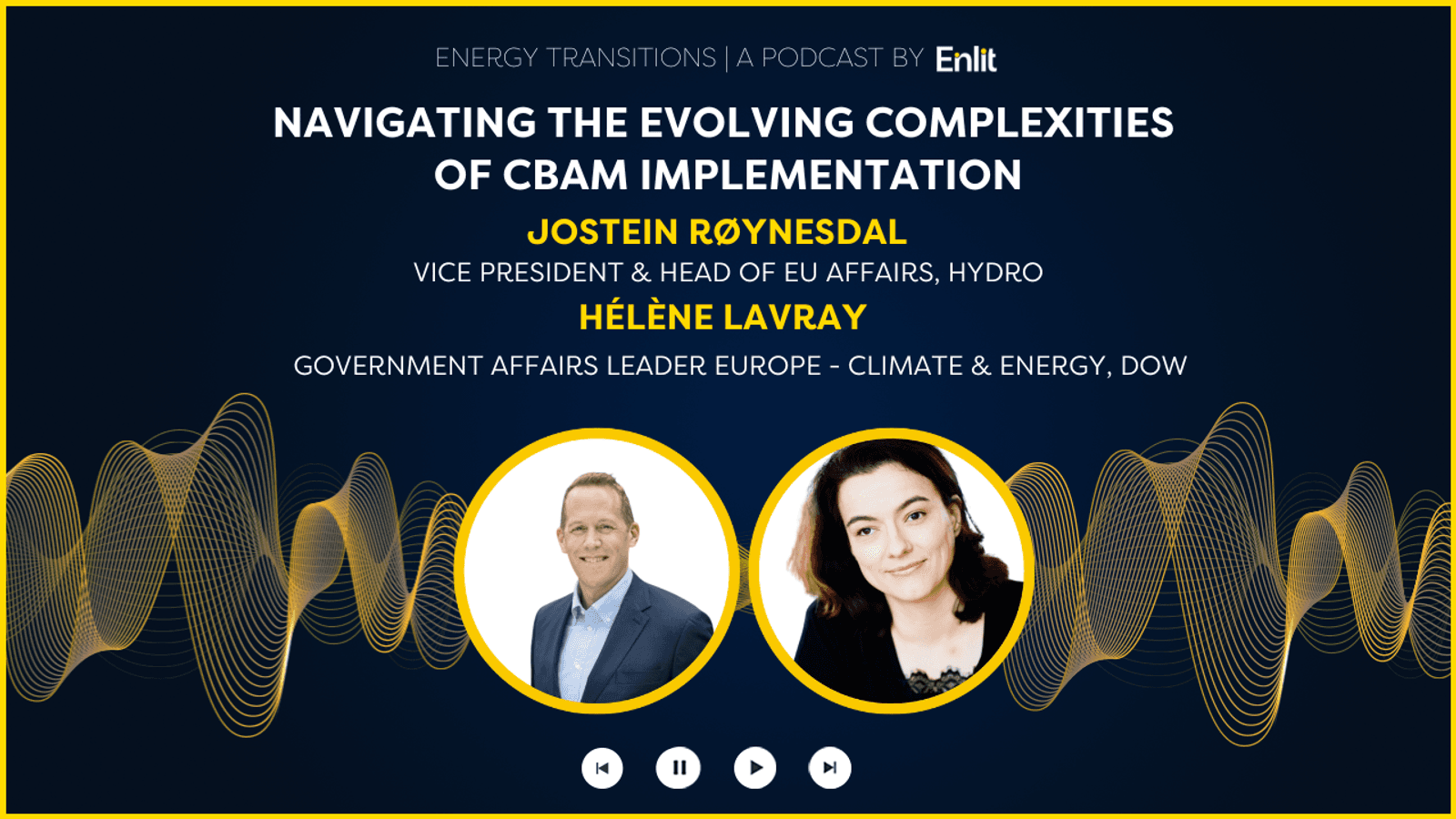
Jostein Røynesdal is the Vice President and Head of EU Affairs at Hydro. He will be speaking about EU ETS and CBAM at the European Industrial Energy Days.

Join Europe’s leading industrial energy users at the annual European Industrial Energy Days (EIED).