How virtual reality is transforming safety in energy
Guest/partner contributor
Posted on: 19 March 2026
Laura McNaughton and Lucie Booth of OPITO write on the new CGI revolution, where virtual reality transforms how the energy sector equips its workforce.

Today’s virtual worlds are rooted in technology that was developed around 75 years ago.
Alfred Hitchcock’s film Vertigo, which aired in 1958, is commonly considered the first film to feature computer graphics. These early computer-generated images (CGI) were little more than line drawings, but they were revolutionary at the time.
Fast-forward to today, and we are amid another CGI revolution – this time transforming how the energy sector equips its workforce to operate safely and reliably.
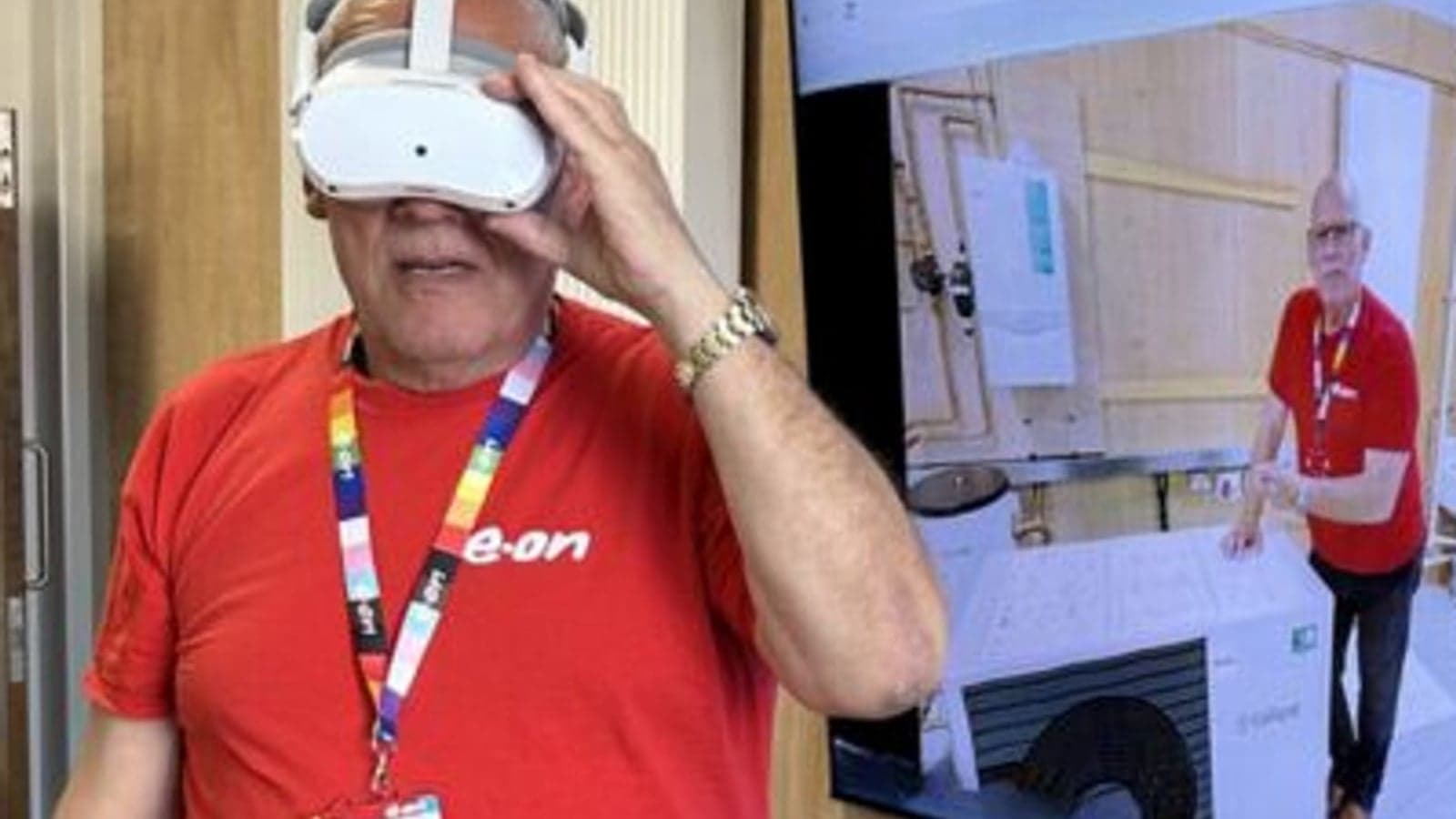
Virtual reality (VR) is now preparing technicians, engineers, and field crews for high-risk scenarios that are difficult, dangerous, or impossible to replicate in the real world. From immersive VR environments that train offshore teams to respond to well control incidents, to grid operators practising rapid decision making during simulated network faults, VR is reshaping how emergency response and safety training is delivered across the entire energy value chain.
By providing the opportunity for professionals to practise safety-critical tasks without real-world danger, immersive learning builds confidence and capability through realistic, repeatable scenarios. But with so many lives dependant on safety training, how do we standardise the inclusion of VR to ensure course integrity and realism?
Improving safety training
In safety-critical industries such as energy, virtual reality is being layered on top of traditional course content to augment the training experience, adding a string to the bow of existing simulator-style training. This enhances realism and accessibility in a way that was not possible before.
For example, practising fire containment is a critical skill in some job roles, however, there are limitations to physical practice without putting learners at risk. Instead, by combining haptic suits, smoke machines and virtual reality, learners can better experience the intensity of a fire and practice how to respond without being in harm’s way.
As these courses become more popular, establishing clear and widely adopted standards will be essential to ensure that every learner receives consistent, high quality training outcomes. Standards help align content accuracy, simulation fidelity, assessment methods, and safety protocols, so that regardless of where or how the training is delivered, organisations can trust that personnel are being prepared to the same rigorous operational and safety benchmarks.
Safely launching an offshore lifeboat from a rig can be very different depending on factors such as time, location, weather and sea conditions. In virtual reality, a trainer can simulate all these factors and more to provide learners taking their offshore lifeboat coxswain training with a more comprehensive learning experience.
Specific facilities and their protocols can be replicated exactly, vessels can have different load weights, day can be changed to night, and sea conditions from favourable to rough. Incorporating virtual reality into the training would ensure that learners are exposed to the same variables, increasingly the likelihood of smooth lifeboat deployment in the event of an emergency.
Digitally simulated world
In the next five years, we expect to see a significant increase in the number of courses that are enhanced through virtual reality, augmented reality or AI.
Safety standards must evolve to ensure the efficacy of course materials and the learning environment. From our discussions with industry, there is already appetite to evolve courses for lifting, crew transfer, emergency management and drilling rigger skills and the standards that ensure their quality.
OPITO is positioning itself at the forefront of these enhancements, including convening a product innovation forum in collaboration with a collection of industry experts to ensure that the integration of digital simulation into safety training courses will maintain or improve course outcomes.
As with existing aspects of safety training, there are legislative and regional differences that must be accommodated, and the standards put in place to ensure course quality should continue to facilitate for different learning preferences. Naturally, some employers will prefer learners to have a more traditional learning experience, while others are already embracing digital simulation.
In recent years, many energy organisations have begun introducing virtual reality into their training programmes, using immersive environments to teach Life Saving Rules and other critical safety procedures in a dynamic, controlled and highly engaging way.
As more operators adopt different technologies to enhance workforce capability, a common standard will be invaluable for ensuring consistency across the industry, strengthening workforce mobility, and improving overall safety performance.
Have you read?
'AI Darwinism' can unleash new potential of energy workforce
Advancing digital skills in wind and energy systems
Utilities prioritising new tech adoption in next five years survey shows
Boosting accessibility
A final benefit of introducing virtual reality into safety training is its ability to improve accessibility to the training ecosystem including course content, trainers, assessment and support.
Though virtual reality cannot fully replace the social aspect of learning and the shared experience gained, it can be useful for overcoming traditional logistical challenges. For example, geographically dispersed teams can be brought together in one virtual environment while emerging markets can benefit from the expertise of trainers anywhere in the world.
Over time, this will break down the physical barriers that learners sometimes face in receiving the training that they need, helping to significantly widen access for all.
The future of digital simulation and safety training
Just as Alfred Hitchcock’s Vertigo laid the groundwork to revolutionise the film industry, virtual reality is now poised to save lives by improving the realism and accessibility of safety training.
By allowing learners to practise safety-critical tasks without real-world danger, they develop stronger muscle memory and can revisit skills more frequently in a virtual setting. With virtual reality becoming an increasingly common part of safety training, standards will be vital for ensuring the efficacy of course content and outcomes.
About the authors:
Lucie Booth is a Product Development Manager at OPITO with over a decade of experience within the organisation. She has a strong track record in product development, quality assurance and standards management, supporting the successful delivery and evolution of OPITO’s global training and certification portfolio.
Laura McNaughton is a Product Development Manager at OPITO. She has a strong background in learning technology and development across the education, public and corporate sectors and brings extensive experience in designing and delivering digital learning solutions.