Hydrogen-ready gas plant adds 682MW fast start capacity to Singapore grid
Pamela Largue
Posted on: 31 October 2025
Plant can ramp up within 10 minutes of a spike or outage and at full capacity will generate power for one million homes.
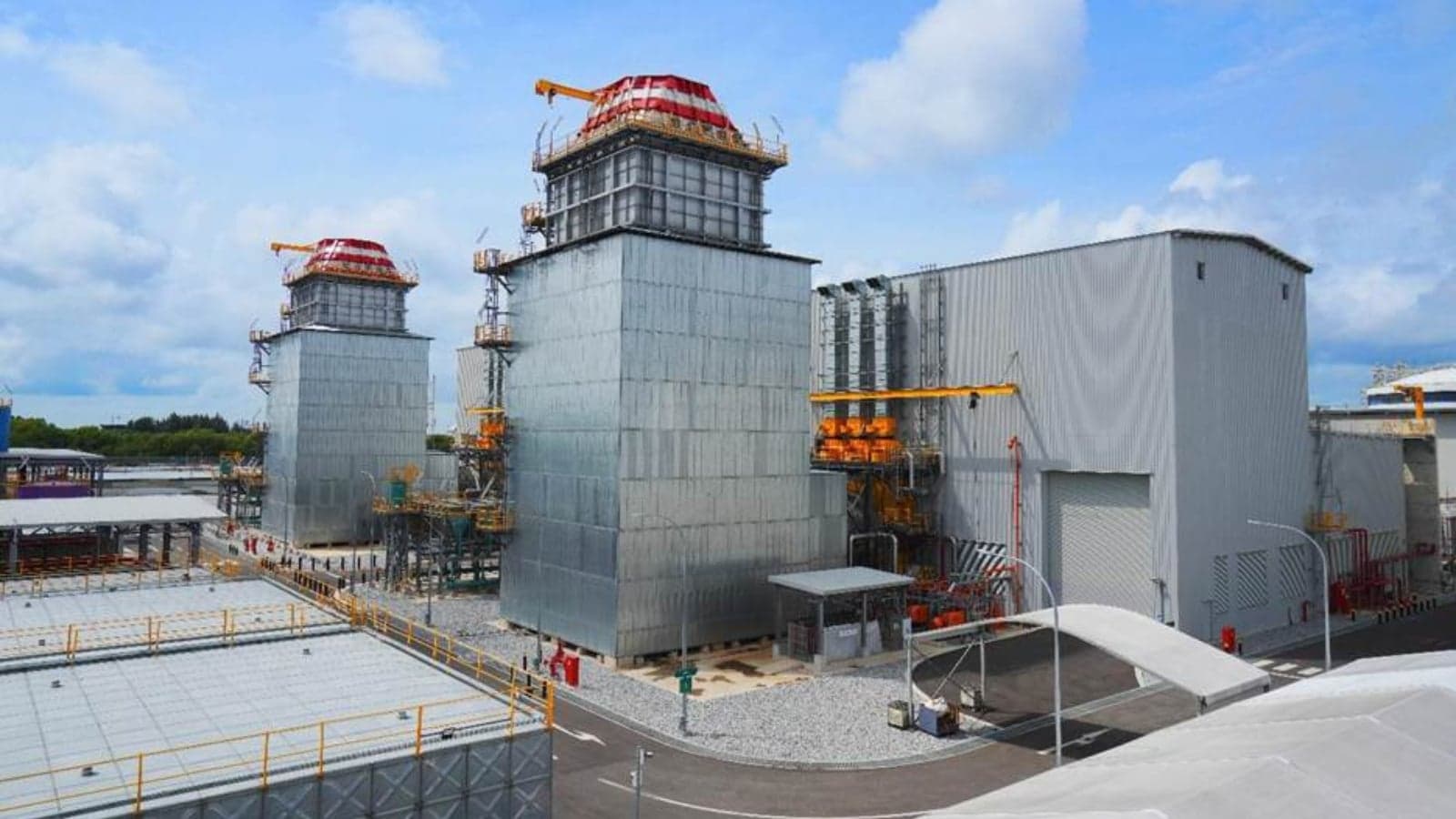
Meranti Power has launched a 682MW hydrogen-ready open cycle gas turbine facility on Jurong Island in Singapore.
The plant will provide fast start capacity, supplying additional electricity within 10 minutes in the event of a demand spike or unplanned outage.
At full capacity, the turbines will generate enough electricity to power more than 1 million households.
The power is being supplied by two 341MW open cycle units. The turbines are hydrogen-ready, capable of co-firing up to 30% hydrogen.
These will replace the aging turbines which are less efficient and produce more emissions. The new turbines can reduce Singapore’s carbon dioxide emissions by approximately 4,000 tonnes for every 50 hours of operation, according to Meranti Power.
Meranti Power is a wholly-owned subsidiary of Singapore’s Energy Market Authority, a government agency tasked with maximising resilience of the country’s energy system.
Puah Kok Keong, chief executive of the Energy Market Authority, said: “These OCGTs strengthen the resilience of Singapore’s power system, providing fast-start capacity that enhances system reliability against unexpected events of supply disruption. By being hydrogen-ready, the OCGTs support Singapore’s transition towards a more flexible and low-carbon energy system.”
Project partners
The project was delivered by a consortium comprising Jurong Engineering and Mitsubishi Power Asia Pacific.
Other project partners included ST Engineering and Trusted Hub, which provided AI-based solutions to boost operational efficiency, secure workflows and enhance digital learning across the organisation.
Have you read?
Google in partnership to prove viability of CCS-enabled cogeneration
New wave of UK data centres to run on gas engine and CCS microgrid
Meranti also leveraged other partnerships throughout project development. Mutual learning and system testing exchanges were conducted with Keppel’s Merlimau Cogen Plant and, the team also worked with the Snowy Hydro team in Australia to gain insights from their experience managing similar turbine systems.
Tan Chor Kiat, managing director of Meranti Power, suggested it’s the successful collaboration with various partners that made it possible to complete the project on time and within budget.
Singapore’s energy mix
According to Singapore’s Energy Market Authority, solar power presents the most promising opportunity for growth in terms of renewable resources. This is evidenced by the fact that in the last five years, the country’s installed solar capacity has more than tripled, growing from under 0.4GWp in 2019 to over 1.5GWp in 2024.
However, gas continues to play a critical role in the country’s energy mix, as a pillar of grid stability allowing more renewables to be added.
In April this year, the government established the Singapore GasCo entity to ensure security of gas supply and centralise procurement activities. In parallel to its continued reliance on gas, the government is also conducting feasibility studies on carbon capture, allowing existing natural gas assets to be used to decarbonise the sector.
It’s important to note that Singapore has made great strides in transitioning from oil to gas-based generation over the past two decades. An updated Nationally Determined Contribution released before COP27 in 2022 confirmed the government’s commitment to achieve net zero by 2050 and reduce its emissions to 60 million tonnes of carbon dioxide equivalent in 2030.