Hydrogen refuelling for aviation: The ALRIGH2T approach
Guest/partner contributor
Posted on: 13 January 2026
The ALRIGH2T project develops innovative and complementary solutions for hydrogen refuelling processes suited for aviation.
Hydrogen is considered a key enabler for achieving climate-neutral aviation. However, its deployment requires new refuelling systems, safety protocols and infrastructures adapted to the specific conditions of airport operations.
The ALRIGH2T project (Airport-Level DemonstRatIon of Ground Refuelling of Liquid Hydrogen for AviaTion), funded by the EU’s Horizon Europe programme, is taking a bold step towards the decarbonisation of air transport. By developing the first integrated liquid hydrogen (LH₂) refuelling system for aviation, this European initiative aims to demonstrate that safe, efficient and large-scale hydrogen refuelling is feasible within real airport operations.
Achieving TRL6, ALRIGH2T will showcase the practicality of handling liquid hydrogen at volumes relevant to the civil aviation industry, laying the foundation for Europe’s transition to hydrogen-ready airports.
Demonstrations will take place at Milan Malpensa and Paris-Orly airports, validating hydrogen refuelling under real-world operational conditions.
Beyond liquid hydrogen, the project also investigates the integration of gaseous hydrogen (GH₂) into ground operations, ensuring a comprehensive and systemic approach to hydrogen deployment across the entire airport ecosystem.
ALRIGH2T methodology
ALRIGH2T adopts a systemic and multi-technology approach built around three technical pillars:
- Liquid hydrogen supply and transfer systems: Development of a high flow rate centrifugal liquid hydrogen pump targeting 2,000kg/h, establishing a new benchmark for aviation-scale refuelling. The system also aims to reduce liquid losses by at least 6% during loading operations.
- Direct refuelling and control systems: Design and validation of an instrumented liquid H₂ tank with a capacity of 40kg, equipped with cryogenic sensors, integrated data acquisition and a predictive digital twin for process simulation and enhanced real-time monitoring.
- Gaseous hydrogen integration for ground operations: Introduction of hydrogen fuel cell ground vehicles for towing and maintenance operations to complement liquid H aircraft demonstrations.
The approach combines engineering, digitalisation, and safety analysis. Detailed simulations analyses guided the safe configuration of the liquid hydrogen pump, while multiphase thermo-fluid dynamic and structural models are being developed and will provide critical information for future scale up of such systems.
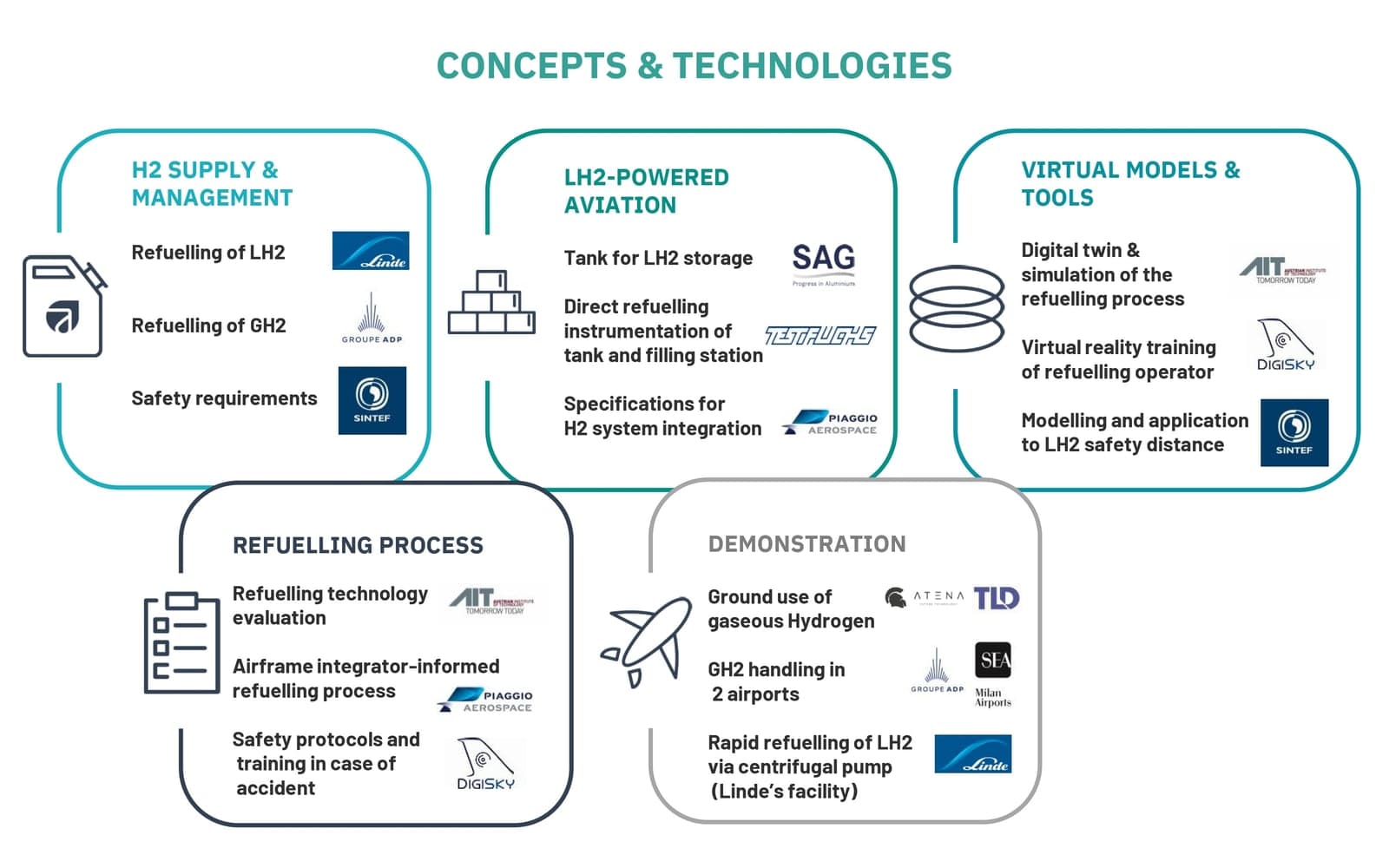
ALRIGH2T is achieving substantial progress in developing the technologies and systems required for airport-level hydrogen refuelling. It successfully moved from conceptual design to integrated system definition, establishing the technical, safety and procedural foundation for full-scale demonstrations planned for 2026–2027.
Key advancements can be grouped as follows:
- Technological and cryogenic system development: System-level design of the liquid hydrogen refuelling prototype advanced to detailed engineering, with mechanical and safety adaptations defined to achieve aviation-relevant flow rates. An instrumented liquid hydrogen tank was designed and tested with integrated sensors and a refined thermal layout.
- Digital modelling and simulation: Creation of a reduced order model capable of simulating the receiving end of the refuelling process (liquid hydrogen into the tank) and the tank’s performance. This has made it possible to estimate airport relevant effects of different tank filling strategies and to assess the relevance of key refuelling parameters.
- Demonstration planning and safety framework: Procedures, safety zones and authorisation steps are currently being prepared for the Milan demonstration under the sandbox framework. Risk analysis and regulatory mapping were initiated to ensure compliance with aerodrome hazard criteria.
Next steps
The next steps are detailed in the 2026-2027 roadmap below.
Year | Milestone | Key activities |
Q1–Q2 2026 | Integration and demo setup | Integration of the liquid hydrogen tank into test platform. Implementation of the control logic integrated with the refuelling interfaces and completion of the sandbox authorisation process with ENAC to enable experimental hydrogen operations. |
Q3–Q4 2026 | Digital twin calibration | Cross-validation of multiphase thermo-fluid dynamic models and structural finite element analyses against experimental datasets and their integration using reduced order models. Refinement of operational safety distances and environmental parameters through quantitative risk assessment. |
Q1 2027 | Demonstration campaign | Direct liquid hydrogen refuelling campaign at Milan Malpensa Airport, performing over 20 controlled cycles to assess flow stability, boil-off behaviour, and system responsiveness under operational conditions. |
Q2–Q3 2027 | Gaseous hydrogen vehicle trials | Field demonstration of hydrogen powered ground support equipment, including hybrid fuel cell/battery tractors. Evaluation of energy efficiency, autonomy and operational safety within the airport environment. |
Q4 2027 | TRL6 achievement and policy dissemination | Delivery of safety and certification guidelines, policy recommendations and final technical assessment to CINEA and EASA for regulatory and standardisation uptake. |
By 2027, the project will deliver validated liquid hydrogen refuelling technologies, digital twins and training tools that will enable future full-scale technology maturation, turning Europe’s major airports into hydrogen ready hubs and improving the understanding of liquid hydrogen refuelling for aviation to support its future scale-up.
Through its focus on both liquid and gaseous hydrogen, ALRIGH2T supports a flexible and scalable transition that can extend beyond aviation, impacting airport logistics, hydrogen mobility and regional energy ecosystems.
Learn more about how ALRIGH2T is advancing hydrogen technologies and paving the way for sustainable aviation on the project website.
This article was prepared in collaboration with ENEA (Coordinator) and project partners AIT, LINDE, SAG, IAI, SINTEF, SEA, ATENA, TLD, and DIGISKY.
About the author
María Yáñez, PhD Chemical Engineer, has over 10 years of experience in project management across applied and development research in the energy sector. As R&D and Innovation Consultant, she manages and prepares EU projects focused on hydrogen production and utilisation, carbon capture and storage and energy storage battery solutions.
Most popular
Join the community for freeAnd get access to all content
Related projects
ALRIGH2T
1 January 2024 - 31 December 2027
View projectLatest content
Partner content
+6
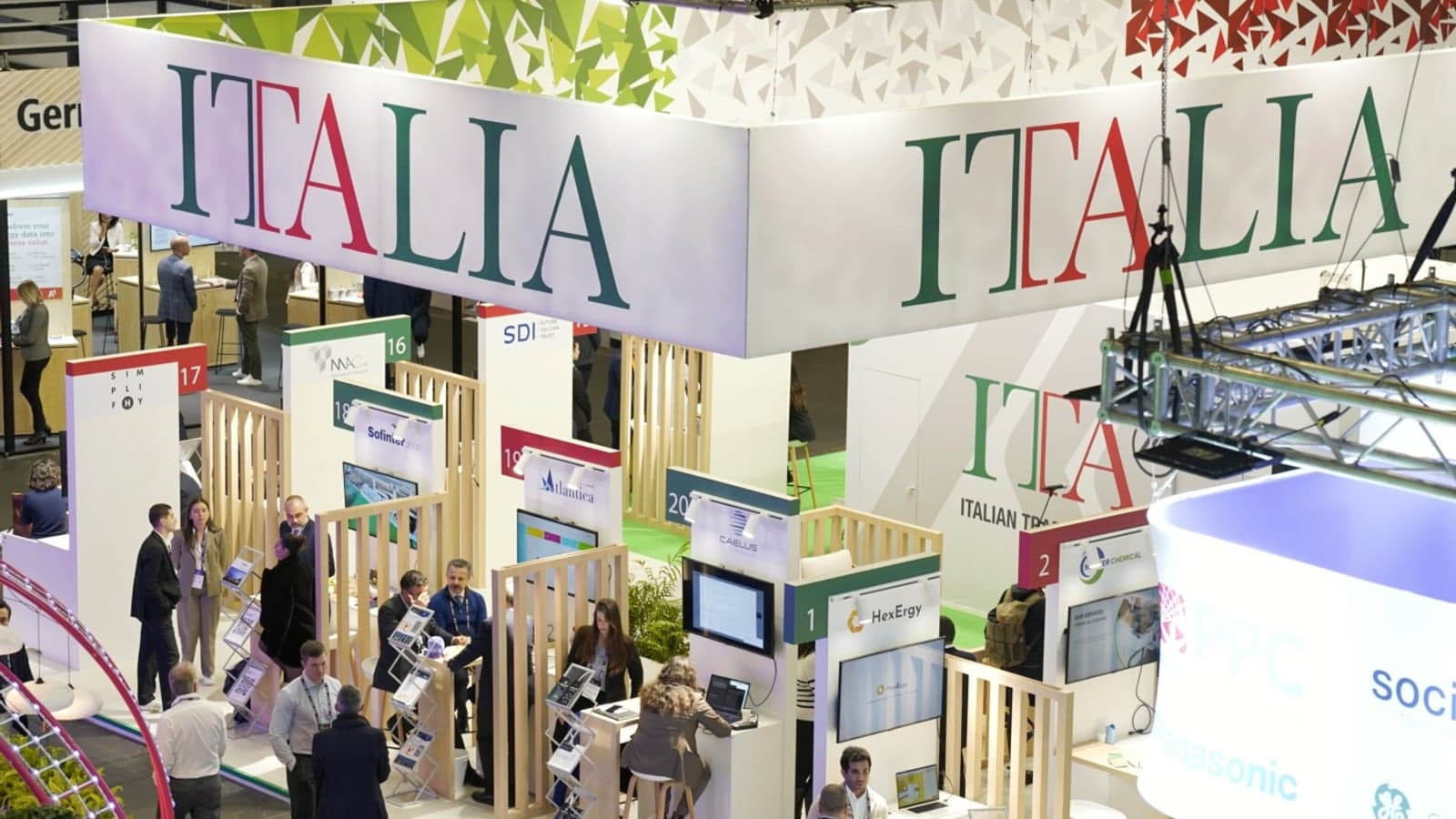
Italy deepens engagement in Iberia amid major shifts towards clean energy
Spain’s accelerating renewable energy drive is creating new opportunities for Italian technology and expertise, prompting the Italian Trade Agency to increase its regional involvement.
- Jonathan Spencer Jones
- 17/12/2025