Iberdrola technology chief reveals his vision for a resilient Europe
Enlit Editorial Team
Posted on: 25 November 2025
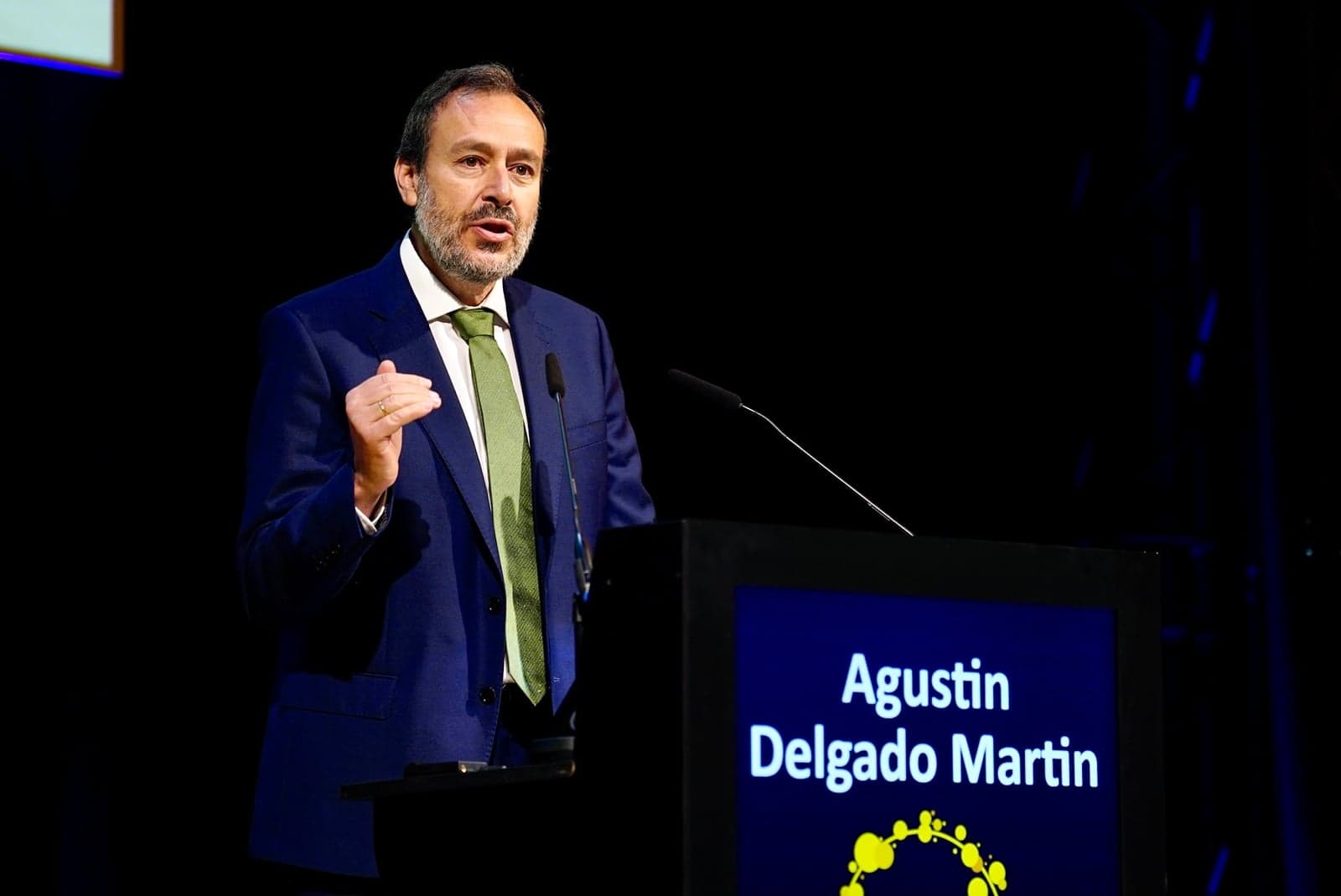
Agustín Delgado Martín explains the priorities Europe must deliver to remain resilient in a rapidly electrifying world.
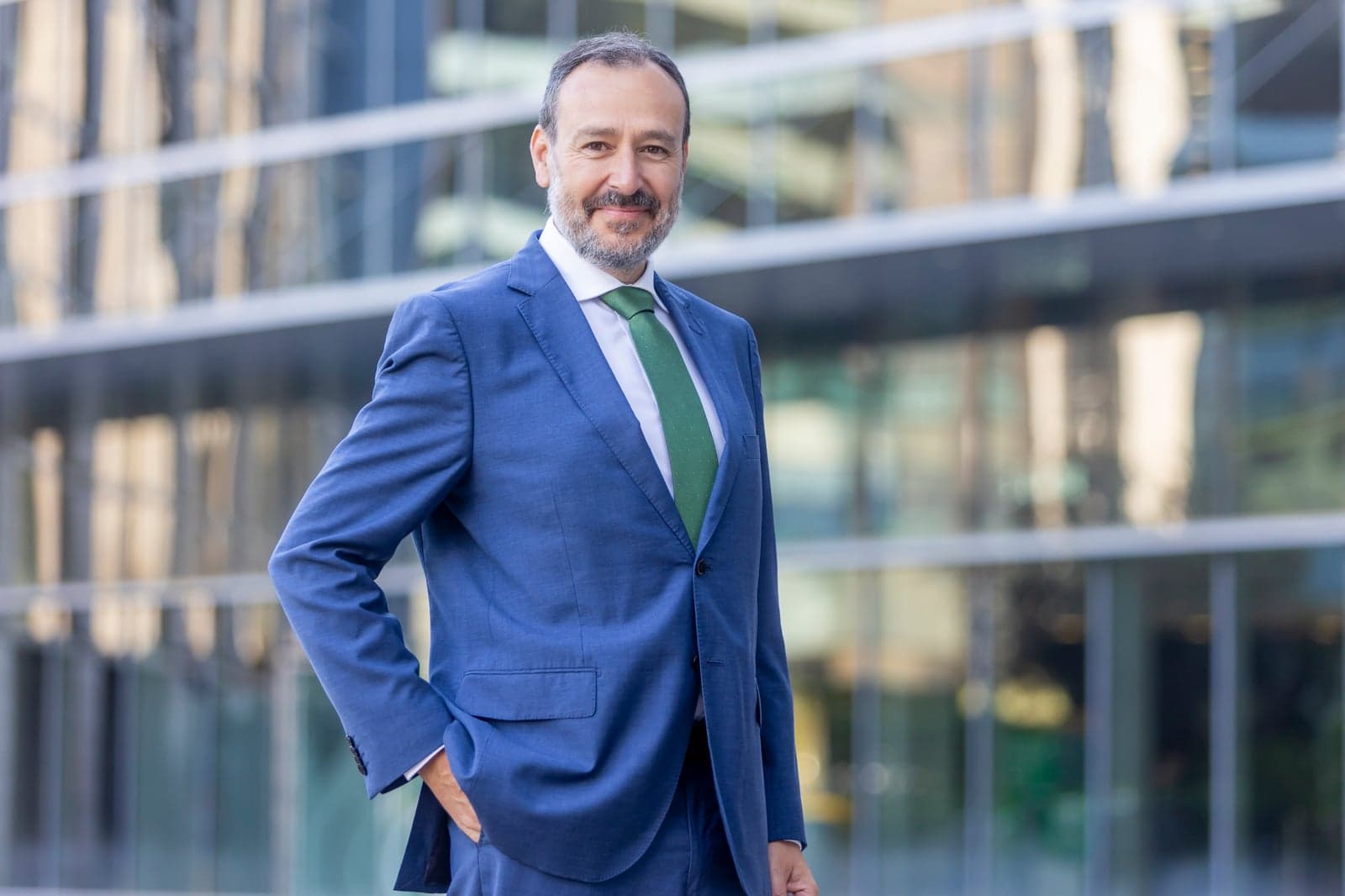
As Europe pushes to electrify transport, industry and buildings, the pressure is mounting to modernise grids, accelerate investment, and build a workforce ready for a digital energy system.
In an Enlit exclusive, Agustín Delgado Martín, Iberdrola’s Global Director of Technology, Environment and Quality, discusses the strategic shifts needed to turn climate ambition into tangible progress.
How does the European energy sector turn shared ambition into collaborative action?
Shared ambition becomes collaborative action when Europe adopts a holistic approach and ensures alignment across all strategies, not only energy, but also digitalisation, innovation, and industry.
Europe’s energy transition will only succeed if ambition is matched by concrete steps. To make this happen, we need:
• Vertical and horizontal collaboration among key actors across the entire energy value chain, including the public sector, technology providers, and industry;
• A common vision that integrates energy with digital and industrial plans and priorities, so that Europe can lead in competitiveness, sustainability, and technological leadership;
• Funding channelled into large-scale innovative projects and regulatory sandboxes;
• Identification of strategic projects in investment programmes for infrastructure and resilience, including smart grids and energy storage systems;
• Simplification and acceleration of industrial policy instruments such as IPCEI, to fast-track critical projects and foster cross-border collaboration.
Innovation and R&D are the backbone of this transformation: Europe must foster technological leadership through collaborative research and large-scale pilots. Iberdrola promotes open innovation in collaboration with universities, technology centres, and stakeholders, leveraging deep knowledge of technologies to add high value to its businesses.
In a global environment marked by technological acceleration and the energy transition, technological innovation and digital transformation allow the company to anticipate sector challenges, optimise processes, and deliver high-value solutions to customers, employees, and partners. This is how we transform words into action and accelerate the real implementation of innovative solutions.
What does Europe need to do to deliver competitive, resilient energy by 2030?
Europe needs to accelerate the development of a smarter, stronger and more digital electricity grid, while ensuring that digital and physical infrastructure evolve in parallel to support AI-enabled energy systems. By 2030, competitiveness and resilience will depend on several priorities.
Firstly, include electricity among Europe’s strategic industries. The sector is central to electrifying transport, industry, and heating, while enabling AI applications with the greatest systemic impact, such as real-time grid management, predictive maintenance, and demand optimisation.
Secondly, we must modernise and digitalise infrastructure in parallel. Europe needs smart grids, large-scale battery storage, decentralised systems like microgrids, and energy-efficient solutions for data centres to integrate renewables and enable scalable, secure AI-driven operations.
The third imperative is to prepare for new electricity-intensive uses. Demand is expected to grow significantly, driven by data centres, artificial intelligence, robotics, and electrified industrial processes. Meeting this demand requires anticipatory planning and flexible, digital networks.
And finally, we must accelerate anticipatory grid investments and interconnections. Coordinated programmes and streamlined processes are essential to reduce bottlenecks and prepare networks for future needs.
Without a robust, digital, and interconnected grid, Europe cannot unlock the full potential of electrification, renewables, and AI-enabled innovation, nor support the competitiveness of other strategic sectors.
It’s 2030: what does Europe’s energy mix look like?
Europe’s energy target mix agreed in the European Green Deal is at least 42.5% renewable. In 2024, 46.9% was already being produced renewably, and the likely prediction for 2030 is 50–57% of the total European electricity generation mix.
In addition, 10–15% will continue to be nuclear and less than 1% will be coal-powered. This is, however, heavily influenced by the will of policymakers to enact measures that will drive electrification and renewable systems.
COP30: are you optimistic or pessimistic about its outcomes?
This year, at the summit for heads of state and of government, Iberdrola’s chairman Ignacio Galán stressed that investments in renewables are advancing, but more energy storage and electricity grids are also needed to electrify the economy and respond to demand, which is expected to increase by 50% worldwide in the next 10 years.
At this summit, Galán argued that economic and environmental sustainability are fully compatible, and this is demonstrated by Iberdrola's track record. The group has invested nearly €175,000 million in the last 25 years to advance electrification through renewable energies, electricity grids and storage, and this has made it possible to increase strategic autonomy and security of supply and improve competitiveness, while promoting development and social progress.
In addition, Galán pointed out that collaboration between companies and administrations is very important to find solutions to advance in environmental care and climate action. We are confident that all the stakeholders at this summit share these common goals.
Sustainability is a collective effort, and Iberdrola’s trajectory shows that large-scale investments combined with individual responsibility can deliver a greener, more competitive future.
What is the biggest workforce issue for the energy transition?
The greatest challenge is preparing people for a transformation that will redefine the economy.
Energy is at the heart of this revolution, and with it comes the biggest opportunity for sustainable jobs and growth. We are moving rapidly away from fossil fuels towards clean technologies and electrification of demand. This shift is creating a unique source of sustainable activity, investment, and jobs.
The opportunities are enormous, but they will only materialise if companies and policymakers ensure that people have the right skills and training. Without qualified workers, the transition cannot succeed. To achieve this, energy leaders must reskill at scale and foster hybrid profiles: combine digital skills with applied knowledge in strategic sectors like energy, health, and mobility. Roles that translate technological advances into real-world impact, such as AI for grid management and cybersecurity for critical infrastructure, will be essential.
The sector must also retain and engage talent: offer purpose-driven careers, flexible work models, and continuous learning to compete for digital talent across industries.
And we must strengthen collaboration with education and research: build partnerships between industry and universities to ensure talent flows both ways, through internships, joint programmes, collaborative innovation projects, and knowledge exchange, so innovation and skills development evolve together.
Ultimately, the future of the energy transition depends on people. The countries, sectors, and regions that invest in talent will lead the way towards a more electrified and competitive economy.
Is the energy sector making the most of the current AI tech?
AI has been making a huge impact in the energy system for decades. Iberdrola has been using AI for many years in key process operations.
Meteoflow is a system created based on machine learning algorithms that predicts meteorological events—from snowfall, temperature, or humidity to solar incidence, wind force, and direction—to better estimate electricity generation from renewables and improve grid maintenance operations during storms.
AI is also used to manage the grid to ensure that outages are immediately isolated and other customers around the fault aren’t affected.
Iberdrola has created new energy products based on AI, like its Advanced Smart Assistant that uses machine learning to optimise the joint functioning of different smart solutions such as EVs and solar PV.
Generative AI tools are still at an early stage but show great promise to automate vast amounts of work. Soon, they will complement predictive and operational AI, enhancing efficiency and customer experience at scale.
How do you see the role of AI supporting/enabling your organisation's CX strategy?
Iberdrola’s focus on its customers means that AI has been embraced as a technology that enables us to provide more and better information to our customers.
We have diversified services and provide EV charging, home heating, residential PV and many other energy services connected through seamless user interfaces. AI recommendations are being used in websites as well as different chatbots for internal and external uses.
As AI progresses and is tested, it will inevitably become more pervasive in most of our interactions with customers.
Read: Iberdrola leads the digitalisation of Spain’s power grid
What sustainability practice in your organisation are you most proud of? And how have you reduced your personal carbon footprint?
At Iberdrola, we are most proud of our long-term commitment to electrification as the foundation for sustainability. Over the past 25 years, we have invested nearly €175,000 million in renewable energy, smart grids, and storage solutions to electrify the economy and meet growing demand.
This strategy has delivered tangible results: 100 million people were supplied with clean, secure, and competitive energy; In 2024, we avoided 23.13 million tonnes of CO₂ and reached 84% emissions-free installed capacity, clear proof that economic and environmental sustainability can go hand in hand; €17 billion in annual purchases from thousands of suppliers, sustaining 500,000 jobs; and €10 billion in annual tax contributions, driving social progress.
We have also launched a €58 billion investment plan for the next four years to continue advancing electrification and strategic autonomy. Collaboration between companies and governments will be key to accelerate climate action and environmental care.
On a personal level, reducing my carbon footprint means making conscious choices every day, prioritising low-carbon mobility, energy-efficient habits at home, and responsible consumption. Sustainability is a collective effort, and Iberdrola’s trajectory shows that large-scale investments combined with individual responsibility can deliver a greener, more competitive future.
What are the biggest challenges facing energy leaders today?
Energy leaders today face a triple challenge:
• Accelerating the energy transition while maintaining security of supply and affordability. Integrating massive renewable capacity, electrifying transport and industry, and reducing emissions requires unprecedented coordination.
• Modernising infrastructure to make grids smarter, stronger, and more digital. Networks must evolve in parallel with digital infrastructure to enable AI-driven management, flexibility, and resilience.
• Managing uncertainty and systemic risks, from volatile markets and geopolitical tensions to cyber threats and climate impacts, while ensuring investment flows and regulatory stability.
The biggest challenge is not just technical; it’s strategic: building an energy system that is resilient, competitive, and digitally enabled, so it can support Europe’s industrial leadership and unlock innovation and competitiveness.
How did your industry experts address these challenges at Enlit Europe?
At Enlit Europe in Bilbao, our experts presented how Iberdrola is addressing the challenges of the energy transition through innovation, investment, and collaboration. We focused on four strategic areas:
Electrification as the foundation for competitiveness, safety, and economic growth: global electricity demand will double in the next 15 years, driven by transport, building heating, digitalisation, and AI. Electrification is key to addressing these challenges, and each country must foster it with indigenous energies to ensure strategic autonomy and competitiveness.
Accelerating investments in networks and digitalisation: we shared how anticipatory investments in smart grids and storage are essential to integrate renewables and enable AI-driven management. Europe needs €1.2 trillion in networks, which requires attractive returns and a regulatory framework that encourages investment. It is also crucial to reduce administrative barriers and streamline permitting processes, as excessive bureaucracy often delays projects for years that could be completed in little more than one.
Stable policies and rational taxation: our experts emphasised the need for predictable regulation and investment incentives to attract long-term capital. Rational taxation and the elimination of asymmetric regimes that favour fossil fuels are critical to accelerate the transition.
Talent and skills for the future: we addressed workforce transformation—reskilling at scale, fostering hybrid profiles that combine digital and sector expertise, and strengthening collaboration with universities to ensure talent flows both ways.
Enlit was a platform to demonstrate that the energy transition is not just a technological shift, but a strategic opportunity for Europe’s competitiveness, sustainability, and job creation.
A Basque blueprint for a resilient energy backbone
During his keynote address at Enlit Europe in Bilbao, Agustín Delgado Martín said building out a resilient energy and power system was a key priority, with the electric grid its backbone.