Integrated system testing to ensure reliable working of smart metering systems
Guest/partner contributor
Posted on: 1 August 2025
The critical importance of integrated system testing before the deployment of smart metering systems is reviewed by Rajesh Bansal and Shailendra Goyal.

The critical importance of integrated system testing before the deployment of smart metering systems is reviewed by Rajesh Bansal and Shailendra Goyal.
System integrators play a central role in the design, development and deployment of smart metering systems. They are responsible for delivering an integrated solution as per the utility need and to ensure the service level agreements are met.
They are responsible for integrating the smart meters, the communication infrastructure, data management and analytics and the user interfaces.
System integrators normally do inspections at the factory level, during installation in the field and finally when the installation and integration are completed.
In general, the testing environment used during the factory inspection is often not clearly separated from the manufacturer’s development environment, which undermines the reliability and objectivity of the test results.
Currently, there is no consistent adherence to procedures that ensure all system components function cohesively. It is essential to recognise that any malfunction or abnormal behaviour in one component of the system should not adversely impact the performance of other components.
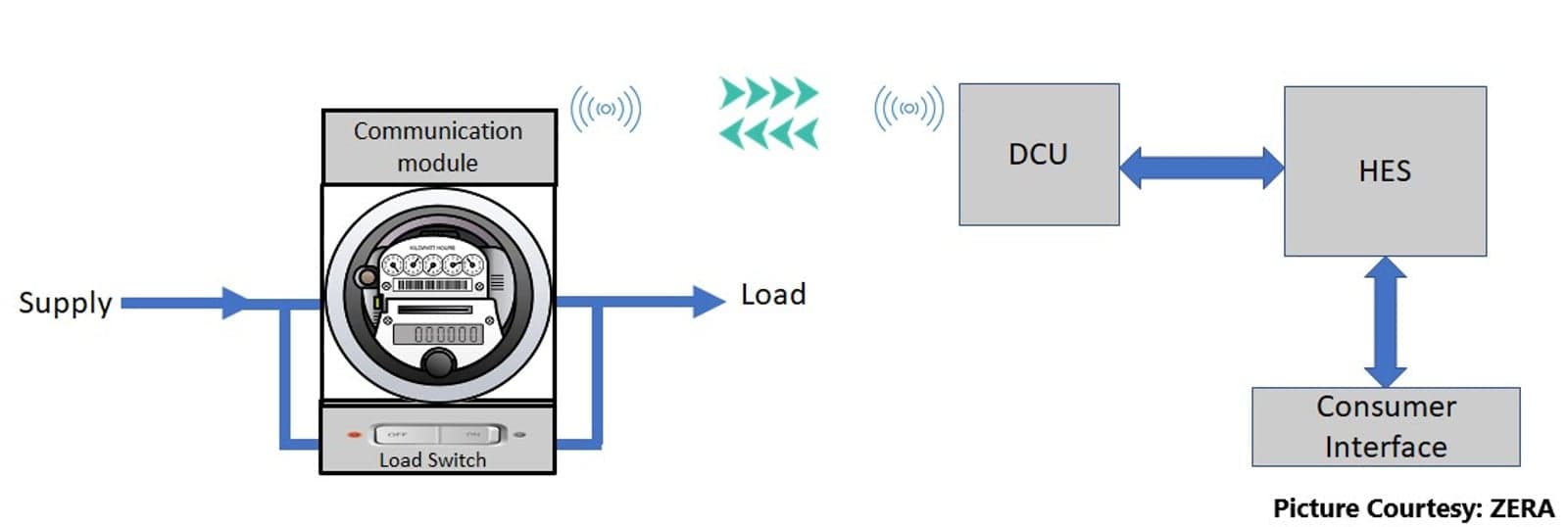
To ensure this, we have developed integrated system testing as part of the factory level inspection. Integrated system testing helps validate the end-to-end functionality of the complete system – including the smart meters, communication infrastructure, head-end system and meter data management system – in a controlled, isolated environment, and is a necessary step to guarantee seamless interoperability and robust system performance prior to deployment.
What is integrated system testing?
Integrated system testing is the phase of validation/inspection that goes beyond individual component testing (hardware, software, etc.) and focuses on how these components work together as a whole system.
This testing involves verifying:
- Data integrity, i.e. that data flows seamlessly from the smart meters through the communication network to the central data systems without corruption.
- End-to-end functionality, i.e. that the system’s components are fully integrated, ensuring that each part of the system – smart meters, network, backend infrastructure and user interfaces – work together to deliver expected outcomes.
- System behaviour under real-world conditions, i.e. that the system is tested to evaluate its performance under varying load conditions, including high traffic, communication failures and other potential challenges encountered during real-world operations.
- Interoperability, i.e that the smart metering system must interact smoothly with third-party systems, such as billing software, customer information systems (CIS) and demand side management platforms.
Why integrated system testing is crucial during factory acceptance testing
While each component of a smart metering system may function as expected during initial unit tests, it is only through integrated testing that one can identify issues that might arise when all the components work together. Below are the primary reasons why integrated system testing is crucial.
Seamless integration of components
A smart metering system is a multi-faceted ecosystem, including smart meters, communication modules, data aggregation platforms, analytics tools and user-facing interfaces. Even if each component performs well independently, there’s always a risk that the system as a whole may not integrate seamlessly. For instance, the communication between smart meters and central systems might be affected by network congestion, signal loss or interoperability issues.
End-to-end validation of data flow
Smart metering systems are fundamentally data-driven, with data generated by the meters, transmitted via communication networks, processed by central systems, and finally used for billing or analytics purposes. Integrated system testing ensures that meter readings are accurately collected, data is correctly transmitted to the central platform, that the data is properly processed and stored for reporting and billing and that the system can handle high frequency data points, typical of modern smart metering systems.
Mitigation of deployment risks
Deploying a smart metering system without sufficient integrated testing can expose system integrators to significant risks, including data discrepancies, operational disruptions and security vulnerabilities.
Ensuring scalability and performance
Smart metering systems often scale to support millions of devices across large geographical areas. Performance testing during integrated system testing evaluates how the system will handle high data volumes, varying network loads and high frequency meter reads. For instance, how will the system perform if thousands of meters transmit data simultaneously? Can the network handle such a load?
Validating system interoperability
Smart metering systems do not operate in isolation. They often need to interface with third-party systems such as customer information systems (CIS), billing platforms, grid management systems, and demand response systems. Integrated system testing verifies that the smart metering system can seamlessly integrate and exchange data with external systems.
Key aspects of integrated system testing
Several critical areas are thoroughly tested during integrated system testing to ensure a successful outcome.
Meter data communication validation
Testing the communication between the smart meters and the communication network is a central aspect of integrated system testing. This includes validating:
- Signal strength and network reliability, which are crucial factors, as poor connectivity can lead to data loss or delays. These aspects are tested in controlled environments that simulate real-world challenges such as weak signals or interference.
- Data accuracy, ensuring that the data sent by the meter reaches the backend system without errors.
- Communication protocols, verifying that the network can support the transmission of data using the required protocols (e.g. Wi-Fi, LoRaWAN, PLC, NB-IoT, etc.).
Data accuracy and integrity checks
Smart metering systems are highly sensitive to data integrity. Any discrepancies in the data can lead to serious issues in billing, reporting, or system operation. Integrated system testing ensures that data:
- Is transmitted accurately from the meter to the central system.
- Can be correctly processed by the backend software without errors.
- Is stored and retrieved consistently during reporting or analysis processes.
Security testing
Security is a paramount concern in smart metering systems. Integrated testing ensures that:
- Encryption protocols are used for data transmission to prevent data breaches.
- Access controls are in place to ensure that only authorised personnel can access sensitive data.
- The entire communication system is secure against potential cyberattacks.
Load and stress testing
Smart metering systems need to be capable of handling high loads. Testing the system under stress conditions, such as heavy data traffic or simultaneous meter read requests, ensures that the system performs reliably during peak demand periods. This might involve testing:
- The ability to handle spikes in data requests from meters.
- Network congestion scenarios.
- The response time of the system under heavy loads.
Test system requirements for integrated system testing
Appreciating the need for integrated system testing, it is critical to have a proper test set-up.
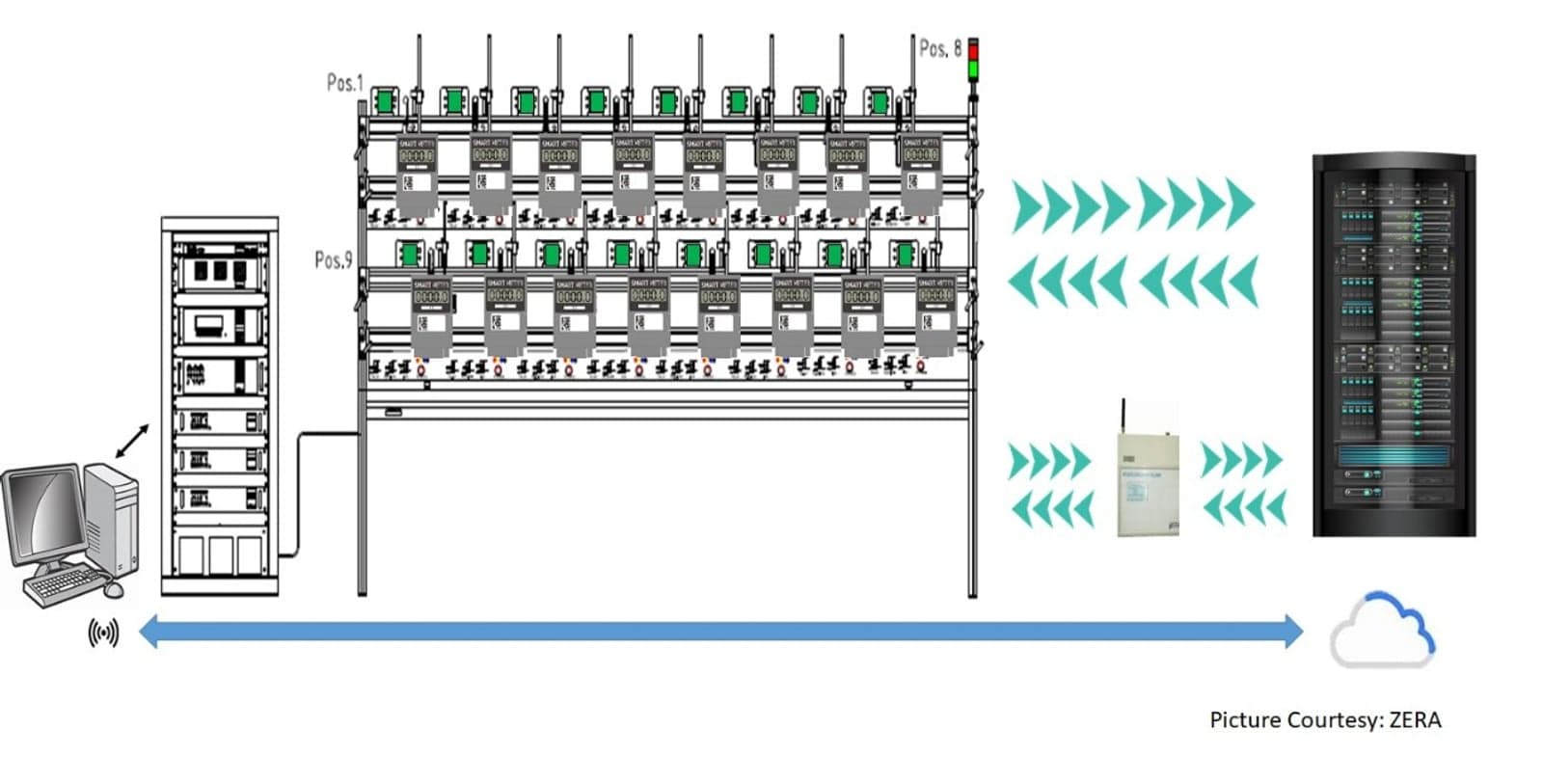
This test system for integrated system testing should be capable of addressing the prime requirement to interface with the head end system through the cloud or test server. It should be able to create different simulation of field (real world) conditions, to test system performance under several simulated field conditions.
The architecture of a smart metering validation system should typically consist of multiple layers of testing to ensure the metering system operates as expected in real-world conditions.
Communication testing
- Ensures that the communication protocols used between devices (e.g., meters, DCUs, HES) comply with the required standards. The smart meter validation system should also check the complete smart metering system in sense of latency, retries, data packet size, etc.
- This includes testing for the correct encoding/decoding of messages, handling of errors and the reliability of the communication under different conditions.
Simulation of boundary conditions
- This involves simulating extreme or boundary conditions like low signal strength, high temperature or network failure to see how the system responds. Smart meter validation system should perform validation in precise defined simulated field conditions such as high temperatures, low signals etc.
Magnetic Influence and load switch alerts
- Magnetic fields can interfere with meter readings, so testing is done to check if the system can detect such anomalies.
- Load switch alerts triggers and display status should be captured when the meter’s load-switching functionality (for disconnecting/ reconnecting power) are verified.
Instantaneous parameters testing
- Measures key operational metrics like current and load in real-time to ensure they match expected parameters.
- Alerts related to abnormal behaviour (e.g. high current) are also tested to ensure proper responses.
End-to-end verification
- Ensures the entire system functions from the metering device to the head-end system. This involves simulating data transmission, validation of received data and ensuring timely communication under various conditions.
Signal strength testing
- Testing at varying signal strengths (e.g. 50%, 75%) ensures reliable bi-directional communication under different network conditions.
- Testing low signal strength is critical for systems where reliable communication is a priority, especially in remote areas.
Firmware over-the-air (FOTA) updates
- FOTA testing ensures that both meters and DCUs can successfully receive firmware updates over the air, without issues like data corruption or failed installations. The system should also check security level.
Failover testing
- Verifies the system's resilience by testing failover scenarios where the DCU or the meter’s mesh network faces disruptions.
- Failover tests ensure that the system can continue functioning or switch to a backup communication path when a primary path fails.
RTC drift testing
- Verifies the accuracy of the real-time clock (RTC) in meters and DCUs, especially under harsh environmental conditions (like high temperatures). Ensures that the clock drift does not impact system functionality or data logging.
Logging and API testing
- Logs data for system monitoring and testing access via APIs, ensuring accurate data reporting (e.g. temperature at 70°C) and seamless integration with backend systems using protocols like IPV6.
Component failure simulations
- Simulates failures in critical components (e.g., communication modules, load switches) to test the system's response and recovery, ensuring system stability in real-world scenarios.
This comprehensive validation approach helps guarantee that a smart metering system is reliable, resilient, and compliant with operational standards. Each test addresses a specific part of the system, ensuring that the whole architecture can function under varying and challenging conditions. It will be more fruitful to conduct integrated testing for 100 hours under different simulated real world conditions.
Conclusion
Integrated system testing during factory acceptance testing is indispensable for ensuring the success of smart metering systems deployed by AMI systems providers.
It should be done like ‘type testing’. By rigorously testing the complete system as an integrated whole, integrated system testing mitigates risks, ensures that all components work seamlessly together and confirms that the system will function reliably in the field.
For system integrators, the benefits of integrated system testing far outweigh the challenges, ensuring that they can deliver a robust, scalable, and secure solution that meets the growing needs of utilities and their customer.
About the authors

Rajesh Bansal has a degree in Electronic Engineering and started his career as a scientist in the Indian Space Research Organisation. He was involved in the development of the first ASIC and single phase electronic meters in India before joining BSES, which he left as CEO of BSES Rajdhani Power in Delhi. He is serving as an advisor on power systems and also is working on ‘smart apps’ as the next step for data analytics.

Shailendra Goyal is the Managing Director of Zera India PvtLtd and the Head of its NABL-accredited calibration laboratory. He holds a B.Tech degree in Electrical Engineering from the University of Rajasthan and is an accredited NABL assessor, a member of IEC TC 13, and a recognised industry expert in the field of power and energy measurement.