Integrating renewable energy sources into the Dutch grid
Yusuf Latief
Posted on: 14 September 2022
Arjen Jongepier discusses the challenges and opportunities in integrating renewable energy sources into the modern electricity grid.
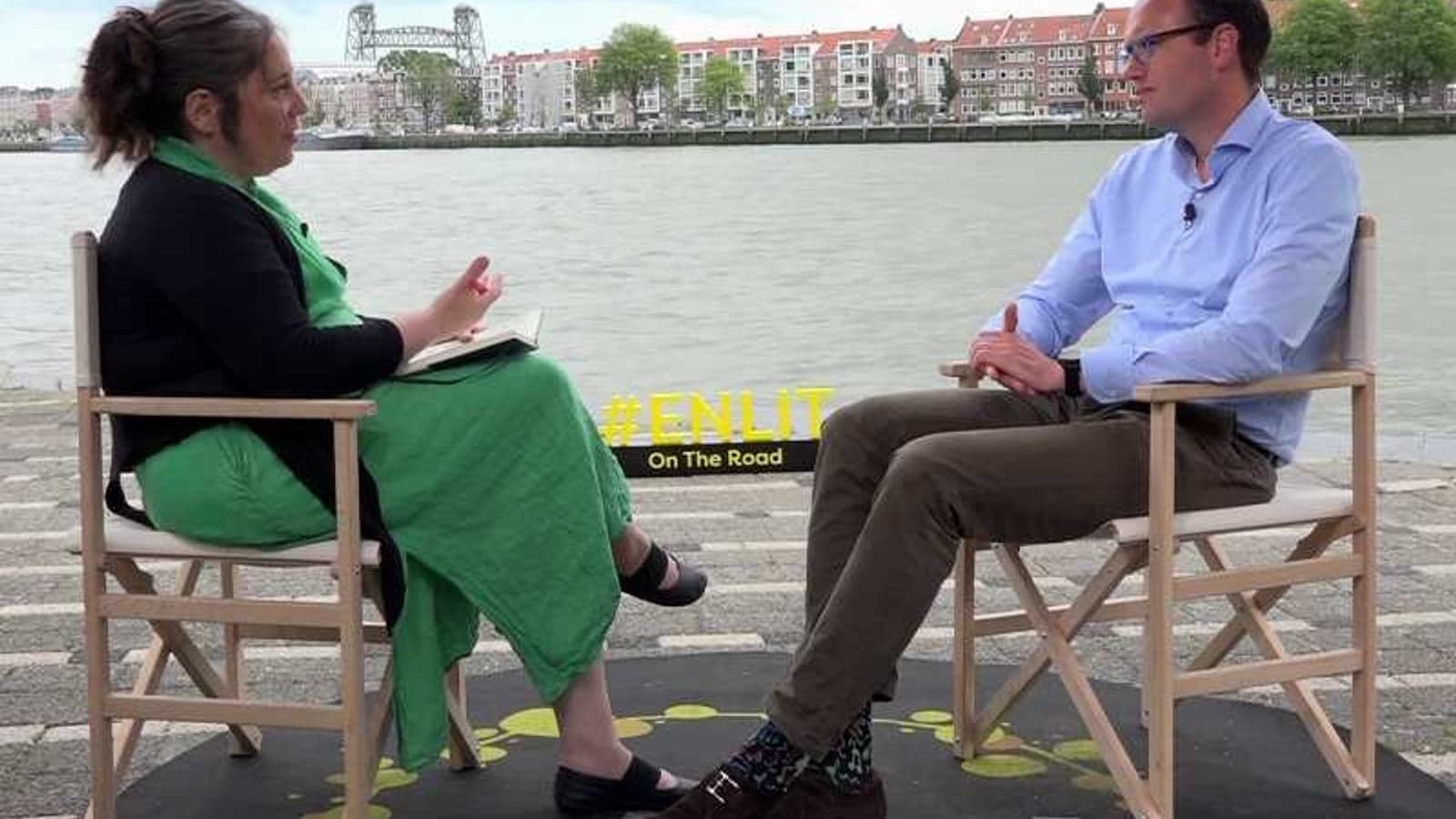
Arjen Jongepier, who works on innovation and sustainability for Dutch grid operator Stedin, discusses the challenges and opportunities in integrating renewable energy sources into the modern electricity grid, among the many other projects Stedin is working on.
In an exclusive interview with Enlit Content Director Areti Ntaradimou during Enlit on the Road Rotterdam, Jongepier states how the extensive connection of various renewable energy resources has sparked a slew of challenges for grid management.
“We are receiving a lot of renewable energy connections, [including] solar and wind and on a DSO level that means that we have to create a lot more connections to customers. The intermittent character of these renewable sources is introducing a lot of new challenges to our electricity grid.
“On the one hand, we have put forward our new strategy – ‘building, building, building’ - in order to create a congestion-free grid in 2027... We are doing a lot of projects on smart charging for electric mobility and we are the first DSO-level congestion management initiative in the Netherlands."
Also of interest:
Safeguarding the stability of the grid
Transgrid interconnector uses smart grid tech to unlock network capacity
Congestion management is becoming more of a priority, he emphasizes, as the very distribution of energy is changing. Where power plant electricity was produced in industrial areas and distributed one-way towards residential areas, the influx of solar roofing and DSO-level wind farms in the country means that infrastructure has had to adapt.
“We have to build, extend and sometimes even reconstruct our existing infrastructure to accommodate these new sources or locations with new patterns,” says Jongepier.
Of particular importance is flexibility to enable energy trade management and alleviate congestion as well as the role of data and digitalisation.
“20-25 years ago it was very easy to put down a transformer. And it always worked [because] it was designed for large peaks… Now we have intermittent renewable sources and we [need consistent updates from] devices on these assets to control the grid…The control centre used to only act in case of disturbances. But now they have to predict and forecast and act continuously on intermittent power flows.”
More from Enlit on the Road Rotterdam:
Stedin chief talks realising, optimising and digitising the energy transition
Site visit: Building Europe’s largest hydrogen plant
Project visit: Residential power-to-gas
Coordinating such asset and grid congestion management, states Jongepier, is an enormous, yet doable, challenge. For while the existing grid can be relied upon in certain areas and extended in others, there are parts of the country, that had not been electrified, where the grid needs to be built and extended.
Yet while such a challenge seems at times a monolith of a task, Jongepier believes it is very much possible.
“There are a lot of challenges but I think we can make it. We will not succeed perfectly everywhere, but we will make it happen.”
Make sure to watch to find out more from this Enlit on the Road Rotterdam video interview to hear Jongepier discuss energy affordability and the evolving flexibility market, how Stedin plans to tackle the developing storage issue and the ethical aspects of working towards the energy transition.
Related tags
Latest content
+2
Rotterdam fuels its own energy transition with hydrogen
Rotterdam, headquarters of Dutch distribution system operator Stedin and home to Europe’s largest seaport, is laying the foundations for a decarbonised future with its development of hydrogen, writes Jonathan Spencer Jones.
- Jonathan Spencer Jones
- 24/11/2022