IRENA boss Gielen finds positivity amid energy crisis gloom
Kelvin Ross
Posted on: 9 September 2022
There may be no silver bullet to Europe’s energy crisis, but there are silver linings, as Dolf Gielen of IRENA explains.
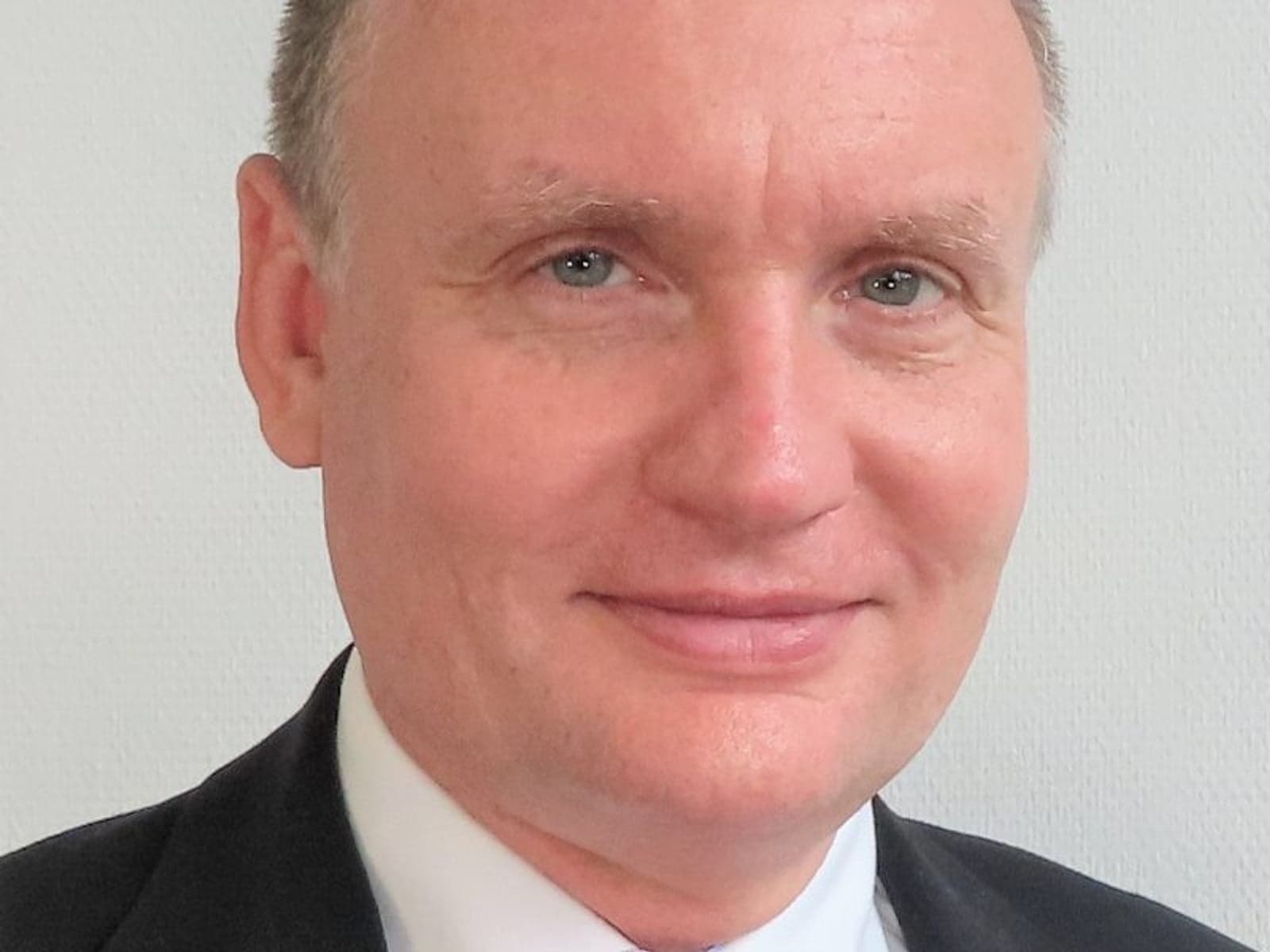
There may be no silver bullet to Europe’s energy crisis, but there are silver linings, as Dolf Gielen of IRENA explains.
There are many reasons to be downbeat about the situation the European energy sector currently finds itself in, yet Dolf Gielen is looking for positive signs.
And he’s finding some in the outlook for renewable energy, a topic close to his heart and key to his role as director of the International Renewable Energy Agency’s Innovation and Technology Centre in Bonn, Germany.
“The cornerstone of the energy transition has always been renewable energy, and renewable energy will continue to be its main pillar. The urgency of moving towards renewables has even increased in light of the issues around natural gas.
“The problem in recent years has been deployment rates haven’t been fast enough, but now there’s a recognition of the urgency to deal with permitting and regulatory issues. There's a lot of movement in that area to streamline these processes with the intent then to significantly accelerate the deployment of renewables.
“So if that is the outcome, then that is a good thing.”
Have you read?
Alliance for Industry Decarbonisation: accelerating net zero in industrial value chains
Energy Transitions Podcast: Reforming Europe’s energy market
A second upside he highlights to the current concerns around rocketing energy prices is that it is “resulting in enormous attention for heat pumps as a solution to get away from natural gas. At the moment there is far more demand for heat pumps than there is supply.
“And the attention on building insulation has increased tremendously. So energy efficiency has come much more to the fore as part of the solution.”
Cutting red tape
Looking to Germany in particular, he says the energy crisis is cutting through decades of well-established red tape.
“Decision-making in Germany is complex: you have a federal government and you have states, and a lot of the planning power is with the states.
“A prime example is Bavaria, which has almost no wind power, because so far the regulations in that state make it nearly impossible to build new wind power. You have a lot of solar – but no wind.
“What is changing now is that the federal government is coming with new regulations that say ‘you cannot do that anymore.”
He says that while the current security of supply crisis “doesn't change much for the 2030 [renewables] target”, it does mean an accelerated transition towards those 2030 targets.
“This whole crisis results in a fundamental rethink. The question will be: how fast can this transition happen?”
In terms of the balance of responsibility for getting to net zero between government and private industry, he says: “Government needs to create the enabling framework, so credible long term targets are critical. It's a role of the private sector to develop technically and economically-viable solutions and deploy them. It's a combination of these two thing.”
Decarbonising industries with hydrogen
Decarbonising industry will be one of the most meaningful gains for climate action, and here too he sees progress.
For energy-intensive industries, he says the issue of competitiveness and carbon leakage “has been on the table for a long time”, however, he adds that “the carbon border adjustment mechanism currently being discussed in Europe is a potential game changer”.
He explains that “the idea of carbon border adjustment mechanisms is that if you import energy-intensive and carbon-intensive products from abroad, that they should face the same energy and climate regime as producers within Germany or within Europe.
“So within Europe, we have EU-ETS so you have a carbon price. So these imports need to declare how much CO2 was emitted abroad in the production of these commodities. And they pay a tax that is equivalent to the ETS price. That's the basic idea.
“It's a trial period for a limited number of products, but if that works, that could deal with a lot of issues.
In terms of how to decarbonise industries such as iron and steel manufacturing, he notes that “it's remarkable how much attention there is for hydrogen as a solution”, yet cautions that it is not as simple as “industry says we want to use hydrogen: government gives hydrogen”.
“You need a massive expansion of electrolyzers and capacity. And who is going to make these investments? For every million tonnes of hydrogen production per year, you need 10 gigawatts of electrolysers and 20 gigawatts of solar and wind capacity.
“These volumes are unheard of in Europe and we will need massive expansion.”
And then, he cautions, you have the issue of transportation. “To bring hydrogen from the production side to the consumers, you will also need a pipeline system or international shipping. So all the interested parties need to cooperate to make this happen.”
E-mobility catch up
He highlights another area of promise in Germany – but also one with some significant challenges: e-mobility.
“Germany has always had a very strong car sector and the sector saw the writing on the wall and is now going in the direction of electro-mobility. But they're still catching up in that field.
And in that field, you need to have battery manufacturing capacity. And to do that you need to have the critical minerals and metals mining capacity. So these whole supply chains need to be developed.”
And he says that all of the above has to happen while at the same time “the lights stay on, the energy is affordable, and there is room for economic development”
“So these are very interesting times right now.”

Join industry thought leaders at Enlit Europe this November and discover how, through successful cross-sector collaborations, Europe can speed up the energy transition and achieve energy security.