Is the world on target to triple renewables?
Guest/partner contributor
Posted on: 7 December 2024
Global leaders at COP28 committed to tripling global renewables’ capacity. So where are we now? Dave Jones of Ember Climate examines the progress.

Global leaders at COP28 committed to tripling global renewables’ capacity. So where are we now?
Dave Jones of Ember Climate examines the progress.
There’s good news and bad news.
The good news is that solar continues to surprise, cheap batteries will further transform the prospects for solar, and China is building both solar and wind very fast.
The bad news is that countries have not yet stepped up with more ambitious renewables targets for 2030, and emerging countries are still struggling with high capital costs.
Tripling global renewables capacity means increasing capacity from less than 4,000GW at the end of 2022 to 11,000GW by 2030. This means adding around 1,000GW per year from 2024 to 2030.
In 2023, around 500GW of renewable capacity was added. In very round terms this comprised 400GW of solar, 100GW of wind, and a smattering of hydro, bioenergy and geothermal. In 2023 – the year solar got big – there was 70% more solar installed than in 2022. The solar generation from just the panels installed last year is almost enough to meet 2% of today’s global electricity demand.
Most of the rest of the capacity was from wind. Perhaps it’s not a surprise that two-thirds of the solar installed in 2023 was in China, but two-thirds of the wind capacity installed last year was too. China is leading in the global deployment of both onshore and offshore.
"It is very important that policymakers realise that tripling renewables is not just about cutting coal and gas generation to decarbonise the electricity sector."
If one were to over-generalise on renewables deployment, one might say Europe’s renewables surge is going very well, China’s has very recently exploded, the US is gaining traction as the IRA kicks in, India started early but is rising quite slowly, many other emerging countries have yet to see a boom, and most big oil and gas countries have largely avoided renewables.
Solar is being installed fast in 2024. Most forecasters thought that solar growth might take a pause after additions grew by 70% in 2023, but the latest data suggests additions could grow by up to a further 40% in 2024.
The hardest part about solar used to be the cost. But prices have halved again in the last year alone. Solar panels are so cheap they are now sold as fences. Supply is not a concern; there is three times as much global solar manufacturing capacity today as demand, albeit concentrated in China.
Have you read?
EU companies want to shift from fossil fuels but many lack resources shows report
Enlit Europe told that ‘competitiveness and sustainability go hand in hand’
The biggest problem now is that although solar panels are cheap, so is the price of the electricity that they sell. This summer in Europe, some places in the US and Australia, electricity prices were increasingly going negative, even costing money to sell solar onto the national grid.
Cheap batteries will change this. Battery technology has progressed, so that already 80% of grid batteries added in 2023 were made without cobalt or nickel, making them cheaper and less controversial than the batteries of just a year ago. Next up is sodium ion batteries (‘salt batteries’), which are made from just sodium, iron, carbon and nitrogen – some of the world’s cheapest and most abundant materials.
China has already started scaling sodium ion batteries. Grid batteries halved in price in the last year, and sodium ion promises to take prices much lower still. It seems increasingly likely that solar will get close to a five-fold rise by 2030, which is what is needed for total renewables to triple.
Whilst solar growth is exponential, wind growth is linear. Forecasters including BNEF, GWEC and the IEA expect annual additions to rise from 120GW last year to around 200GW by 2030. This would put total wind capacity on track more for a doubling than a tripling.
China is expected to install more than half of global wind from now to 2030.
The birth of offshore wind is still in its infancy, but 20 countries have meaningful targets for 2030. Floating offshore wind has not yet begun to scale, although developers in countries like Korea are making plans.
Many countries have yet to set the ambitious 2030 targets that are needed to stimulate local supply chains, which are more important for wind than for solar.
Also of interest: IEA delivers green hydrogen reality check as China leads renewables boom
Wind turbines generate twice as much electricity as solar panels for the same capacity. So although the expectations for solar capacity to help meet the tripling are far bigger than for wind, wind generation still provides almost half the increase in renewables generation.
Therefore, it is critical that we do not allow solar to overshadow wind, if we want to achieve the full benefit of a global tripling of renewables.
Record electricity demand will be a key driver for new renewables. Even if renewable capacity triples by 2030, more than half of that will still be needed to meet new electricity demand growth, and less than half will displace coal, gas and oil generation.
Global electricity demand will rise this year by almost the highest amount in two decades. The developed world – which has grown used to stagnant electricity – will see fast growth from five key sectors: electric cars, heat pumps, electrolysers, air conditioners and AI data centres.
The emerging world will see the same, plus the growth of overall energy demand predominantly by using electricity rather than directly using oil, gas and coal, continuing the trend from the last decades. China already gets far more of its energy from electricity than the EU or the US, and so does much of Asia including Korea, Vietnam and Bangladesh.
It is very important for policymakers to realise that tripling renewables is not just about cutting coal and gas generation to decarbonise the electricity sector, it’s about cutting coal, gas and oil use in every sector to decarbonise the entire economy.
Current goals are not close enough. Ember’s analysis of 2030 renewables targets last November showed that country targets sum closer to a doubling of renewable capacity than a tripling.
What’s more, only four targets have been updated since the tripling commitment made last December, according to data tracking by Ember. This is worrying, since countries need realistic targets to help enable the step-up of renewables, for example on land use, supply chains, skills and financing.
COP29 may help somewhat. There is an urgent deal to be done to assist emerging countries with the cheap project capital they need to finance their renewables projects. There is talk of a storage target – and maybe even a grid target – to help enable the tripling target. In terms of overall primary energy, renewables are currently fourth, behind oil, gas and coal.
If the world does manage to triple renewables by 2030 – and achieve a doubling of energy efficiency - then renewables will overtake all three fossil fuels to become the largest source of primary energy. And that – according to the IEA Net Zero Pathway – would be enough to cut global CO2 energy emissions by 37% from 2022 to 2030.
The prize is worth fighting for. If global renewable capacity does triple by 2030, and energy efficiency doubles, then we will get a lot closer to a 1.5-degree pathway than anyone thought possible.
Author

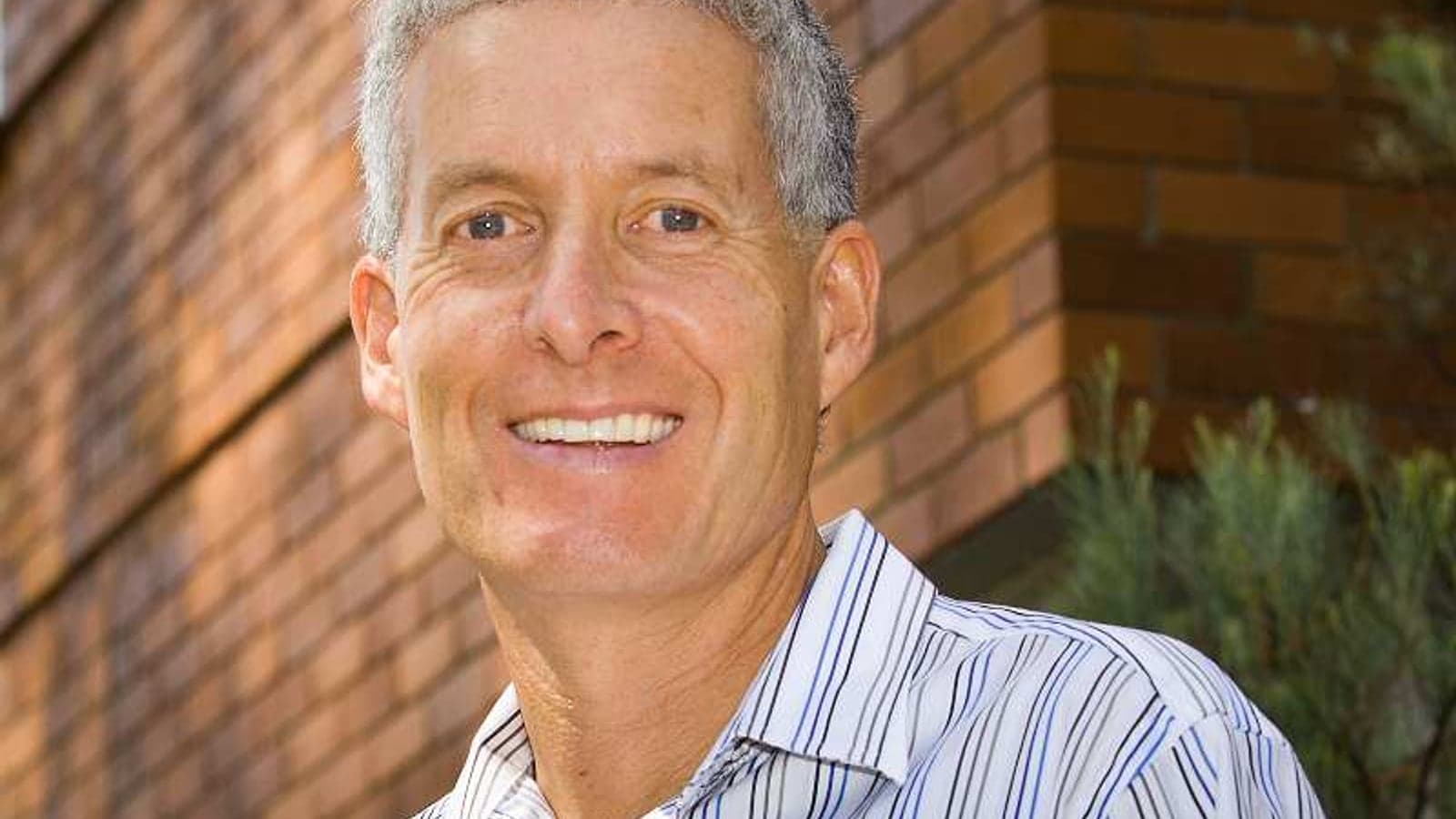
Dave Jones leads Ember’s Global Insights team in tracking the global electricity transition.
Related tags
Latest content
+4
Why Europe needs collaboration, not just ambition
Jaroslav Macek from Elevion Group shares why Europe’s energy transition needs orchestration, not just ambition and how collaboration, digitalisation, and investment in skills can drive a resilient, cost-effective energy future.
- Enlit Editorial Team
- 17/11/2025