Why Europe needs collaboration, not just ambition
Enlit Editorial Team
Posted on: 17 November 2025
Jaroslav Macek from Elevion Group shares why Europe’s energy transition needs orchestration, not just ambition and how collaboration, digitalisation, and investment in skills can drive a resilient, cost-effective energy future.
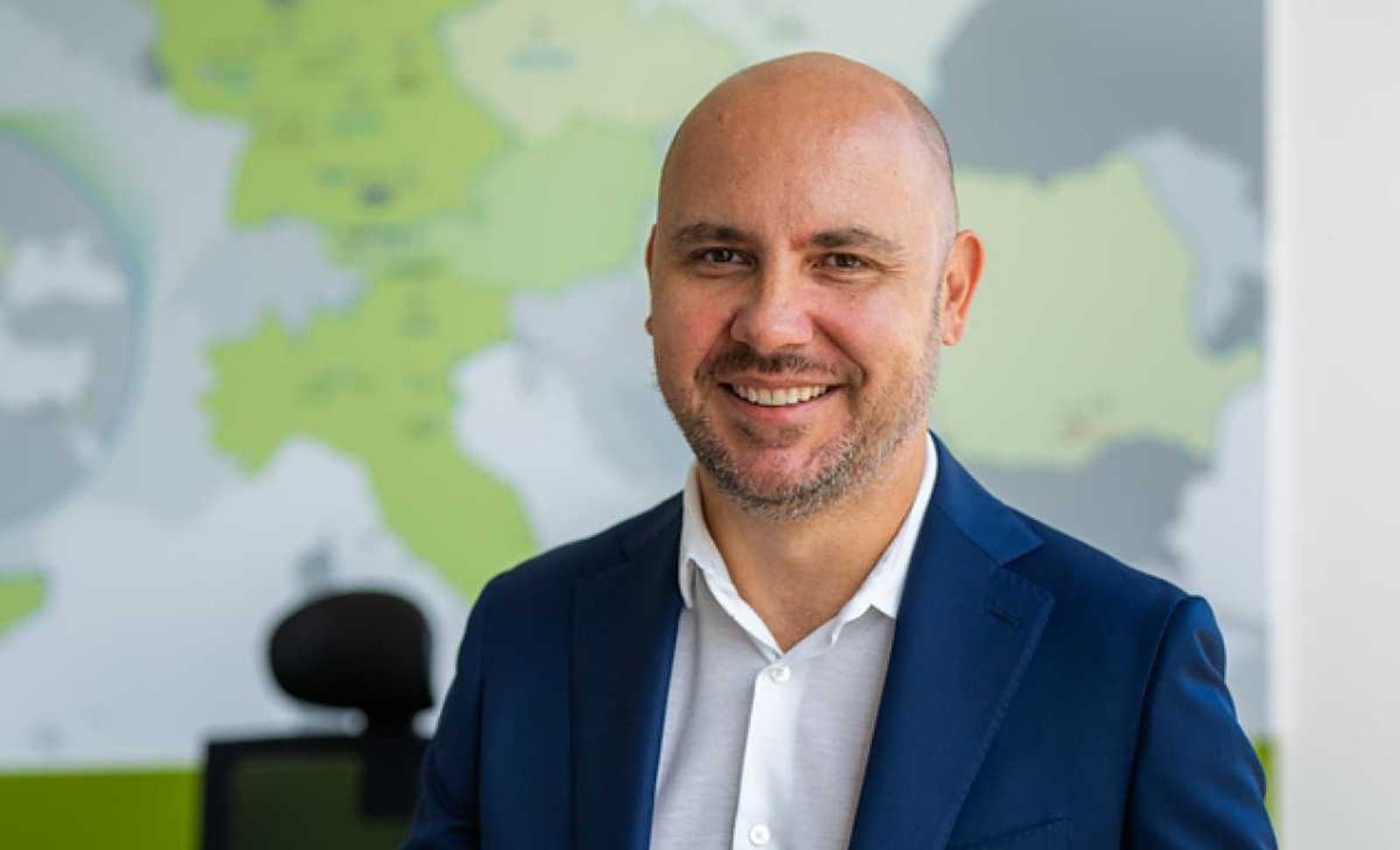
Turning vision into action demands coordination across policy, technology, and people. Jaroslav Macek CEO of Elevion Group shares how collaboration, digitalisation, and skilled talent can drive a competitive and resilient energy future for Europe.
How does the European energy sector turn shared ambition into collaborative action?
Europe doesn’t lack ambition; it needs orchestration. Collaborative action means three things. First, turn targets into bankable signals: stable market design, no retroactive changes, and de-risking tools like guarantees or CfDs where needed. Here, the EU and member states can build a complementary system and should avoid interferences. Second, overcoming fragmentation by clear common standards: one-stop permitting and digital workflows that work the same way for wind, solar, storage, efficiency — and cross borders. The internal electricity market is still unfinished. This also helps the third point, make the system fit for scale: invest in grids and data, open flexibility markets, and shift from ‘invest-and-connect’ to ‘connect-and-manage’ so projects can connect earlier while operators manage constraints dynamically. Add clear accountability — shared KPIs for permitting speed, grid connections and flexibility — and you turn ambition into a repeatable delivery machine.
What does Europe need to do to deliver competitive, resilient energy by 2030?
Competitiveness and resilience come from electrification at the lowest system cost. Four priorities. One, permits and predictability: fast-track approvals and stable rules — investors can price risk, not uncertainty. Two, grids, grids, grids: accelerate DSO and TSO investments, strengthen cross-border capacities, digitalise congestion management, and markets for flexibility storage, demand response and distributed assets support system stability. Three, de-risk private capital: use guarantees and long-tenor finance rather than ever-higher subsidies — many projects are profitable if risk is managed. Four, demand-side first: efficiency, heat pumps, process electrification and better load management in data centres and industry. Do this, and Europe lowers energy costs structurally while improving security of supply.
It’s 2030: what does Europe’s energy mix look like?
By 2030, Europe’s power mix has a strongly increased share of renewables, with wind and solar as the backbone, backed by hydro, existing nuclear, and increased flexibility at every level — utility-scale storage, distributed batteries, demand response and smarter EV charging. Gas also plays a role as peaking and balancing capacity, running fewer hours. But in 2030, which is only five years away, coal will still be part of some member states’ power mix, even though with decreasing tendency due to the worsening economics of coal power generation. On the demand side, electrification has moved ahead — heat pumps, more electric mobility, and early electrification of low- to medium-temperature industrial processes. The winning systems combine decentralised assets with a much smarter grid and connect-and-manage practices that keep projects moving while maintaining reliability.
I truly believe that sustainability begins with individual choices — and that leadership must always lead by example.
Is there another industry vertical which has vital lessons for the energy sector?
Yes, the automotive industry provides powerful lessons for the energy sector — particularly in how it has managed the shift towards electrification, innovation, and customer-driven transformation. In less than two decades, car manufacturers have moved from traditional combustion engines to highly efficient electric vehicles, reshaping not only products but entire value chains.
However, the transition has also revealed some important lessons for Europe. In the automotive case, the lack of full alignment between policy frameworks, industrial value chains, and investment clarity created inefficiencies and uncertainty across the ecosystem. As we accelerate the energy transition, we must learn from this experience — ensuring better coordination between technology development, regulation, and market readiness.
The same fundamental transformation is now underway in the energy sector, as we move from fossil-based, centralised systems to smart, integrated, and decarbonised solutions. The automotive example shows that real change happens only when technology, policy, and consumer behaviour evolve together. We must make sure that as we transform industrial sectors across all verticals, we remain competitive and retain critical know-how in the value-added segments of the new energy economy.
COP30: are you optimistic or pessimistic? What should it deliver to make a true impact?
I would describe myself as an impatient optimist. We already know what works: renewables complemented by storage and supported by dispatchable sources such as gas or even hydrogen power plants, emission-free nuclear reactors, a strong focus on energy efficiency, and continuous investment in grid development. For COP30 to make a real impact, it must move from pledges to implementation — particularly by addressing finance. We need de-risking platforms, guarantees, and sovereign tools that can mobilise private capital, especially in emerging markets where the financing gap is most acute.
Another priority should be joint international technology development, particularly for hard-to-abate sectors. Accelerating deployment now will ensure these technologies are ready when we need them most. If we succeed in improving financing mechanisms and technology deployment, we won’t need to spend as many resources on governing and policy targets — which currently consume too much attention. That’s where I see real added value in a stronger international, collaborative approach.
What is the biggest workforce issue for the energy transition?
The biggest workforce challenge in Europe’s energy transition isn’t retention — it’s skills. The market faces a structural talent imbalance between the soaring demand for technical and digital expertise and the limited supply of qualified professionals. Roles such as solar and energy storage engineers, experienced project managers, and skilled electricians are increasingly difficult to fill. Europe is now competing globally for talent that can design, implement, and scale renewable and smart energy solutions. Recruiting has become the real bottleneck, while retention remains manageable — we keep turnover low by being an attractive and forward-looking employer. To overcome the talent shortage, we’re investing in targeted training and recruitment initiatives across Europe and beyond, helping us build the capabilities needed to deliver the energy transition — faster, smarter, and more resilient than before.
Is the energy sector making the most of current AI technology?
The energy sector is making progress with AI, but it’s fair to say we’re not yet unlocking its full potential. Many companies are still running isolated pilot projects, in areas like forecasting, predictive maintenance, or customer analytics, yet few have managed to scale AI across their entire operations. The real opportunity lies in integrating AI with automation and digital platforms to create a smarter, more flexible energy system. At Elevion, we focus on practical applications, using AI to improve the performance of buildings, energy systems, and industrial assets, making it a seamless part of everyday energy management rather than just an innovation headline. We see the greatest added value of AI in power grid management. That’s why we are starting cooperation with an Israeli market leader in this segment to develop a strong backbone for our AI ecosystem within the Group.
We must make sure that as we transform industrial sectors across all verticals, we remain competitive and retain critical know-how in the value-added segments of the new energy economy.
How do you see the role of AI supporting/enabling your organisation's customer experience strategy?
For us, AI is a tool to make energy management simpler and more transparent for our clients. It enables us to turn data into actionable insights — whether that’s optimising energy use, predicting equipment failures, or visualising cost and efficiency savings. Looking ahead, we see AI becoming fully integrated into all customer interfaces, empowering clients to understand and manage their energy performance in real time. The real value comes when technology disappears into the background — and what the customer experiences is lower energy costs, greater reliability and more comfort.
What sustainability practice in your organisation are you most proud of? And how have you reduced your personal carbon footprint? What sustainability practice in your organisation are you most proud of?
For me, true sustainability means living by the same principles we promote to our clients — both as a company and personally. At Elevion Group, I’m proud of how our solutions not only drive decarbonisation but also enhance our clients’ competitiveness and the resilience of their own customers. Our work creates real value — helping businesses become more efficient, future-ready, and sustainable at the same time. We are also advancing our own ESG framework as an authentic part of our long-term strategy. Elevion Group has already deployed more than 5 GW of photovoltaic capacity and operates over 4 GW of PV and battery storage systems, contributing directly to Europe’s clean energy transition. On a personal level, I follow the same path. My home integrates photovoltaics, battery storage, EV charging, and an energy management system — a complete smart energy setup. I bought my first electric car in 2015, and today our family drives only EVs. I truly believe that sustainability begins with individual choices — and that leadership must always lead by example.
What are the biggest challenges facing energy leaders today?
The biggest challenge for energy leaders today is staying agile in a rapidly changing market and geopolitical environment. Prices and availability of key commodities can shift overnight, and regulatory priorities evolve just as fast. To remain successful, companies must react quickly, diversify their strategies, and avoid putting all their eggs in one basket.
At the same time, leaders need to balance short-term competitiveness with long-term transformation. Europe’s ability to decarbonise without losing industrial strength depends on flexible, forward-looking energy players that can adapt to both global market dynamics and local policy changes. At Elevion, we focus on helping our clients navigate this complexity through sustainable, cost-effective energy solutions that strengthen their resilience and competitiveness.
How are your industry experts going to address these challenges at Enlit Europe?
The core message of Elevion Group at Enlit Europe is that we are promoting a pragmatic, integrated approach — one that balances sustainability with financial impact and competitiveness.
My colleague Paloma Méndez Pérez, CEO of our Spanish subsidiary within the Belectric Group, will share her perspective in the panel “Utility Scale Solar & Storage – Optimising the Powerful Partnership.” Another colleague from Belectric Spain, our Senior BESS Expert Juan José Del Amo, will contribute to the discussion “Energy Storage – Discharging the Potential.” As Belectric has already built more than 5 GW of photovoltaic power plants worldwide, their experience in optimisation, deployment, and innovation of PV and BESS systems is truly extensive.
To present our group-wide, end-to-end energy solution perspective, I will be speaking in the session “System-wide Approach to the Energy Transition.” There, I intend to share Elevion’s integrated view — covering the entire energy value chain: from centralised generation and storage, through intelligent energy management, to decentralised and building-level energy solutions.
Ultimately, we come to Bilbao to continue the dialogue about the future we are already building — to exchange visions, foster partnerships, and accelerate our collective path towards a competitive, energy-independent Europe.
If you had a magic wand, what is one thing you would implement today?
If I had a magic wand, I would create true alignment between ambition and action in Europe. We already know what needs to be done — we have technology, science, and the awareness. What we often lack is the collective determination to move together in the direction that’s necessary.
Europe should focus much more on catching up with the rest of the world in terms of competitiveness and economic feasibility. There must be clear, measurable KPIs to track progress and assess actions accordingly. Without tangible results, even the most visionary strategies risk remaining aspirations.
I believe it’s essential that Europe strengthens its connection with the global economy — not by lowering its ambitions, but by grounding them and measurable outcomes. Only then can Europe remain strong, innovative, and capable of meeting international challenges.
Connect with Elevion Group in Bilbao!
18-20 November 2025
Related tags
Latest content
+6
The energy sector must lead Europe's industrial strategy says head of Enel Grids
"The energy sector is not just another industry within Europe’s industrial strategy; it is the enabler that underpins the entire European economy," says Gianni Vittorio Armani, Head of Enel Grids and Innovability.
- Enlit Editorial Team
- 15/10/2024
Latest in Digitalisation
All articlesPartner content
+1
Digital water management: Empowering utilities with scientific decision-making
As urban water distribution networks continue to expand and water resource management becomes increasingly complex, water utilities are facing growing operational challenges.
- Guest/partner contributor
- 03/07/2026