Measuring progress of renewable technology innovation
Jonathan Spencer Jones
Posted on: 11 March 2022
As clean energies grow in countries’ energy mixes, ongoing innovation is key for reducing costs and improving the performance.
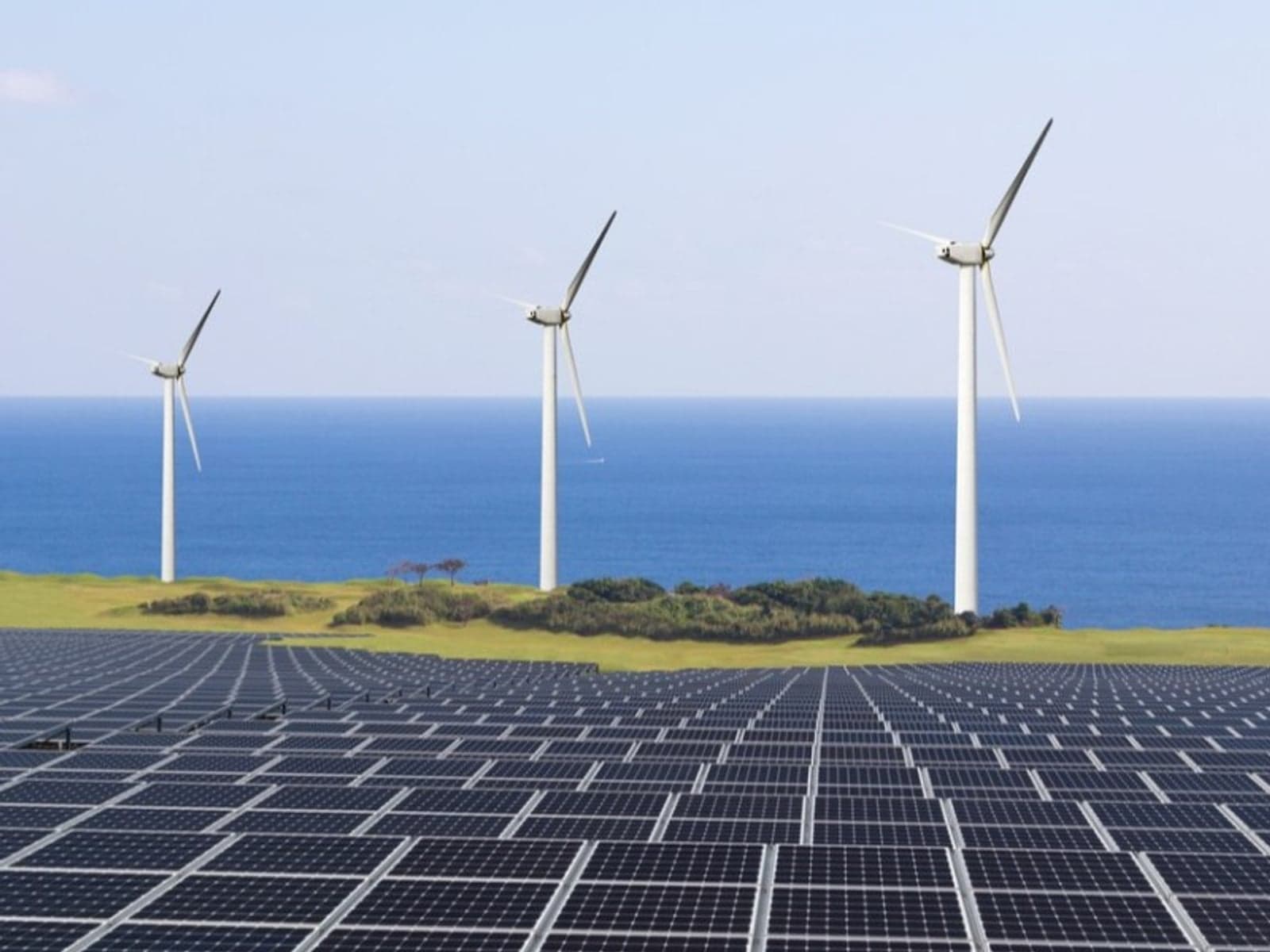
As clean energies grow in countries’ energy mixes, ongoing innovation is key for reducing costs and improving the performance.
Research, development and demonstration of clean energies is common across countries and regions. However, with the limited availability of metrics, only a partial view of the outputs and outcomes are likely.
In a new study, the International Renewable Energy Agency (IRENA) has aimed to address this issue, gathering data on the costs and performance of selected renewable technologies as well as on patents and standards with the goal to provide a quantitative measure of innovation progress.
Applied in a case study on offshore wind technologies, more than 50 indicators are identified in three ‘impact categories’ that innovation support seeks to deliver, i.e. the ecosystem, technology progress and the market.
Innovation ecosystem indicators encompass the state of knowledge development, codification and dissemination and the state of awareness and collaboration among the various actors, public and private and national and international.
Additional insights from IRENA
IRENA: How to future-proof economies against fossil fuel volatility
IRENA’s Francesco La Camera spotlights next steps for climate action after COP26
Technology progress is reflected in cost reduction, diversity of project characteristics and technology performance improvements, while the market formation is determined by the scale of technology deployment and the commercialisation of the technology.
Renewables snapshot
Key insights from the study on the current status of selected renewables are as follows:
Solar PV: The dramatic decline of solar PV costs in the last decade have been driven down significantly by technology innovation, which has also helped to enhance the performance of products. After a decline of 85% in the levelised cost of electricity between 2010 and 2020, the technology continues to adapt into new markets.
Concentrating solar power: Despite its modest deployment the competitiveness of CSP has improved consistently over the last decade. The LCOE of newly commissioned CSP plants fell by 68% between 2010 and 2020, as installed costs fell, O&M costs declined and capacity factors increased.
Behind the meter batteries: Policy support for behind-the-meter battery storage has played an important role in increasing the scale of main markets, though significant potential for growth remains. The increased research activity and a growing manufacturing landscape have meant that energy, power and safety characteristics of Li-ion battery energy storage have improved with time.
Onshore wind: With higher hub heights and larger swept areas there was an almost one-third increase in the global weighted-average capacity factor of onshore wind, from just over 27% in 2010 to 36% in 2020. Driven by cost reductions and technology improvements, the global weighted-average LCOE of onshore wind fell 56% between 2010 and 2020.
Offshore wind: With higher hub heights and swept blade areas, offshore wind capacity factors have increased over time due to technology improvements in the turbine, wind farm layout and connections and due to improved O&M practices. Between 2010 and 2020, the global weighted-average LCOE of offshore wind fell 48%.
Hydrogen electrolysers: Alkaline electrolysers showed a 60% increase between 2005 and 2020 while that for proton exchange membrane (PEM) electrolysers was even larger. The R&D effort has seen the likely efficiency of alkaline electrolysers improve by at least 10%, although the efficiency of PEM systems has likely not improved to the same extent.
Large-scale solar thermal: Europe has supported the development of solar heat for industrial process projects over the last decade, albeit in small numbers, with a more than two-thirds decline in installed costs from 2010 to 2019.
Patents and standards
The patents and standards metrics are applied to two emerging technologies, offshore wind and green hydrogen electrolysers.
For offshore wind, invention activity shows two peaks – one around 2012, followed by a decline, and the second in 2018, which due to data lags, may be continuing. European countries are leading in terms of high value inventions and have an international approach to patenting.
For green hydrogen, and water electrolysis in particular, the rapid growth of inventions after 2012 is in line with the widespread implementation of national energy plans based on the diffusion of green hydrogen technology.
Both technologies have benefitted from existing standards on wind and hydrogen, which may have contributed to their deployment.
For offshore wind technology, the first standard published in 2004 applies to the design of both onshore and offshore wind turbines. Since then, 32 standards have been published. As differences between onshore and offshore wind turbines are limited, offshore wind turbines have largely benefitted from onshore wind standards, which has helped the market to mature faster.
Hydrogen standards have followed a similar pathway. Currently, 126 standards on hydrogen and fuel cells cover production, transport, storage and use, along with cross-cutting issues including safety. The only standard for the production of green hydrogen was published in 2019, which is currently being revised and will be separated into several standards covering different aspects in more detail.
The study was supported by the European Commission’s Horizon 2020 research and innovation programme.