Meet the climate expert leading Iberdrola's C&I electrification drive in Australia
Jonathan Spencer Jones
Posted on: 19 October 2022
Pavina Adunratanasee, Smart Solutions Manager for Decarbonisation and eMobility technologies at Iberdrola Australia, discusses innovation for large electricity customers in Australia and lessons for other markets.

Pavina Adunratanasee, Smart Solutions Manager for Decarbonisation and eMobility technologies at Iberdrola Australia, discusses innovation for large electricity customers in Australia and lessons for other markets.
As the demand to reduce emissions becomes more urgent, the need for new innovative solutions to support companies is becoming ever more pressing.
It is also becoming more challenging for corporates looking to decarbonise their carbon footprint, with Scope 3 supply chain emissions coming under increasing scrutiny by regulators.
Which goes some way to explain how a climate and clean energy expert is now leading Iberdrola Australia’s industrial and commercial customer electrification drive.
Previously based out of Singapore, working on renewables and power transactions, it was the growing understanding of the potential of energy storage in solving the intermittency issue of large scale renewables that led to Pavina Adunratanasee's move to Australia.
She describes the Australian clean technology market as “dynamic and evolving”, behind the major markets of Europe and the US in terms of technology adoption and providing huge opportunity for growth drawing on the best practices of these markets but also serving as a robust testing ground for new technologies.
“We are at an inflection point on the decarbonisation trajectory where a lot of the customers are looking at procuring renewable energy or green products. But to move beyond that, we are looking at commercialising clean technologies that help customers decarbonise across not just energy but also emobility,” she comments.
“Where we come in and add value is guiding the customer on that decarbonisation journey and helping them understand how these technologies can help them not only meet their net zero targets but also improve their operational savings.”
What technology trends are you seeing in the market?
One of the technologies that I’m very excited about is the concept of being able to aggregate flexible load behind the meter to tap into market revenues for customers and pass that through to them in the form of a Virtual Power Plant (VPP).
Research indicates that there will be approximately 4 million electric vehicles on the roads in Australia by 2035 and that's a huge amount of storage sitting behind the meter. That doesn’t include the additional capacity of energy storage installed at residential and commercial sites that will come outline. The vision for the future is to be able to manage and control flexible load at the demand level leveraging on a software orchestration layer to control signals and create essentially another diversification of energy resources and additional value for consumers who own these assets.
At what scale are we seeing demand flexibility becoming mainstream?
There is potential to deploy distributed batteries at customer sites and integrating those with the software control orchestration platform to achieve a proof of concept at a small scale leveraging optimisation tools to access revenue streams in the market through energy arbitrage or other grid supporting services.
The challenge with battery storage is that due to the lack of subsidies, we're still finding that the technology is in some cases cost prohibitive for customers in the C&I sector.
That is where the value proposition comes in and if the customer can be part of a larger fleet of batteries to access the market revenues, then it will help to offset some of the upfront capex costs and improve the cost effectiveness. In essence, it’s about value stacking.
The challenge with battery storage is that due to the lack of subsidies, we're still finding that the technology is in some cases cost prohibitive for customers in the C&I sector.
What about EV storage?
EVs are essentially batteries on wheels. As an industry, we haven’t seen vehicle-to-grid (V2G) take off yet, but it’s a space I’m continuously tracking.
There are a lot of interesting use cases that can come from V2G particularly for commercial and bus fleet operators to control and optimise EVs to dispatch power from stored energy in their batteries directly back into the building or the grid, thereby turning the EVs into energy storage assets and unlocking their monetisation potential as part of a broader VPP programme.
And e-mobility more broadly?
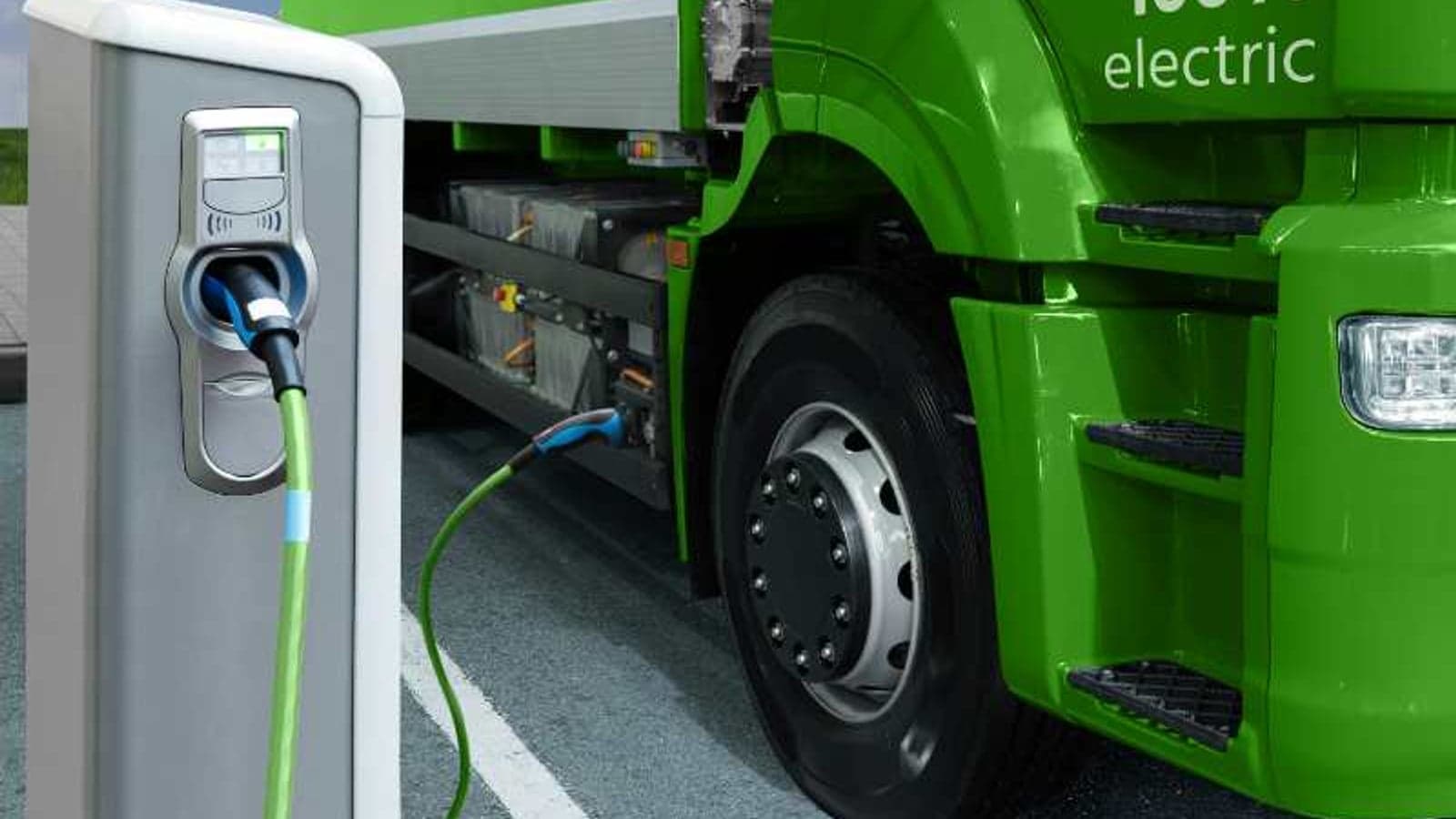
The transportation sector is going through an unprecedented transformation. To accelerate emobility adoption, the focus needs to be on unlocking EV charging infrastructure at commercial sites and improving the charging experience for users, both for use by EV drivers but also for commercial fleet operators.
We are at the early part of the adoption curve, which means customers are thinking about it but are limited by the lack of subsidies to reduce the upfront costs for fast charging infrastructure. A charging-as-a-service model can help C&I fleet operators, particularly last mile delivery companies, to transition their fleet from diesel cars to adopt battery electric commercial vehicles.
The other trend we’re seeing is that EVs represent a new source of clean electricity demand. Experts forecast that we’re going to need almost double the electricity generation capacity to serve the electric mobility sector so the grid needs to be able to respond quickly and fill this gap. When we couple that with smart charging software that enables consumers to optimise charging during periods when there is an influx of renewables and reduce peak loads in the grid, we have a gamechanger for the mobility sector.
One of the biggest challenges for e-mobility operators is that to truly decarbonise a vehicle fleet requires energy predominantly sources from renewables. One solution is looking at co-optimising onsite solar PV with an EV charging solution.
Australia is at an inflection point when it comes to transport electrification and we are seeing several states take a lead in phasing out internal combustion vehicles. There are policy lessons from Europe that can be applied, e.g. vehicle emissions targets, which haven’t arrived to Australia yet.
We’re seeing state governments commit to transition their fleets to zero emissions technology by the year 2040. A substantial portion of the existing fleets are expected to be electrified over the next decade; we need to find a solution to electrify bus depots that are not set up to be able to import large amounts of power to support bus charging. With limited constraints in the network capacity, onsite generation through rooftop solar PV and battery storage co-located with a combination of fast and slow chargers can deliver the optimal charging solution for buses that need to charge at night time outside peak tariff.
What decarbonisation lessons are there for Europe from Australia?
The wide-scale deployment of solar PV at the residential scale, at about 1.2 million households so far, has been a remarkable story.
That uptake of solar is transforming energy market dynamics. In Queensland for example, where there’s been a substantial uptake of solar PV in households and business, it’s driving down prices in the energy market during the day. In South Australia, lithium-ion battery storage has served as peaking capacity, and we've seen a lot of innovation being unlocked both at the grid scale level and at the distributed level as part of a VPP.
These are interesting test cases as the EU markets prioritise demand electrification as part of the energy transition.
As an industry, the focus has been on electrifying the supply side and now the focus needs to shift on electrifying households and businesses.
Why has this solar uptake been so successful and how this model be applied to other technologies?
The solar at residential level has been incentive driven with the feed-in tariff driving the uptake. But also cost is a factor and the cost of solar PV technology has been decreasing significantly. Similarly, if you observe the cost of technologies like EVs and battery storage come down, that will probably drive uptake, although there will still need to be policy incentives to support uptake in the early stages of consumer adoption.
The other technology at the C&I level that has tremendous potential to decarbonise is heating and cooling solutions and electrifying this sector is going to be the key to unlocking that and solving for carbon emissions reduction. For example, heat pumps have proven to have significant potential to drive down overall emissions for large industrials.
We are seeing an acceleration of electrification technologies globally and I spend a lot of my time focused on developing solutions to electrify consumer demand. As an industry, the focus has been on electrifying the supply side and now the focus needs to shift on electrifying households and businesses.
What is the approach to electrification?
Across the board, with these newer technologies it comes down essentially to the cost of installing and operating them.
In the bus sector, customers who are investigating the business case for electrify their fleet and find that the capex of diesel versus battery electric buses is not cost competitive today. Having said that, research forecasts that in a few years the total cost of operating an electric bus coupled with slow charging will be cost competitive vis-a-vis a diesel bus globally.
The technologies to electrify exist today and ultimately it’s the business model innovation that is going to be key to unlocking commercial adoption at scale. The focus needs to be on how to solve the high upfront capex consumers have to pay to adopt such technologies., whether that’s a shift from a CAPEX to OPEX solution or offering an ‘as-a-service’ models.
Where do you see hydrogen in the decarbonisation of transport?
From an urban transport perspective, where there is a need for shorter travel distances battery electric will make the most sense from a cost competitiveness and technology application, but for longer distance travel and for heavier duty applications like trucks, there is a role for hydrogen to fill the gap.
Electrifying multi-modal transport from urban to regional fleets is key and governments and bus operators are looking at a hybrid solution covering battery electric and hydrogen fuell cell here in Australia. The optimal solution is the combination of the two technologies, depending on the distance on a range of factors.
The opinions shared in this interview are the interviewee’s own and do not necessarily reflect an institutional view.
Pavina Adunratanasee is speaking at Enlit Europe in Frankfurt (29 Nov - 1 Dec).
Register for the event to attend her sessions about e-mobility and more.