Microgrid in a Box boosts resilience in rural US
Pamela Largue
Posted on: 25 July 2023
Idaho National Laboratory has deployed its new Microgrid in a Box at a hydropower plant in rural Idaho| US.
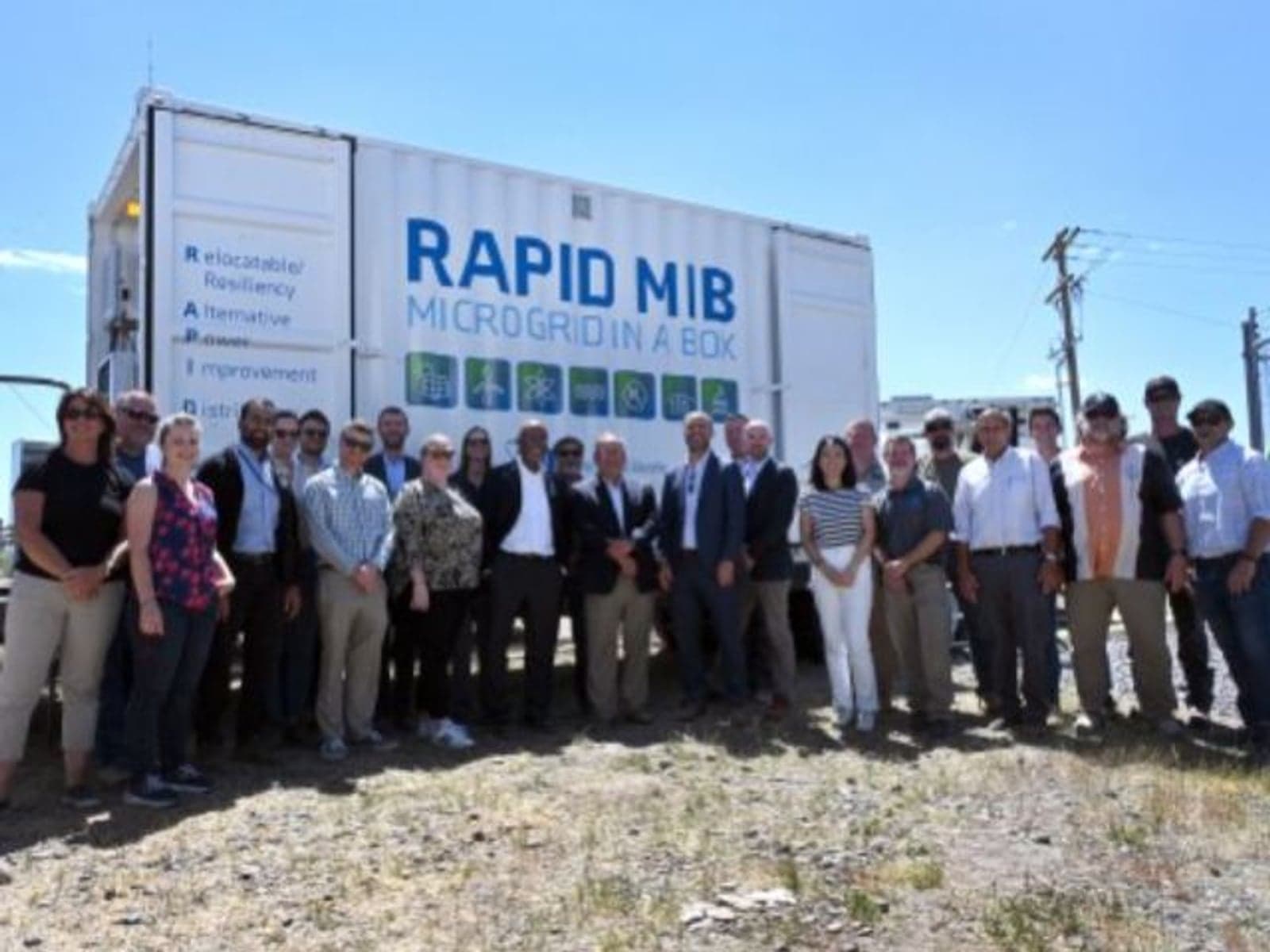
Idaho National Laboratory (INL) celebrated the ribbon–cutting of its new Microgrid in a Box, which was deployed in partnership with the Fall River Electric Cooperative at its hydropower plant in rural Idaho, US.
The researchers used the new technology to demonstrate how hydropower with advanced controls and use of a mobile microgrid can enable small communities to maintain critical services during emergencies.
At the ribbon–cutting, power from the Microgrid in a Box simulated a critical load, and demonstrated blackstart ability after a simulated grid blackout.
The Microgrid in a Box is a Relocatable Resiliency Alternative Power Improvement Distribution Microgrid in a Box, also known as RAPID MIB.
Have you read?
Solar+storage microgrids replacing diesel at remote California water project
IKEA instals Australia’s ‘largest commercial microgrid’ in Adelaide
The system, developed by INL and various government and private entities, is a portable, self-contained grid system that enables the integration of multiple energy sources. It is designed to provide resilient and reliable power to remote locations or during power outages.
“Fall River Electric Cooperative is focused on investing in technology that can improve the lives of our owner-members and this partnership with INL is a prime example,” said Fall River CEO Bryan Case. “The Microgrid in a Box test has accelerated our ability to deploy a hydropower and battery system to provide our members with electricity in the event of natural disasters or other local emergencies.”
Through research, analysis, simulations and real-world testing like the blackstart demonstrated at today’s ribbon-cutting event, INL is enhancing the ability of power utilities to recover from blackouts and minimize the impact on communities and critical infrastructure.
Microgrid in a Box
According to INL, the system includes 320 kilowatt-hours of battery storage, and can tie seamlessly into a modern electrical grid and coordinate the distribution of electricity.
The microgrid can manage about 250 kilowatts of electricity and work in both US and UK standard electrical systems and is touted as the first portable system at this scale with all its advanced control features and specifications.
It is equipped with special inverters and is capable of handling about 200kW of AC-coupled, inverter-based generation from sources such as wind, nuclear and/or solar plus an additional 250kW AC of fueled, synchronous generation.
An early version of the Microgrid in a Box has already been deployed for military use in Kuwait.
Related tags
Latest content
+5
Transforming commercial structures into energy-optimising powerhouses
With buildings accounting for a whopping 37% of global energy use and a third of US emissions| businesses are kicking sustainability initiatives into gear to advance the clean energy transition.
- Guest/partner contributor
- 29/06/2023