Moving the dial on the workforce challenge
Pamela Largue
Posted on: 7 May 2025
The energy sector is facing a shrinking potential workforce and to address this effectively, a three-pronged approach is needed involving government, educational institutions and the sector at large. This was the overriding message in a conversation with Alison Lowrie, founder of UK-based talent management specialists STEM Select, and Tom Essex, founder of Dutch recruitment specialists KIGYO, about how to ensure the people and skills are available to reach our energy transition goals.

The energy sector is facing a shrinking potential workforce and to address this effectively, a three-pronged approach is needed involving government, educational institutions and the sector at large.
This was the overriding message in a conversation with Alison Lowrie, founder of UK-based talent management specialists STEM Select, and Tom Essex, founder of Dutch recruitment specialists KIGYO, about how to ensure the people and skills are available to reach our energy transition goals.
STEM Select specialises in technology and engineering recruitment and KIGYO in talent acquisition for renewable energy projects, which means both Lowrie and Essex are acutely aware of potential workforce pitfalls.
Lowrie states unequivocally: "Let's be realistic, we have far more working against us than for us right now, and if we aren't tackling these challenges readily, we are going to be caught short."
Essex agrees that there's a lot to do, especially when considering the number of people joining STEM versus the aging workforce: it's a challenge that needs to be addressed with training programmes, investment in diversifying workforce, and transferable skills he said.
Three-pronged approach
Lowrie and Essex agree that efforts to address skills gaps have been siloed, with disjointed training and education programmes floating about independently without having a noteworthy impact.
Coming together in a three-pronged strategy is what's needed they said, with Lowrie explaining that governments must get more involved in incentivising universities to create programmes. Also, organisations need to create paid internships.
"It takes collaboration," stresses Lowrie. "I feel like we are in an echo chamber. We need policies to be stronger, we need education to grab the reins and start creating programmes and we need institutions to take their internship and diversity, equity and inclusion programmes more seriously."
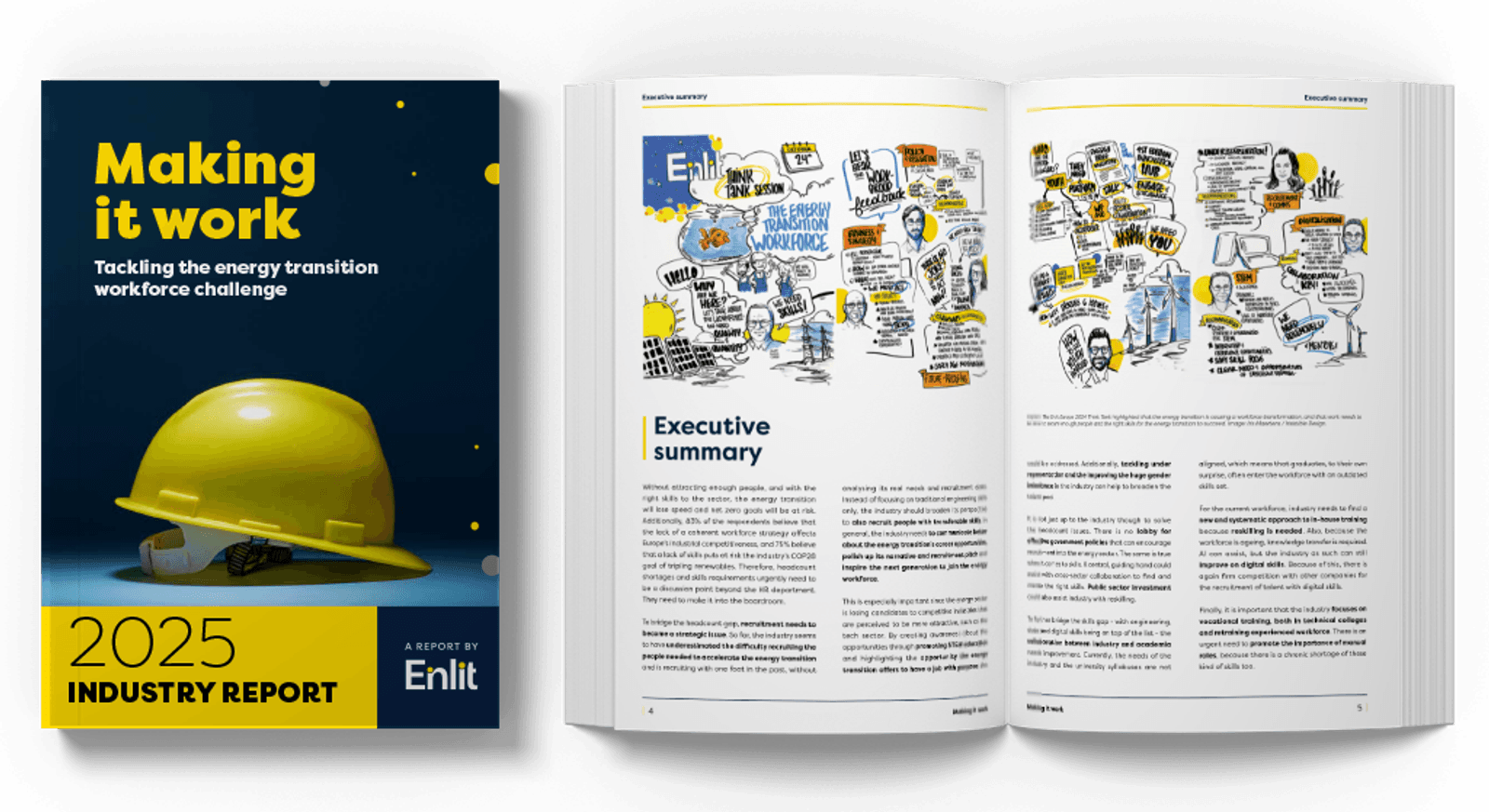
Read Enlit's report, Making it work, for actionable recommendations to help the industry bridge the headcount and skills gap.
Shortage of transferable skills
Essex and Lowrie point to key priorities that need to be addressed by this inclusive strategy, with a lack of transferable skills being one of the most important.
Resistance to transferable skills is a major issue, they agree, coupled with the stigma attached to hiring from other industries outside renewables.
Essex says: "Customers and providers in general are not open enough to transferable skills. A little deeper than that, governments locally are not doing enough to understand which markets are on the decline and what skills from markets like that can be pushed into markets on the incline".
According to Essex, governments in Eastern Europe are doing more with transferable skills initiatives. However, it's clearly not a priority for policymakers across the rest of Europe and in the UK specifically.
While both Essex and Lowrie agree that governments should focus on how to transfer workers from fossil fuel industries to renewables, they note it can be more challenging when it comes to STEM.
Says Lowrie: "Where it's tricky is STEM... you have a very certain set of skills and those require a certain level of training or retraining, but there's a lot of soft skills as well that can be moved from dying industries into renewable energy.
Have you read?
France’s electricity network workforce is short by 43,000 people
How to win the battle for the best energy talent
"So even if it's harder to tackle STEM, there are multiple different areas and sub-sectors that we could be tackling, we're still not at pace."
Essex also suggests that organisations must do a lot more to break the stigma and address the lack of trust in the transferable softer skills from industry outsiders. "It's a snowball effect. Once one or two of the big players are open to it, others may follow."
He recommends industry skill mapping and academic fast track programmes in schools and universities and stresses the need for a partnership approach between government and industry to ensure hiring incentives are in place for graduates.
Diversity or the lack thereof
When it comes to diversity and inclusion, Lowrie emphasises the need for more pace.
"If you look at gender diversity, there is a very large pool to tap into and really we are only scratching the surface."
And when asked if improved messaging to target women would improve the situation, Lowrie adds: "Better messaging around job descriptions - is that really making much of a difference? Unless we are starting to offer opportunities for women to enter the workforce, we are paying lip service."
Essex also suggests the sector address gender disparity around first senior promotions, which often occur around the time of maternity leave, leaving many women without a seat at the table.
The role of education
One area showing a worryingly low level of interest in recent years is blue collar engineering and vocational training.
Essex explains that there are significantly fewer people going into vocational training, adding: "I think the renewable energy sector will feel that."
According to Essex, one of the main reasons why the workforce is showing less interest in blue collar opportunities is that many are heading to university instead.
This is likely because more organisations have included educational requirements in their job descriptions, and tougher entry requirements are forcing people into higher learning, he says.
And even though more people are attending university, the sad fact, stats Lowrie, is that many students don't even know about available renewable energy job options and education institutions aren't encouraging students to find out.
Both Lowrie and Essex stress that discussions about these opportunities need to begin before university, in first and secondary learning phases. Children, especially girls, need to be exposed to on-the-job learning, field trips and the opportunities local organisations and utilities have to offer.
While both Lowrie and Essex agree that the responsibility lies with governments, educational institutions and those doing the hiring, their ultimate message is that it's time to stop virtue signaling and start acting.
This will be the ultimate test of how serious we are about achieving our energy transition goals, stresses Essex.
Listen to the entire episode of the Energy Transitions podcast with Alison Lowrie, founder of STEM Select and Tom Essex, founder of KIGYO, to learn more about tackling the workforce challenge.