New project spotlight: Advancing emobility with NEVERFLAT, ePowerMove and FLEXMCS
Jonathan Spencer Jones
Posted on: 19 September 2025
As the demand for electric vehicles (EVs) grows, so too does the need for a large scale accessible charging infrastructure.
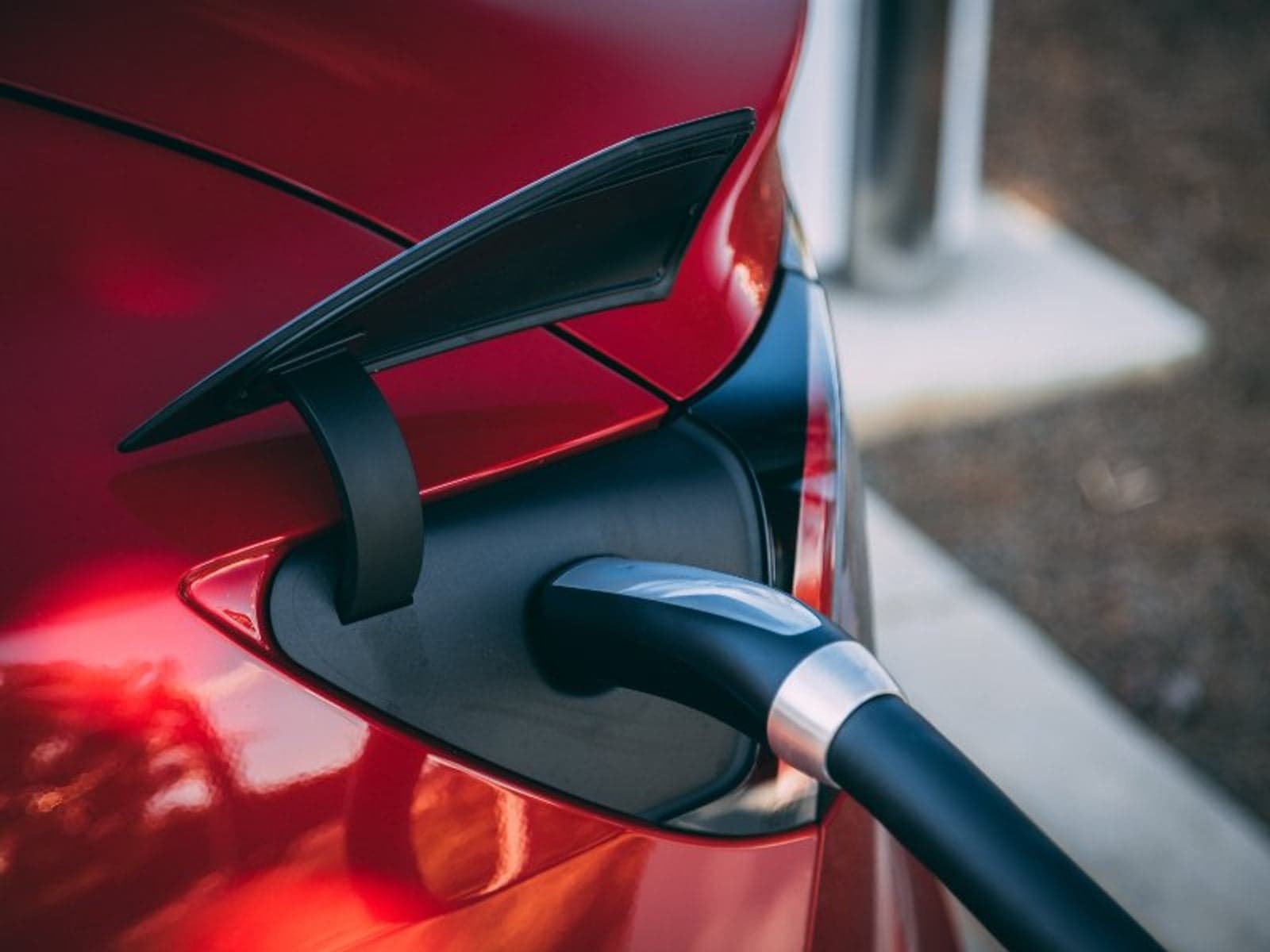
As the demand for electric vehicles (EVs) grows, so too does the need for a large scale accessible charging infrastructure.
Challenges in locating suitable charging points due to being inconveniently situated, having lengthy waiting times or malfunctioning are arguably one of the key frustrations for EV drivers and barriers for potential new users.
Three new Horizon projects, all starting on 1 January 2025 and running through June 2028, are aiming to address this challenge.
NEVERFLAT – improved charging for a greener future
The NEVERFLAT (iNnovative EV-charging EnviRonment for Future Low-cost mAss deployment) project being led by Aarhus University is aimed to address this with the development and demonstration of a low-cost, bi-directional charging infrastructure for EVs.
Also of interest
EU Energy Projects Podcast: EU’s energy and transport need a digital backbone and BEGONIA might be it
Energy Transitions Podcast: Fitting EVs into Spain’s power system
Planned to leverage cutting-edge technologies such as machine learning, WBG (wide-bandgap) semiconductors and advanced simulation models to bring innovations to the core hardware and software, NEVERFLAT intends to advance the optimisation of deployment and orchestration of the charging infrastructure to enhance grid stability and improve renewable energy usage.
The solution will then be validated in operational urban and peri-urban environments in pilot sites in Germany, Romania and Spain, in order to showcase the potential for widespread adoption with seamless EV integration across Europe.
ePowerMove – people-friendly charging solutions for EVs
The ePowerMove project under the leadership of the European road transport telematics implementation coordination organisation ERTICO is aimed to create a global energy usage optimiser that combines cutting-edge technologies in charging infrastructure and grid energy management.
Driven by social innovation, affordability and user acceptance, the proposal is for slow charging solutions that are cost-effective, bi-directional and interoperable, and intelligently synergised with the grid, to optimise the overall efficiency and capacity of the power supply.
Demonstrations are planned in Helsinki, Finland, with a focus on charging infrastructure cost reduction and people-friendly applications, in Klagenfurt, Austria, with a focus on business model development, and in Nicosia, Cyprus, with a focus on grid compatibility and energy flow optimisation.
The architecture is designed to be flexible, scalable and compatible with a variety of regional power systems and V2G technologies.
New business and usage models also will be explored to maximise the project results' impact and to assess policy intervention scenarios and strategies for mass-deployment EV uptake.
FLEXMCS – charging hubs for heavy duty EVs
The mass deployment of heavy duty EVs faces greater challenges than passenger vehicles due to the limited and slow expansion of the charging infrastructure.
The FLEXMCS (Flexible Megawatt Charging Systems) project under the coordination of the Vrije University Brussels is aimed to address this gap with the development of energy efficient megawatt renewables integrated charging hubs equipped with multiport chargers for fast charging during the day and slower charging at night.
The project also intends to develop tools for optimal utilisation of charging infrastructure, with an open charging framework architecture for real-time data exchange between the charge point operators and truck, to match the supply and demand of charging infrastructure.
Part of the project also is the streamlining of the planning and installation of new charging hubs, including the identification of optimal geographical locations along the trans-European transport network (TEN-T) corridors that have been identified for the development of the EU’s transport infrastructure.
These will then be demonstrated and an upscaling strategy and business cases developed.