OPENTUNITY’s role in providing a low-cost energy transition to small consumers
Guest/partner contributor
Posted on: 26 August 2025
OPENTUNITY, funded by the Horizon Europe Programme and led by ETRA in collaboration with a consortium of 21 partners, is working to shape a more reliable, sustainable and user-centric energy ecosystem.
OPENTUNITY, funded by the Horizon Europe Programme and led by ETRA in collaboration with a consortium of 21 partners, is working to shape a more reliable, sustainable and user-centric energy ecosystem.
Through a portfolio of cutting-edge software solutions, OPENTUNITY is making it easier to integrate distributed energy resources, including solar PV, battery storage and electric vehicles, into European smart grids. These innovations are key to greening the grid, ensuring supply-demand balance and providing stability for an energy system increasingly powered by variable renewable sources.
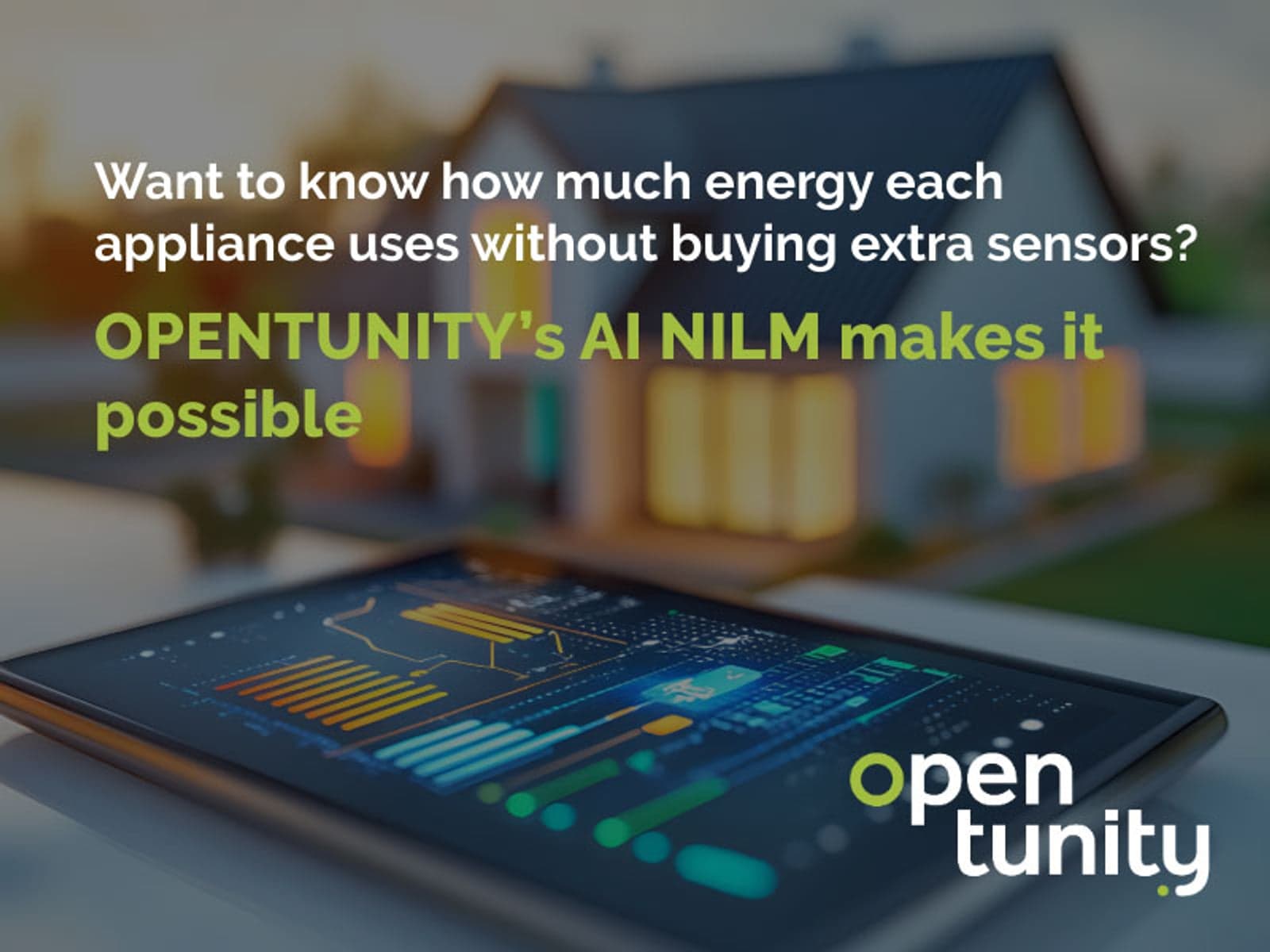
In this article, the emphasis is on the 'AI non-intrusive load monitoring algorithms' block of the project as people are interested in appliance energy consumption, but they may lack smart assets or sensors to access energy-related information. This is where non-intrusive load monitoring (NILM) becomes relevant.
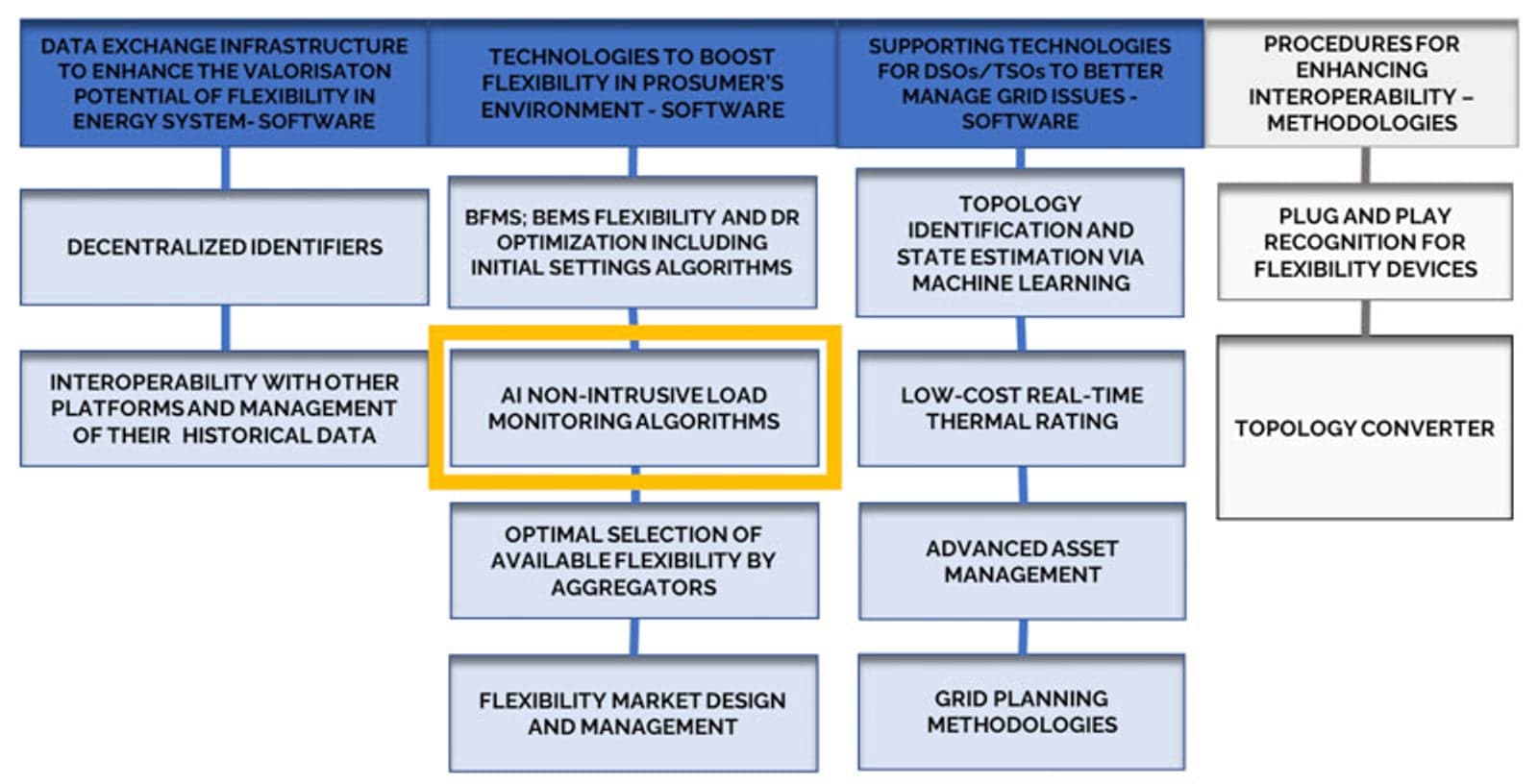
OPENTUNITY’s NILM
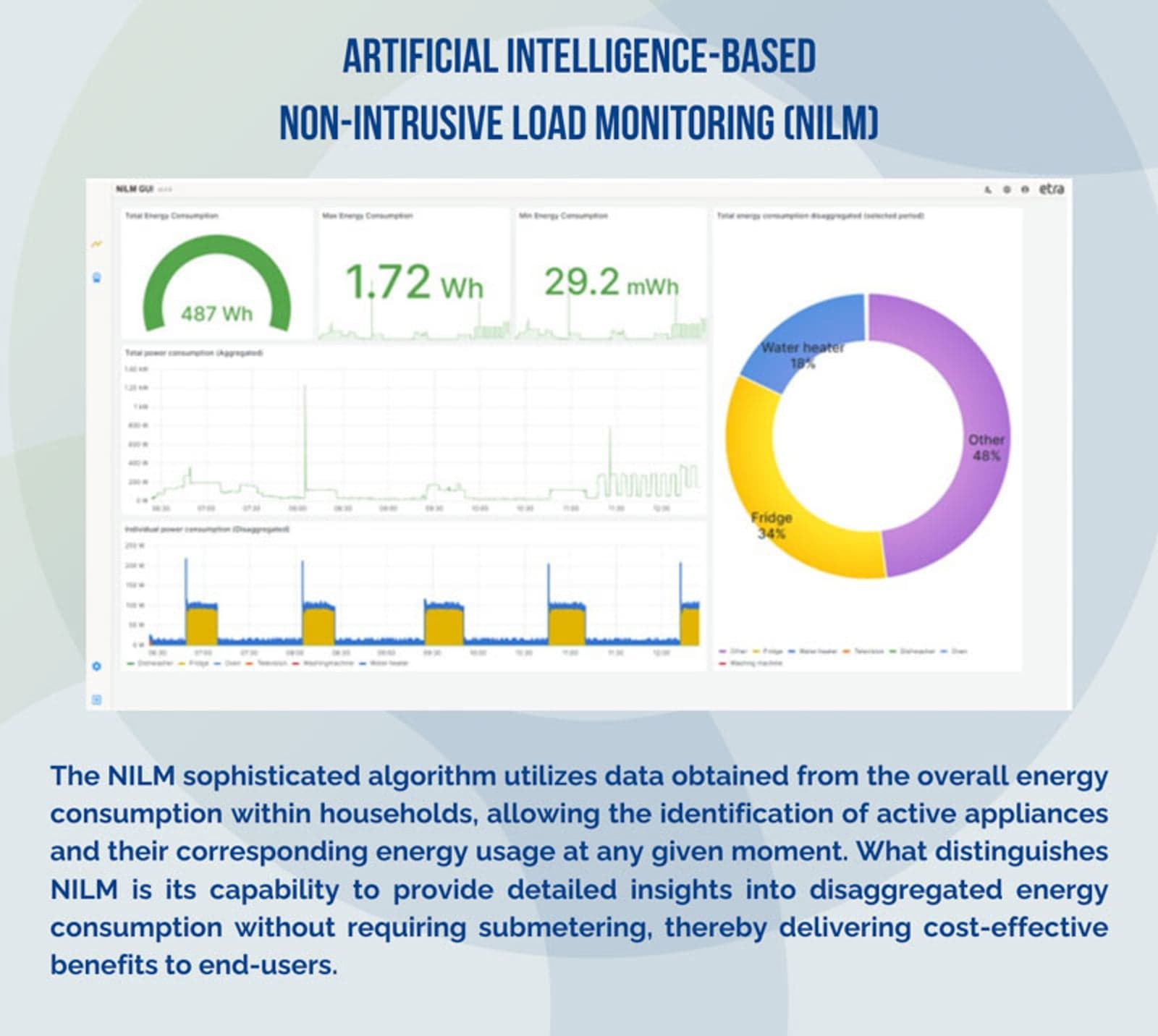
NILM is a methodology that detects appliance usage based on total power or energy consumption curves. It identifies patterns using exogenous variables such as active power, reactive power, current, voltage and energy consumption, disaggregating the power usage of each appliance from the total consumption curves.
OPENTUNITY employs regression techniques to predict real-time individual appliance power consumption, creating generalised models applicable to any household with metering data. This approach clarifies electrical measurement information for end-users, indicating appliance performance more accurately. Additionally, these generalised models support demand response campaigns by providing consumption curves for flexible assets.
These machine learning models were trained within OPENTUNITY using information collected from the pilot sites and from public datasets. The target variable is the individual power consumption of each appliance. Models have been trained using only active power consumption and both active and reactive power consumption as exogenous variables due to the lack of data with more than active and reactive power included and other electrical-related information such as voltage or current.
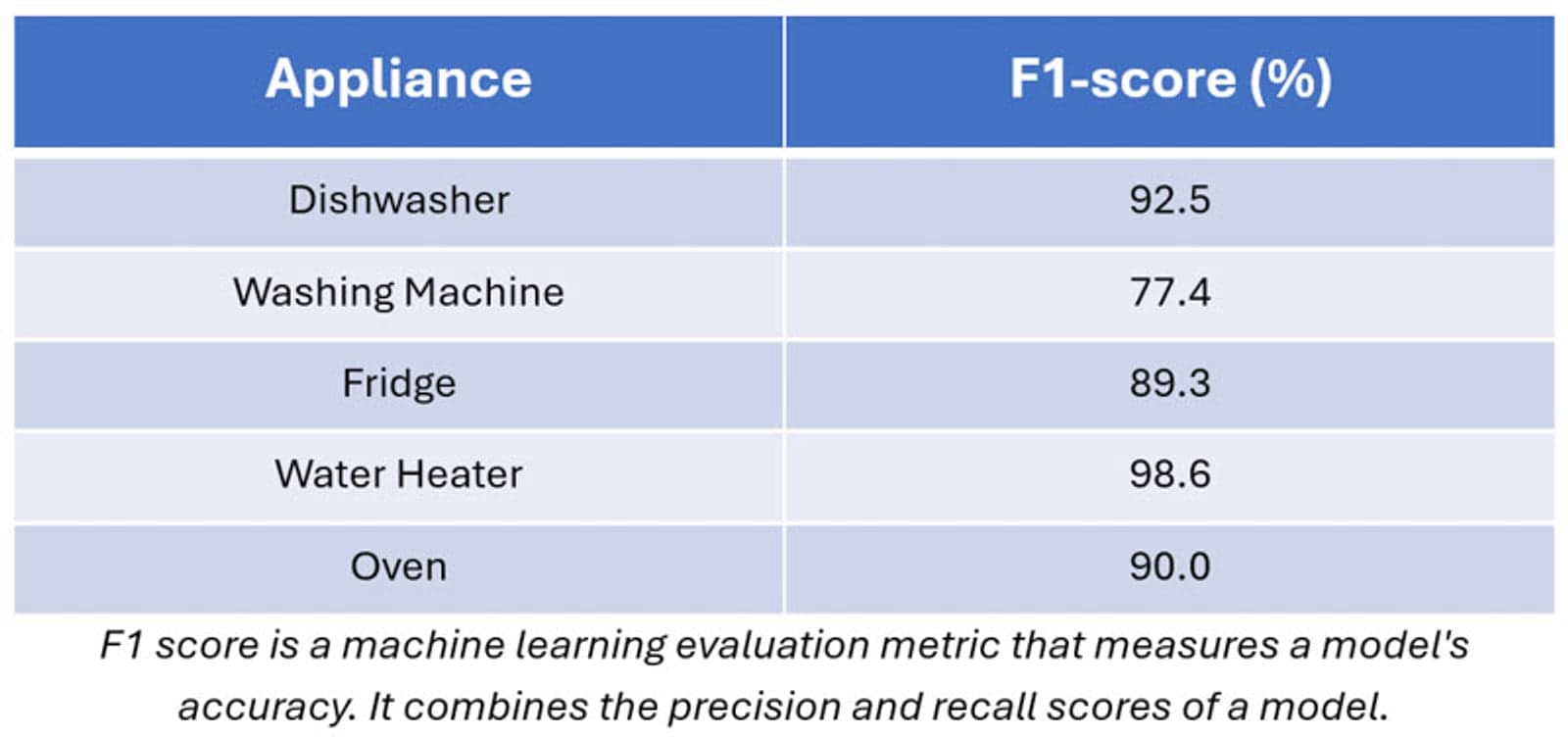
We are now approaching to the actual test of our NILM module in the pilot sites. However, it is noteworthy that in the validation phase, we have reached the following promising results:
Finally, it is noteworthy, since the NILM is developed in a modular manner, that it could work as a deployable module in different software platforms and be useful for ESCOs and retailers to enable them to provide new functionalities and services to their clients.
Curious about what else OPENTUNITY is working on? Watch the video to explore more innovations.
To stay updated on OPENTUNITY’s progress and innovations, visit OPENTUNITY’s website or follow us on LinkedIn and X. For enquiries or collaboration opportunities, feel free to contact us at [email protected].
About the author

Álvaro Nofuentes holds an Engineer’s Degree in Industrial Technologies and a Master’s in Industrial Engineering from the Polytechnic University of Valencia. He is currently working at ETRA I+D as the Project Manager of the EC project OPENTUNITY. He was also the project manager of the completed WiseGRID and TRINITY H2020 projects and former chair of the Customer Engagement Group at the BRIDGE initiative.
Latest content
+5
Smarter grids, smarter choices: OPENTUNITY’s role in the future of energy
The OPENTUNITY project is working to create a collaborative energy ecosystem where grid operators have access to advanced technology tools and energy prosumers can harness the full potential of their energy assets.
- Guest/partner contributor
- 06/05/2025