Smarter grids, smarter choices: OPENTUNITY’s role in the future of energy
Guest/partner contributor
Posted on: 6 May 2025
The OPENTUNITY project is working to create a collaborative energy ecosystem where grid operators have access to advanced technology tools and energy prosumers can harness the full potential of their energy assets.
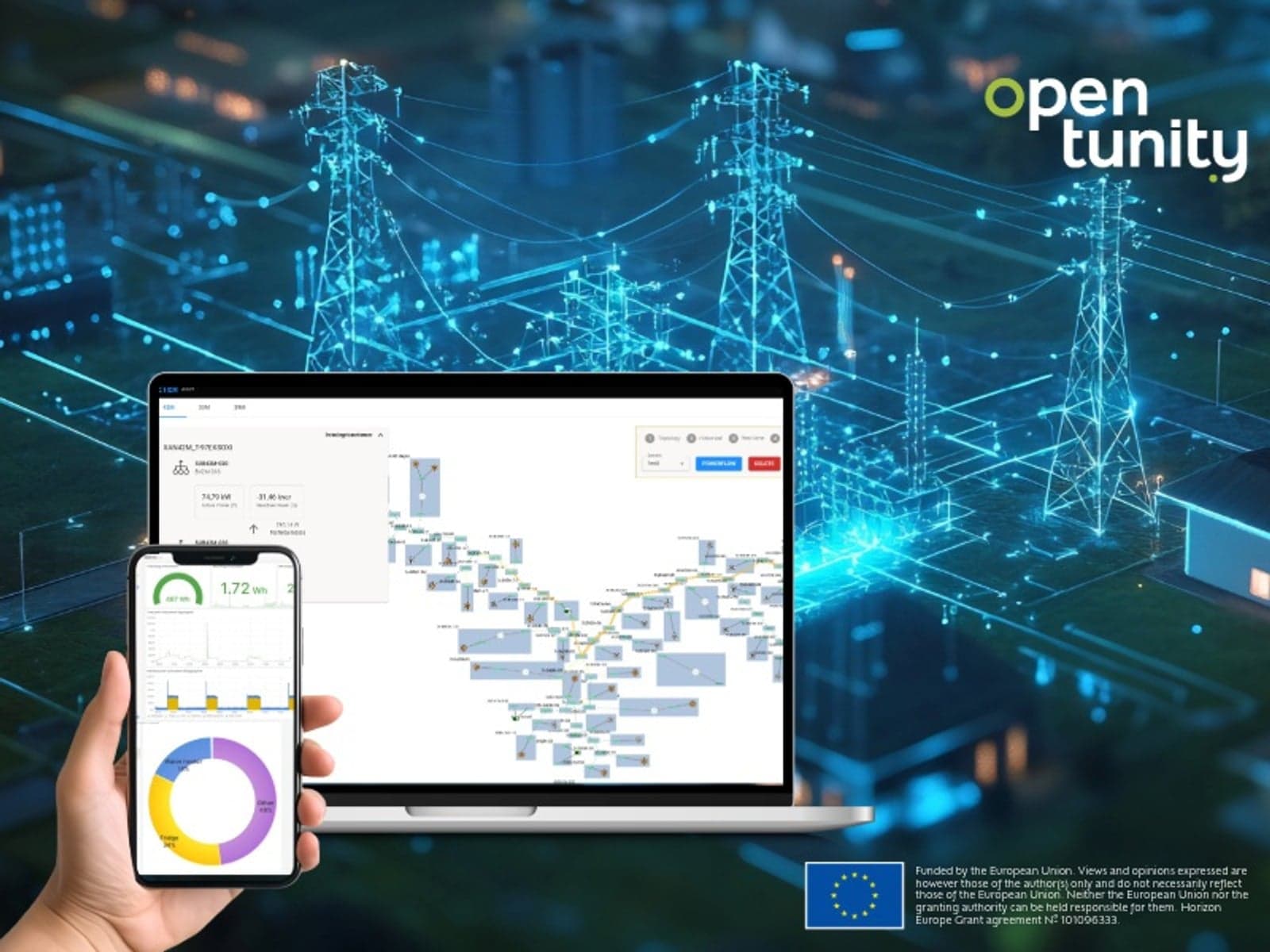
The OPENTUNITY project is working to create a collaborative energy ecosystem where grid operators have access to advanced technology tools and energy prosumers can harness the full potential of their energy assets.
Funded under the Horizon Europe Programme, spearheaded by ETRA, and backed by a consortium of 21 partners (including ETRA), the OPENTUNITY project is striving to create a more flexible energy ecosystem, removing barriers to interoperability and championing standardised approaches.
Its goal is to decarbonise EU grids and place the end-user at the centre of the energy transition.
OPENTUNITY introduces a series of innovations that facilitate the integration of distributed energy systems, such as PV, batteries and electric vehicles, into European smart grids. These systems are essential for greening EU grids, balancing energy supply, and providing backup for intermittent bulk renewable energy sources.
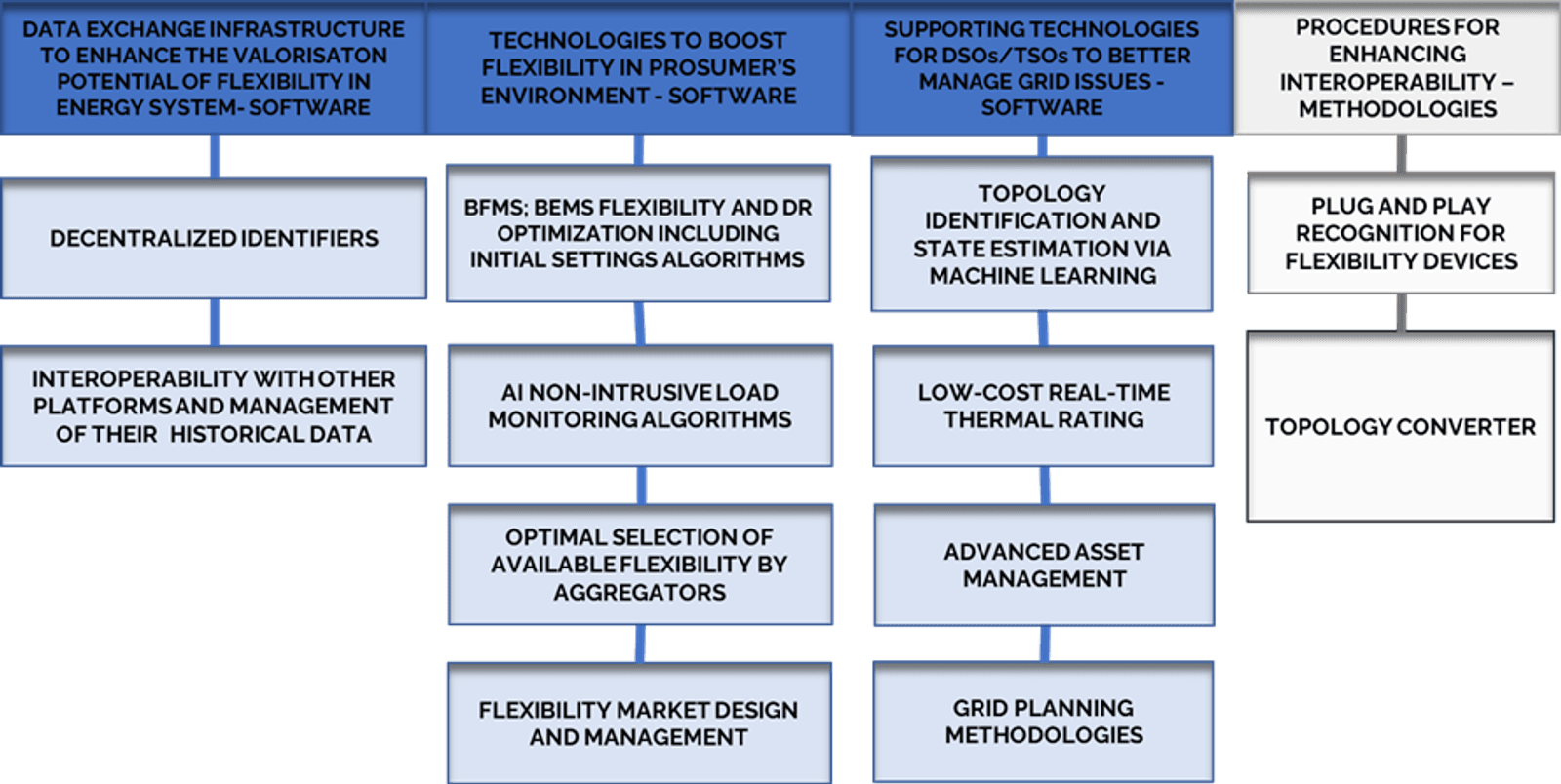
In order to be able to actually deploy and function those innovations, there are two of them that arise as the ones serving the rest of them and allow them to perform in whatever situation.
Grid innovation: Topology converter
The objective is to define a methodology for utilities (mainly DSOs) to simplify the exchange of topological network data with other utilities.
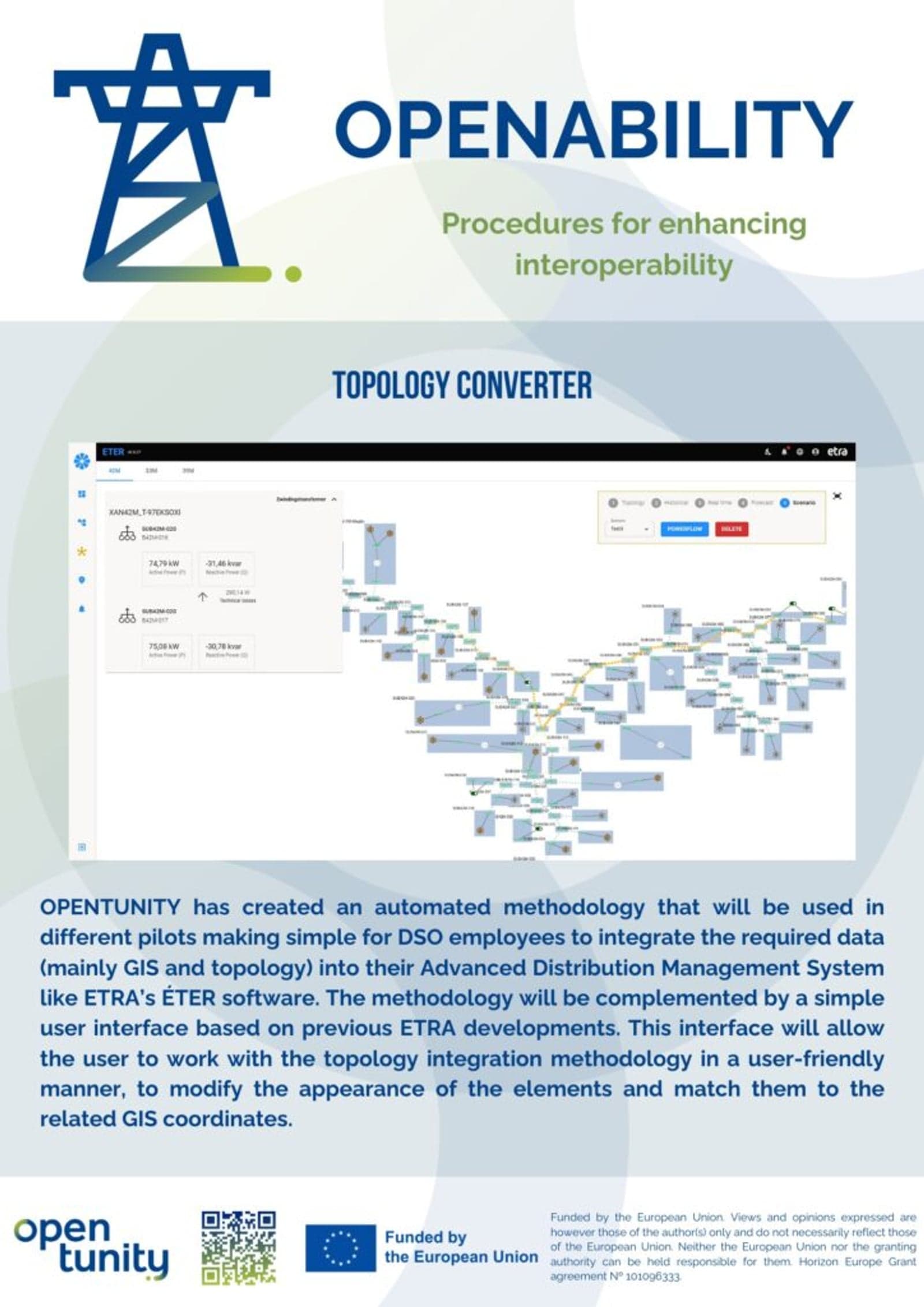
A key challenge lies in the existence of multiple tools, each with its own topology data model, requiring complex transformation processes for data exchange. Additionally, this complexity limits the use and evaluation of different tools, effectively resulting in vendor lock-in.
The CIM could be seen as a common format that might be used by all tools as an exchange data format. However, in practice, its implementation in MV/LV networks remains quite limited.
OPENTUNITY is describing a methodology for DSOs to make use of the standards and best practices in the different components of the infrastructure.
A software tool has been developed for DSOs to facilitate the conversion between topology models, enabling the transformation between the CIM and other topological formats such as GIS, pandapower, PowSybl and Excel. The goal is to streamline interoperability across different systems.
Having a proper topology, is essential to run the rest of grid innovations from OPENTUNITY such as:
● Topology detection: Applies when the network operator knows the line infrastructure and their impedances and needs to determine those that are currently energised.
● State estimation via machine learning: One version predicting the state of the unknown pseudo-measurements by making use of the historical smart meter and SCADA measurements, and the other version more focused on the analysis of PMU data and the study of the most beneficial deployment option of these assets for observability purpose.
● Real-time thermal rating tool: The aim of this tool is to develop a dynamic line rating algorithm based on weather condition estimation.
Prosumer innovation: AI non-intrusive load monitoring algorithm
The non-intrusive load monitoring algorithm is aimed to estimate the energy consumption of individual household appliances based only on whole-house smart metering data, without the need for extra metering equipment.
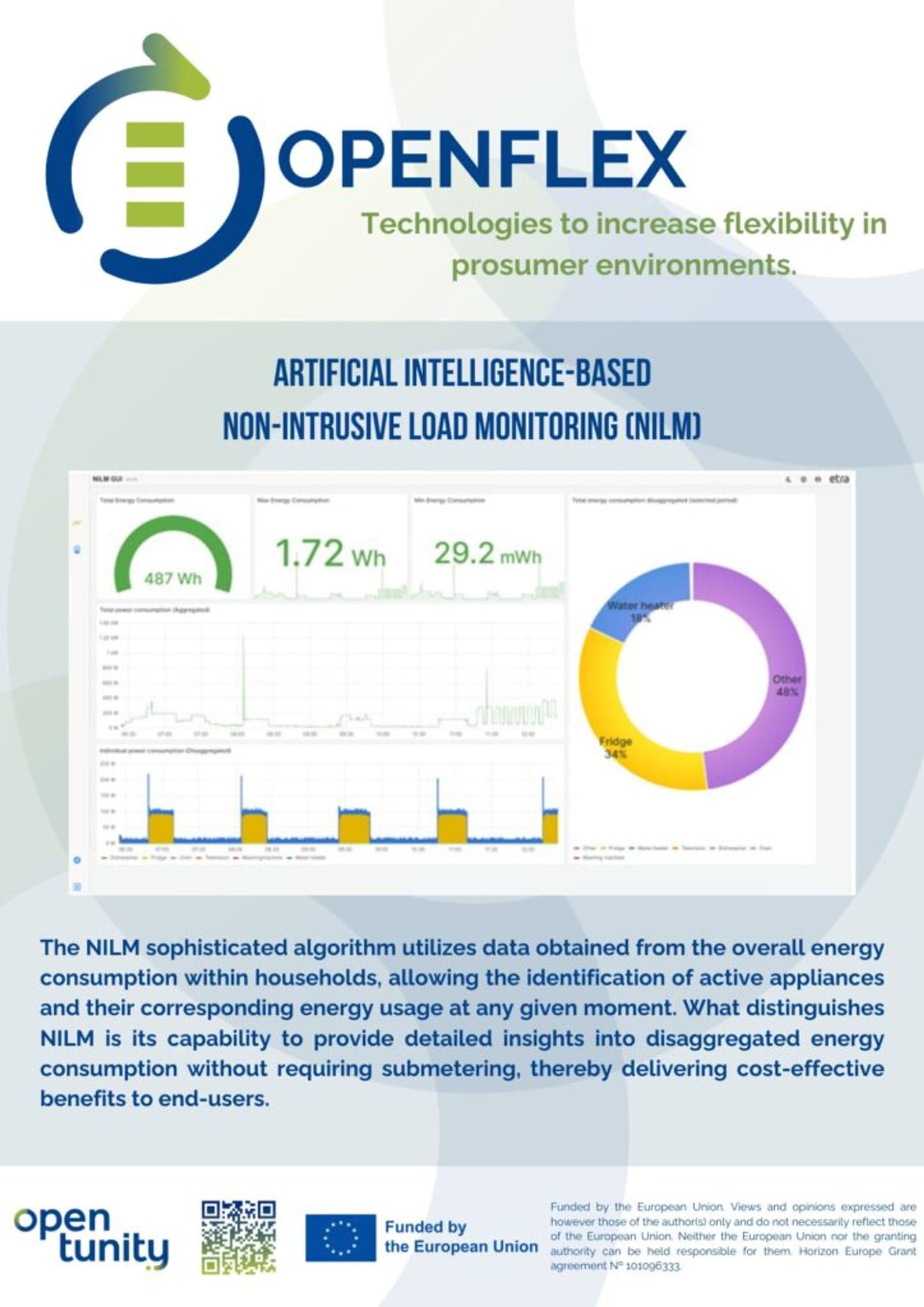
OPENTUNITY employs regression techniques to predict real-time individual appliance power consumption, creating generalised models applicable to any household with metering data. This approach clarifies electrical measurement information for end-users, indicating appliance performance more accurately.
Additionally, these generalised models support demand response campaigns by providing consumption curves for flexible assets.
The module also calculates a dynamic energy certificate of the asset, thus being able to compare it to the energy label provided by the manufacturer and then check the actual performance of the asset.
Having this technology is relevant to run the rest of prosumer innovations from OPENTUNITY such as:
● Building flexibility management system: Its aim is the provision of services for flexibility forecasting and dispatching from the various flexibility assets within the buildings (heating/cooling systems, domestic hot water and PV with energy storage systems). In situations where no submetering is available, the non-intrusive load monitoring is utilised to provide the building flexibility management system with measurements for flexibility forecasting.
● New flexibility management designs from NODES: The NODES flexibility market platform was integrated into the OPENTUNITY ecosystem. Extended work was performed to establish the most appropriate flexibility market design in each pilot’s location. Furthermore, different demonstration scenarios for flexibility trading between the DSOs/TSOs and the flexibility service providers/aggregators were determined to address each pilot-specific grid problem and operational challenges. Thanks to non-intrusive load monitoring, the baseline calculation in places where there is no submetering will be possible.
To stay updated on OPENTUNITY’s progress and innovations, visit OPENTUNITY's website, follow us on LinkedIn and X, and view our video. For enquiries or collaboration opportunities, feel free to contact us at [email protected].
About the author

Álvaro Nofuentes holds an Engineer’s Degree in Industrial Technologies and a Master’s in Industrial Engineering from the Polytechnic University of Valencia. He is currently working at ETRA I+D as the Project Manager of the OPENTUNITY project. He was also the Project Manager of the earlier WiseGRID and TRINITY H2020 projects and former chair of the Customer Engagement Group of the BRIDGE initiative.