Plugging V2G into Austria’s energy system ambitions
Yusuf Latief
Posted on: 19 November 2025
EMC ElektroMobilitätsClub Director Christian Peter shares his take on the potential of V2G in Austria, where interest has been high.

Austria is moving quickly on electrification, supported by strong smart meter rollout rates and consumer interest in flexibility services, making it a potential hub for vehicle to grid (V2G) services. But how realistic is its widespread adoption?
Few can answer this from as many angles as EMC ElektroMobilitätsClub Director, Christian Peter, whose path from electrical engineering into international IT management at IBM eventually led him into the EV sector.
You started out in general electrical engineering at Vienna University of Technology and moved into a long IT career with IBM. Why the pivot to EVs and EMC?
While working for IBM, when the EU announced their intention to establish emission limits for vehicles, I got interested in the topic and wanted to contribute by choosing vehicles with low emissions.
During an executive consulting project in 2016 an international IBM team consulted the mayor of Amsterdam on the future of jobs.
During the research phase we visited many stakeholders and transportation often happened via electric taxis, mostly Tesla model S and Nissan Leaf vehicles, giving me ample opportunity to talk to taxi drivers using BEVs and to understand their experience in their daily use.
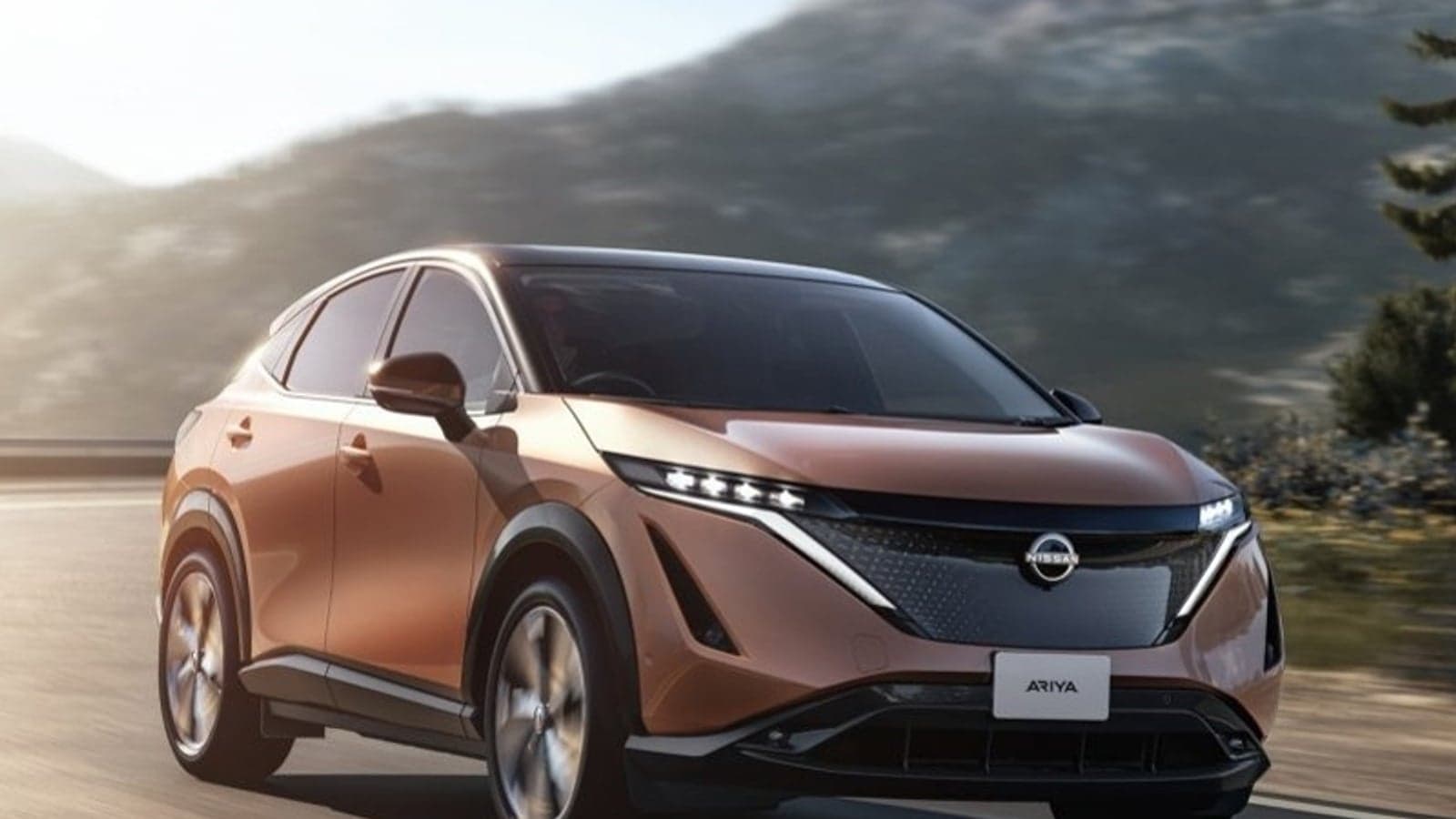
When coming back from this 6-week consulting assignment I ordered my first BEV, a Nissan Leaf (30kWh battery). I also wanted to get in touch with other BEV drivers and participated in the monthly meetings of ElektroMobilitätsClub Österreich. As with all volunteer organisations: if you have ideas and an interest in contributing, you will quickly be integrated into the leadership team.
How have your experiences in international IT management helped inform your approach to the challenges of electrification and V2G in Austria?
Having been part of a truly international company obviously helps in creating and maintaining international networks. During a meeting of several EV driver organisations in Oslo in 2019 we decided to stay in contact - which eventually resulted in the creation of the Global EV Alliance (GEVA) where I’m part of the management team.
When done cleverly, a broad adaption of V2G will indeed remove grid congestion pain.
V2G keeps coming up both within EMC Austria as well as at GEVA. I have always been a technician at heart - but also learned within IBM to manage profit and loss and lead large, diverse international teams.
I thus try to constantly learn about the technical aspects of the energy system but also understand underlying economics. While there is no direct link to the topic of V2G, a good international network and understanding both the technical perspective as well as the commercial side is also very useful for V2G.
How ready are Austrian distribution and transmission networks for broad adoption of V2G?
Compared to Germany, Austria has a big advantage in an almost completed rollout of smart meters, at around 95%.
Unfortunately the current Austrian legislation doesn’t allow DSOs to use smart meter data to understand the status of their low voltage networks. Actually, this brings to mind a famous quote from an Austrian DSO: 'The only thing digital within the Austrian low power grid are the fire detectors in our transformer stations.'
Austrian DSOs and Austria’s TSO face the challenge of grid congestions if V2G is not used wisely. PV/solar feed into the grid is already a significant challenge and needs to be capped. We need intelligent systems that result in network-friendly and power-system-friendly usage.
When done cleverly, a broad adaption of V2G will indeed remove grid congestion pain. To tap on this potential we need to change our legislation and regulations. This is underway but not in place, yet. Austria plans to double the production of electric power from approximately 70TWh today to 140TWh in 2040, using 100% renewable energy.
We need more digitisation and significant build-out of the grids to achieve that. Done right, V2G will be one of the key technologies supporting this effort.
Are there specific regions or grid segments that are more advanced or better suited for early V2G pilots?
We are better prepared at the mid- and high-voltage network levels in Austria.
We have also started to use advanced sensoring to increase the utilisation of our existing mid- and high-voltage grids (e.g. measuring temperature). Connecting areas of high renewable energy production with areas that need and consume this energy is an ongoing challenge, but a major east-west transmission project, the 380 kV Salzburgleitung, is well advanced.
Austria’s current law ElWOG is outdated and not fit for today’s prosumer environment. A successor, the ElWG has been in the works...
What changes will be required from the regulatory side to unlock V2G at scale?
Austria’s current law ElWOG (Electricity Act - Elektrizitätswirtschafts- und -organisationsgesetz) is outdated and not fit for today’s prosumer environment.
A successor, the ElWG has been in the works and in discussion for several years now to establish a more adequate foundation for drivers, flexible regional power production, power sharing, etc.
The expectation and hope is that this law will finally pass this year and will also then create a much better foundation for adequate regulations, better fit for distributed PV, stationary storage, V2G, peer-to-peer contracting, etc.
It will formally introduce the concept of independent aggregators and also open up the possibility of dynamic grid tariffs.
What do you believe a successful V2G ecosystem in Austria will look like in 2030?
The interest in V2G is very high in Austria - especially among consumers with solar power installations. Large scale-up of V2G is still a challenge (availability of suitable BEVs, availability of suitable charging equipment, interoperability, availability of suitable financial incentives / business cases) thus the scale-up will start rather slowly.
I expect that we will see a slow start of V2G in Austria, beyond pilot projects, in 2026 when the first affordable systems will be available (still largely with vendor lock-in), accelerating a bit more in 2027 - hopefully with more interoperability.
There are only a few years from this slow start until 2030, thus even at 2030 the EV participation rate in V2G will be low - not many cars within the fleet will be V2G-ready and not many wallboxes will be V2G-ready.
We might see more V2G impact from electric HDV depot charging as I expect quite significant uptake of electric trucks and busses in Austria. I can’t really put any serious number on that expectation.
Austria is well positioned in establishing itself as one of the European leaders for the scale-up of V2G.
A further complication obviously is the continuing price-drop for stationary storage. Cheap stationary storage will compete with V2H/G in private households.
I can’t really size any impact of this competition, but would still expect a significant skew towards V2G, as long as the delta investment into V2G charging infrastructure is significantly lower than an installation of stationary storage.
How well positioned is Austria in this field?
Austria is in a good position with the excellent smart meter rollout at 95%. We also already have a good choice of dynamic tariffs, although the uptake is very, very low right now. However, Austria is well positioned in establishing itself as one of the European leaders for the scale-up of V2G.
The interest in the V2G Alliance Austria by local charging equipment manufacturers, by car manufacturers, TSO and DSOs, consumer organizations, etc. is very high. This alliance should help us not only to identify Austria’s unique V2G roadblocks but also in addressing and eliminating those hurdles.
Join Christian Peter during Enlit Europe in Bilbao, Spain, where on Wednesday 19 November he will be presenting on a session exploring the potential of V2G and V1G for EV power management.