RE-WITCH demonstrates waste heat and thermally driven chillers as a great match
Guest/partner contributor
Posted on: 26 June 2026
The RE-WITCH project demonstrates how various industrial waste heat sources can be accessed and what they can be used for
The decarbonisation of European industry requires a multi-dimensional approach. Efficiency in energy consumption must increase, alongside the integration of renewable and waste heat–driven solutions.
Waste heat, which is unavoidable and a by-product of many industrial processes, has a great potential as an additional source of energy. However, its temperature is often too low for direct use, so it is frequently neglected.
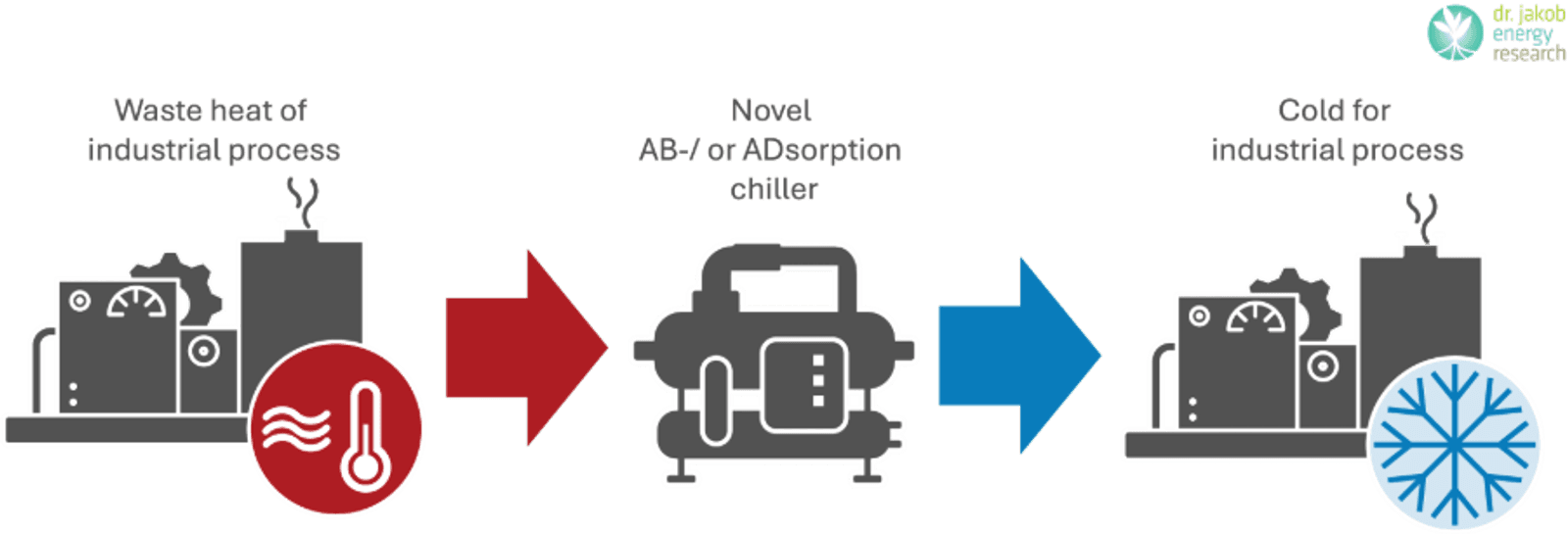
The RE-WITCH project harnesses untapped waste heat potential in the industrial sector, using it as the driving energy source for thermally driven ADsorption and ABsorption chillers.
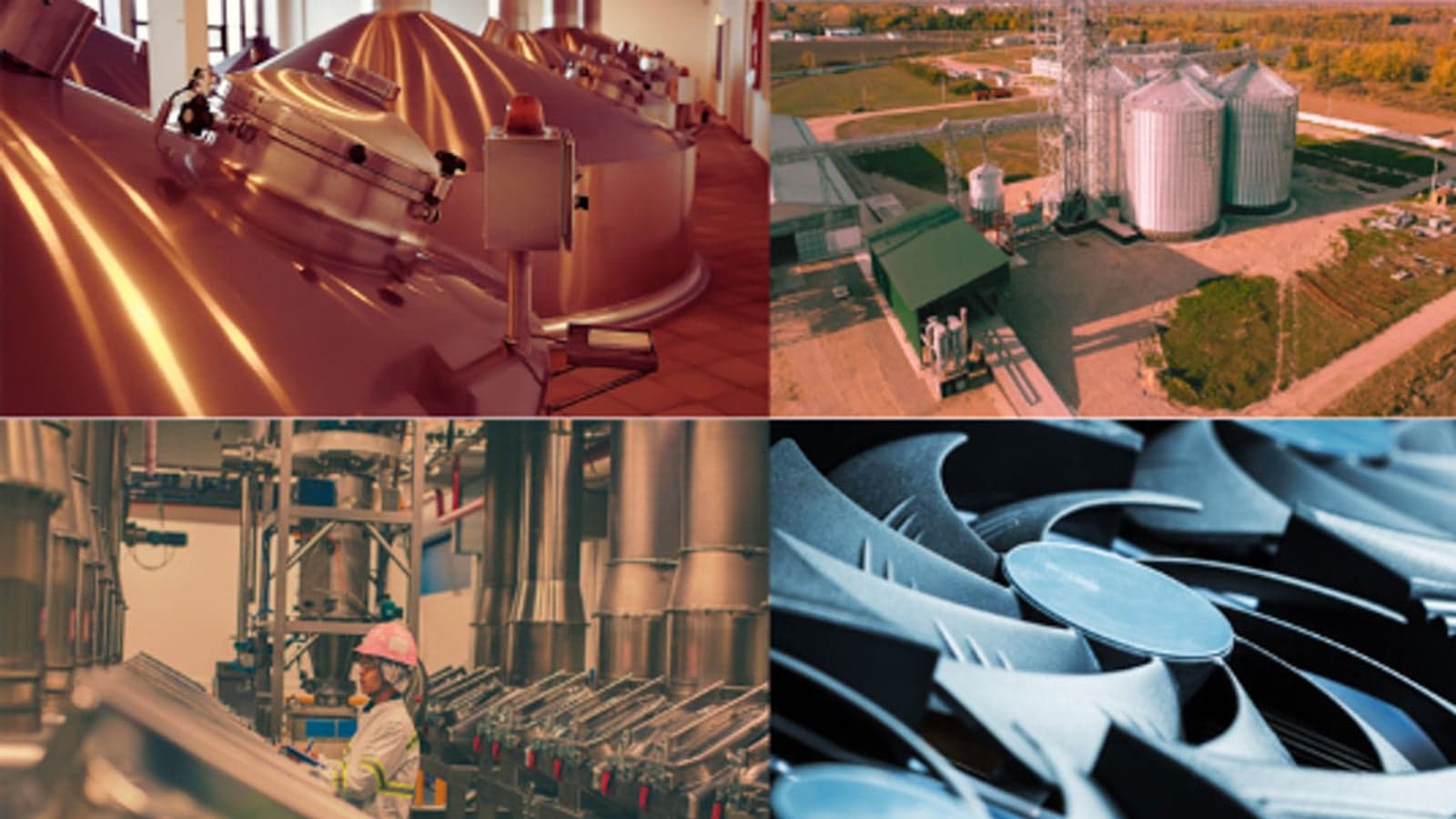
The project will demonstrate its innovative ad/absorption cooling solutions at four demo sites, representing typical industrial sectors with high cooling demand: food and beverage (BROWAR in Poland and COVAP in Spain), biofuels production (MIL OIL in Greece) and paper production (ICP in Italy).
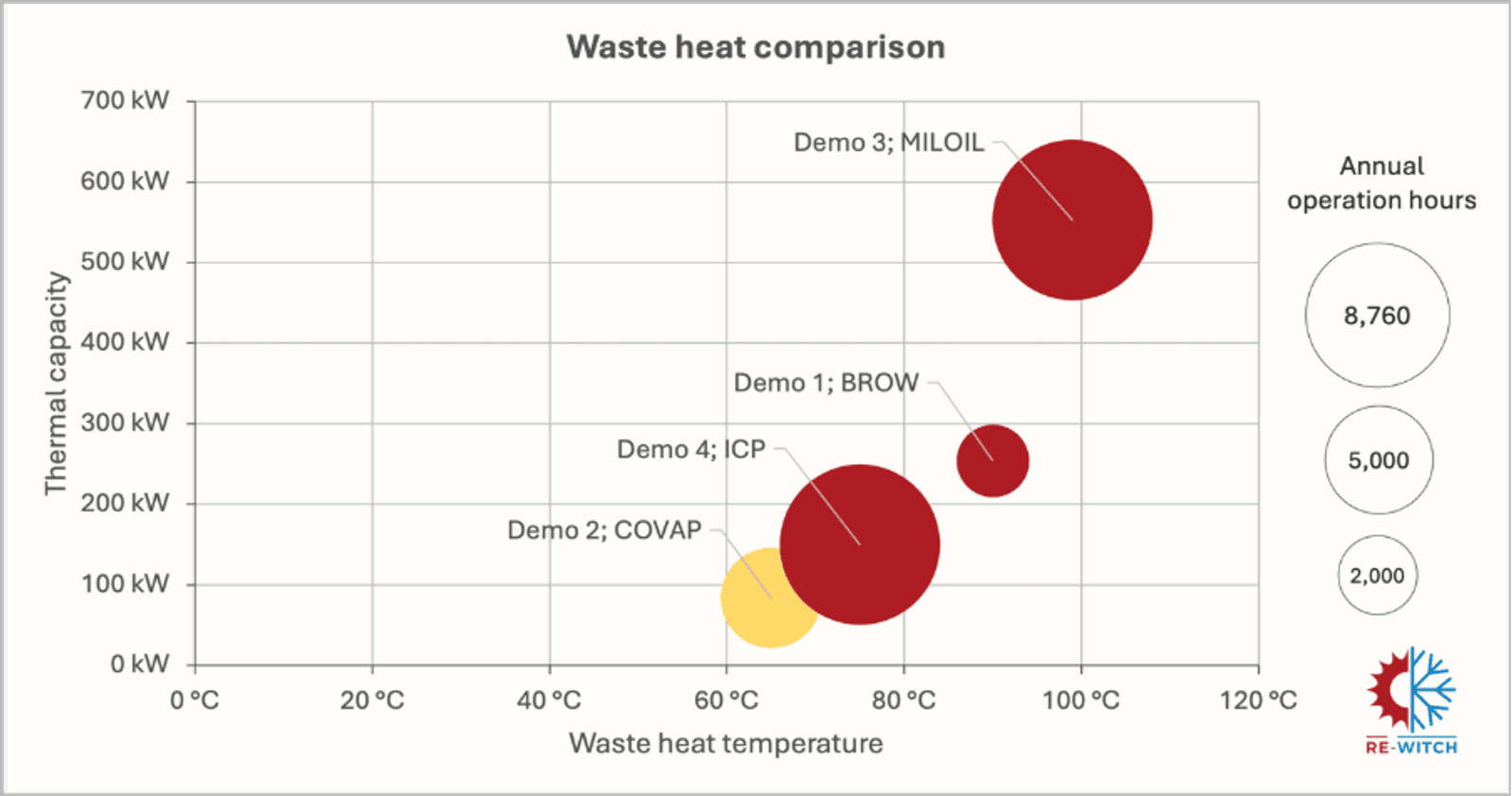
However, the waste heat potential must first be identified and assessed, and additional heat exchangers may need to be installed to effectively exploit this heat source. Analysing waste heat is therefore a critical step in maximizing energy yield. The waste heat situation varies significantly across the four RE-WITCH demo sites.
COVAP – Spain
The RE-WITCH installation at COVAP in Spain does not rely on waste heat to power the thermally driven chiller, unlike the project’s other three demo sites. Instead, two turbo-compressors are integrated into the absorption chiller, creating a hybrid chiller unit.
This adaptation enables the chiller to both cool an external chilled water circuit down to 7°C (with a 35kWₜₕ capacity) and supply 85kWₜₕ of heat at 60°C.
As a result, the absorption chiller’s excess heat, usually at a design temperature of around 30°C, is upgraded to a useful temperature and repurposed as waste heat to pre-heat a hot water circuit.
MIL OIL – Greece
MIL OIL as a company produces renewable fuels, particular biodiesel and biogas. The locally generated biogas is then used to operate three combined heat and power (CHP) units, generating green electricity.
The excess heat of these three CHP units has a temperature of up to 100°C amounts for more than 3MWth. This heat is accessible through a piping system connected to each CHP unit, from where it is diverted to the new absorption chiller, an Organic Rankine Cycle (ORC) unit to generate additional electricity and to a local biodiesel generation plant.
The unique double evaporation absorption chiller to be installed provides cooling at two temperature levels – at 10°C and at 20°C. This site demonstrates how CHP units cannot only deliver electricity and heat, but also indirectly cold via absorption chillers.
BROWAR Głubczyce – Poland
The brewing process consists of a series of process steps that require either cooling or heating. Naturally, the process operates in batches, and the wort is pumped from one process to another.
This process set-up facilitates the use of waste heat. After boiling the wort at up to 100°C it needs to be cooled down to 8–12°C. This is exactly where the RE-WITCH solution comes into action. An adsorption chiller is integrated within this cooling step. It is driven by the excess heat from the wort itself. Heat is extracted through a heat exchanger, providing an initial cooling it in a first step.
This extracted heat is used for regeneration in the adsorption chiller. The evaporator of the adsorption chiller cools down well water from 15°C to about 8.5°C. This cold is then distributed to a second heat exchanger, pre-cooling the wort before it is cooled down via an electric driven chiller to the desired 8 °C for fermentation.
This demonstrates how a single medium (the hot wort) can serve both as a heat source and the medium to cool.
ICP – Italy
ICP produces paper, which requires intensive application of compressors to generate pressurised air for later use in pneumatic tools, equipment and processes. ICP has currently four compressors with a rated electric capacity of 132kW each.
As state of the art, the compressors are air-cooled to avoid overheating of the technical appliances. Two of the compressors are retrofitted with additional heat recovery units, delivering hot water a temperature of 75°C. The waste heat of both compressors is estimated at 150kWth and delivered to the adsorption chiller. The return flow from the adsorption chiller back to the heat recovery unit at the compressors has an estimated temperature of 55°C.
This demo presents how cooling one unit (the compressors) can deliver heat driving another unit (the adsorption chiller).
Making use of waste heat
The first step in using industrial waste is the identification of such. Previously, additional cooling towers were installed to dissipate unnecessary waste heat, as fuel was cheap and waste heat was not assessed as an additional heat source, but as an unintended side effect to get rid of.
This is particularly the case for waste heat at temperature below 100°C, since its field application may be limited. However, THE latest projects and demonstrations show that waste heat also at temperatures of 60–80°C can be used as a valuable heat source and used for pre-heating purpose, heat source for thermally driven sorption chillers to generate cold or as a heat source for industrial heat pumps, lifting to a higher temperature.
Harnessing waste heat requires multi-sectoral planning and engineers and technicians following a holistic approach, not only focussing on one unit and its operation, but a system approach.
Conclusion
The RE-WITCH project presents various forms of industrial waste heat and demonstrates how this valuable heat source can be tapped and used for either pre-heating or directly to run thermally driven sorption chillers providing cold.
The past activities of the project focused on the identification of waste heat, collection of relevant information, and the planning for waste heat harnessing and integration in energy efficient systems.
Future activities of the project target the physical integration of the technical solutions.
Stay tuned and follow the project to learn about its upcoming achievements.
About the authors
Prof. Dr.-Ing. Uli Jakob is Managing Director at JER and has over 25 years of professional experience as an engineer and specialist in the field of sorption heat pumps for cooling and heating solutions as well as industrial processes. He has contributed to over 20 EU-funded and 18 national research projects.
Michael Strobel is Senior Project Manager at JER and PhD candidate at the University of Innsbruck in the field of sustainable cooling solutions in the building sector. His professional work focuses on thermodynamic simulations and system analysis for building and industrial use-cases and he supports activities within the framework of EU-funded projects.
Related tags
Most popular
Join the community for freeAnd get access to all content
Related projects
RE-WITCH
1 January 2024 - 31 December 2027
View project