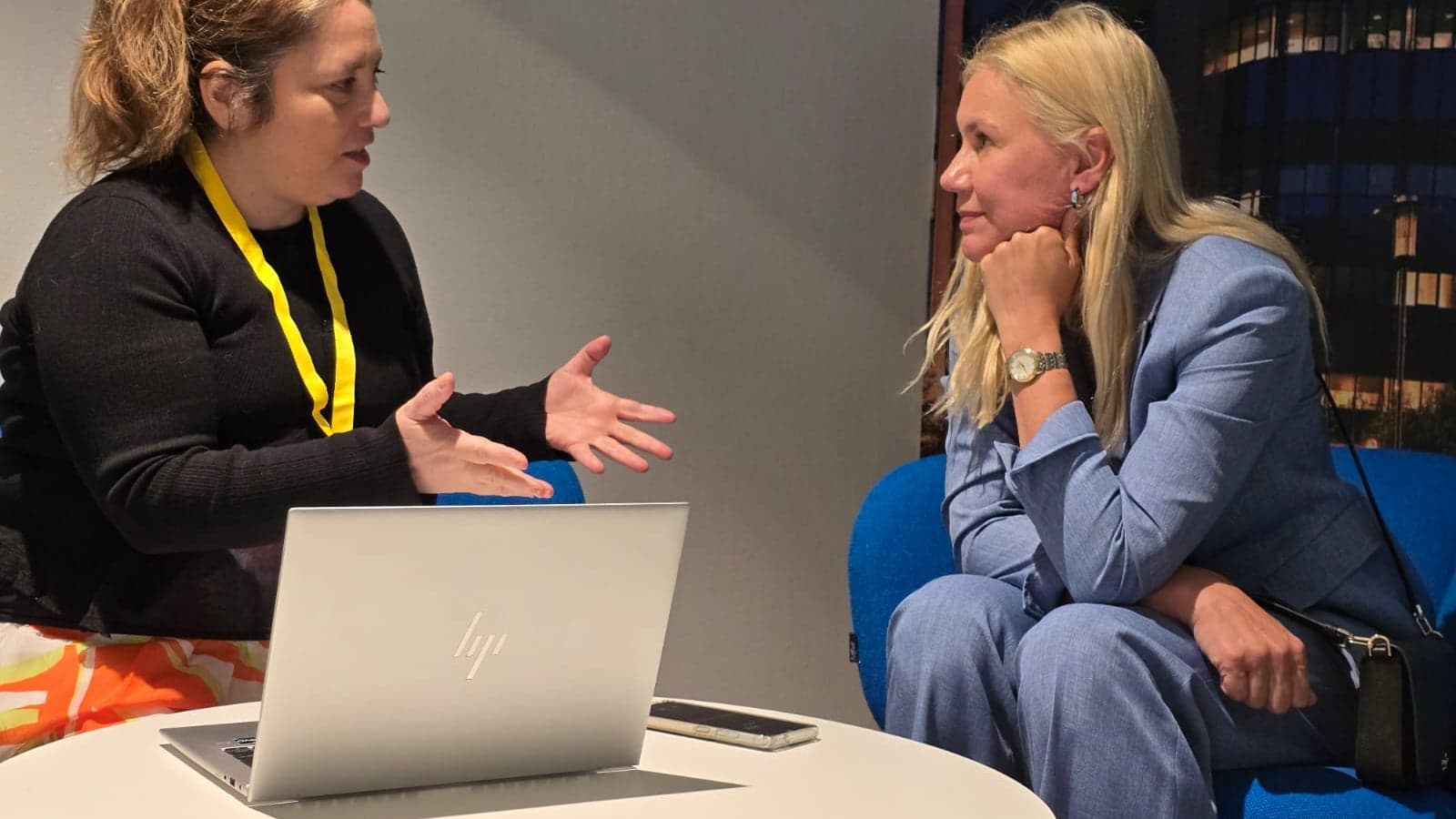
Meet these award-winning European clean energy champions
Jonathan Spencer Jones
Posted on: 17 June 2026
Three European Sustainable Energy Awards were presented to clean energy champions at EU Sustainable Energy Week in Brussels.
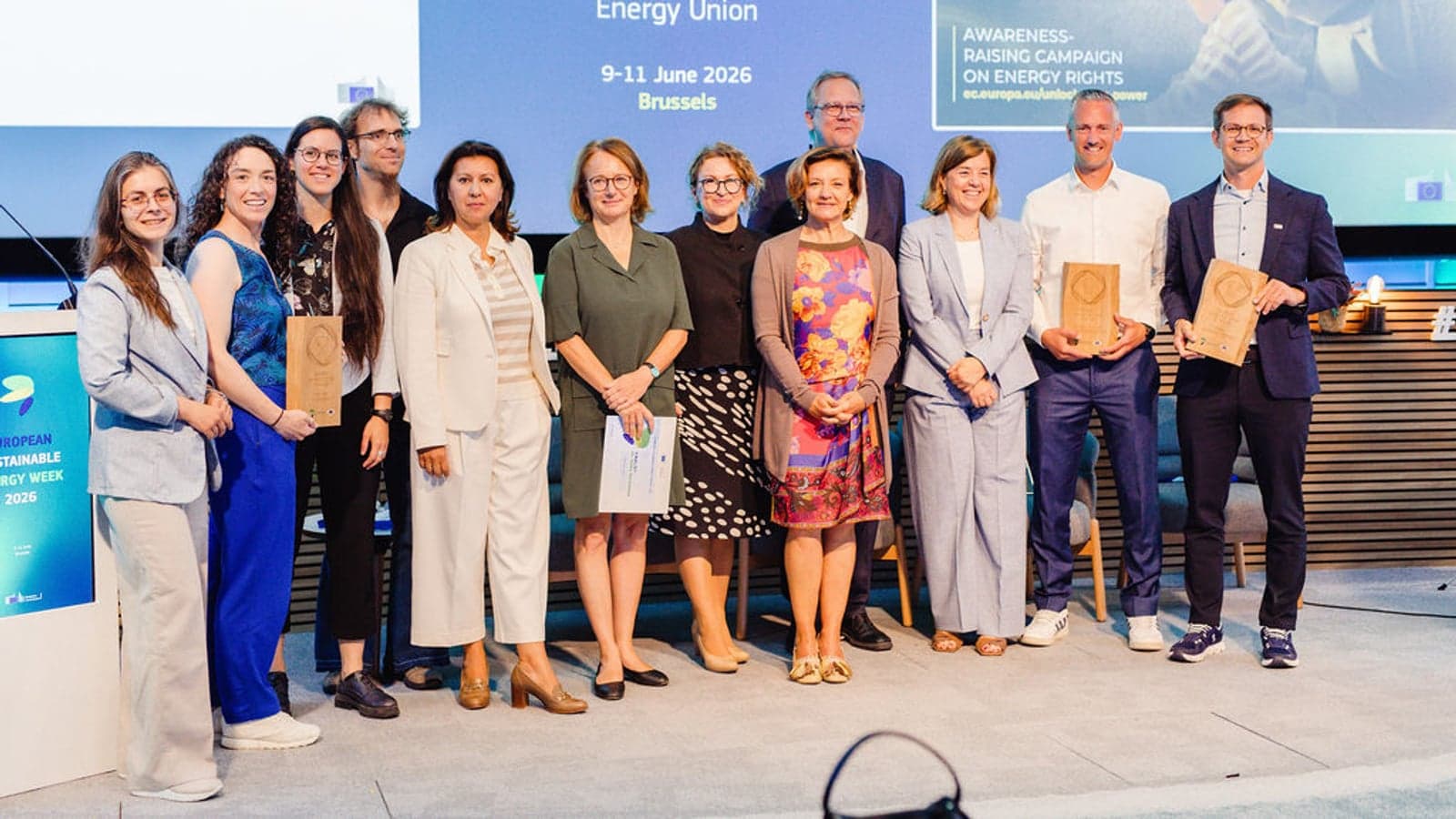
The three winners are Donna Gartland who received the ‘Woman in Energy’ award, the 100 Projects Phasing out Gas that received the ‘Local Energy Action’ award, and RE-LEAF that received the ‘SMEs Driving Energy Efficiency’ award.
These were selected by an online public vote after the original entries were judged down to three finalists in each category.
“This ceremony is a powerful communication tool for all the work that people are doing and how they are making the clean energy transition,” said Paloma Aba Garrote, Director of CINEA.
“Local actions ensure that the clean energy transition is tangible and is also affordable for citizens, and these champions are paving the way and pushing the boundaries. The projects have different ambitions and different scales but all are equally important and I hope that the finalists ignite the courage for all to act as a leader.”
Woman in energy

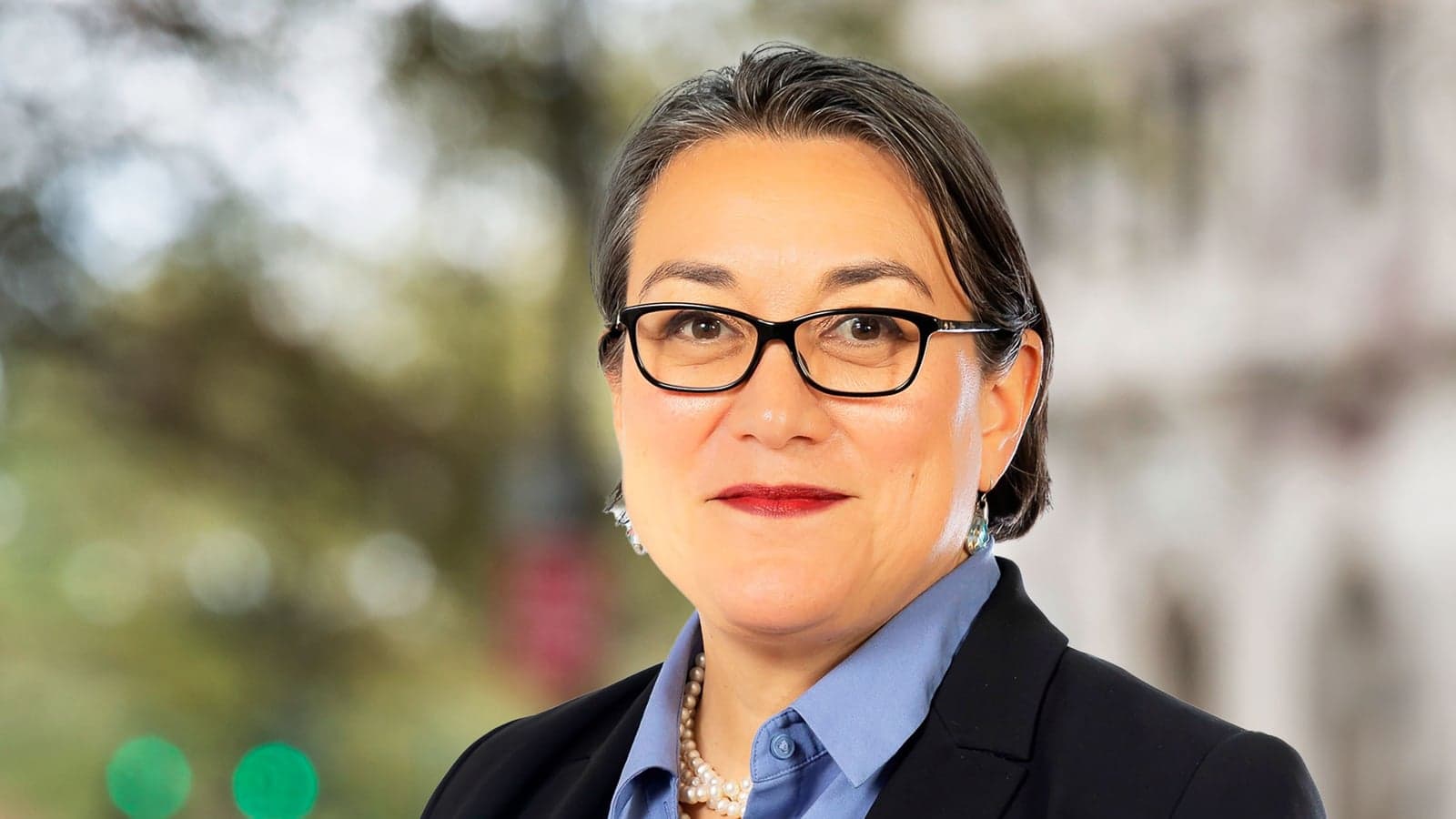
Donna Gartland, head of Dublin’s energy agency Codema, received the ‘Woman in energy’ award for her role in driving Ireland’s transition to low carbon heat, in particular for leading a district heating project using waste heat from an expanding data centre to supply municipal and residential buildings.
She also has secured major EU funding under the LIFE clean energy transition programme and has mainstreamed gender equality and progressive workplace policies at Codema, including a four-day working week on full pay and a gender-neutral family leave policy.
Gartland explains that the inspiration for the data centre district heating project came from observing a similar project when living in Denmark and although district heating in Dublin is very limited, it “seemed like a real no-brainer”.
With the enthusiastic support of the South Dublin County Council the Tallaght area was identified as suitable and when Amazon put in for planning permission for a data centre it was made a condition that the waste heat should be supplied into the scheme.
“The waste heat is uplifted by heat pumps on site and applied directly and there is no gas or fossil fuels, although we have back up boilers for when a little extra energy is needed in winter,” Gartland explains, noting that the first connections are the university campus, the municipality campus and a nearby new apartment block.
The project also was pioneering in being a first for Amazon.
“There were a lot of barriers that had to be broken down on both sides, but the waste heat is not valuable to them. They were looking for solutions to make their data centres greener and more sustainable and providing the waste heat to the heating network helps to do that.”
Looking ahead, with the high concentration of data centres in Dublin their sustainability is very topical at national level, Gartland says.
She adds that while new data centres are now required to use a significant portion of renewable electricity, there is as yet no mandate for waste heat use.
“We are working with local authorities to mandate new data centres or data centre upgrades in particular areas and the closer they are to the heat demand the more we can use their waste heat.”
There also are plans for a similar larger scheme with another new Amazon data centre and other data centre operators have expressed interest, Gartland adds.
“Reputationally the public don’t see data centres in a great light so providing waste heat is a positive for them but whether we need a lot more data centres in Ireland with their effects on the grid and pushing up electricity prices is another question. So it’s a difficult one”
Local energy action
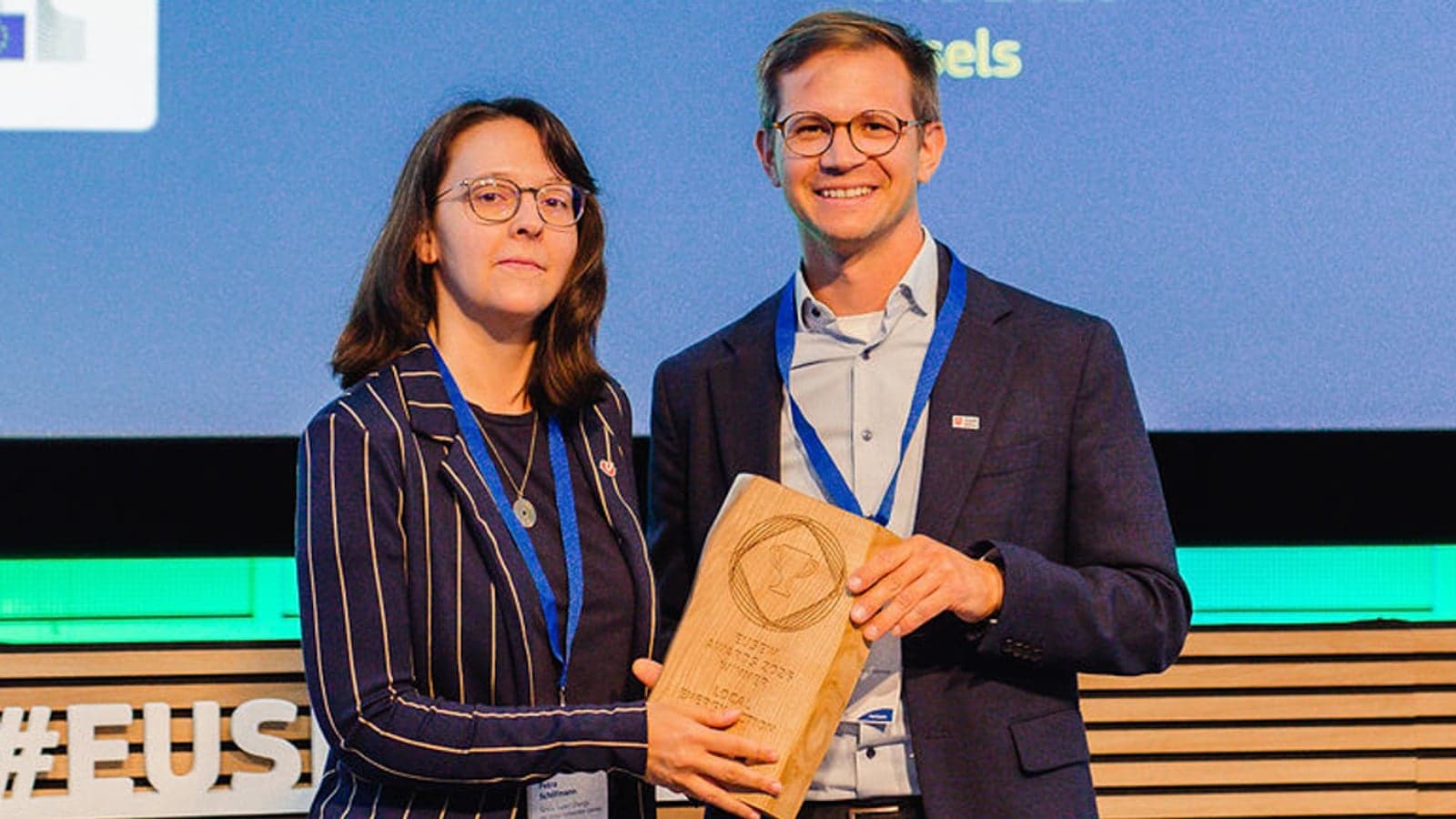
The 100 Projects Phasing Out Gas initiative led by the City of Vienna’s energy planning department and its climate and innovation agency, Urban Innovation Vienna, received the ‘Local energy action’ award for its impact in driving the energy transition towards 100% renewable energy supply in the Austrian capital by 2040.
In practice 101 projects have been reached to date and the number is growing, says Stefan Sattler, from the City of Vienna’s Unit for Renewable Energy and Innovative Energy Solutions, of the initiative, which is focussed on showcasing projects that demonstrate a successful switch from gas to renewables based heating systems.
By 2040 all buildings in Vienna must be heated with emission free and renewable sources of energy, with around 600,000 households that cause close to 90% of the city’s building carbon emissions needing to be converted.
“In the project something we feel doesn’t happen too often is that the city is willing to support on the one hand and listen on the other,” comments Urban Innovation Vienna’s Petra Schöfmann.
“We get to know both the success stories and the problems and the city listens and adopts the regulations and framework so that other projects like these are easier to implement.”
Over the first two years the focus has been on multi-story residential buildings that cannot be connected to the district heating network, with almost 1,900 housing units converted with fossil-free heating system replacements to over 1,000 gas fired boilers.
In addition 570 geothermal probes have been sunk with a length over 74km and 70 PV systems installed with a total peak output over 3MW.
Starting in 2026 the focus has switched to industrial, office and public buildings and other non-residential structures such as schools.
“While we are collecting projects to showcase, ultimately it is about the total phasing out of gas in Vienna,” says Sattler.
Schöfmann adds that alongside heating, cooling also is an important aspect with the higher temperatures being experienced and with most of the systems implemented cooling also is possible.
“This is important for the comfort of inhabitants and a big motivator as in the end we really need their agreement to accept the decarbonisation.”
SME driving energy efficiency
The RE-LEAF Affordable Renovation project in the Belgian province of Limburg received the ‘SMEs Driving Energy Efficiency’ award for its efforts in pioneering an innovative financing model to tackle energy poverty.
Broadly the project, which brings together social mortgage lender Onesto with local renovation consultants in the Energiehuis Limburg, is focussed on providing mortgages to low income and vulnerable people who would be unable to apply for loans with the traditional banks or access government loans.
“We are in that gap and it’s all about preventing energy poverty,” explains Joris Piette, Project Manager and member of the board of directors of Onesto, commenting the loan level is typically around €250,000 and the repayment up to 28 years.
“We connect the purchase phase with the renovation phase before approving the loan and that’s important to avoid people falling into energy poverty, which could happen if having had their loan approved they were then unable to afford to renovate their home or pay their energy bills.”
Such renovations include insulation, window replacement, renewal of the heating system and solar panels and are able to reduce energy use by 40-60% while increasing property values by up to 15%. These generally take two to three years to complete, although Piette notes that one client had a five-year renovation journey, which included installation of a heat pump.
“We have to plan each step very carefully and connect with the one-stop-shops in Flanders, which have renovation advisers who visit the homes. Or if that’s not possible, we use digital renovation tools to get a clear cost estimate.”
He adds that the renovation can be funded with a government loan up to €60,000 over 25 years, which lowers the risk, and it is not possible to renovate to an EPC label A or neutral energy home level but rather the aim is to achieve EPC label C level.
There also are discussion with the EIB on a European guarantee scheme to cover the mortgage risk in order to encourage more capital investment into the initiative.
“When we started this initiative there was no financial solution for vulnerable people. They could get renovation advice but they didn’t have the financial resources and the innovation for us is that we are able to make the connection in this ecosystem.”
Related tags
Latest in Projects
All articles+2
Kadri Simson: “We surprised the world with how strong Europe is”
The energy crisis triggered by Russia's invasion of Ukraine forced Europe to take decisions in months that would normally have taken years. At the centre of that response was Kadri Simson, European Commissioner for Energy from 2019 to 2024.
- Areti Ntaradimou
- 16/06/2026