Partner contentAsset Management
Renewable energies – the transmission and distribution enablers
Jonathan Spencer Jones
Posted on: 24 May 2023
Understanding how renewable energies, coupled with new technologies, are the power transmission and distribution enablers.
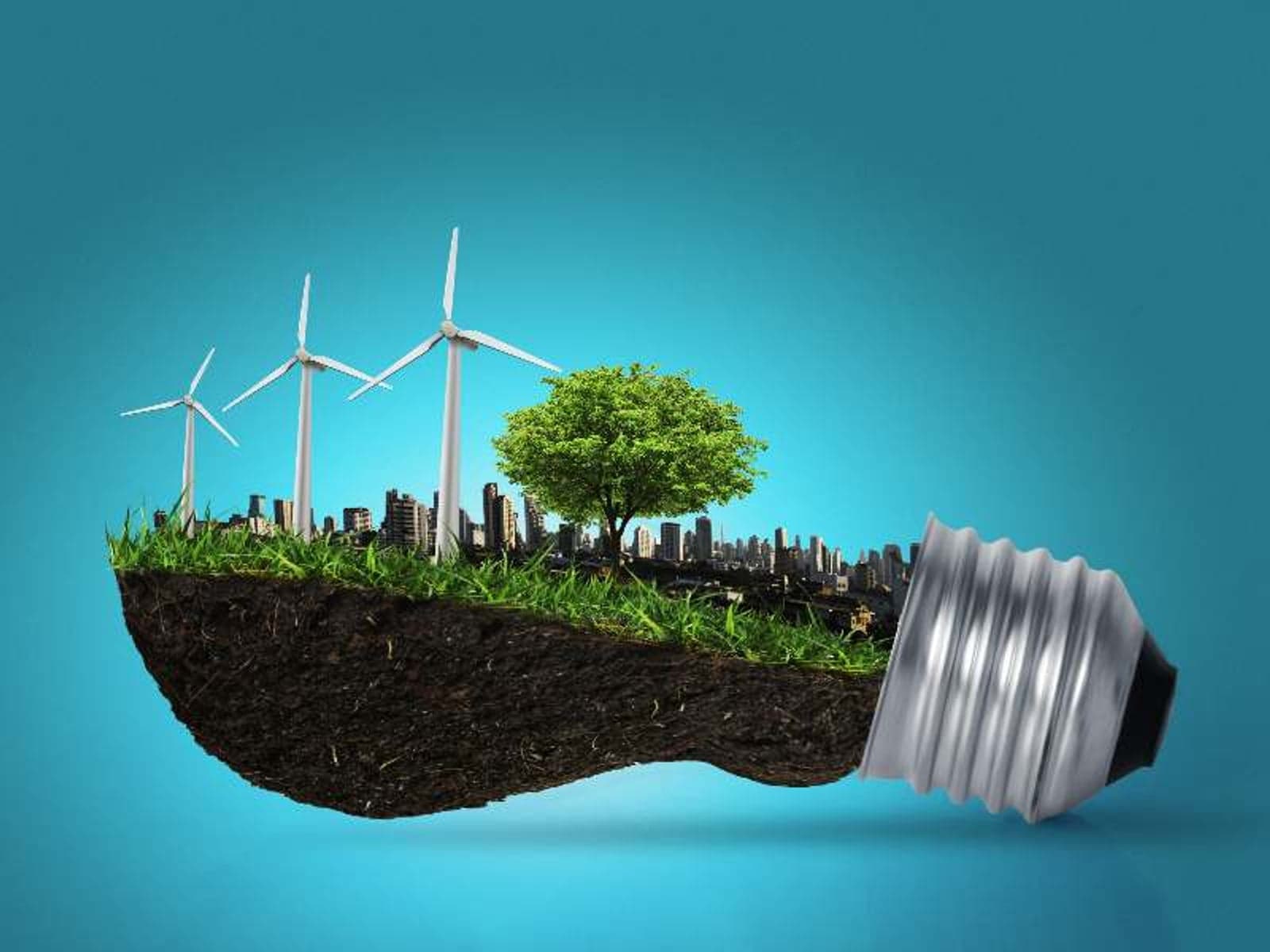
Technologies and digitalisation are the two key enablers for the large-scale deployment and integration of renewable energies.
The large-scale rollout of utility and customer-sited low carbon generation and its enabling infrastructure across the grid to decarbonise sectors across the economy to meet net-zero targets is filled with numerous challenges.
Renewable energies: the demand challenge
One of the most significant in many countries is the ageing grid infrastructure due to the technical and financial barriers to renewal. In the US for example, the average age is about 40 years.
Equipment breakdowns and other stresses are on the increase, exacerbated by more extreme weather events, and could become even more prevalent as demand increases.
The IEA in its World Energy Outlook 2022 projects global electricity demand to increase between 75% to 120% over 2021 levels by 2050, primarily due to the electrification of energy-intensive sectors including transport, heating, and industry.
Another challenge is the emergence of two-way flows of electrons with prosumer decentralised energy resources such as small-scale solar, home batteries and electric vehicle-to-grid. This requires advanced levels of automation for monitoring and management to ensure reliability.
The IEA has estimated in its net-zero scenario that global investment in the grids should reach close to $750 billion per year by 2030 and remain at a high level through 2050.
Close to 70% of this investment is for distribution grids, where most of the decentralised generation is connected, for their expansion, strengthening and digitalisation.
However, the IEA points to several obstacles that need to be addressed, especially permitting and construction times, which in some countries for a single overhead transmission line can take up to 13 years.
New technologies for green grids
The financial and regulatory challenges, which are in the hands of policymakers and governments, are clearly significant.
But no less so are the infrastructure challenges, the responsibility of utilities and their solution partners, requiring new advanced grid technologies driven by a digital backbone to optimise their operation and enable the necessary high level of automation on a near real-time basis.
By extracting the full capacities of networks, the need for more expensive strengthening or expansion can be deferred or eliminated altogether.
Among these are technologies such as power flow controllers and dynamic line rating for congestion management, commonly known in the US as ‘grid enhancing technologies’ to distinguish them from the more general ‘smart’ or ‘intelligent grid’ technologies.
With smart metering and advanced metering infrastructure as the foundation of a smarter grid, insights on consumption and the status of the grid on both the customer and utility sides of the meter are becoming available to energy managers.
Intelligence at the edge
These are being supplemented with sensors and other grid devices. Edge intelligence is decentralising decision-making and control in equipment and appliances, enabling automation closer to real-time.
A key technology emerging is bi-directional electric vehicle chargers. In addition to charging the EV, the vehicle-to-home and vehicle-to-grid use cases enable these ‘batteries on wheels’ to serve as a backup to the home and to contribute to the smoothing of peak loads.
Another new technology that can enhance the security of the grids is the microgrid. Islanding these can enable the development of community renewable projects and build local resilience and protection from wider grid outages.
To expedite the delivery of these microgrids, the energy-as-a-service offer is a no-money-down model that allows electricity customers to reap the reliability, economic and environmental benefits without the capital or operational risks.
As an example, the Montgomery County, Maryland microgrid was introduced to overcome the challenge of increasing weather-induced incidents at critical facilities, including the public safety headquarters and correctional facility. In the event of the grid going down, power can be provided from stand-by generators, CHP and solar installations.
Following its implementation, a second solar-hybrid microgrid has been installed at Montgomery County’s electric bus depot for e-bus charging.
The digital grid
The second pillar underlying the operation of the modern grid is digitalisation. Platforms integrate the IT and OT aspects of the business and enable new use cases to be progressively added as they are developed.
With the decentralisation of supply, energy management is becoming more localised with the need growing for flexibility in the distribution grid alongside the traditional ancillary services at the transmission level.
This is demanding closer coordination between the TSOs and DSOs as well as third parties such as aggregators. This in turn is bringing new requirements for data management and sharing while adhering to privacy and other use restrictions.
Advanced technology and solutions such as Schneider Electric’s EcoStruxure platform, are designed to help utilities erase the boundaries between the supply and demand sides as an IoT-enabled, plug-and-play, open, interoperable architecture and platform for energy management and industrial process automation.
EcoStruxure Grid provides three key components: an Advanced Distribution Management System (ADMS) – named #1 by Guidehouse in its ADMS vendor leaderboard – including outage and energy management sub-components; ArcFM, a GIS solution; and Distributed Energy Resource Management System (DERMS) for grid edge device management, that could be quickly deployed in a stepwise journey, identifying the best DER use cases to start with. Like PG&E is partnering with Schneider and Microsoft, building the platform that is best for the company.
With EcoStruxure ADMS to upgrade Italy’s grid, Enel recorded savings of about 144GWh/y – enough to power 50,000 households for the year – and CO2 emissions reductions of 75,000t/y.
You might be interested in:
Watch: IoT EcoStruxure at Enel Ensures Sustainability
Advanced analytics and digital twins
Advanced tools such as machine learning and artificial intelligence are further improving the value of these solutions to provide data-based insights.
Digital twins linking digital models with their physical counterparts are providing a new and powerful way to model and assess changes and scenarios for power systems.
The ETAP digital twin, for example, presents virtual models of a real-world power system under varying physical and operational conditions to model past, present and future behaviours.
Quantum computing is opening the way to investigating problems such as power grid optimisation that is running up against the capacity of traditional computation.
But digitalisation doesn’t come without its challenges and the main one is the increased attack surface for cyber threats. Generally, cybersecurity is built in ‘by design’ but a proactive approach with ongoing vigilance is needed to remain cyber secure at both OT and IT levels across the enterprise.
Ransomware attacks, the most common, are known to occur approximately 14 seconds and in the last year over half of utilities have reported at least one attack involving a loss of private information or an outage in the OT environment.
You might be interested in:
Schneider Electric and ETAP announce digital twin integration
Establishing harmony
Ultimately for cybersecurity and new technologies in general, balancing the risks and benefits is key for the digitised electricity infrastructure.
And highlighting the local importance of the Montgomery County e-bus microgrid, but applicable for the wider energy networks, Chris Brown, Chief of Montgomery County’s Office of Energy and Sustainability, sums up their central role succinctly: “Relationship goals – hashtag.”
Read Part 1 of this 3-part series: Renewable energies for the grid of the future
Read part 3 of this 3-part series: The ‘grids of the future’ in action