Renewables deliver decarbonisation for Airbus in Toulouse
Pamela Largue
Posted on: 15 April 2026
Airbus sustainability officer Christophe Valot explains how biomass, solar and PPAs with Engie are cutting emissions at the site in France.
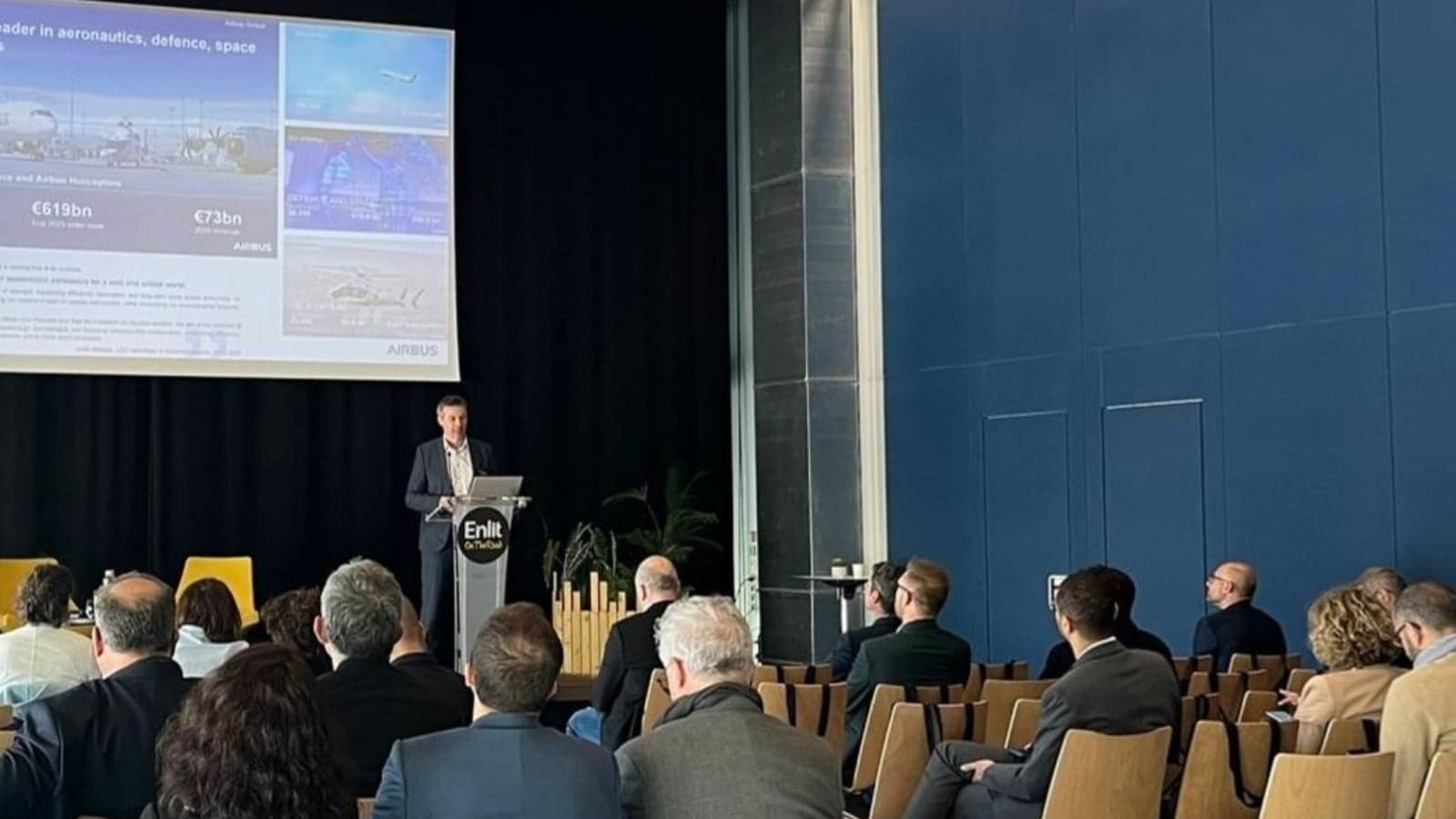
Aviation may account for just 2–3% of global carbon emissions, but that fraction is under intense scrutiny, according to Airbus National Sustainability Officer Christophe Valot.
“Especially in Europe, every time we speak about global warming and CO2 emissions, we first suggest reducing aviation,” says Valot.
However, he suggests the solution lies not in the sky, but on the ground: rather than reducing air traffic, the industry can do more to decarbonise.
And with around 160,000 employees spanning more than 180 locations worldwide, and supported by 18,000 direct suppliers globally, Airbus is committing hundreds of millions of euros into a variety of sustainability measures.
The company has committed to targets validated by the Science Based Targets initiative. For Scope 1 and 2 emissions, it aims for a 63% reduction by 2030 compared to 2015 levels, aligned with the Paris Agreement 1.5°C pathway.
It has already achieved a 52% reduction, but progress is becoming harder. “This is more challenging in the post-COVID phase,” Valot notes, as production ramps up to meet renewed demand for air travel.
Also of interest:
Building Milan's net zero airport of the future
One of the biggest operational hurdles lies in logistics. Transporting aircraft components, whether by Airbus’s iconic Beluga cargo aircraft or via shipping, remains emissions-intensive, particularly on transatlantic routes.
However, Valot highlights new investments that aim to soften that impact. The company has acquired three new vessels that promise a 50% emissions reduction through turbine technology, while Beluga aircraft are expected to cut emissions by 20%.
Greening the industrial footprint
At its Toulouse site, the company is also rethinking how it consumes energy, water, and materials. Energy use stood at 4GWh in 2015, with a target to reduce consumption by 20% by 2030.
"Airbus is almost there”, says Valot, though rising production continues to complicate progress. Furthermore, the buildings target is aiming for an 85% reduction in CO₂ emissions by 2030. Measures include electrifying vehicle fleets, upgrading lighting systems, and improving insulation in aging facilities.
A major pillar of this effort is biomass energy. What began with a single biomass heater in 2013 has evolved into a large-scale system, including a 20MW installation that came online two years ago.
This infrastructure now covers 85% of the site’s heating network, a significant contribution in a facility where heating once accounted for half of energy demand via natural gas.
“We are not experts in energy, we are users,” Valot admits. “To do the final step [of decarbonisation], we know it’s going to be difficult.”
To this end, Airbus has partnered with Engie, signing a global agreement focused on power purchase agreements and solar PV deployment.
The aviation roadmap
Valot is often asked if Airbus is looking to reduce emissions, why does it keep building new planes? He explains that currently 61% of planes in operation globally are older-generation models. Each new generation delivers around 20% lower fuel consumption and emissions, making fleet renewal a critical priority.
The company is already working on a successor to its A320, targeting a 30% efficiency improvement through advanced engines, hybridisation, and aerodynamic innovations.
Looking further ahead, Airbus sees hydrogen as a transformative solution. Fuel cell technology could redefine aviation, but only if the supporting ecosystem exists.
“There must be hydrogen available after a plane takes off from Toulouse,” Valot explains, acknowledging that infrastructure gaps have pushed timelines into the next decade.
The fuel transition challenge
According to Valot, sustainable aviation fuel (SAF) is one of the most viable pathways to reducing emissions from existing fleets.
Produced from renewable feedstocks including biofuels and synthetic e-fuels, SAF can cut lifecycle emissions by around 80% and is fully compatible with current jet engines.
But scale remains a major barrier, he says, highlighting that globally, SAF accounted for just 0.6% of aviation fuel use last year.
Valot hopes that regulatory pressure in Europe will increase that figure to meet the targets of 6% by 2030 and 25% by 2035.
“It’s a steep ramp up,” he says - and costly. Biofuels are currently two to three times more expensive than conventional jet fuel, while e-fuels can be up to ten times costlier. However, rising oil prices and geopolitical volatility may shift that equation.
Read more:
Report examines Europe’s hydrogen infrastructure dilemma
First section of Rotterdam’s hydrogen network filled with H2
Airbus is attempting to accelerate adoption by supporting local SAF production ecosystems, helping suppliers demonstrate both environmental and socioeconomic benefits.
The company itself used 21% SAF in its internal operations last year and is actively collaborating on storage solutions for both SAF and hydrogen.
Airbus’s decarbonisation strategy reflects a broader truth about the energy transition in general and aviation in particular: the mission to decarbonise can’t be achieved alone.
“We want to take responsibility. We will invest for the scope 1 and 2 to reduce our footprint. We want to lead the aviation roadmap, but we need support from politics and also from the energy suppliers.”