Home
/
RES-integrated electrified heating and cooling systems for improved energy efficiency and demand response
RES-integrated electrified heating and cooling systems for improved energy efficiency and demand response
Guest/partner contributor
Posted on: 28 August 2025
-
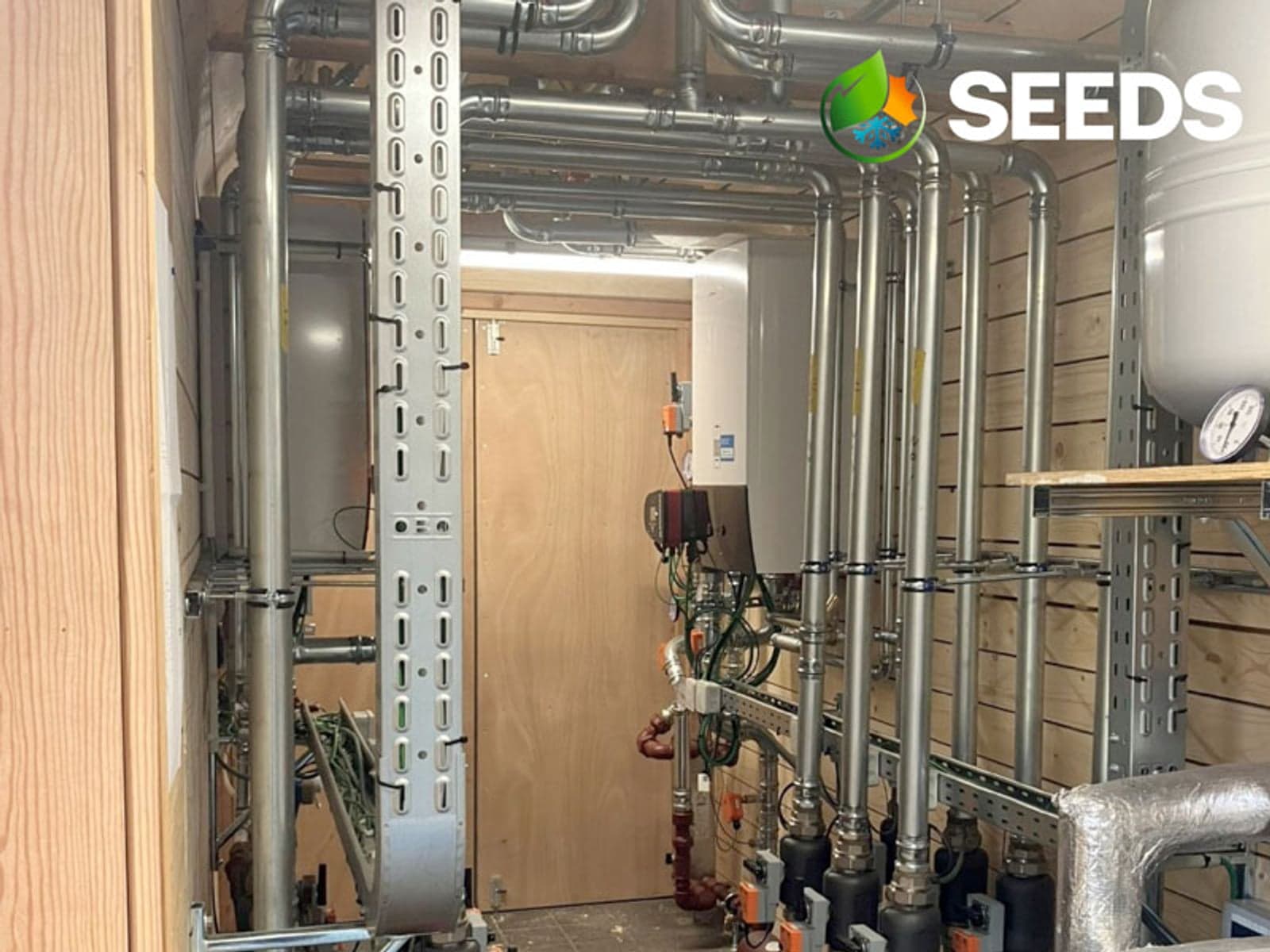
SEEDS is a groundbreaking European project launched in January 2024 with funding from Horizon Europe, that is reshaping how buildings produce and consume thermal energy.
As Europe accelerates its transition to a sustainable energy future, the buildings sector emerges as a critical battleground. Heating, cooling and hot water production account for over 70% of energy consumption in European households, with natural gas still dominating as the primary fuel source.
Reducing this dependence on fossil fuels is essential, not only for tackling the climate crisis but also for enhancing energy security in a geopolitically uncertain world.
Enter SEEDS – 'Cost-effective and replicable RES-integrated electrified heating and cooling systems for improved energy efficiency and demand response'. Its mission? To accelerate the electrification of building heating and cooling systems through smart, renewable and integrated solutions that cut carbon emissions and support grid stability.
What is SEEDS?
At its core, SEEDS offers an innovative, holistic approach to decarbonising buildings thermal demand by combining three key pillars:
● Deep energy renovation to drastically reduce heat loss by improving building envelopes through insulation and façade upgrades.
● Smart electrification of HVAC systems, deploying advanced heat pumps that replace fossil fuel boilers for heating and cooling.
● Renewable energy integration, notably through on-site PV solar panels and battery storage, enabling buildings to generate and manage their own clean power.
But SEEDS doesn’t stop there. Leveraging cutting-edge digital technologies and Internet of Things (IoT) platforms, it activates energy flexibility, allowing buildings to dynamically adjust their heating and cooling consumption in response to grid signals and renewable availability. This not only optimises energy use and cuts costs but also helps stabilise the electricity grid by smoothing demand peaks.
Real-world demonstrations across Europe
To prove its concepts, SEEDS is deploying its solutions in five diverse pilot sites across Europe, each reflecting different climates, building types and market contexts – with Center Denmark in Denmark, SWECO in Belgium, ÉMI in Hungary, Petrol in Slovenia and the Democritus University of Thrace in Greece.
This geographical diversity is vital. It ensures that the SEEDS technologies and methodologies are not just theoretical but proven and adaptable across Europe’s varied construction styles and climates, from cold Nordic winters to Mediterranean summers.
The pilots showcase how integrated system design, modularity and digital control enable scalable solutions suited to everything from multifamily residential buildings to historic properties and even service stations.
Early insights and innovations
Though still in the initial stages of implementation, SEEDS has already highlighted several critical success factors:
● Iterative cost-effective system design: By continually refining both individual components and their integration, SEEDS maximises energy savings while keeping investments affordable.
● Secure interoperable IoT data platforms: Open and secure communication networks allow seamless coordination between HVAC systems, renewable generation, storage and user interfaces, enabling advanced controls and real-time feedback.
● Modular scalability: Solutions are designed to be replicable across different building sizes and types, lowering barriers for widespread adoption.
● Grid integration through demand response: SEEDS systems actively participate in balancing the electricity grid, reducing stress during peak times by shifting heating or cooling loads without compromising comfort.
These elements together form a powerful systemic approach that extends beyond simple retrofitting. SEEDS envisions buildings as active, responsive nodes within a smart energy ecosystem.
A new paradigm for the built environment
The significance of SEEDS lies not only in technology but also in its vision of the role of buildings in the energy transition.
Traditionally, buildings have been passive energy consumers. SEEDS transforms them into proactive players, able to generate, store and flexibly use energy in harmony with the wider grid.
This shift has far-reaching implications:
● For homeowners and tenants: Lower energy bills, improved comfort and a greener footprint.
● For energy providers: More predictable demand patterns and enhanced grid stability.
● For policymakers: A tested pathway to meet climate goals through scalable solutions and data-driven decision-making.
By coupling energy renovation, electrification and digitalisation, SEEDS delivers an integrated blueprint for decarbonising Europe’s building stock – one of the continent’s largest energy consumers and carbon emitters.
What's next?
As the SEEDS pilot sites progress, the consortium of 26 partners spanning eight countries will continue gathering data, refining methodologies and developing business models to support replication at scale. These learnings will inform policy recommendations and create a strong foundation for accelerating the electrification of thermal demand across Europe.
Ultimately, SEEDS aims to demonstrate that clean, smart and cost-effective heating and cooling solutions are not only possible but essential. By making buildings smarter and more flexible, SEEDS helps Europe reduce its fossil fuel dependency, integrate more renewables, and move closer to climate neutrality.
For more information and updates on the SEEDS project, visit project-seeds.eu.
About the authors

Anaïs Gandelin holds two BTEC Higher National Diplomas and a Master’s degree in Business and Communication. She gained experience in communication at Ferrero France, Barnes International and Christian Dior Couture. Since 2023, she has been leading communication and dissemination activities at R2M Solution focusing on stakeholder engagement and public outreach.

Rongling Li is an Associate Professor in Civil and Mechanical Engineering at Danmarks Tekniske Universitet (DTU) and is the coordinator of the SEEDS project. She specialises in smart energy systems and building energy flexibility, and has coordinated numerous EU and international projects. Her research interests include smart buildings, energy resilience and data-driven energy system modelling.
Related tags
Most popular
Join the community for freeAnd get access to all content
Related projects
SEEDS
1 January 2024 - 31 December 2027
View project