Researchers develop compact power plants for green hydrogen
Pamela Largue
Posted on: 8 July 2024
Researchers from the Fraunhofer Institute in Germany have developed a module that is self-sufficient and reliable at producing solar-generated green hydrogen.
Researchers from the Fraunhofer Institute in Germany have developed a self-sufficient and reliable module for producing solar-generated green hydrogen.
As part of the Neo-PEC joint research project, researchers from three Fraunhofer institutes came together to develop a modular solution that enables highly flexible hydrogen generation and supply with solar energy.
The Fraunhofer Institute states that the tandem PEC module solution offers an efficient alternative to electrolysers, which are large, complex and costly.
Have you read?
China’s Huizhou CHP plant starts operating with hydrogen-ready turbines
bp joins consortium to develop green hydrogen in Egypt
According to the researchers, the module allows electricity to be generated and electrolysis to take place in the same unit.
To produce the tandem cell, the experts coat standard float or plate glass with high-purity semiconducting materials on both sides, which allow them to increase the hydrogen yield.
Fraunhofer Institute explains that the photovoltaic elements linked in the module supply the system with additional voltage, which accelerates activity while boosting efficiency.
The result is a reactor with an active surface area of half a square meter. "Currently, a single module exposed to sunlight under European conditions can generate over 30 kilograms of hydrogen per year over 100 square meters. With this yield, a hydrogen car could travel 15,000 to 20,000 kilometers, for example," states the release.
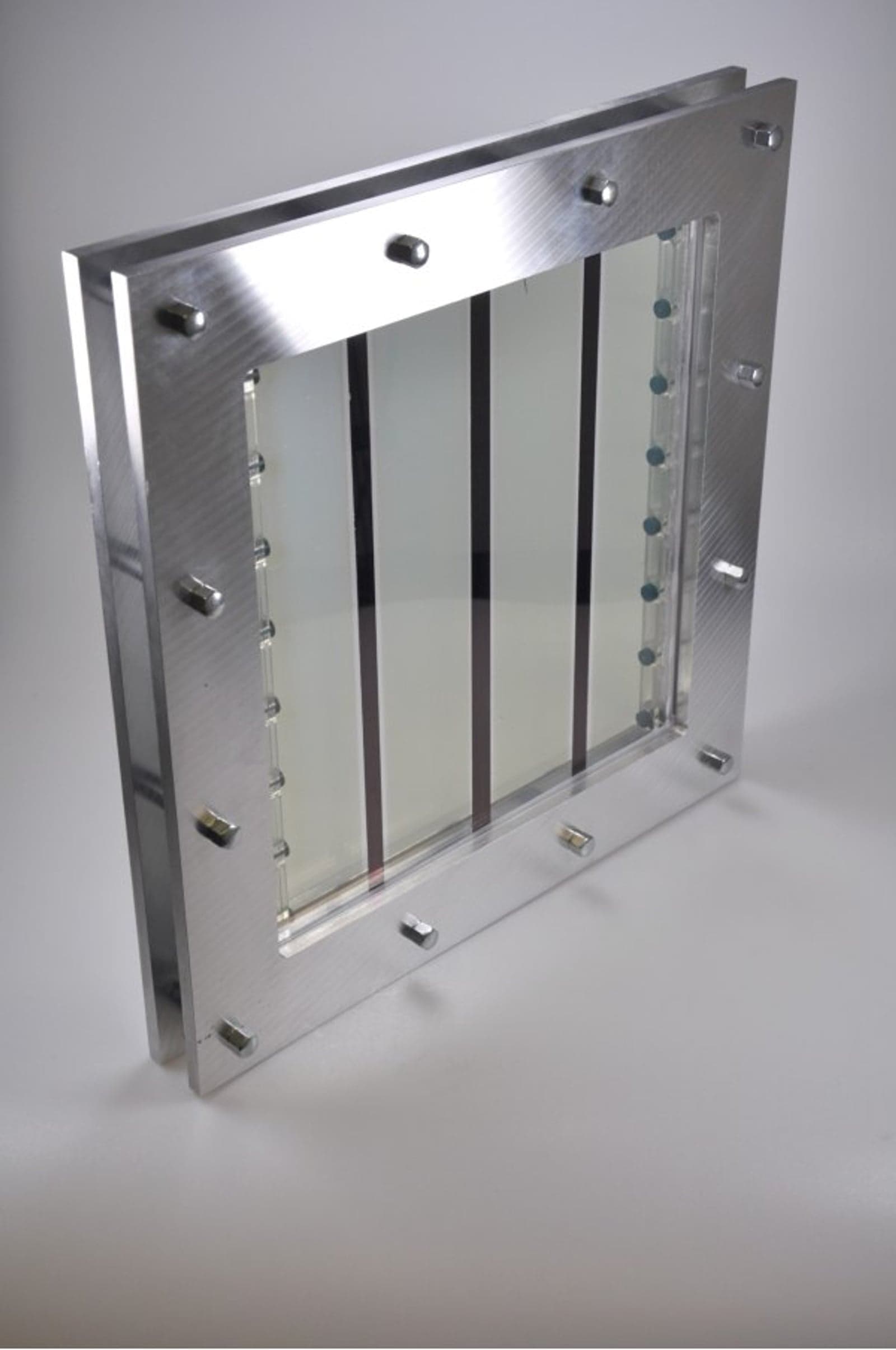
Dr Arno Görne, group manager of Functional Materials for Hybrid Microsystems at the Fraunhofer Institute for Ceramic Technologies and Systems IKTS commented in a statement: “In terms of the dimensions of the tandem cell, we are limited by the fact that our module splits the water directly, but it is also necessary for electricity to get from one side to the other to achieve this. As the module area increases, the rising resistance has an unfavourable effect on the system. As things currently stand, the existing format has proven to be optimum. It is stable, robust, and significantly larger than any comparable solution.”
In terms of the next steps, the researchers will further develop their solution in collaboration with the private sector to promote efficient and decentralised generation and supply of hydrogen.
The scientists suggest that this solution will make a significant impact in decarbonising hard-to-abate industries and transforming industrial processes to be more climate-friendly.
In a comment to PEi, Görne added: "We see the main use cases in off-grid or decentralised solar hydrogen generation, as well as the free scaling without any respect to power generation or electrolyzer.
"Hydrogen generation at the point of use is still missing, so that is one possible impact on the sector. Of course, there is still development necessary, but the size and stability of the module is outstanding for PEC hydrogen generation."