Rising nickel prices will not halt the energy transition
Guest/partner contributor
Posted on: 15 March 2022
The world needs critical materials for the energy transition. Earlier this month nickel prices at the London Metal Exchange (LME) tripled in the space of four days.
By Dolf Gielen and Martina Lyons of IRENA
The world needs critical materials for the energy transition. Earlier this month nickel prices shot up at the London Metal Exchange (LME). They more than tripled between Friday, 4 March and Tuesday, 8 March to a record high level of 100 000 USD/t. However, LME cancelled the contracts and halted the trading.
The reasons for this price spike are complex. The largest nickel producer in the world, a Chinese company called Tsingshan, which accounts for around a third of global supply (notably nickel for stainless steel), had bet on falling prices, knowing that significant own production would come on stream. Then, Russia’s Norilsk Nickel supplies around a tenth of the world nickel market (146 kt in 2021, high grade nickel) and was sanctioned following the Ukraine invasion. So what followed was a shortage and a market squeeze, and Tsingshan was caught wrongfooted.
Read more about the conflict in Ukraine
Analysis: Impact of the Ukraine crisis on Europe’s energy markets
Has Russia’s power generation modernisation come to an end?
The strategic importance of Ukraine’s energy infrastructure
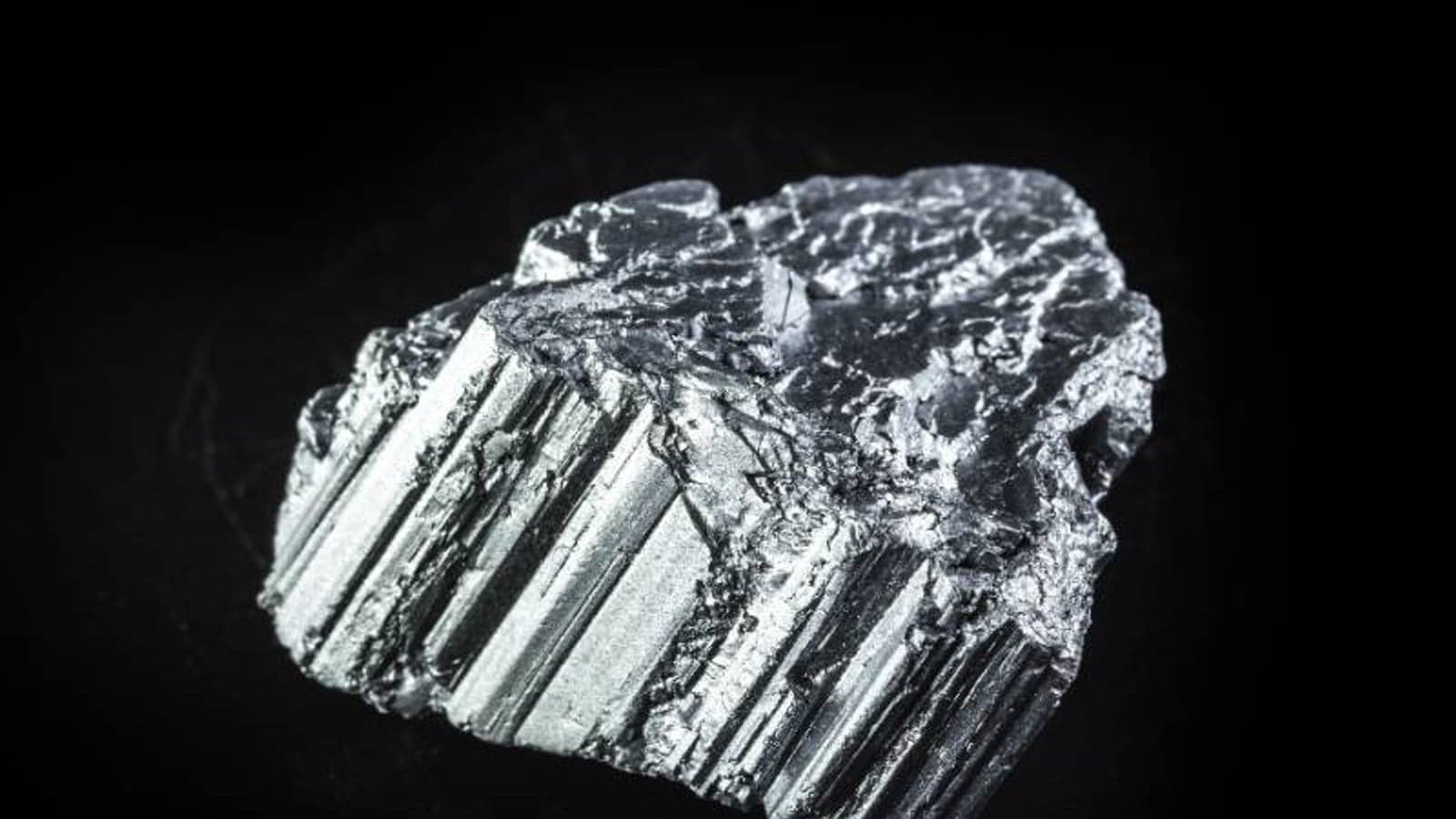
But the price trend for nickel has been upward for some years now. It doubled from 20 000 USD/t end 2017 to 40 000 USD/t end 2021. The reason is a strong nickel demand for electric vehicle (EV) batteries and rapidly rising battery manufacturing. A typical battery EV with nickel based batteries uses around 45 kg of nickel. So if 50 million BEV with such batteries are sold in 2030 – a fifteen-fold increase from last year – this will require more than 2 Mt of nickel. In comparison 2.5 Mt nickel was mined in 2020 with around one third in Indonesia, and Philippines, Russia and New Caledonia each producing 200-300 kt. We will not run out of nickel any time soon as identified land-based resources with 0.5% nickel or greater contain at least 300 million tonnes of nickel, with about 60% in laterites and 40% in sulfide deposits.
In fact, the market is more complex than it may seem at first sight and it is evolving fast due to technological innovation. On the supply side there are two main resources that are exploited today: nickel sulphide ores and laterite weathered tropical soils. Sulphide ores are typically derived from volcanic or hydrothermal processes and usually include copper and/or cobalt, and sometimes other precious metals such as gold or platinum and palladium (e.g. Norilsk Nickel). The world’s largest nickel producer Indonesia with neighboring Philippines produce the laterite resource type. Laterite resource vastly exceeds the sulfide resource, a reason why Indonesia is currently expanding its production significantly. Significant amounts of laterites can also be found in Australia, Brazil, Cuba, New Caledonia and South Africa, as well as other places.
To extract nickel, laterite ores require extensive and complex treatment, which has been historically more expensive than sulphide ores. So far markets for Nickel Pig Iron (NPI) and battery grade nickel have functioned independently with battery grade nickel being much more expensive. Tsingshan has developed a revolutionary new technology to process laterite nickel with a substantial reduction of processing cost and pioneered the production of NPI from nickel laterite ores.
Not all nickel mined is used for EV batteries or traded on the LME. Mined nickel can be split into two broad categories: low and high-grade primary nickel. High-grade nickel (Class I) accounts for 55% of all nickel mined while low-grade primary nickel (Class II) accounts for the remaining 45%. Class I nickel contains at least 99.8% nickel. Class II nickel, such as NPI or iron-nickel actually contains a relatively small amount of nickel - from 8-16% and 15-55% respectively. The secondary nickel market, on the other hand, is sourced from the recycling of nickel containing materials such as stainless steel scrap.
Battery technology exclusively uses Class I nickel for cathode production. Only Class I nickel is traded on the LME due to the high purity standard of the mined metal. Such LME exchange-traded Class I nickel satisfies specific delivery standards (this accounts for less than 25% of total finished nickel supply). Hydrometallurgical processes use Class I nickel sulphides to produce battery grade sulphate NiSO4.
Tsingshan takes NPI and processes it further to high-matte nickel products that contain 75% nickel. Saprolite ore (from laterite soils) is refined and turned into NPI, which is in turn refined into nickel matte and then further processed to make Class I nickel. Following markets development. Provided that this new process becomes the norm, growing EV battery demand could mean NPI supply being diverted away from stainless steelmaking. Through the new process the supply bottleneck for nickel sulphate has been broken and expectation is that Class 1 and Class II nickel prices will converge, taking into account that conversion of NPI to nickel sulphate adds around 5500-6500 USD/t nickel.
This process would increase the carbon footprint substantially, contributing 50-70 tonnes of emissions per tonne of nickel mined needed to convert NPI to matte and then further into NiSO4. An alternative process uses high-pressure acid leach (HPAL) technology to recover nickel and cobalt separately from each other from low-grade nickel-oxide laterite ores. The nickel that is recovered is Class I, battery grade nickel sulphate. The technology has been deployed in New Caledonia. However high capital expenditure and environmental costs have caused it to lag behind current methods.
Also 39% of global nickel reserves are found in locations that are exposed to high or extreme biodiversity risks – and because nickel typically comes in thin ore deposits, these areas are often destroyed. Furthermore, one-third of nickel reserves are also in areas with high levels of water stress.
Another option that is currently being developed is mining of subsea manganese nodules. These also contain around 1.3% of nickel. The carbon footprint would be reduced to less than 4 tonnes of lifecycle emissions per tonne of nickel. The Metals Company estimates that two of its contract areas in the Clarion-Clipperton zone of the Pacific Ocean - sponsored by Nauru and the Kingdom of Tonga - contain around 16 Mt of nickel that could be produced at cost well below laterites. Intent is to start production in 2024. Many other such subsea mining projects in international waters are under development by countries such as China, France and Germany, subject to allocation and approval of the International Seabed Authority. Studies suggest that the environmental impact will be limited. This resource could become an important source of nickel and other metals in the coming decade.
So nickel scarcity will not stop the energy transition, the recent price spike is in that sense misleading. However expectation is that supply will need to expand. Another key question is if this nickel supply growth will really be needed. Car makers’ and battery producers’ attention has recently shifted to lithium iron phosphate (LFP) batteries. Such batteries eliminate the use of nickel. This comes at a cost of heavier weight and reduced driving range. A balance will emerge between battery performance and cost, with high-end vehicles probably using nickel for the foreseeable future. But battery chemistry continues to evolve very fast with more attention for manganese than for nickel in recent years. The much lower cost for manganese certainly plays a role.
IRENA is establishing a Collaborative Framework on Critical Materials for the Energy Transition, at the request of its global country membership. Goal is to ensure that supply of critical materials such as nickel, lithium, rare earth elements and copper will not halt the energy transition. Environmental and Sustainability Governance of new mining projects will be critical to ensure buy-in of local populations and new mines in developing countries must consider local processing to create value added and economic activity. The drive towards net zero emissions mining based on renewable power is accelerating. Together with World Bank IRENA is exploring this topic for Africa.
Related tags
Latest content
+2
Technology Trending: Li-S batteries, iron fuel, Greenland rock flour
Lithium-sulphur batteries with enhanced performance, iron as a fuel for use on Earth and on the Moon and Greenland rock flour as a potential carbon capture medium are in the week’s technology radar.
- Jonathan Spencer Jones
- 05/06/2023