Has Russia’s power generation modernisation come to an end?
Pamela Largue
Posted on: 9 March 2022
“Russia has not been asleep at the wheel. The country’s strict local content requirements have resulted in a much more robust power supply chain and a capacity scheme to be envied. But for how long? ”
“Russia has not been asleep at the wheel. The country’s strict local content requirements have resulted in a much more robust power supply chain and a capacity scheme to be envied. But for how long?”
So said Christopher de Vere Walker of SEEPX Energy in a follow-up interview with Enlit World regarding the potential impact of international sanctions and divestment plans on Russia’s power sector.
Christopher de Vere Walker was joined by SEEPX Energy co-founder Katya de Vere Walker for an eye-opening discussion about Putin’s strategic long game aimed at energy security and industrial autonomy.
Foreign involvement and local content in Russia’s power sector
In terms of foreign actors in Russia’s power generation by 2022, their number has reduced to merely a couple, Fortum (that operates its own assets as well as assets formerly owned by Unipro [Uniper]) and Enel Russia, according to Christopher.
In the power engineering space, several European companies have supplied various products and services in the past, and some continue to be involved in the supply and maintenance of equipment.
Have you read?
The strategic importance of Ukraine’s energy infrastructure
Analysis: Impact of the Ukraine crisis on Europe’s energy markets
Yet, according to Christopher, Russia is less reliant on foreign companies in certain areas now than 10-13 years ago. “The impact of sanctions or foreign withdrawals will be significant for Russia; however, it will be less severe due to the country’s increasingly tighter localisation laws and dedicated industrial programmes for import substitution in key sectors of economy.”
Local content rules in support of Russia’s own industrial competences
Politically driven ambition for energy security and new industrial competencies since 2014 brought about effective regulatory support and shrewd fiscal measures which, via the capacity market, ensured Russia’s generation base has been getting younger, more efficient, and greener.
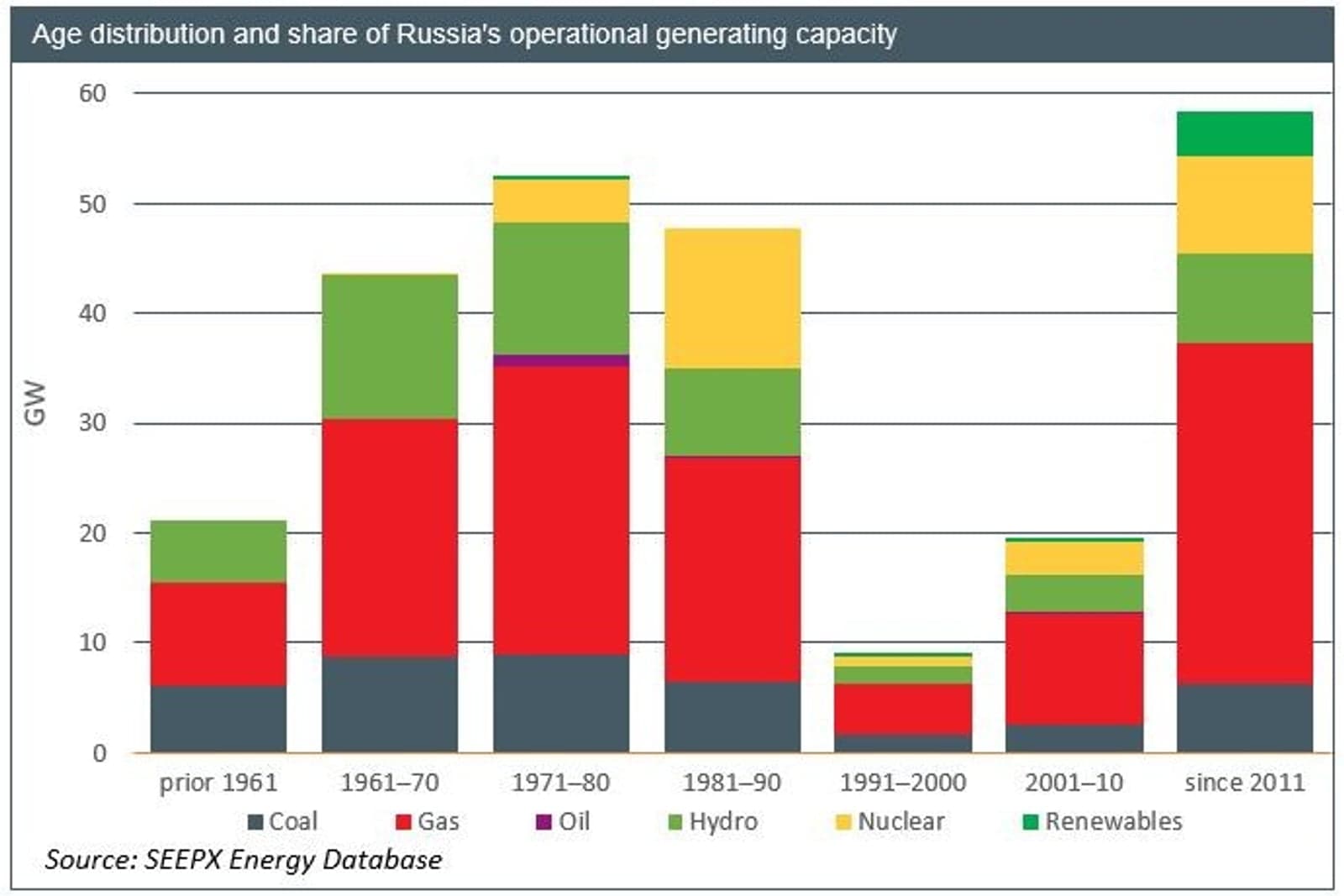
Christopher and Katya explained that over a period of just ten years Russia’s wholesale market capacity mechanism was responsible for adding almost 30GW of new thermal generating capacity (via a scheme abbreviated as DPM and launched in 2009), almost 5GW of renewable capacity (since 2013) and 10GW of nuclear capacity (Generation III and III+).
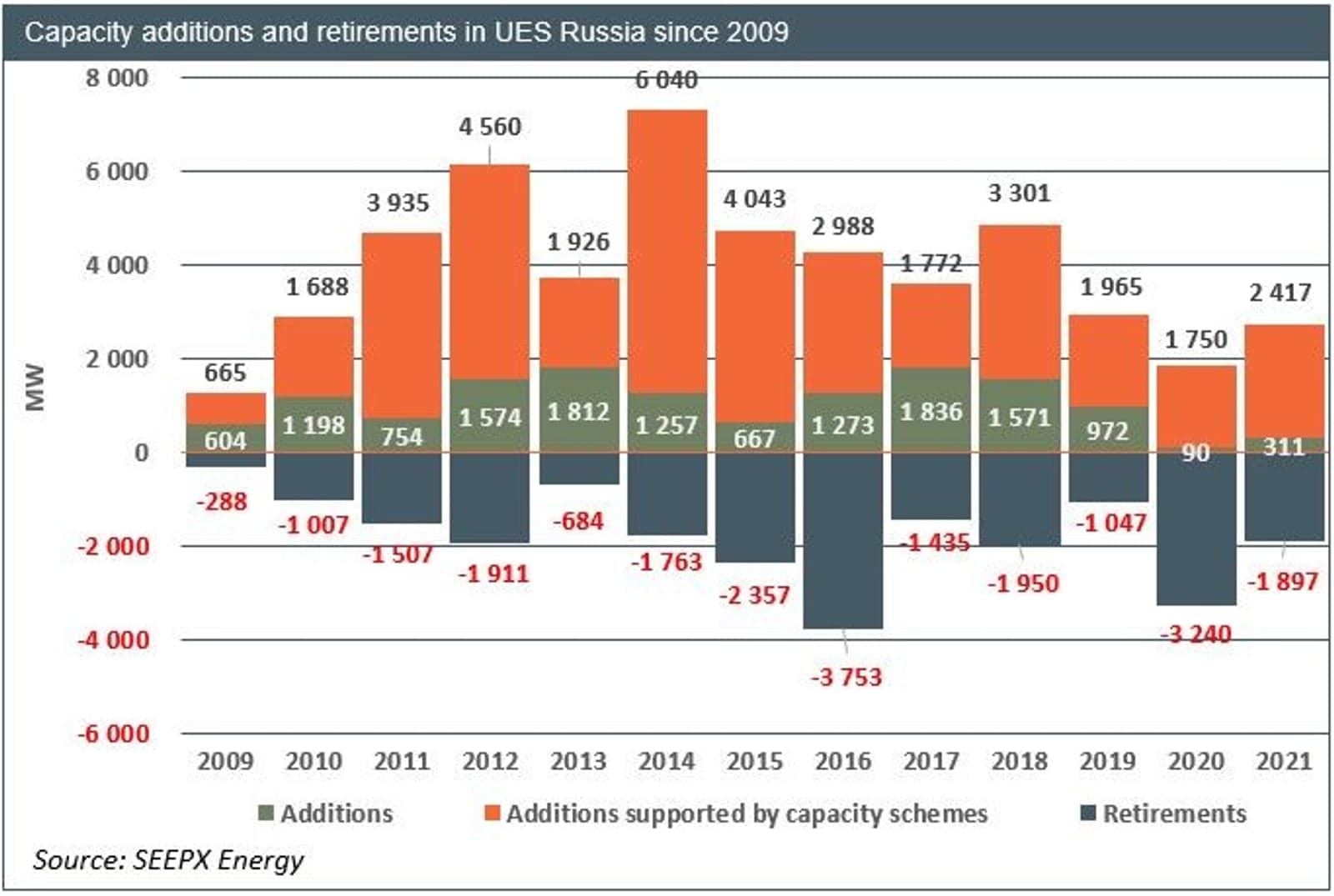
Whilst the new capacity mechanisms addressed the issue of energy security, the renewable programme was solely driven by the goal to create new solar and wind industrial competences in Russia. By 2022 the wind and solar local content reached 55-65%. However, the invasion of Ukraine could impede the goal of increasing the local content in solar and wind to 95% by the 2030s and hinder export ambitions.
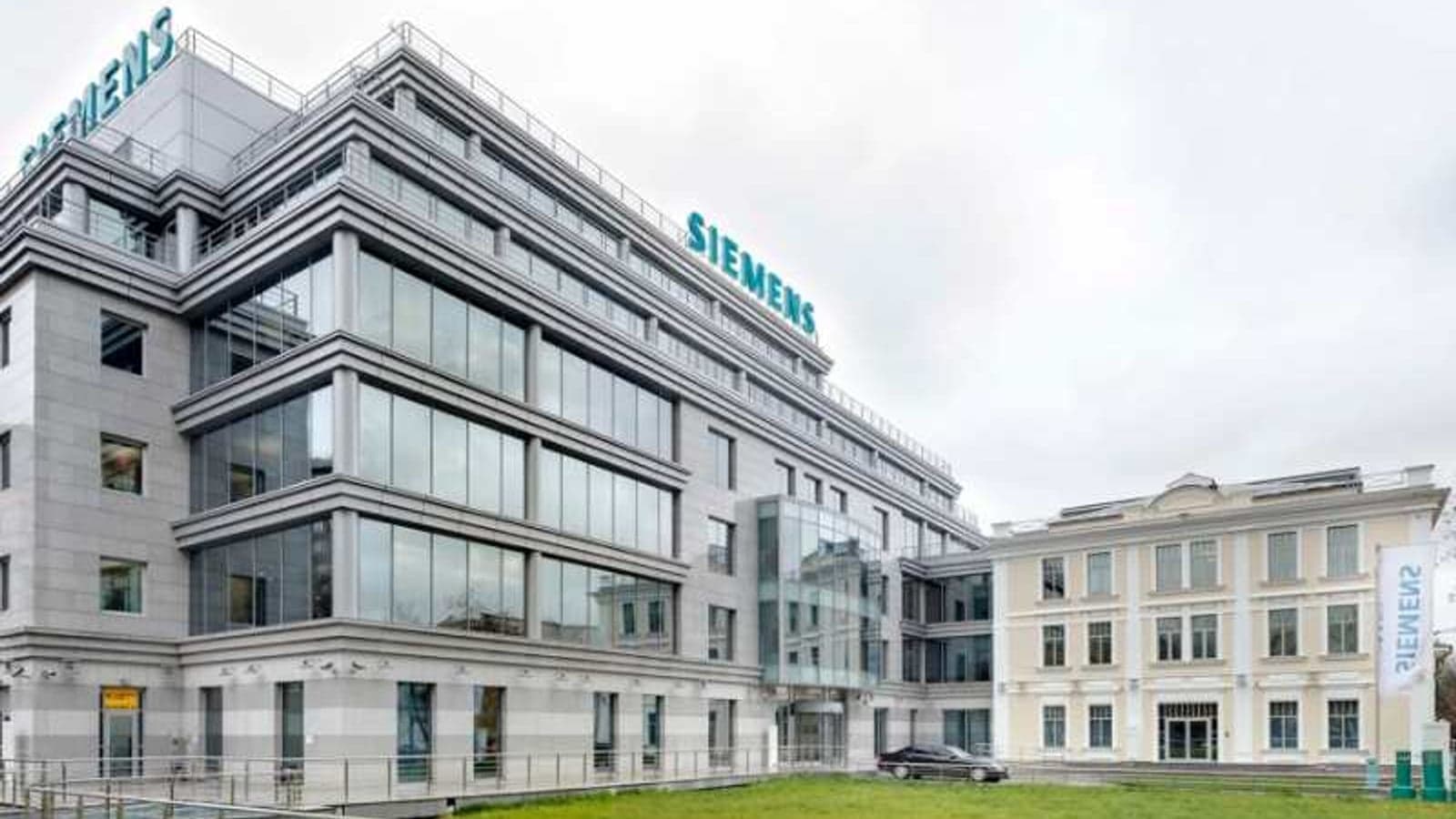
The same fate could await the country’s programme for modernising and replacing some 41GW of ageing thermal generation (via a capacity market scheme abbreviated as KOMMOD) that started in 2019 and is planned to run until 2035. The scheme is critical to creating badly needed industrial competencies in large-scale (above 65MW) gas turbines (currently supplied by the likes of Siemens and GE).
“Russia is the fourth largest power system in the world that wants to balance security of supply with innovation, reduced impact on environment, and affordability. This means the cost and accessibility of capital are critical even in more stable times. However, since the invasion, the modernisation schemes will be harder, if not impossible to finance. The asset owners are committed to modernise capacity at the agreed price set by an auction, which they will likely not be able to keep to,” said Christopher.
Katya noted that the most recent capacity auction (KOM-NGO) to test Russian gas turbines was cancelled as no bids were submitted –a potential impact of the worsening situation in Russia.
Future impact on the Russian power system
“Despite some progress with localisation, Russia is not evenly independent across the entire value chain and still relies heavily on imports of certain equipment. For example, Russia is weak on battery technology with little to no industrial competencies and relies a great deal on foreign innovation. The same goes for hydrogen, despite some regulatory support introduced 2021.”
Some key areas where Russia is likely to feel the pinch is the power system automation, digitalisation, and big data management.
When it comes to power system monitoring and control and grid automation, explained Katya, Russia, as a rule, relies on GE and Siemens’ SCADA systems, as the country does not have a domestic equivalent. This could see Russia reach out to China for support in terms of funding and provision of technical expertise and technology replacement.
Christopher explained that Russia is indeed facing the potential collapse of its grid modernisation programme. “With a significant fall in power demand, currency devaluation and the rapidly rising cost of money, the modernisation programme could choke without additional state funding—and that does not feel likely.”
“It might start to feel a bit like the nineties where investment into Russia’s power system stalled, which means they will need to continue flogging the assets until the sanctions are removed.”
Both Katya and Christopher stressed that Russia is still in a transition phase in terms of modernisation, implementing AI and automation to transform its grid. With foreign companies pulling back, the transfer of intellectual property will suffer, effectively strangling the country’s modernisation efforts.
Will this have a dire impact on the system? Certainly not in the short term, suggests Christopher. He expects the economic slowdown in Russia will mean a significant dampening of power demand in the country, so any slowdown in generation growth may save the system from any crippling impact that one might expect.
The role of Russia’s nuclear power: soft power
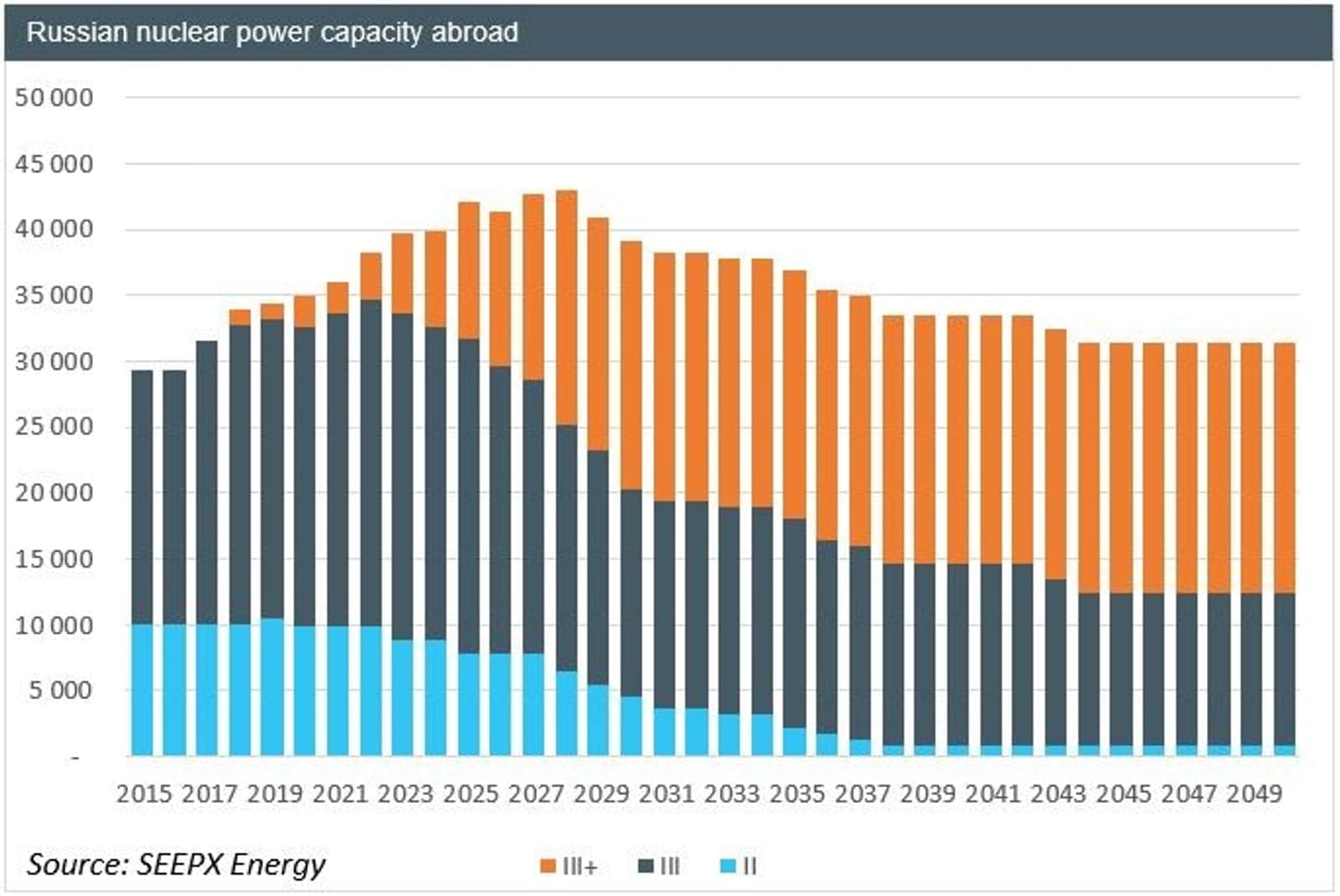
Christopher highlighted the strategic importance of Russia’s nuclear energy company Rosatom, a vital player throughout the nuclear value chain from building, fuelling, maintaining, and decommissioning of nuclear power plants and thus far untouched by sanctions.
“With an international portfolio of about $300 billion across 16 countries including China, Finland, Hungary, Bulgaria, Taiwan and Turkey, Russia has enormous geopolitical power through its nuclear activities, and this is causing countries like India to take less of a tough stance against what is occurring in Ukraine”.
“And domestically, over the last decade, Russia has launched almost 10GW of new nuclear capacity but looking forward the pace of new launches at home is likely to slow dramatically. To start with, demand does not warrant it, but also Rosatom’s budget is likely to be cut. Like in the 1990s and early 2000, Rosatom will heavily depend on its foreign portfolio for survival.”
To stay or leave
Christopher highlighted the complex challenges of making a hard exit from the Russian market.
Big power companies considering an exit will face challenges, effectively standing to lose assets and suffer heavy financial losses.
For those companies that remain, there are still risks from an ESG perspective, especially with increasing pressure to ensure responsible investing.
Christopher concludes, “Both asset operators and engineering vendors seem to be adopting a wait-and-see policy. If Putin maintains his resolve, the stalwart state-controlled companies, such as Gazprom, RusHydro, Rosatom, and Inter Rao might be the only few that remain.”
Data and insights included in this feature are sourced from SEEPX Energy