Rolls-Royce shows mtu fuel cell system is black-start capable
Power Engineering International
Posted on: 17 April 2023
Rolls-Royce has proven that the mtu fuel cell demonstrator system can provide uninterruptible power in the event of a blackout.
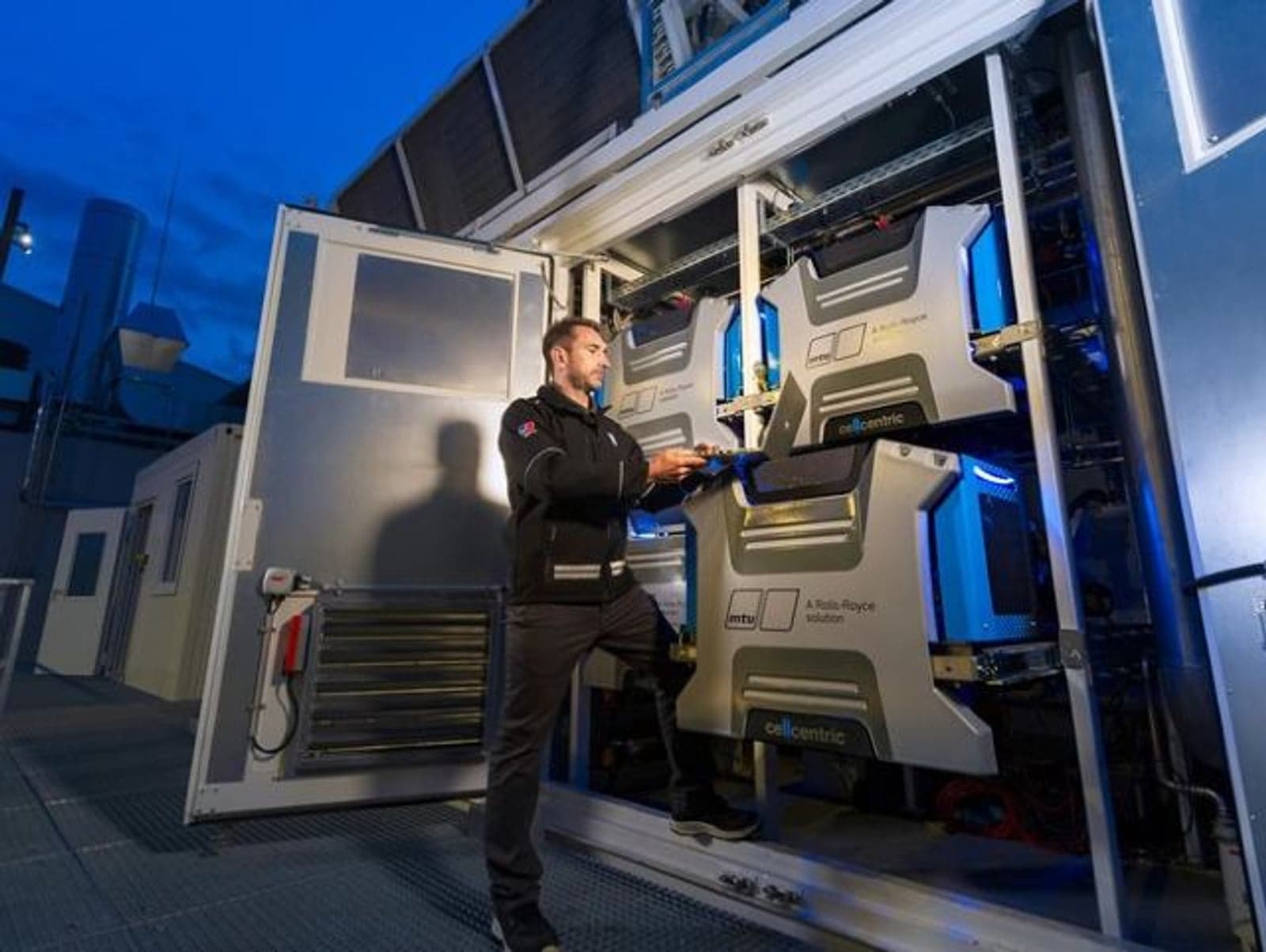
Rolls-Royce has confirmed that tests performed on its first mtu fuel cell demonstrator have proven that the system can provide uninterruptible power in the event of a blackout.
The tests focused on the interaction of fuel cell modules, batteries and power grid, as well as to demonstrate the ability of an uninterruptible power supply for data centres.
According to Rolls-Royce, the tests showed the fuel cell demonstrator is black-start capable, meaning it can be started without being connected to a power grid. Tests for peak load power delivery were also successfully validated.
Have you read?
Large-scale commercial production of green fuels
Ceres Power to trial solid oxide electrolysis tech with Linde and Bosch
Dr Philippe Gorse, responsible for developing the mtu fuel cell system at the business unit Power Systems of Rolls-Royce, said: “The 250-kilowatt system we built at our headquarters in Friedrichshafen and tested for about a year absolutely met our expectations. During the blackout simulation, the system immediately and consistently provided the requested power.”
Rolls-Royce plans to deploy two mtu fuel cell systems at the Enerport II project. The project is located at an inland port in Duisport, Germany, where a new terminal with a hydrogen-based supply network will be commissioned in 2024.
In the future, most of the electrical and thermal energy required in the port will be generated directly on site from hydrogen in a carbon-neutral manner. This will be achieved with the mtu fuel cell systems and two combined heat and power plants with mtu Series 4000 hydrogen engines.
Dr Peter Riegger, head of the Rolls-Royce PowerLab explained: “The biggest plus point comes when regeneratively produced hydrogen is used as fuel. Then the emission of pollutants and climate-damaging gases together can be reduced to zero. In this way, fuel cells have enormous potential to become a key technology building block for the decarbonisation of propulsion and energy systems.”