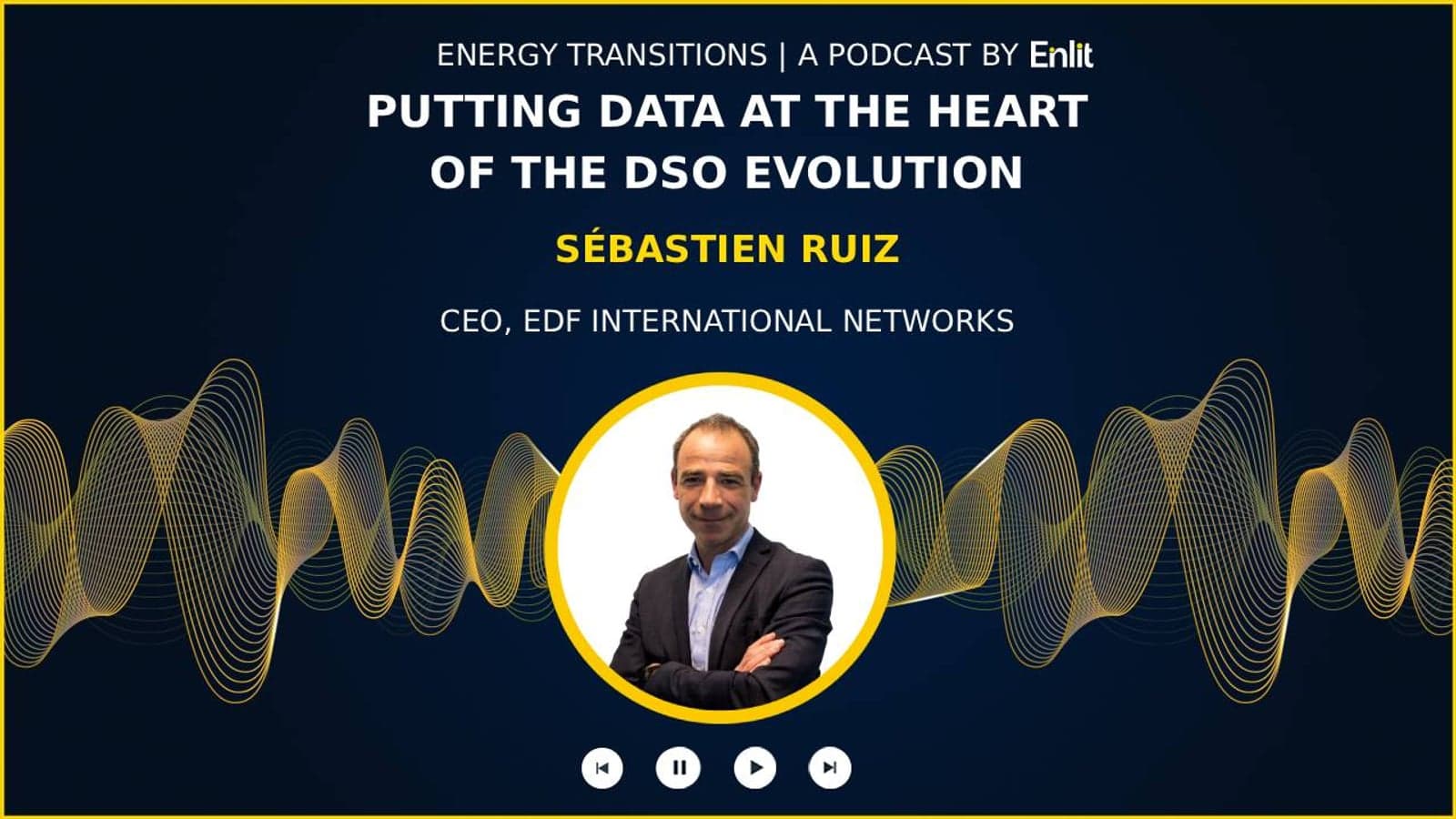
Sebastian Ruiz on the role of data for the next-gen DSO
Pamela Largue
Posted on: 31 January 2026
Data will be critical for DSOs to effectively mitigate the twin risks of energy transition and climate change.
As demand from electrification grows and generation assets become more decentralised, data is playing an increasingly central role in how networks are planned, operated and maintained.
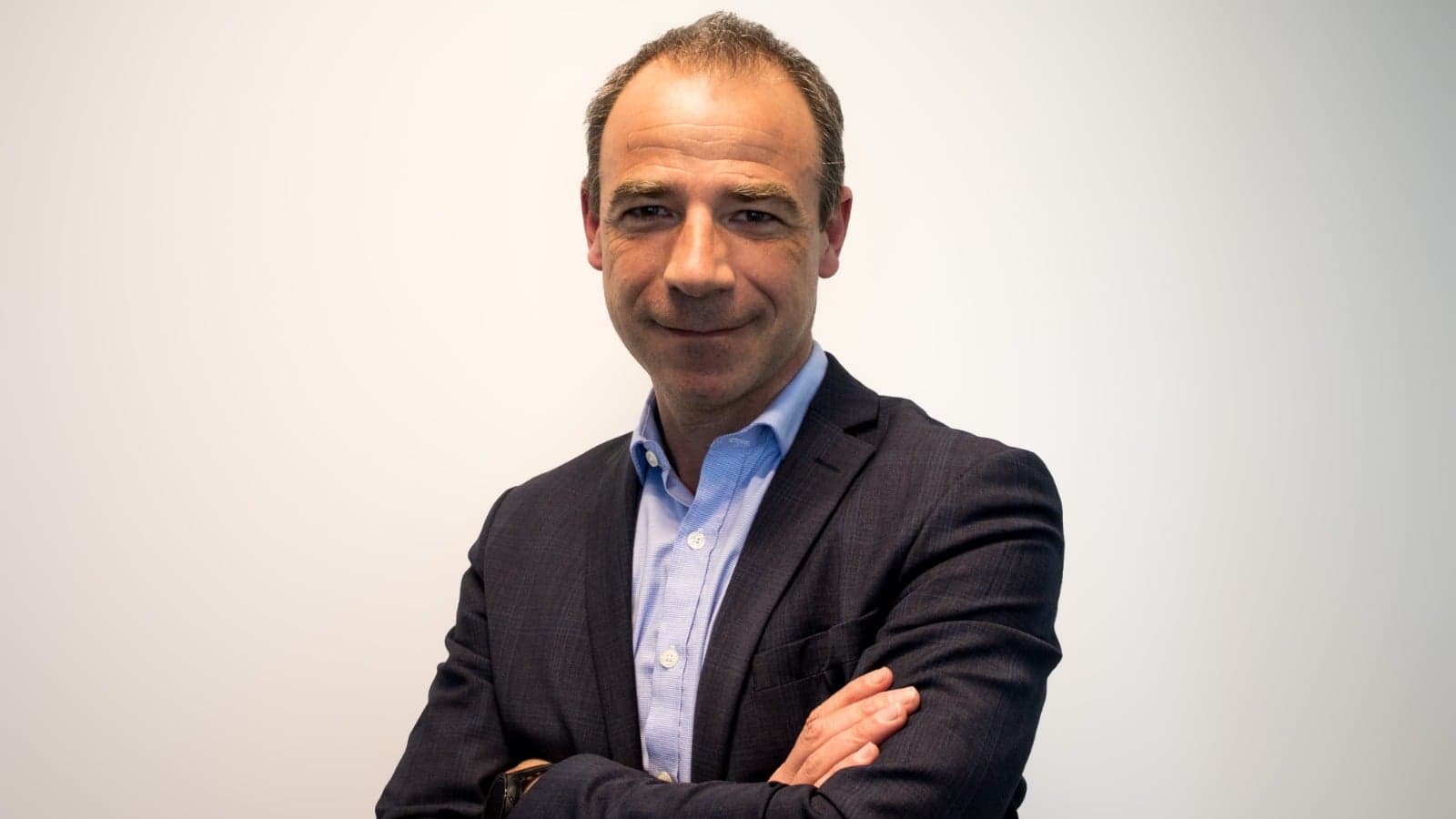
According to Sebastian Ruiz, chief executive of EDF International Networks, DSOs around the globe are facing similar challenges.
Besides their traditional role of operating large-scale networks, they are also having to adapt to new pressures from the energy transition, as well as from climate change.
“For France, 90% of the new renewable capacities are connected to the distribution network,” he says. This represents around 5.5GW of new distributed generation connected each year, a figure that continues to grow. At the same time, demand is rising rapidly due to electrification.
“Last year we connected around 5.1GW of new charging capacity for electric cars,” Ruiz notes. “You see 5.5GW in generation, 5.1GW in distribution – that’s the size of the challenge.”
It’s “the second electrification of France”, he says, comparing it in scale to the post-war expansion of the power system.
The second major pressure on distribution networks is that of adapting to climate change. “In the last two years, we had 34 major climate events in France,” defining a major event as one affecting more than 100,000 customers. The usual rhythm was five per year. That’s three times more than what we were expecting.”
Have you read?
Networks: the backbone of electrification and innovation in Europe
Europe’s DSOs moving towards a new digital model
That requires significant network adaptation, according to Ruiz. And to adapt and address these challenges requires investment, people and innovation.
He highlights that EDF is investing around €5 billion per year in distribution networks and recruiting heavily to build the required capabilities.
“This year, in the distribution area, we’ve been recruiting around 3,500 new staff,” he said, calling it “an exciting challenge” for young people entering the sector.
When it comes to innovation, France has made good use of base and peak tariffs to provide flexibility, allowing approximately 28TWh to be shifted from day to night.
“It’s not technical,” he says, explaining it uses smart meters to practically deploy flexibility and innovation.
France’s smart metering programme has already deployed more than 35 million meters. Beyond improved billing and faster interventions, Ruiz suggests the real value lies in data.
He explains that by mixing data from meters with geographic information systems, customer information and weather forecasts, you start to deliver extra value operationally. It improves quality of service being delivered and reduces cost, he says. Although one of the most powerful applications is predictive maintenance.
Data has allowed DSOs to move from regular to predictive maintenance, enabling the identification of probable defaults and the tweaking of work planning to avoid failures.
“When the system is telling you there will be a default, you will find something – the system is getting good results.” Ruiz adds enthusiastically that they are achieving close to 99% certainty, however, it’s not without its challenges. “The difficulty is to have it fully integrated into your daily business – that’s a major change.”
And, says Ruiz, having the flexibility internally to quickly react to incoming data and change the work schedules accordingly is critical. It requires training, new tools and collaboration between the people doing things the “old way” and those doing it the “new way”.
“Change management is key,” he stresses. “You’re mixing the competencies of electrical networks with competencies of data scientists in the same room”.
For the full conversation, watch the video below.