Speed and scale must underpin energy strategy says Gridspertise boss
Enlit Editorial Team
Posted on: 26 November 2025
Europe’s 2030 goals demand faster grid transformation. Hakan Ozmen outlines where the sector must accelerate and where new opportunities are emerging.

As Europe accelerates toward its 2030 climate goals, grid operators face increasing pressure to modernise infrastructure, integrate increased renewables, and embrace digital innovation at scale.
In this exclusive interview, Gridspertise chief executive Hakan Ozmen discusses the critical shifts required to deliver competitive, resilient energy; the role of AI and data intelligence in transforming network operations; and why collaboration across the entire ecosystem is essential to turn ambition into action.
How does the European energy sector turn shared ambition into collaborative action?
Collaboration is the only path to win the energy-transition challenge. Europe’s progress toward energy security and net zero depends on cooperation and orchestration across the entire ecosystem: from EU legislators setting ambitious targets and coordinating investments, to regulators and associations advancing cross-border grid integration and data sharing, to national governments aligning strategies, and utilities modernising and digitalising their infrastructure.
EU initiatives such as the Green Deal and Fit for 55, together with shared financing programmes such as the Recovery and Resilience Facility and REPowerEU, are aligning national efforts under a unified framework.
In this transformation, companies like Gridspertise play a pivotal role by equipping utilities with digital solutions that accelerate the energy transition and enable the creation of smarter, more resilient grids.
What does Europe need to do to deliver competitive, resilient energy by 2030?
Grid digitalisation must be at the top of Europe’s energy agenda. The grid is the backbone of the energy system—connecting production and consumption—and its modernisation is essential to deliver competitive, resilient energy by 2030.
The challenge is no longer only producing cleaner energy; it’s ensuring the grid can carry it securely. Digital technologies enhance efficiency, enable renewable integration, and reduce costs, but they also introduce new vulnerabilities.
As cyberattacks on Europe’s energy infrastructure rise, ensuring resilient grids requires two equally critical measures: embedding cybersecurity into every layer of the system and, as the IEA stresses, accepting that full prevention is impossible—so systems must be designed to withstand and recover from attacks.
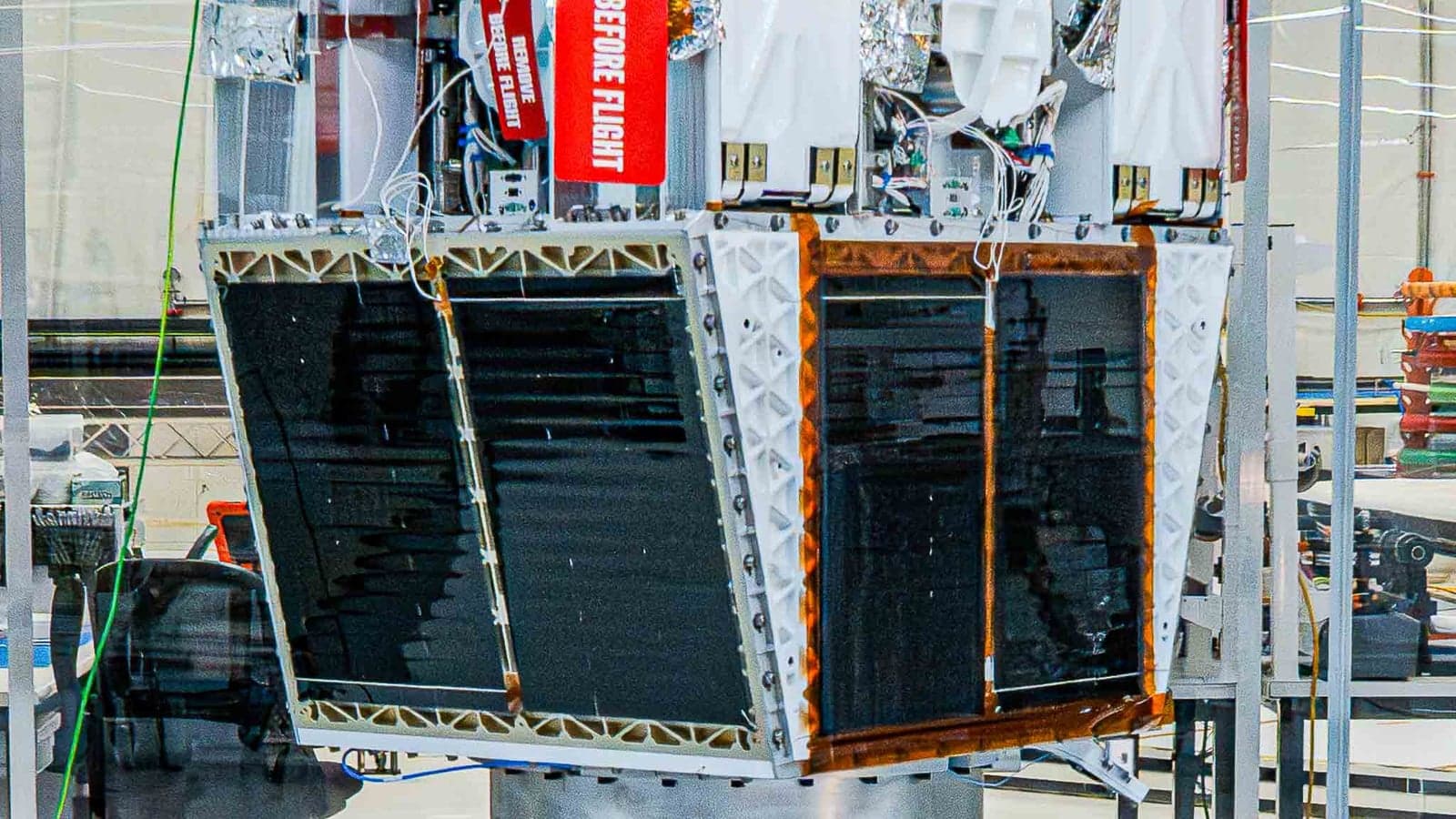
For example, edge intelligence solutions, such as Gridspertise Quantum Edge device and its smaller form-factor version QEd1000, enable distributed grid management and local control, mitigating the impact of potential attacks while ensuring continuity of operations.
At the same time, Gridspertise combines advanced solutions with a cybersecurity-by-design approach, supported by ISO/IEC 27001 certification and complemented by continuous device testing throughout their lifecycle.
It’s 2030: what does Europe’s energy mix look like?
Renewables—especially solar and wind—are now at the centre of Europe’s energy ecosystem. Clean energy has become the norm, with traditional generation covering only residual demand. Over the past five years, thanks to the full achievement of the ambitious REPowerEU objectives, Europe’s power system has undergone a profound transformation: the share of renewables in electricity generation has risen from 45% to nearly 70%, while fossil fuel demand has dropped significantly.
This shift has been enabled by unprecedented investments in grid infrastructure, digitalisation, and flexibility. Traditional grids have evolved into smart, bidirectional systems that support energy prosumers and electrified transport.
This is the 2030 we must build—powered by technology, innovation, and vision. Gridspertise’s mission is to support utilities in this evolution. One example is our QEd device, a field-proven solution that virtualises secondary substations and enables cross-domain data analysis directly at the edge, supporting advanced automation, integration of distributed energy resources, and power restoration to unaffected portions of the grid in less than 1 second through SFS - smart fault selection.
A frontrunner utility is already deploying this technology, and its scalable architecture ensures new applications can be integrated over time without costly hardware upgrades. It is the proof that the solutions needed to enable Europe’s clean energy future are already in action.
Is there another industry vertical which has vital lessons for the energy sector?
The technology sector. It offers key lessons for the energy industry, particularly in using real-time data to drive better decisions. Tech companies and leaders excel at turning vast data streams into actionable insights—an approach increasingly essential for modern energy systems. By adopting data-centric and ecosystem-based thinking, the energy sector can enhance grid resilience, flexibility, and engagement.
Advanced energy data management now underpins everything from billing accuracy to outage response and renewable integration. Turning metering and sensor data into intelligence enables automation and real-time operations, paving the way for a more responsive, participatory grid.
Strategic moves in this space—such as partnerships focused on cloud-based energy data platforms—highlight the growing importance of data management in accelerating grid digitalisation and the energy transition. Our group moved in this direction early on and has recently acquired Energyworx, a Dutch company specialising in advanced energy data management solutions. This strategic acquisition has further strengthened our capabilities in this critical area.
Interesting read: Turning metering data into grid intelligence
What is the biggest workforce issue for the energy transition?
Digitalising the distribution grid is a generational effort that blends technological progress with human development. Grid modernisation, clean energy mandates, and cybersecurity requirements demand not only sufficient staffing, but also specialised skills to manage and protect the grid of the future.
Traditional hiring alone is no longer enough, especially for small and mid-sized utilities. New models, such as Metering-as-a-Service from Gridspertise, help address workforce gaps by outsourcing operations, so utilities can focus on core activities.
This delivery model could also include provisions to transfer knowledge and technology back to the utility, ensuring long-term control. This gradual transition enables utilities to modernise their grids, maintain operational continuity, and build resilience while navigating the complexity of the energy transition.
To realise AI’s full impact, the sector must invest in digital infrastructure and embrace supportive policy reform.
Is the energy sector making the most of the current AI tech?
Not yet. Although AI and the energy sector are deeply intertwined, adoption remains limited. A recent Boston Consulting Group report shows that while 60% of energy executives expected tangible AI outcomes within a year, nearly 70% were dissatisfied with their progress.
The gap stems from structural issues: fragmented energy ecosystems, outdated equipment lacking real-time data capabilities, and inconsistent data flows across producers, grid operators, and regulators.
Smart grid deployment illustrates the point. AI-driven analytics require high-quality data and robust infrastructure, resources that are not uniformly available. Platforms such as Gridspertise Energy Data Management, powered by Energyworx, are helping utilities unlock data value, but broader adoption is needed. Cost, cybersecurity, and regulation also slow progress.
To realise AI’s full impact, the sector must invest in digital infrastructure and embrace supportive policy reform. Only then can utilities fully leverage AI to drive resilience, efficiency, and sustainability.
How do you see the role of AI supporting/enabling your organisation's CX strategy?
Our customer experience strategy is built on anticipating needs and delivering reliability, speed, and transparency. At Gridspertise, we recognise that unlocking AI’s potential starts with data readiness and integrated systems, the very main gaps that the DSOs need to fill to enable and boost AI-based progress across the sector.
That’s why we are investing in a cloud-edge architecture that brings together hardware, data, and intelligence, all of them with an AI-ready approach, creating the foundation for advanced AI applications to tackle the growing complexity customers face in managing medium and low voltage networks.
While full autonomy remains a long-term goal, in the near term we see AI as an intelligent assistant: supporting operators, accelerating decision-making, and automating actions where responsiveness is critical.
Take fault management on medium-voltage grids, for example: AI could identify the faulty section and suggest the most efficient reconfiguration sequence, optimising the overall effects on the MV grid; the operator would then validate and execute the solution with a single action. This dramatically reduces downtime and gives utilities a proactive view, fastening answers and minimising impacts on the customers.
As we look ahead, the next frontier is agentic AI: solutions that go beyond assistance to act with autonomy and purpose, anticipating needs and orchestrating actions across the grid thanks to agentic-AI instances that are specialised in autonomously managing different operations on the grid. This evolution will unlock a new era of energy intelligence for our customers, enabling flexibility scenarios that would not be possible without the integration of AI.
What sustainability practice in your organisation are you most proud of? And how have you reduced your personal carbon footprint?
For Gridspertise, sustainability is a strategic imperative, not a trend. The energy industry and society at large cannot afford to step back from this commitment. While we all personally work to reduce our environmental footprint—limiting car travel, reducing meat consumption, and optimising energy use at home—the most transformative impact comes from corporate action.
Above all, we are proud of our holistic approach to sustainability. This commitment was recognised with the EcoVadis Gold Medal in 2024, a testament to our dedication to responsible and sustainable business practices.
We are progressing towards a 360° Sustainable Supply Chain framework, embedding ESG principles at the core of our supplier selection, auditing, and tendering processes. We have defined our Code of Conduct, which all suppliers are expected to uphold, require environmental certifications, and include contractual provisions to ensure responsible management of ESG risks and impacts. This approach goes beyond compliance; it fosters a collaborative ecosystem of partners who share our long-term vision for responsible innovation and measurable decarbonisation, making sustainability a cornerstone of shared competitiveness.
What are the biggest challenges facing energy leaders today?
Energy leaders are under pressure to deliver transformation faster than ever. Climate risks are intensifying, grids are aging, and electrification is accelerating. Over half of Europe’s distribution networks are more than 40 years old, yet renewables already power nearly half of the EU’s electricity mix and, according to IRENA, are expected to reach between 75% and 100% by 2050.
The challenge is not only technical—it’s strategic. Leaders must integrate new technologies, manage legacy systems, and meet rising regulatory and stakeholder expectations while ensuring financial discipline. Intelligence is now as critical as infrastructure: scalable, data-driven solutions unlock actionable insights.
At Gridspertise, we help utilities rethink operations with a cutting-edge, end-to-end modular offering that merges the strengths of our three companies: Gridspertise, Aidon, and Energyworx. Our goal is to ensure resilience, efficiency, and sustainable growth by bringing increasing levels of intelligence to the service of utilities. In this landscape, leadership means shaping the future—by turning complexity into clarity, and intelligence into impact.
How did your industry experts address these challenges at Enlit Europe?
At Enlit Europe in Bilbao, we were present as a unified Group—Gridspertise, Aidon, and Energyworx—each contributing distinct strengths to a modular portfolio that supports utilities at every stage of their digital transformation.
We unveiled integrated solutions that blend digitalisation, data intelligence, and service-based models to build smarter, more resilient grids.
Our experts shared real-world applications: from Nordic success stories using Aidon’s monitoring solutions, to Gridspertise’s digital substations and QEd technologies, and Energyworx’s real-time energy data management.
Our Chief Product Officer, Sergio Martín Guerrero, participated in a Summit panel on grid security and resilience, highlighting how intelligence across edge devices and analytics software can strengthen Europe’s energy independence.
If you had a magic wand what is one thing you would implement today?
If I could use a magic wand, I would rebuild the energy infrastructure to ensure everyone has immediate access to clean, reliable power. This has been the focus of my entire career: reinforcing the infrastructure that powers our energy systems to enable a more sustainable future. There’s no magic in this: just the right mix of technology, execution, and people. Joining Gridspertise is a natural continuation of that path.
Here I have found a team of professionals with deep expertise and a strong sense of purpose, and I’m confident that this group has what it takes to make a meaningful difference for utilities worldwide. We are here to deliver smarter, real-world solutions—scalable, modular, and results-driven—that turn ambition into action and accelerate the energy transition.
Latest content
+6
The energy sector must lead Europe's industrial strategy says head of Enel Grids
"The energy sector is not just another industry within Europe’s industrial strategy; it is the enabler that underpins the entire European economy," says Gianni Vittorio Armani, Head of Enel Grids and Innovability.
- Enlit Editorial Team
- 15/10/2024