Thales eyes nuclear fusion with launch of GenF
Jonathan Spencer Jones
Posted on: 30 May 2025
Thales has inaugurated the new spinoff company| GenF| to develop inertial confinement nuclear fusion in France.
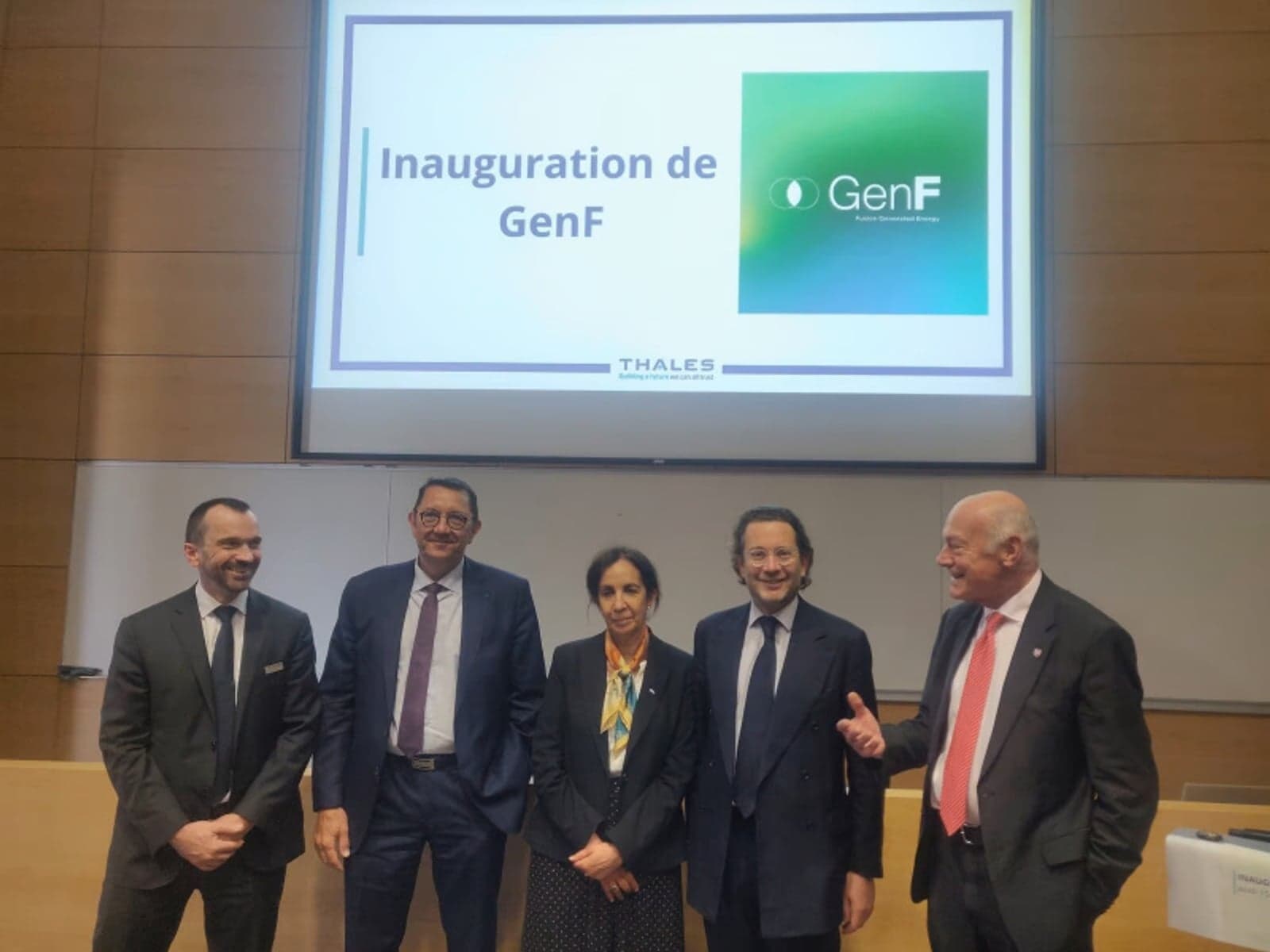
Thales has inaugurated the new spinoff company, GenF, to develop inertial confinement nuclear fusion in France.
The launch of GenF follows the selection of Thales’ TARANIS project to demonstrate the feasibility of designing a first inertial confinement nuclear fusion reactor in February 2024, as part of a call from the French government for innovative nuclear reactor projects in its France 2030 initiative.
TARANIS is being developed in partnership with the French Alternative Energies and Atomic Energy Commission (CEA), the National Centre for Scientific Research (CNRS) and the École Polytechnique.
Thales is contributing its expertise in high-power lasers, which are the basis for inertial confinement fusion and required to compress matter to trigger the fusion reaction.
Have you read?
Total investment in fusion industry tops $7.1bn shows FIA
Energy Transitions Podcast: Why fusion energy is the ‘vaccine of climate change’
GenF, with premises in Le Barp in the southwest of France, currently brings together around ten scientists, engineers and industrial experts and involves about forty people from all the institutions combined.
The company plans to develop in three phases.
By 2027, a first phase of modelling and simulation is planned, calibrated through experiments on existing facilities such as the Laser Mégajoule (LMJ) device.
From 2027 to 2035, a second phase is envisaged to focus on the maturation of fusion technologies such as multiple laser synchronisation, the production of cryogenic targets and the development of new materials for the reactor wall.
Then, from 2035, a third phase could lead to the scaling-up of the reactor, with the construction of a first prototype.
On this timeline, a 1GW commercial reactor is targeted to enter service in the 2050s.
The Le Barp facility has been supported by the Nouvelle-Aquitaine Regional Council, which already brings together various areas of expertise in nuclear fusion, including the CNRS’s high power laser centre (CELIA) and the CEA’s Aquitaine research centre (CESTA).
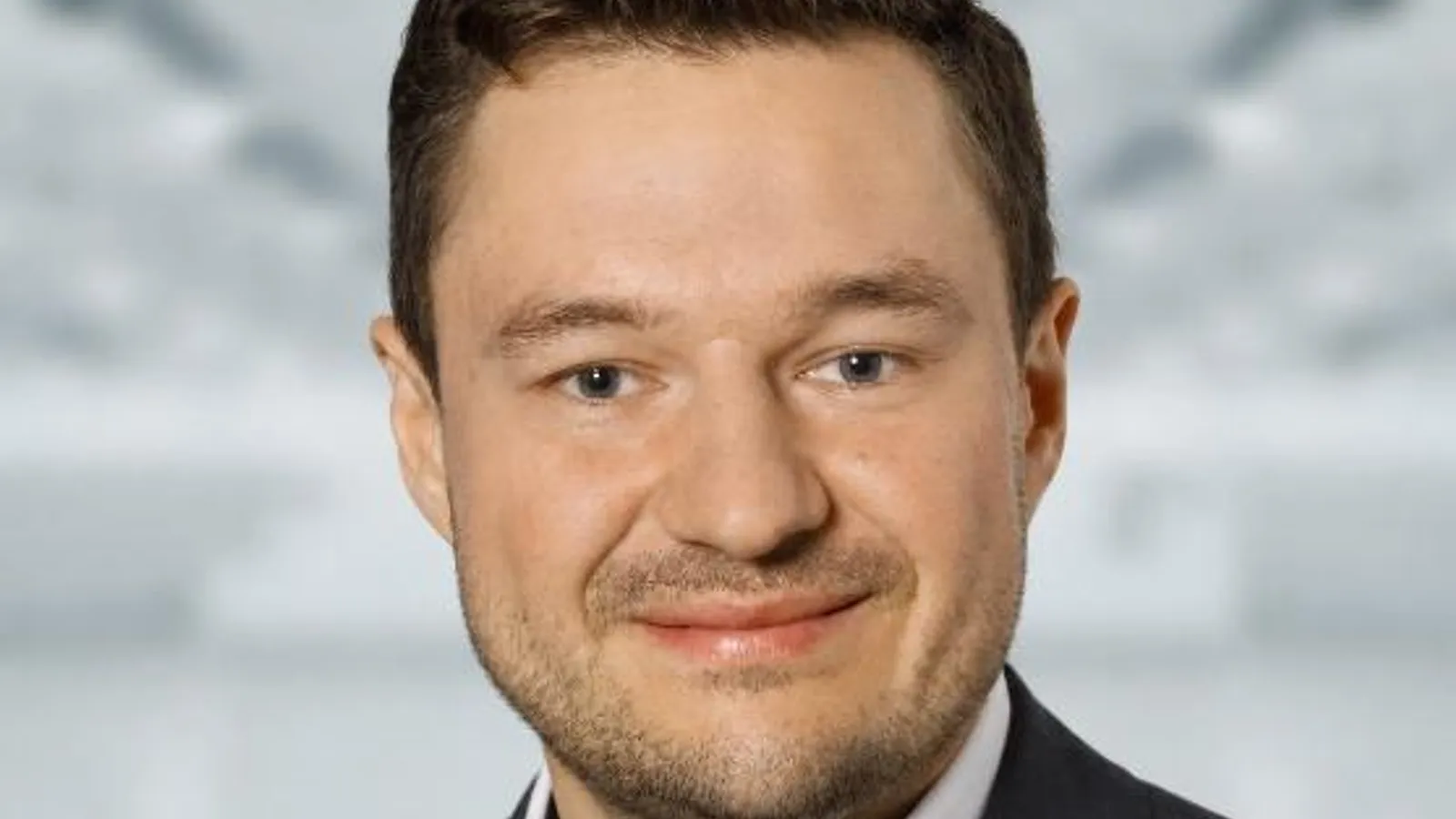
GenF was founded and is being led by Yann Gerard, an engineer with a background in laser development, initially with Alcatel and subsequently Thales.
With its selection, the TARANIS project has access to a €18.5 million ($21 million) budget for its initial development phase.
Inertial confinement fusion
Inertial confinement fusion is one of the two main approaches to developing nuclear fusion, the other being magnetic confinement, and with the respective proponents of each expecting to be the first to deliver energy on a commercial scale.
A significant step forward for the technology was achieved in December 2022, when the Lawrence Livermore National Laboratory’s National Ignition Facility (NIF) delivered a fusion energy gain with a 3.15MJ output from a 2.05MJ input.
In February 2025, in a seventh ignition 5MJ was delivered from a 2.05MJ input, marking a new record with a 2.44 gain.
Despite these advances, much work is still required to advance inertial confinement fusion, in particular with the scaling up to a full size system.
The Fusion Industry Association’s 2024 report lists seven companies pursuing the laser driven inertial confinement approach, among them Blue Laser Fusion in the US and Germany’s Marvel Fusion appearing as the most advanced.
Latest content
+1
DOE to fund $42M inertial fusion hub programme
The hubs will be led by researchers at Colorado State University| the University of Rochester| and Lawrence Livermore National Laboratory| where last year a team successfully achieved fusion ignition for the first time| proving that creating energy from fusion is possible.
- Power Engineering International
- 18/12/2023