The good, the bad and the safety: AI and data in the energy sector
Enlit Editorial Team
Posted on: 8 July 2024
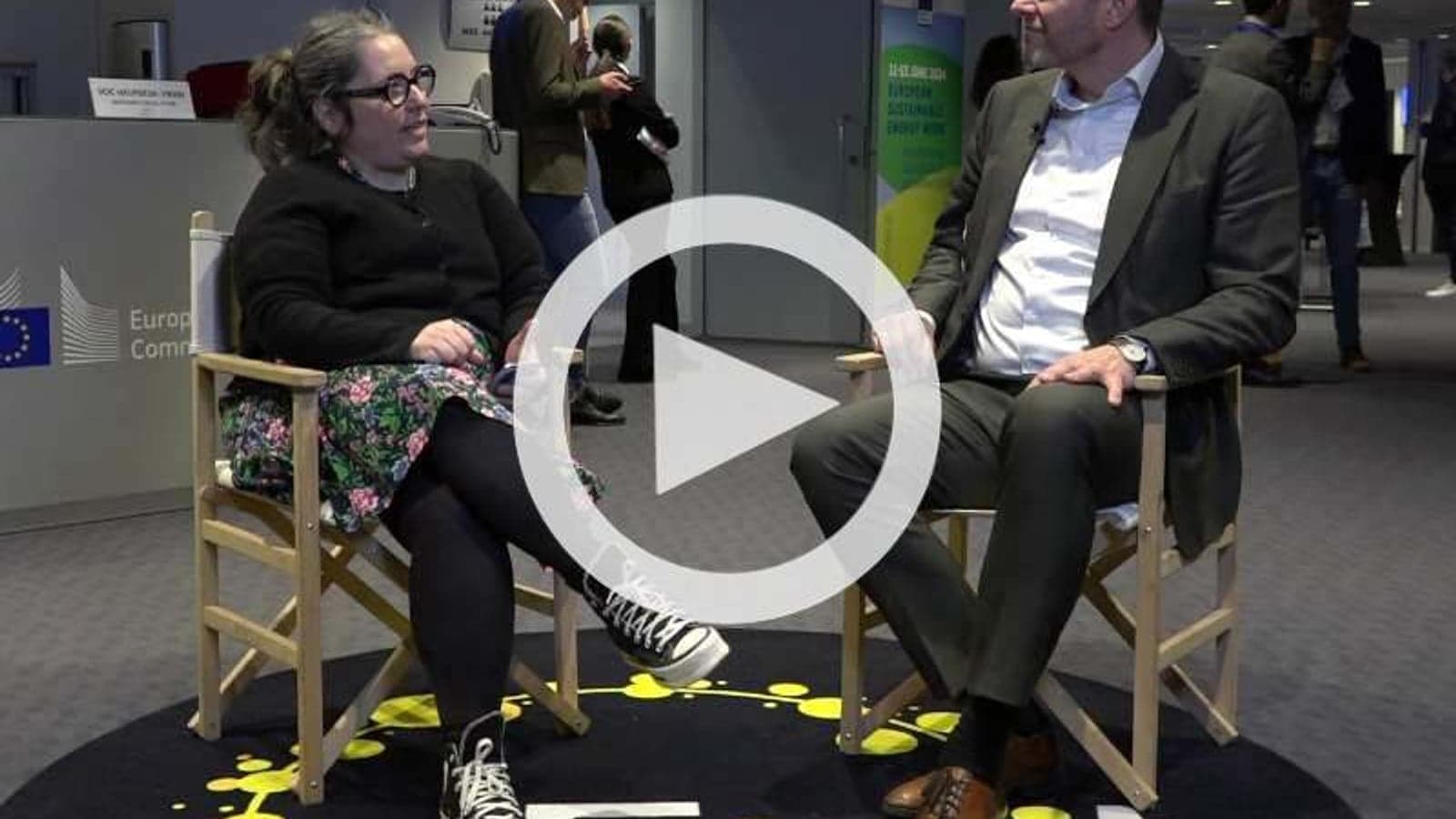
Ray Pinto, DIGITALEUROPE Senior Director of Digital Transformation Policy explains the benefits and continued challenges for AI in energy.
From flexible grids preventing blackouts to 50% improved energy efficiency, the potential of AI to revolutionise the energy sector is clear. Ray Pinto of DIGITALEUROPE explains how, although these benefits are real, the data challenge remains.
During an exclusive interview at European Sustainable Energy Week, Pinto, a Senior Director of Digital Transformation Policy, labels data is the ‘elephant in the room’ when it comes to AI in energy.
The two key challenges to look at when considering AI and its data consumption – managed within data centres – are said consumption’s carbon footprint and safety issues.
Data consumption
Although data centre energy consumption is a concern, according to Pinto there are already innovations being done towards its reduction.
Pinto cites 2008 projections forecasting data centres to grow a carbon footprint of over 4%, “the fastest growing size of any type of industry. But that never happened.
“We are now in 2024 and the CO2 emissions of a data centre is still very stable at 1.8% to 2% (…) because there is so much innovation that is pumped into data centres.”
Tens of billions of euros, he adds, have been pumped into energy efficiency for data centres.
Technical innovations such as natural air economisers or even sewage, have meant data centres can be cooled with dramatically lowered energy needs. This innovation then works to also drop the carbon footprint.
Data usage
Then comes the issue of safety and ethics. A big concern, states Pinto, is to ensure that “the data centre is not creating ethical issues.
“It's how we use data that creates that and that is a very heavily regulated space. The European Commission has, over the past couple of years, created the GDPR and this is not communicated very loudly, but if you go to article 1.3 of the GDPR, one of (its) main purposes was that personal data, sensitive data can flow freely and cannot be restricted by a member state.
“That was the first fundamental step that the European Commission did to make sure that it can have data flowing in the EU, which is now going to be the foundation of a future energy data space.”
More from European Sustainable Energy Week:
E.DSO’s Secretary General foresees focus on ‘policy implementation’ by DSOs
Enhancing the green energy transition through energy hubs
A matter of safety
Safety has long been brought up as a key challenge when it comes both to housing vast amounts of data and increasing the prowess of AI technology.
But for Pinto, from other industries, there are already “very clear examples that AI has been used, and has actually led, for safety for many decades.
“If you look at the airline industry, commercial jets have been flying since the 60s and 70s, largely using AI. A commercial pilot today would struggle to fly a commercial jet as AI makes sure that that plane could take off, go through turbulence, storms, adjust by itself and land safely. And all that functionality is largely due to AI.
“AI takes that human error away and makes these systems a lot safer. So that's the first thing you know to think about when we create a data space. That fundamentally means that data can flow from one Member State to another.
“If you want to dream a project where you are going to have solar-powered energy from Spain coming up to Belgium, you're going to need that data space.”
Watch the rest of the interview with Ray Pinto to learn more about the EU's AI Act, why regulation will be key to building up confidence in the take up of AI and some real examples of how AI has already helped to make lives easier.