The hidden leaks behind closed doors: Why smart meters matter
Guest/partner contributor
Posted on: 28 July 2025
In the broader fight against water loss, smarter technology plays a vital role in ensuring that every drop counts.

It may surprise you to learn that household leaks can waste over 1 trillion gallons of water every year across the United States alone. According to the Environmental Protection Agency (EPA), the average household loses more than 10,000 gallons annually due to leaks, while 1 in 10 homes experiences daily losses exceeding 90 gallons (340 litres).
However, these indoor leaks often go unnoticed. Unlike dramatic pipe bursts, household leakage tends to be silent, slow, and hidden—occurring behind walls, under floors, or from aging fixtures. A constantly dripping faucet, a malfunctioning toilet tank, or underground plumbing faults may not raise alarms immediately but can result in unexpectedly high bills and massive water waste over time.
Traditional mechanical meters make indoor leak detection a frustrating task. Generally, residents must stop all water usage and watch the meter closely to see if the dial moves—an imprecise and time-consuming process.
But smart metering technology changes the game. With smart water meters, users can track their consumption in real-time through a mobile app, down to the hour. Meanwhile, smart meters integrated communication technologies such as GPRS/CAT1/NB-IoT/LoRa/LoRaWAN/ Sigfox, automatically upload usage data to the Meter Data Management System (MDMS), which continuously monitors consumption trends.
Patterns such as continuous low-flow usage, unexpected night time consumption, or sudden spikes in daily use can all serve as the indicators of potential hidden leaks. When such anomalies are detected, the system can trigger instant alerts via MDMS system, Email or SMS, allowing both users and utility operators to take swift action—preventing further water losses, structural damage, or shockingly high water bills.
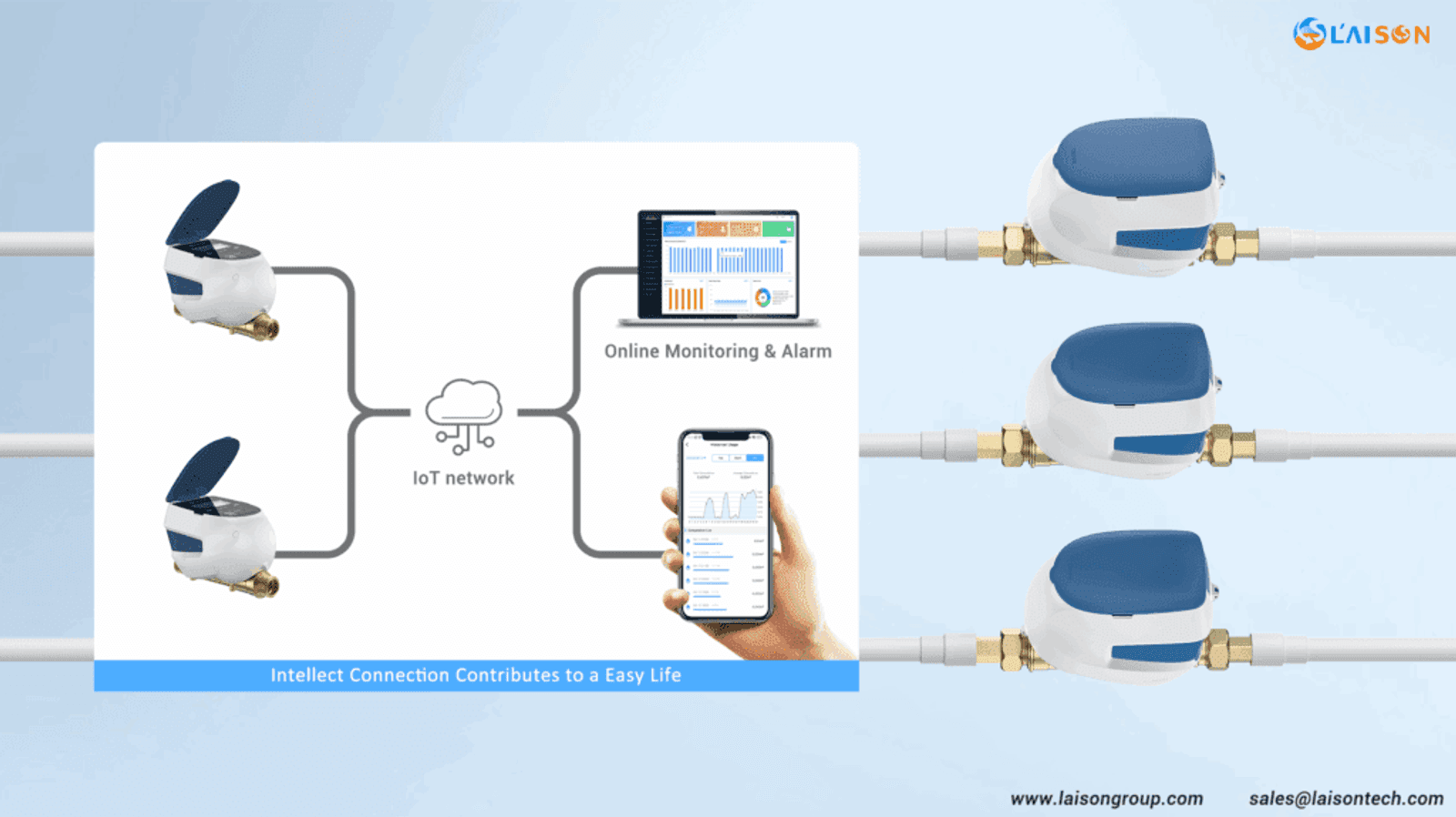
But the value of smart indoor leak detection goes beyond households. For utilities, the ability to remotely monitor thousands of endpoints simultaneously helps optimize response times, reduce non-revenue water (NRW), and enhance customer trust. Instead of waiting for complaints or manual inspections, utilities can proactively identify and prioritize leak-prone areas, even at the individual property level.
In areas where water scarcity is intensifying and infrastructure budgets are tight, this proactive, data-driven approach can lead to substantial operational savings. Smart water meters also support prepaid working mode, improving revenue assurance while empowering users to better manage their consumption.
Detecting indoor leaks is no longer a guessing game. Smart metering technology brings transparency, control, and peace of mind to both households and utilities. In the broader fight against water loss—where NRW still exceeds 30% in many regions—smarter technology plays a vital role in ensuring that every drop counts.
Related tags
Latest content
+2
Laison demonstrates advanced smart water meter solutions at AfWASA
Laison, a leading smart water meter company, successfully exhibited its latest innovations at the AfWASA International Congress & Exhibition (AfWASA ICE) held in Kampala, Uganda, from February 16-20, 2025.
- Guest/partner contributor
- 21/02/2025