The role of co-location in the UK energy transition
Guest/partner contributor
Posted on: 29 May 2025
As the UK accelerates its journey to net zero| co-location is coming to the forefront and becoming an increasingly important strategy.

As the UK accelerates its journey to net zero, co-location is coming to the forefront and becoming an increasingly important strategy.
By Bali Sahdra, UK & Ireland BESS country manager at Nidec Conversion
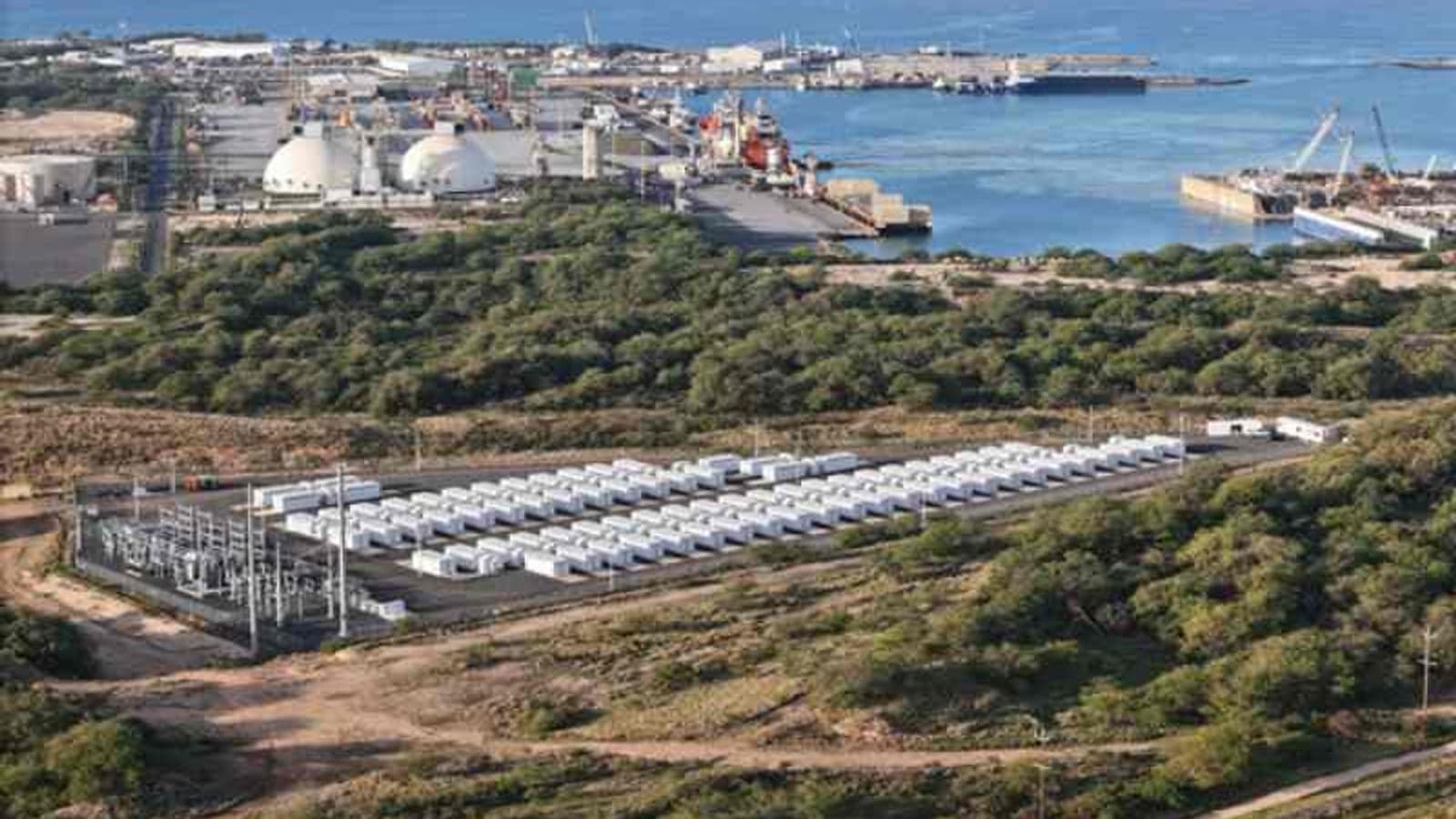
Co-location refers to the location of multiple power generation technologies, including battery energy storage systems (BESS), at the same geographic location with the same grid connection point.
In some instances, assets may share land and infrastructure, whilst in others they may be located on separate parcels of land having their own infrastructure but operating in conjunction with each other.
It maximises the deployment of renewable energies, optimises land use and improves grid stability, helping to overcome connection bottlenecks and favouring the development of more integrated and flexible energy systems, supporting a resilient and sustainable energy future.
The increasing need for co-location
As the UK progresses towards net zero emissions by 2050, the inevitable result will be a greater reliance on renewable energies.
Several studies, including the DNV Energy Transition Outlook UK 2025, are already forecasting the future trajectory of offshore and onshore wind power, as well as solar power. However, the challenge the UK – and many other countries with high penetration of renewables, coupled with low level or diminishing growth of future static inertia – is facing is the need to ensure grid stability. This is because intermittent renewables can create grid instability due to the variability inherent to their nature.
Co-locating onshore wind or solar generation with BESS can support the continued growth of renewable technologies by mitigating this instability.
Have you read?
Grid connection granted to 1.3GW solar farm and storage system in Australia
ContourGlobal commissions 221MW solar+storage plant in Chile
By providing immediate, millisecond-level responses, BESS can stabilise the grid and smooth out fluctuations. Co-location can therefore play a pivotal role in helping the UK meet future energy demands and in facilitating the deployment of renewables.
As highlighted by the Carbon Trust, improving grid flexibility with technologies such as BESS will enable the UK to integrate renewables effectively, with savings in the order of £16.7 billion ($22.5 billion) per year in 2050.
The UK grid connection approval process recently experienced a bottleneck, largely due to the high demand for new connections, infrastructure upgrades and limited resources, all factors contributing to the delays developers are currently facing.
This is not surprising, considering that, historically, applications for grid connections – mostly from fossil fuel generation and peaking power plants – amounted to a few dozen per year. Today, there is fierce competition not only from generating plants, but also from data centres, all vying for connection to the grid.
Future trends for offshore and onshore wind, as well as solar, indicate that new projects will be larger in installed capacity, provided the site can accommodate the size.
This trend is driven by economies of scale, as these technologies are now well-established and manufacturing capabilities have improved enabling great cost efficiencies. This, in turn, will drive the need for enhanced grid stability and for the co-location of technologies such as BESS to meet demand and ensure the grid remains flexible and able to handle the increased load.
The positive impact of co-location on revenue streams
Co-location offers significant advantages enabling investors to tap into additional revenue streams in several ways.
The most obvious example is the co-location of solar and BESS, which enables photovoltaic (PV) time shifting. Solar energy is stored using BESS during the day, when power prices are typically low in the UK market, and discharged later to capture peak prices.
Moreover, the co-location of BESS and onshore wind can generate additional revenues during periods of curtailment. In these instances, BESS can store the curtailed energy and discharge it at a later time, potentially capturing periods of high-power demand and market prices.
BESS can also generate new revenue streams by providing additional services, including ancillary services such as frequency response, voltage regulation and black start capabilities, which increase the overall value proposition of the co-located assets.
The challenges of co-location
While co-location offers multiple advantages, it can present challenges to asset owners, particularly when the two technologies co-located are owned by different investors.
Understandably, each investor aims for their asset to be the primary dispatched facility at the co-location, or seeks assurance that their asset will not be impeded from market opportunities, such as those arising during periods of high-power demand or system instability, which often lead to peak power prices.
Land scarcity is another challenge, as finding suitable locations for future generation capacity with grid connection is becoming increasingly difficult. This is the reason why, over the past few years, we have been witnessing an increased use of existing generation sites.
Also of interest:
UK’s only female-founded wave energy firm bags £531k funding
UK invests £45.5m in climate cooling research
Solar, wind and old power plant sites are being increasingly evaluated for co-location with BESS, which exert a relatively low impact on the landscape. Leveraging any spare capacity of an existing grid connection is paramount to tackling the issue of land shortage.
Other challenges of co-location include the metering points for each technology, especially when different investors are involved, and ensuring clear points of connection and areas of demarcation.
Yet another barrier remains the lack of detailed policy guidance on the addition of a co-located asset. Currently, there appears to be insufficient clarity around planning and consideration of material amendment to existing permission or relaxation of such amendment.
Why co-location is central to the UK journey to net zero
Despite the challenges, co-location will be integral to the UK energy transition, driven by the rapid growth of renewables and the urgent need for grid stability.
Co-location offers a wide range of advantages, from unlocking enhanced revenue streams and optimising the use of existing infrastructure to enabling a more flexible energy system supported by technologies like BESS.
By allowing renewable energy to be stored and dispatched when most needed, co-location can drastically reduce curtailment and ease pressure on the grid.
It is no exaggeration to say that co-location will not only accelerate the deployment of renewables, but also improve grid resilience, support the UK decarbonisation targets and create long-term economic value for investors and developers.