Three CCS challenges that Europe must overcome
Jolijn Schalkwijk
Posted on: 12 December 2025
Jolijn Schalkwijk examines the next steps for CCS highlighted by Enlit Europe speakers.

Europe cannot decarbonise its industries without carbon capture and storage: that was a clear message from speakers at Enlit Europe in Bilbao.
Heavy industries cannot easily switch to renewable electricity, so capturing their CO₂ emissions is essential if Europe wants to reach its climate goals while keeping the industrial economy strong.
And although the benefits are clear, there are real challenges too when it comes to deploying CCS in Europe.
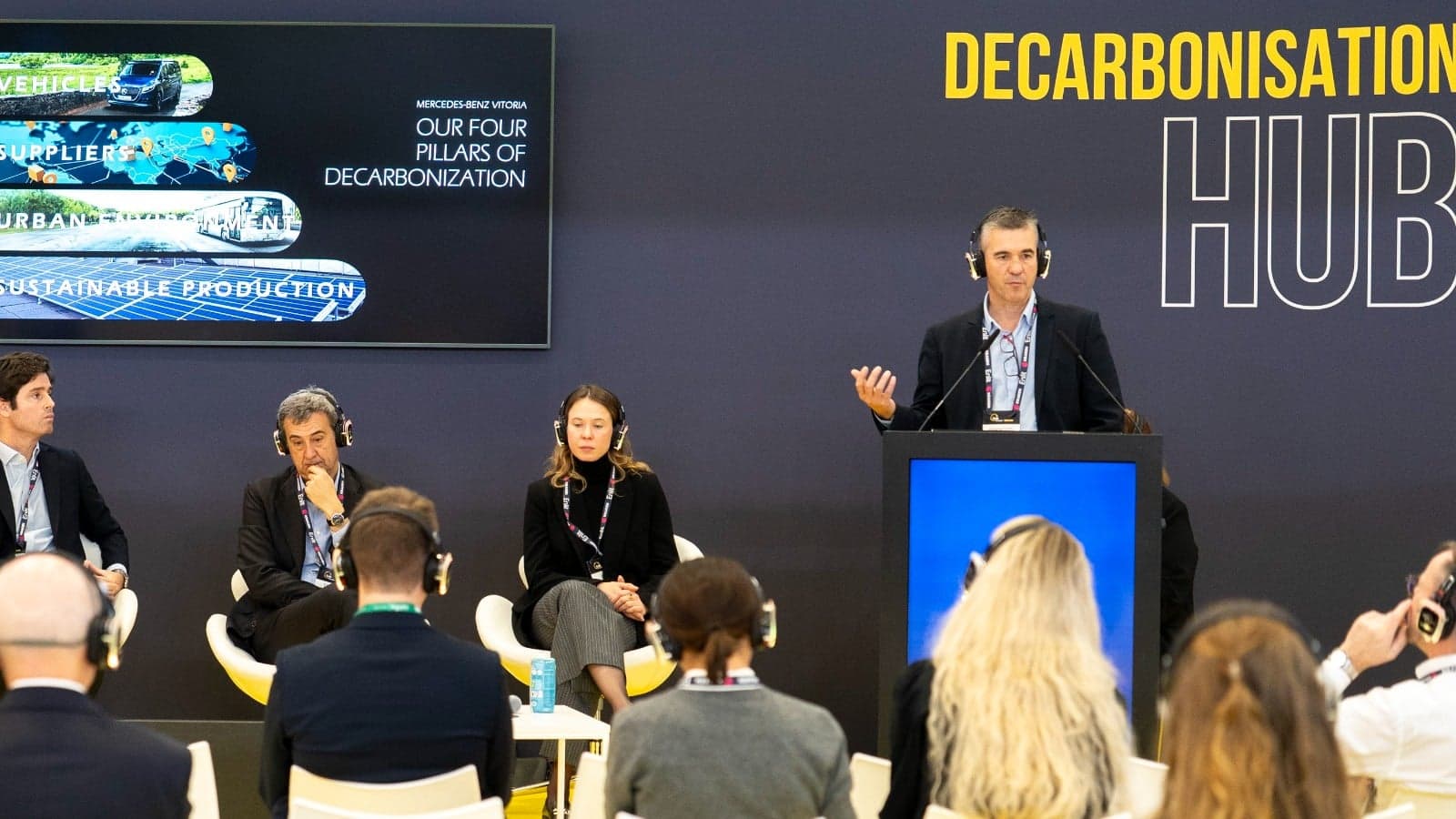
In a Summit panel discussion at Enlit Europe, it became clear that Europe’s CCS push is shaped by three main needs:
First, we must build shared CO₂ transport and storage networks that connect factories to storage sites. To make it work across many countries, Europe must agree on common CO₂ quality standards, simplify permitting procedures, and improve cooperation between the EU and UK emissions trading systems.
Second, Europe needs stable and predictable policies to encourage companies to invest in CCS. Tools like Contracts for Difference (CfDs) can guarantee a stable price for captured CO₂ or low-carbon products, reducing financial risk. The EU’s Net Zero Industry Act also helps by requiring more CO₂ storage capacity by 2030, addressing one of the biggest barriers to CCS deployment: the lack of available storage.
Third, Europe must create a market for low-carbon products made using CCS, such as low-carbon cement, steel, and synthetic fuels. For these products to succeed, governments and industries need clear labels, green procurement rules, and transparent communication with the public. Building trust is crucial: people want to understand costs, safety, and environmental impacts before supporting CCS projects.
Practical solutions
There’s growing momentum and confidence in CCS, driven by recent final investment decisions and EU funding through the Innovation fund. The Carbon Capture and Storage Association (CCSA) emphasizes its role in advocating for clear policies, regulatory frameworks, and facilitating knowledge sharing from its 120 members.
Diving into the technologies enabling CCS, the progress is rapid. We invited three experts to our hub session centred around Carbon Capture at Enlit Europe in Bilbao, to talk about the solutions they are working on.
First, we welcomed the hot potassium carbonate (HPC) carbon-capture system presented by Sumitomo SHI FW. This technology uses a non-toxic solvent and can handle polluted flue gases common in waste-to-energy and biomass power plants. After over 4,000 hours of testing, HPC showed strong performance, capturing more than 90% of CO₂ while resisting corrosion and solvent degradation.
Another complimentary pathway for CCS is Direct Air Capture (DAC), which removes CO₂ directly from the atmosphere. Skytree’s modular DAC units can be powered by renewable energy and waste heat, producing up to one kilotonne of CO₂ per year each. With costs approaching €150 per tonne, DAC is becoming competitive as a clean CO₂ source for e-fuels, greenhouses, and industrial uses. It also supports long-term climate goals by helping remove historic emissions.
Bellona, talked about The Longship Project, and its storage component Northern Lights. This project, primarily funded by the Norwegian state, captures CO₂ emissions from waste incineration and cement production, transporting the captured CO₂ via ship to a coastal terminal where it is temporarily stored before being injected deep beneath the seabed into sandstone formations.
As Europe moves toward net-zero emissions, CCS is proving to be more than just a technical fix, as it is a practical, scalable solution that supports industrial jobs and drives sustainable growth. Though CCS is not a silver bullet, many argue that Europe cannot reach net zero without it. We must invest in the infrastructure, standards, and markets that make CCS viable. With smart policy and public transparency, CCS can help Europe to more resilient industrial future.
Latest content
Members only content
+3
Cybersecurity and digital infrastructure resilience for a complex grid
Cybersecurity is considered the second most significant threat facing the energy sector after geopolitical issues including conflicts, trade wars and access to critical minerals.
- Enlit Editorial Team
- 03/06/2026