How Basque Country is shaping a sustainable energy future
Jolijn Schalkwijk
Posted on: 5 December 2025
Enlit Europe conference producer Jolijn Schalkwijk reflects on a thought-provoking debate in Bilbao.
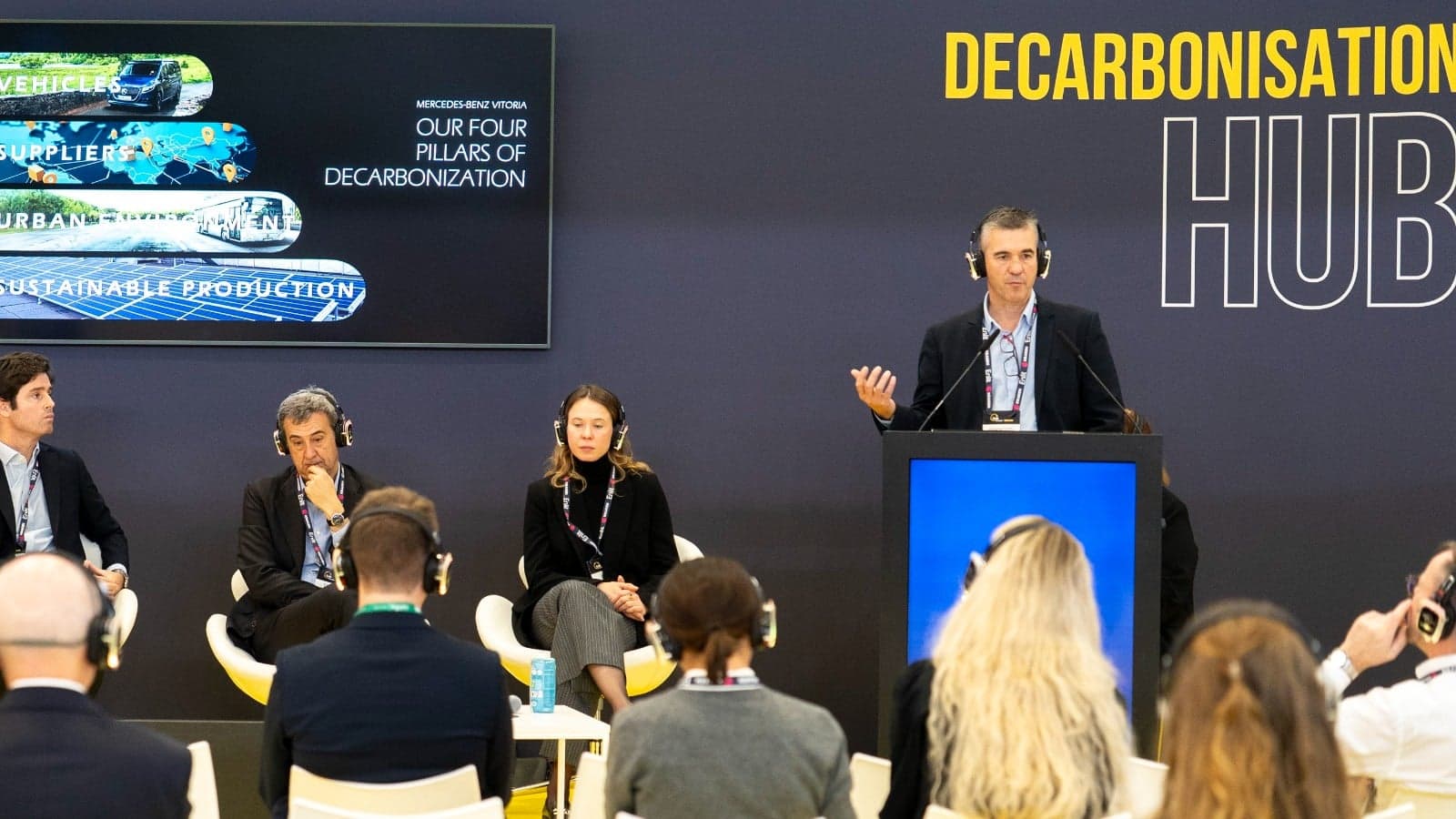
When curating part of the Enlit Europe programme in Bilbao this year, one of the sessions I looked forward to most was Basque Energy Users - Industries in Transition.
The session explored innovative decarbonisation strategies currently transforming the Basque industrial landscape, highlighting real-world projects and solutions from leading industrial companies which are committed to driving a sustainable regional economy.
Industrial companies are vital to Europe’s energy transition, as their decarbonisation journeys are often complex and sometimes overlooked. Yet, these sectors offer significant opportunities for learning and progress, especially when it comes to reducing emissions in heavy industry.
A key challenge is the ‘chicken-and-egg’ problem. Green steel, for example, is necessary to build wind turbines, power lines and other renewable energy infrastructure. But producing green steel in large quantities requires a significant supply of renewable energy – energy that can only exist after this new infrastructure is built.
This circular problem shows that no part of the energy transition can move forward alone. A successful transformation needs a full ecosystem approach that connects industry clusters, policy, infrastructure and new technologies.
The Basque Country specifically is facing a difficult industrial transition: it is on a mission to reduce carbon emissions in a region where the economy depends heavily on energy-intensive manufacturing, which often requires high-temperature processes, such as glass, paper, iron, and steel.
This transition is not something that can be achieved with small changes. It requires coordinating many connected parts of the energy and industrial system, protecting economic competitiveness and increasing cooperation across sectors.
More from Enlit Europe:
Enlit Europe offers snapshot of financing trends
Europe’s industrial competitiveness depends on smarter energy systems
In The Basque Country, industry represents about a quarter of the region’s GDP, and nearly 40% if related services are included. Despite this strong industrial base, the region has started moving toward a more sustainable energy system.
Different sectors are using a wide mix of solutions, including electrification, carbon capture and renewable fuels. What makes the Basque Country stand out is its culture of collaboration: government, industry associations, and technology providers work closely together.
This cooperation helps turn climate action into an opportunity for economic advantage, not just a legal requirement.
However, the challenge ahead is still large. Only about 10% of current energy use in the Basque Country comes from renewables. The goal is to reach 30% by 2030, which is very ambitious.
To meet this target, the region will need to quickly expand renewable energy production, modernise the electric grid, and provide stable and clear policies that attract investment.
The Energy Transition and Climate Change Law, which aims to achieve climate neutrality in the Basque Country before 2050, is an important step because it creates a more consistent framework for renewable energy and efficiency measures.
Also of interest
Mission Possible: Tracking Europe's industrial decarbonisation
The Basque Energy Agency, Ente Vasco de la Energía (EVE) plays a key role by helping turn these policies into real projects through public-private partnerships. Together with EVE, Enlit united four industrial players from the Basque Country to get a view on the energy transition challenges that they face and the incredible transformations that they have already committed to regarding their path to sustainability: Petronor, Mercedes-Benz España, Vidrala and PepsiCo Iberia.
- The refinery Petronor, is transforming itself into a multi-energy hub in line with Repsol’s 2050 net-zero plan. Its strategy includes electrifying operations, producing renewable hydrogen, and developing synthetic fuels for aviation and maritime transport;
- Mercedes-Benz’s Vitoria plant is also changing rapidly. Preparing to produce a fully electric vehicle in 2026, the plant has already reached carbon neutrality through offsets and aims to cut emissions by 80% by 2030. This involves electrifying production lines, building zero-emission facilities, and improving logistics;
- Glass producer Vidrala faces the tough task of reducing emissions while melting glass at 1600°C. Its solutions include increasing recycled glass, electrifying furnaces, and using renewable gases like biomethane and hydrogen;
- Even the food and beverage sector is involved. PepsiCo’s Basque plant is a global test site for net-zero production, using electrified equipment, solar power, and better insulation.
Across all these examples, one message is clear: for industrial regions like the Basque Country, decarbonisation is not only about protecting the environment: it is essential for future competitiveness.
With coordination, cooperation and openness to new technologies, even energy-intensive regions can move toward a sustainable and successful future.
Related tags
Latest content
+3
EU Energy Projects Podcast: How the 2Cool2Waste cluster is turning waste heat into an opportunity
In this episode of the EU Energy Projects Podcast, I had the pleasure of welcoming Mohaddeseh Maktabifard and José Luis Corrales Ciganda, both representing the inspiring 2Cool2Waste cluster; an initiative uniting EU-funded projects that transform waste heat from an overlooked by-product into a practical, clean-energy resource.
- Areti Ntaradimou
- 03/12/2025