Turning residential flexibility into a grid resource with the ENFLATE Swiss demo
Guest/partner contributor
Posted on: 17 July 2026
The ENFLATE Swiss demonstration site explores how distributed residential flexibility can support future electricity grids, writes Joëlle Clot.
The increasing electrification of heating is fundamentally changing the requirements placed on electricity grids across Europe.
At the same time, the growing share of renewable energy sources introduces higher volatility into electricity generation. To ensure grid stability while progressing toward decarbonisation goals, flexibility on the demand side is becoming increasingly important.
The Horizon Europe project ENFLATE addresses this challenge by among others developing and demonstrating solutions for flexibility markets across several European pilot sites. The project investigates how distributed energy resources can actively contribute to balancing local grids, integrating renewable generation and enabling more resilient energy systems. Particular attention is given to the role of residential flexibility and its integration into future local energy markets.
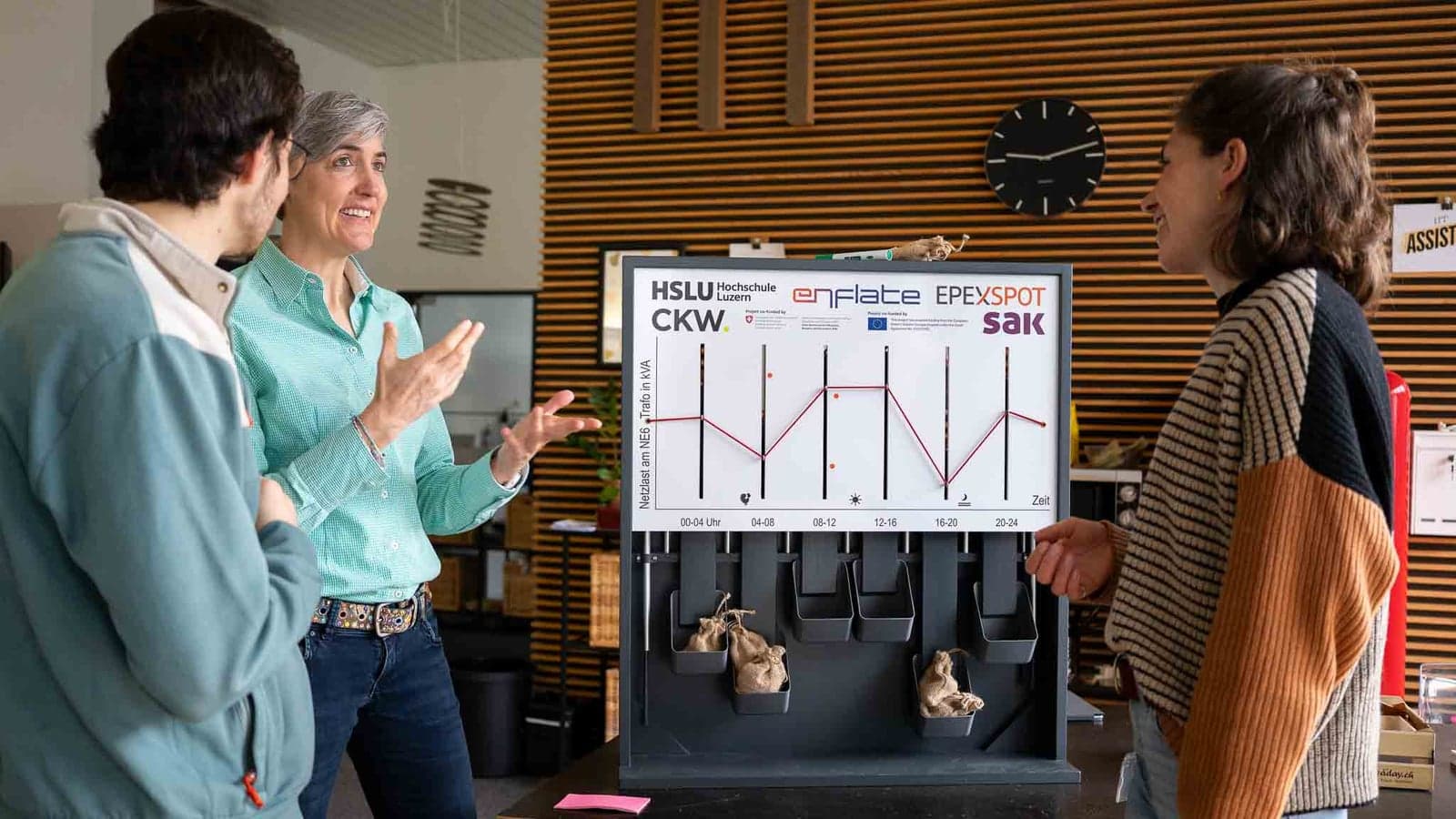
The pilot, operated by the Lucerne University of Applied Sciences and Arts (HSLU) together with local partners, investigates how common building technologies such as heat pumps and domestic hot water systems can become active participants in future energy systems.
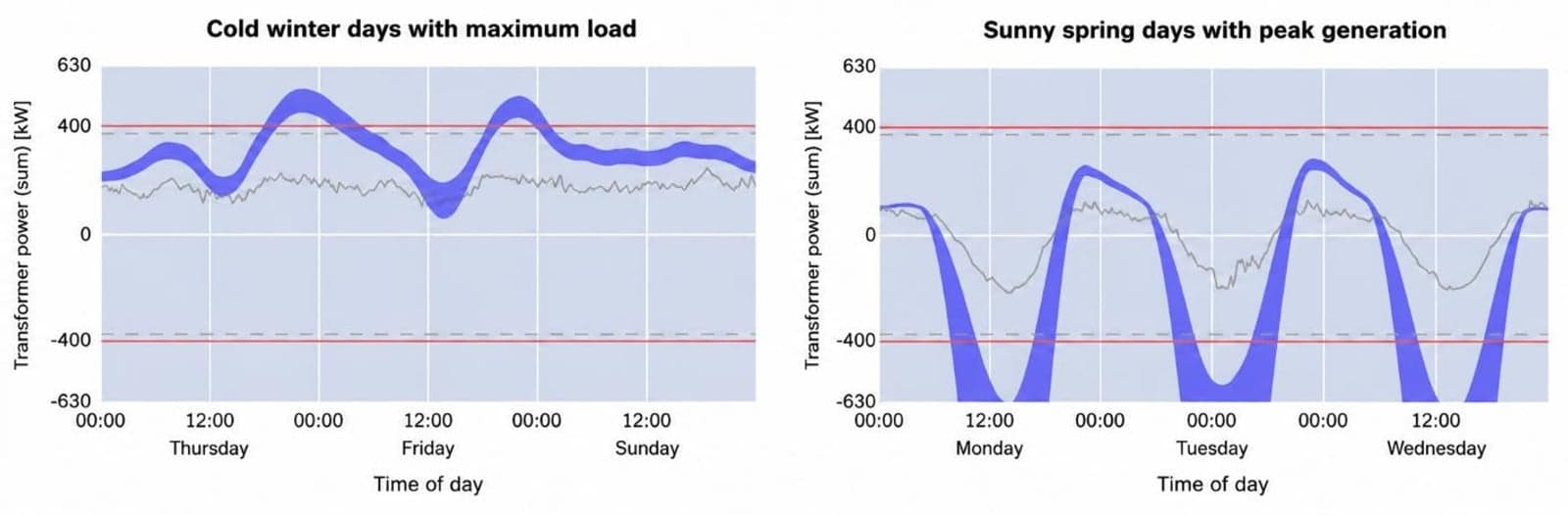
To better understand the future impact of electrification on the local distribution grid, simulations were carried out for the Swiss pilot area. The results indicate that increasing penetration of heat pumps and photovoltaic systems could substantially increase transformer loading during cold winter periods, while high photovoltaic generation during sunny spring days may lead to significant reverse power flows.
Figure 1 shows projected transformer load flows for typical winter and spring scenarios without the utilisation of flexibility measures.
These projected developments underline the growing importance of distributed flexibility. Coordinated control of residential assets can help shift loads, reduce simultaneous demand peaks and better align electricity consumption with renewable energy generation. Rather than relying solely on conventional grid reinforcement, flexibility therefore offers an additional pathway to support the transition toward decentralised and renewable-based energy systems.
Unlike many laboratory-based approaches, the Swiss demo operates under real-life conditions with residential users. This allows the project not only to evaluate technical feasibility, but also to assess interoperability, operational reliability and user acceptance in practical deployment scenarios.
ENFLATE methodology
The Swiss ENFLATE demonstration is centred around a coordinated flexibility ecosystem connecting residential consumers, grid stakeholders and market actors through a central coordination platform.
Participating households provide flexibility through controllable assets such as heat pumps and domestic hot water. These flexible assets are connected to an integrator platform, which aggregates distributed flexibility and enables communication between end users, grid operators and energy market participants.
At the core of the demonstration is a local flexibility coordination platform developed within the project framework. The platform supports day-ahead and intraday flexibility processes and enables rule-based conflict resolution in situations of local grid congestion. Historical metering data is used both for baseline generation and for validating flexibility activations.
The demonstration investigates several flexibility use cases simultaneously. These include peak shaving for the local distribution grid, balancing services and optimisation strategies for balancing groups in electricity markets. The pilot therefore evaluates not only technical flexibility activation, but also the interaction between grid-oriented and market-oriented flexibility use cases.
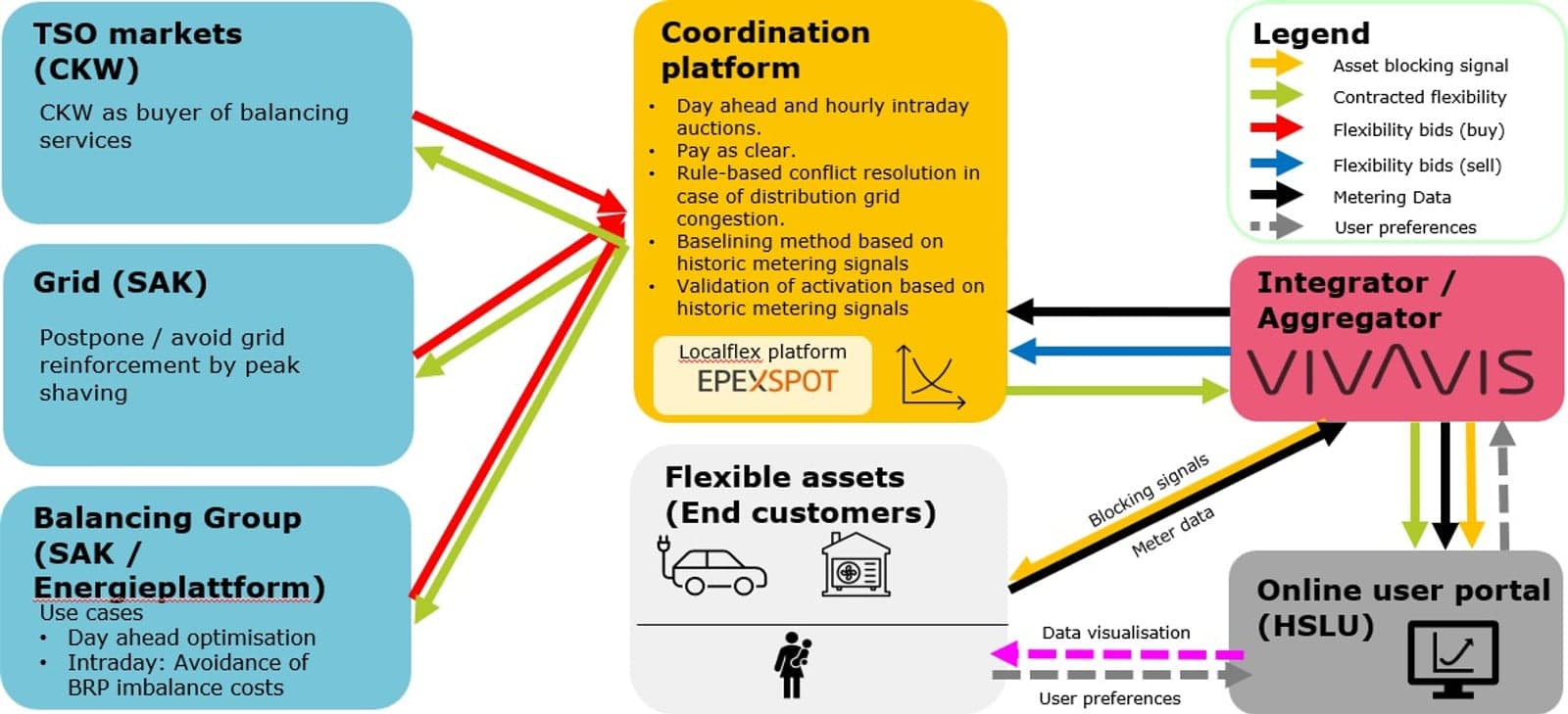
The coordination platform runs day-ahead and intraday auctions and applies a pay-as-clear mechanism. Rule-based conflict resolution ensures that local grid constraints are respected, using baseline calculations and validations based on historic metering data. When flexibility is activated, the aggregator sends control signals, for example to preheat domestic hot water or adjust heat pump operation, to the assets and receives metering data to verify performance.
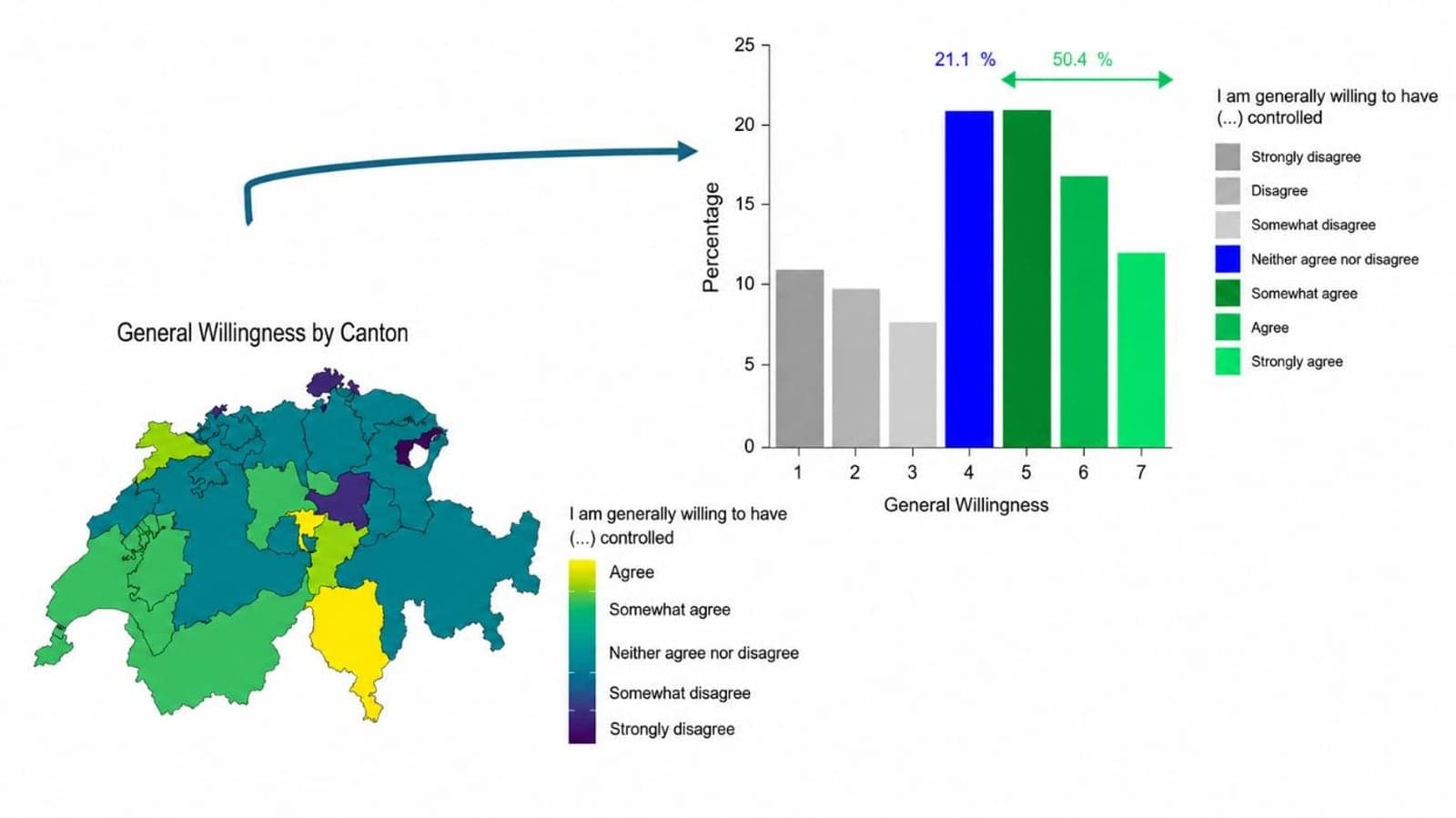
To additionally assess social acceptance, an online survey on the willingness to participate in flexibility-based energy solutions was conducted across Switzerland. A total of 728 participants completed the survey within a two-week period. Responses were received from all major Swiss regions, resulting in a broadly balanced distribution across the different cantons.
Particular attention is given to the interaction between technical optimisation and real-world operational constraints. Existing building installations vary significantly in age, configuration and controllability, making interoperability a key challenge. The demonstration therefore provides valuable insights into how flexible residential assets can be integrated into market-based mechanisms and how their value can be realised for both the grid and energy market participants.
Results and discussion
Initial findings from the Swiss demonstration indicate that distributed residential flexibility can provide measurable benefits for both local energy systems and future grid planning.
One important observation is that coordinated flexibility activation can effectively shift and reduce peak loads without noticeable impacts on occupant comfort. By intelligently controlling heat pumps and domestic hot water systems, electricity demand can be moved away from critical periods and aligned more closely with grid and market requirements.
Operational tests within the pilot demonstrated that flexibility activation can successfully postpone the switching-on times of thermal systems and thereby flatten simultaneous demand peaks.
In addition to the technical feasibility, the project also evaluated the economic implications of flexibility-based approaches compared to conventional grid reinforcement strategies. The results indicate that flexibility solutions can significantly reduce overall system costs by avoiding or postponing expensive infrastructure upgrades. While flexibility-based approaches may require higher operational coordination efforts, they can substantially lower total expenditures compared to traditional transformer and grid reinforcement measures.
Another important aspect investigated within the Swiss demonstration is social acceptance. Since residential flexibility directly interacts with building operation, user trust and willingness to participate are essential for large-scale deployment.
To better understand customer perspectives, a cross sectional survey has been conducted on the acceptance of controlled residential energy systems. The results indicate a generally positive attitude towards flexibility-based solutions, particularly when transparency, user control and comfort preservation are ensured. A significant share of respondents stated that they are willing to allow the controlled operation of residential energy systems as part of future energy solutions.
The project also provides valuable insights into interoperability challenges. Residential buildings often contain heterogeneous systems from different manufacturers and generations, making integration into a unified flexibility platform a complex task. The demonstration therefore highlights the importance of open communication standards and scalable integration approaches for future deployment.
Although the demonstration is still ongoing, the results already underline the relevance of distributed flexibility for future energy systems. Residential buildings should no longer be viewed solely as passive consumers, but increasingly as active and flexible participants in the electricity system.
Conclusion
The Swiss demonstration site within ENFLATE illustrates how residential flexibility can become an important component of future electricity systems. By coordinating distributed thermal assets such as heat pumps and domestic hot water systems, the project demonstrates how existing building technologies can actively support both grid stability and market-oriented flexibility applications.
The results indicate that flexibility-based approaches can help reduce and shift peak loads, mitigate future grid congestion and better align electricity consumption with renewable energy generation. In addition to the technical benefits, the comparison with conventional grid reinforcement strategies highlights the economic potential of flexibility solutions to postpone or reduce infrastructure investments.
The demonstration also underlines the importance of interoperability, stakeholder coordination and user acceptance for large-scale implementation. Surveys conducted within the project indicate a generally positive attitude towards controlled operation of flexible residential loads, provided that transparency and occupant comfort are maintained.
Although the pilot is still ongoing, the findings already show that residential consumers can play a significantly more active role in future decentralised energy systems. Distributed flexibility should therefore not be viewed solely as a technical option, but increasingly as a practical and scalable complement to conventional grid expansion.
As ENFLATE progresses, further work will focus on long-term operational experience, scalability and the integration of residential flexibility into future local flexibility markets.
References
About the author
Joëlle Clot is a researcher at the Institute of Innovation and Technology Management (IIT) at the Lucerne University of Applied Sciences and Arts (HSLU). Her work focuses on distributed energy systems, building flexibility and the integration of residential demand-side management into future energy markets.
Related tags
Most popular
Join the community for freeAnd get access to all content
Related projects
ENFLATE
+1
1 September 2022 - 31 August 2026
View projectLatest content
+7
What will it take to truly digitalise the European power grid?
In this episode of the Energy Transitions podcast, Christiane Mann, Chair of the T&D Europe working group on grid digitalisation and Vice President, Head of Industry Affairs at Siemens Smart Infrastructure, helps unpack what true grid digitalisation really means.
- Yusuf Latief
- 19/02/2026