We must rewire the digital grid debate says Christiane Mann
Yusuf Latief
Posted on: 25 February 2026
The chair of T&D Europe's grid digitalisation group discusses the challenge of evaluating Europe’s power grid, which was not designed for today’s demands.
Without regulatory reform, harmonisation and a rethink of change management, Europe risks evaluating tomorrow’s grid with yesterday’s rules.
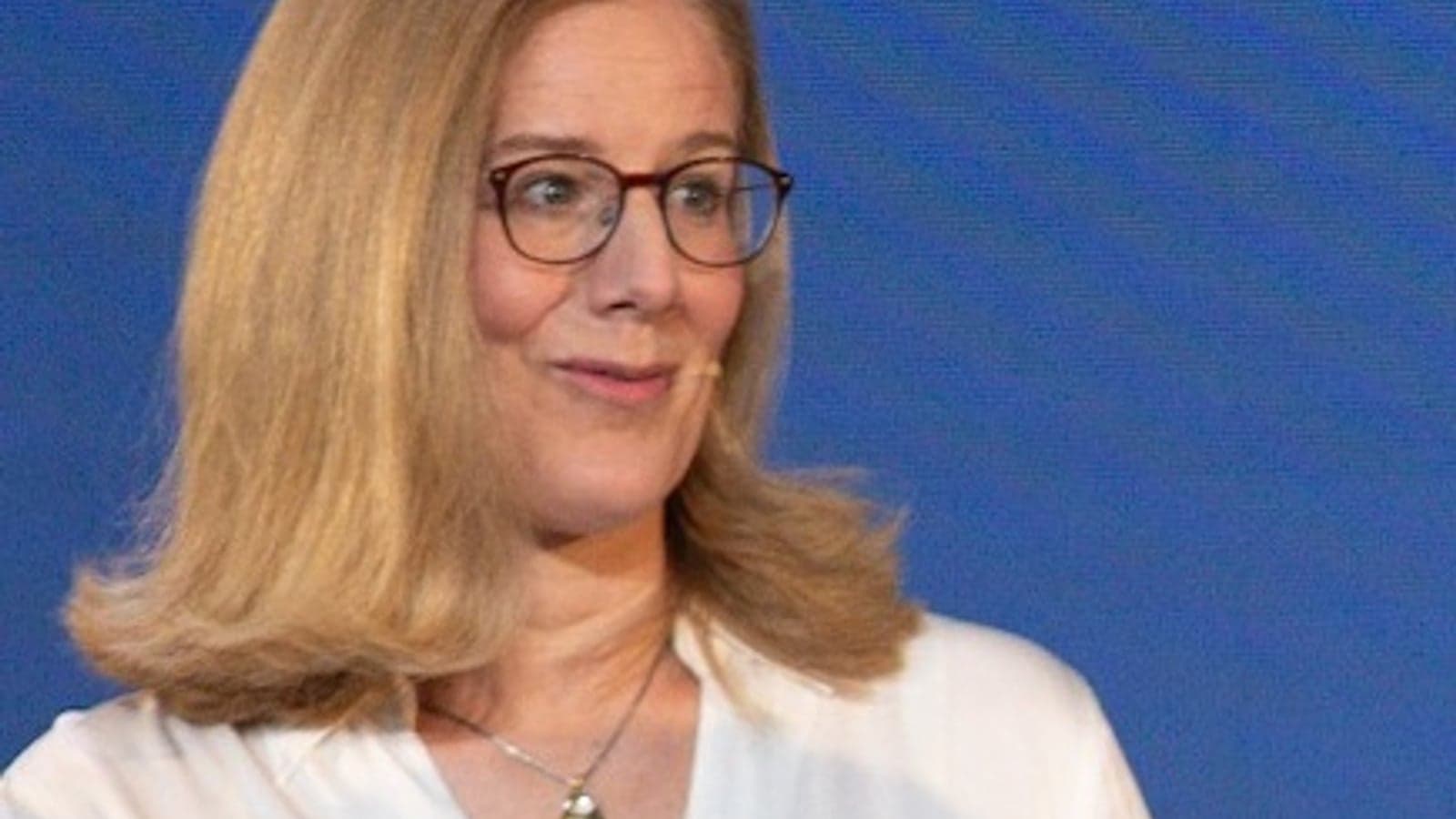
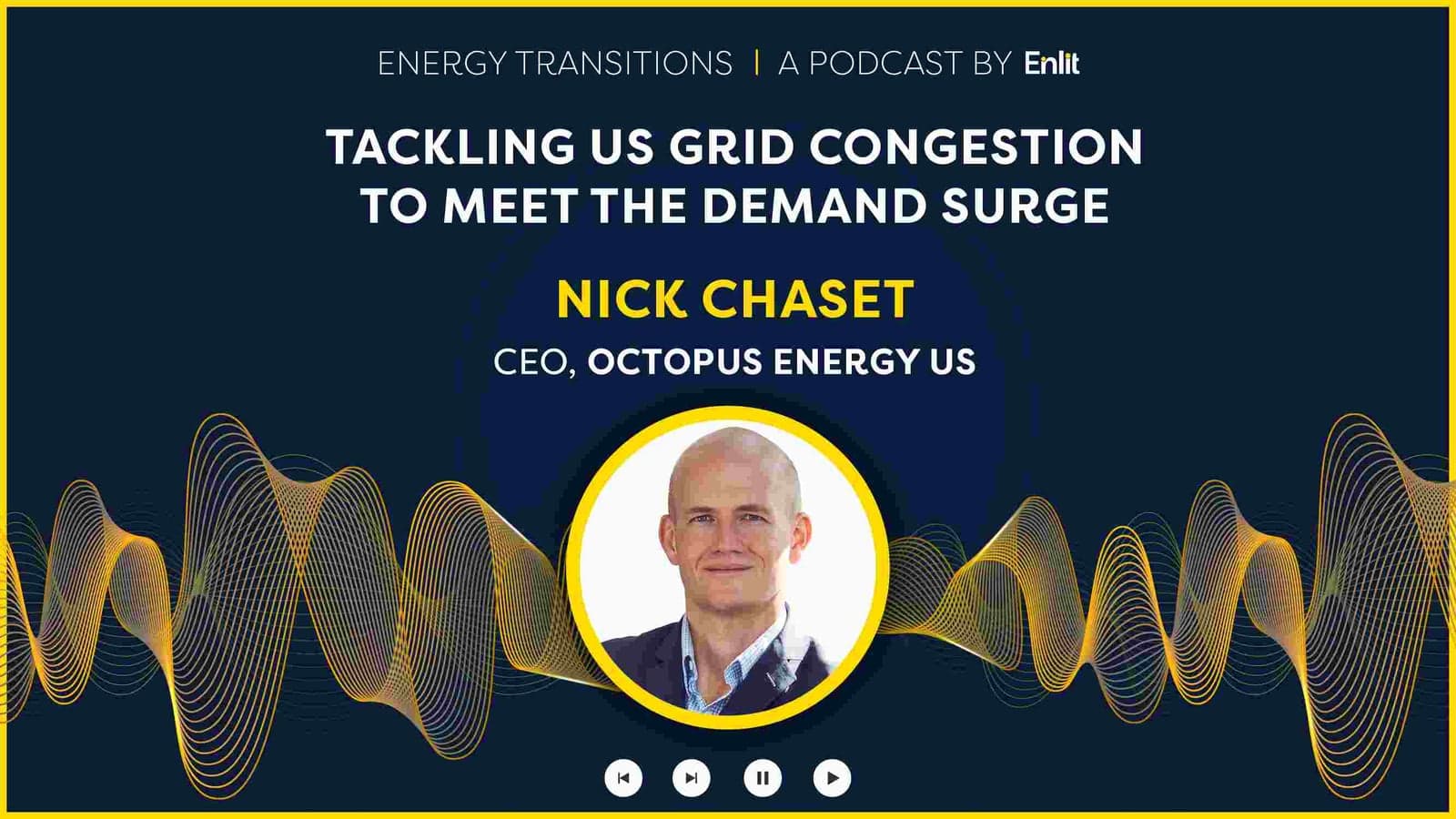
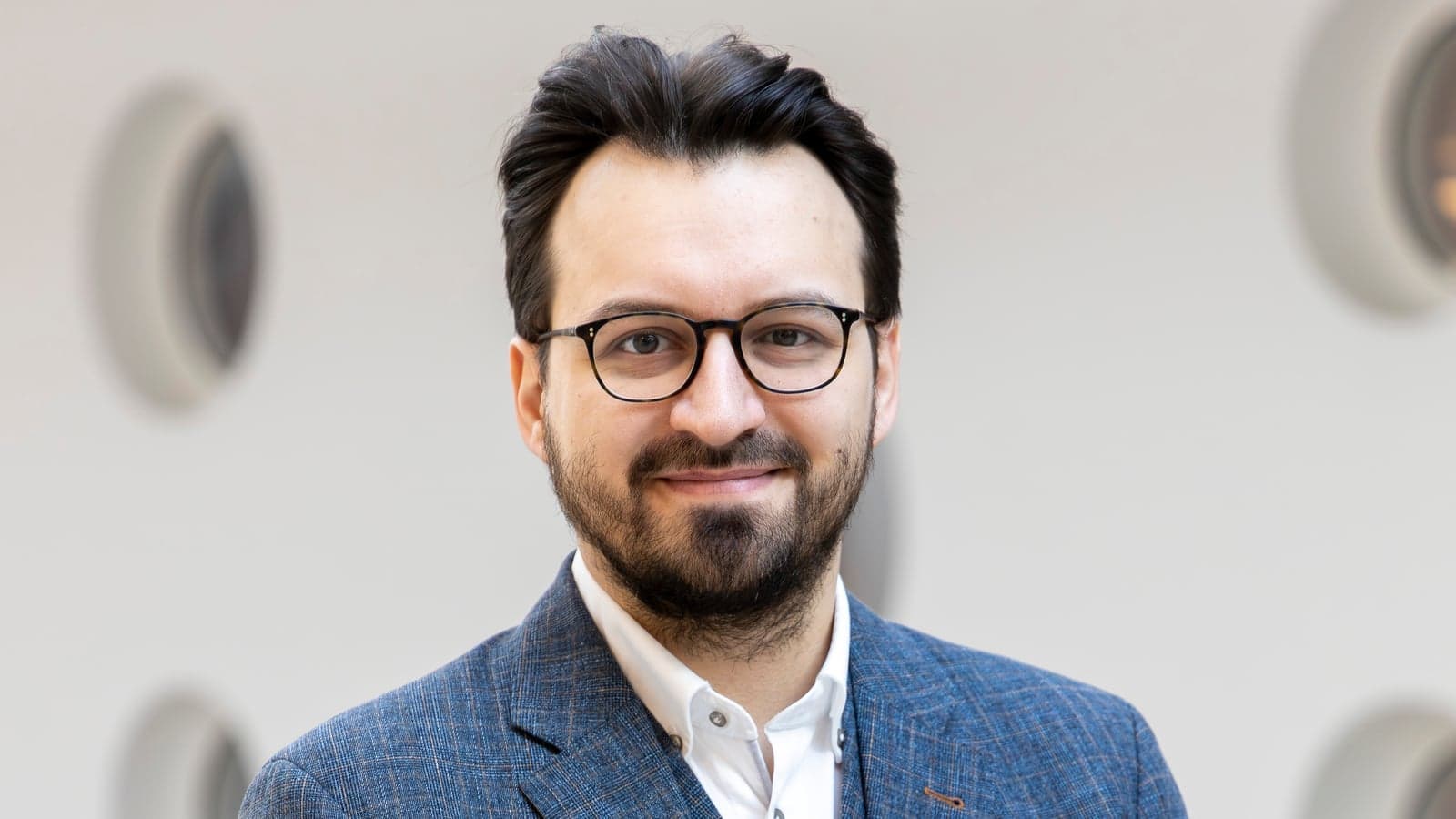
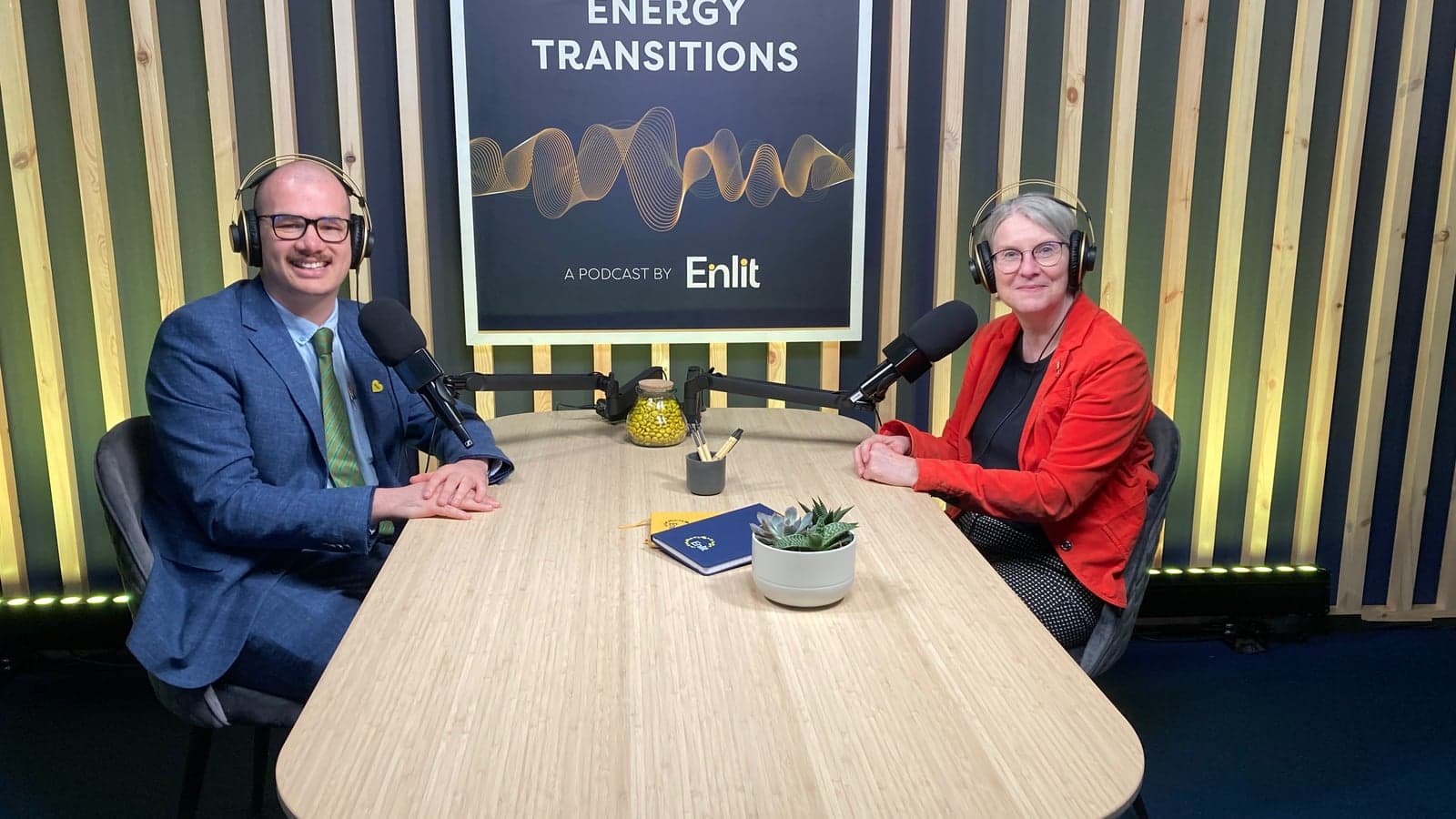
That's the warning given to me by Christiane Mann, Chair of T&D Europe’s Working Group on Grid Digitalisation, when we meet in the Enlit studio to record an Energy Transitions podcast.
It’s no secret that today’s power grids were not designed for this world of decentralised renewables, electric vehicles and heat pumps. Yet that is precisely the environment they now have to operate in.
And Mann, who is Vice President, Head of Industry Affairs at Siemens Smart Infrastructure, sets out why the debate itself needs reframing — not just around technology, but around the regulations, incentives and behaviours that shape how that technology is deployed.
Rather than asking whether Europe’s grid can cope, she argues, the more urgent question is whether Europe is assessing digitalisation through the right lens.
The role of definition
Mann reflectes on what grid digitalisation actually means in practice – and why regulation, skills and human behaviour may prove as decisive as technology.
She joined me in the podcast studio following the publication of a T&D study, conducted alongside Compass Lexicon, which was commissioned to analyse how digital solutions can transform the continent’s electricity grid.
She says: “As Chair of the working group, I frequently got confronted with the question: what does it actually mean to digitalise the grid?”
And her question is not necessarily rhetorical. “We looked at what that means from a technology perspective. We looked at who benefits from it because it costs money. “Then we looked at the regulatory frameworks, how they support the rollout of digital grid technologies…”
In other words, before Europe can modernise its grid, it must first agree on how to define, measure and value digitalisation itself. And in addressing these questions, several points of interest came up.
Beyond a single technology
One of the first challenges, she explains, was definitional. “It's quite interesting to look at the discussions we had within T&D Europe. It took a while, a couple of tough discussions, to come up with some kind of technology stack.”
According to Mann, there was common agreement that it's all about enabling advanced grid functionalities, which you cannot access with ‘traditional technologies’, which she explains is almost a misnomer.
“It's important to explain it's not just one single technology: it's the way existing and new technologies are smartly put together to enable these functionalities.”
What is changing is not so much the supply, it's the whole environment. You suddenly have renewables, volatility, power stability issues, decentralised resources – all of this comes together.
And such functionalities matter because the operating environment has fundamentally shifted.
“With these functionalities, you can access all sorts of benefits, be it customers who have renewable energy… or for grid operators so they can operate the grid under new conditions.
“What is changing is not so much the supply, it's the whole environment. You suddenly have renewables, volatility, power stability issues, decentralised resources – all of this comes together.”
Thus, rather than simply tapping on software onto an unchanged system, grid digitalisation has become more about equipping operators to manage complexity that simply did not exist when much of Europe’s grid was built.
Prosumers to flexumers
That complexity extends to customers and their evolving role in the power system. “We had consumers in the past, then we evolved to prosumers. Flexumers are digitally connected agents which can, in a short period of time, either contribute or take load off the grid.
“The way to enable this is digital technologies. A flexumer is a very active, digitally connected agent in the grid.”
The shift from passive consumption to active, time-sensitive participation underlines why advanced digital functionalities are essential. Without visibility, interoperability and data-driven control, such actors cannot be integrated at scale.
Rewiring the debate, therefore, also means recognising that digitalisation is about empowering — and coordinating — millions of new participants.
Have you read?
UK power grid cannot cope with increasing 'super storms'
Can hybrid power systems ease the strain on Europe’s power grid?
Why Europe's DSOs should start flexibility now
Regulation, CAPEX bias and uneven incentives
If the technological direction is becoming clearer, the regulatory picture remains uneven.
T&D and Compass Lexicon’s study examined frameworks in France, Germany, the UK and Spain, with consultants interviewing regulators to identify best practices and barriers.
“One of the biggest blockers is what everybody refers to as a CAPEX bias," says Mann. “Capital expenditures have a preferential treatment, but software investments — when we talk about digital, AI also, that's software — they are typically OPEX, operating expenditures, but [these] are treated differently in the regulatory framework.”
Different countries are experimenting with different approaches, she notes, and there is scope to learn from one another.
But fragmentation slows deployment and raises costs, reinforcing her warning that Europe risks judging digital progress through outdated metrics.
“I think what would help us a lot is a little bit more harmonisation across Europe: not everyone having their own approach. The more you harmonize the quicker you can be, the more cost effective it is.”
A massive change management process
Yet for Mann, the story does not end with regulatory levers. “I personally have this theory that this is a massive change management process, which applies to anyone: to you and to me as end consumers, the grid operators, industry players, flexumers, prosumers, everyone.”
Electricity, long taken for granted, then becomes something to actively manage. “As an end consumer, all of a sudden you have to think about questions like, is this a good time for me? Is it cheap? Or could I do a different time? Could I shift my loads?
You cannot just change one thing and then expect that the other things happen as well. You have to find the right triggers for everyone.
“So for me it's a big change management process and we humans do not like to change. As much as we think we're rational and do the rational decision, we do not. We like to do what we know we can do well.”
Acceleration, therefore, is not simply about mandates — it is about looking at the whole system. “You cannot just change one thing and then expect that the other things happen as well. You have to find the right triggers for everyone.”
And that includes regulators themselves. “It's not just the utilities. It's not just the end consumer, or the industry…It's also the regulator, the politicians.”
Negotiating reality
Time, in fact, may be the most contested variable in this debate. “The biggest challenge we have right now is that all changes have to happen now and be implemented yesterday and that is just unrealistic.”
Indeed, the grid was built over a century ago, but now new technologies, stakeholders and digital requirements are being layered on simultaneously.
Intersections that never previously interacted – e-mobility, heating, distributed generation – must now “find a way to couple”, says Mann.
Standardisation, too, requires patience. “Developing a standard, which our industry is well versed in, takes about on average three years. You have industry experts sit in a group, ‘negotiate reality’ until they come up with ‘this is what we want to achieve and this is what is needed.’ It takes about three years and it's a good process."
But against a backdrop of rapid policy shifts, she describes a sense of instability. “Now we have: yesterday one rule, today and tomorrow the next one. There is sometimes the feeling of playing ping pong, pushing the ball back in order to try to get some kind of stability in order to be able to deliver and implement on what is done.”
A policy wish list
For Mann, when asked on a ‘policy wish list’, it begins with this very stability — because without stable frameworks, even the best digital tools cannot deliver.
“I think the first one I would say is stability. Stable frameworks in order to be able to implement and deliver. It's not that you can just throw any technology into the grid, you have to prove it.
“Think of it this way. The grid is the largest living machine we have and it works through the whole of Europe. This is unbelievable.”
And there is no silver bullet, she concedes. “I don't have the one single answer, the magic wand and we fix it all. I don't think we'd be sitting here if that were the case.”
What emerges instead is a picture of digital grid transformation as layered, iterative and inherently political: a negotiation between technology, regulation and human behaviour.
Latest content
+7
What will it take to truly digitalise the European power grid?
In this episode of the Energy Transitions podcast, Christiane Mann, Chair of the T&D Europe working group on grid digitalisation and Vice President, Head of Industry Affairs at Siemens Smart Infrastructure, helps unpack what true grid digitalisation really means.
- Yusuf Latief
- 19/02/2026