What the energy sector can learn from US military skill set strategies
Julia Kramer
Posted on: 3 April 2024
Julia Kramer sat down with Dr Richard Hartman to find out how he is applying his non-energy experience in this role as the Chief Innovation Officer in the Office of Energy Assurance in the US Air Force.
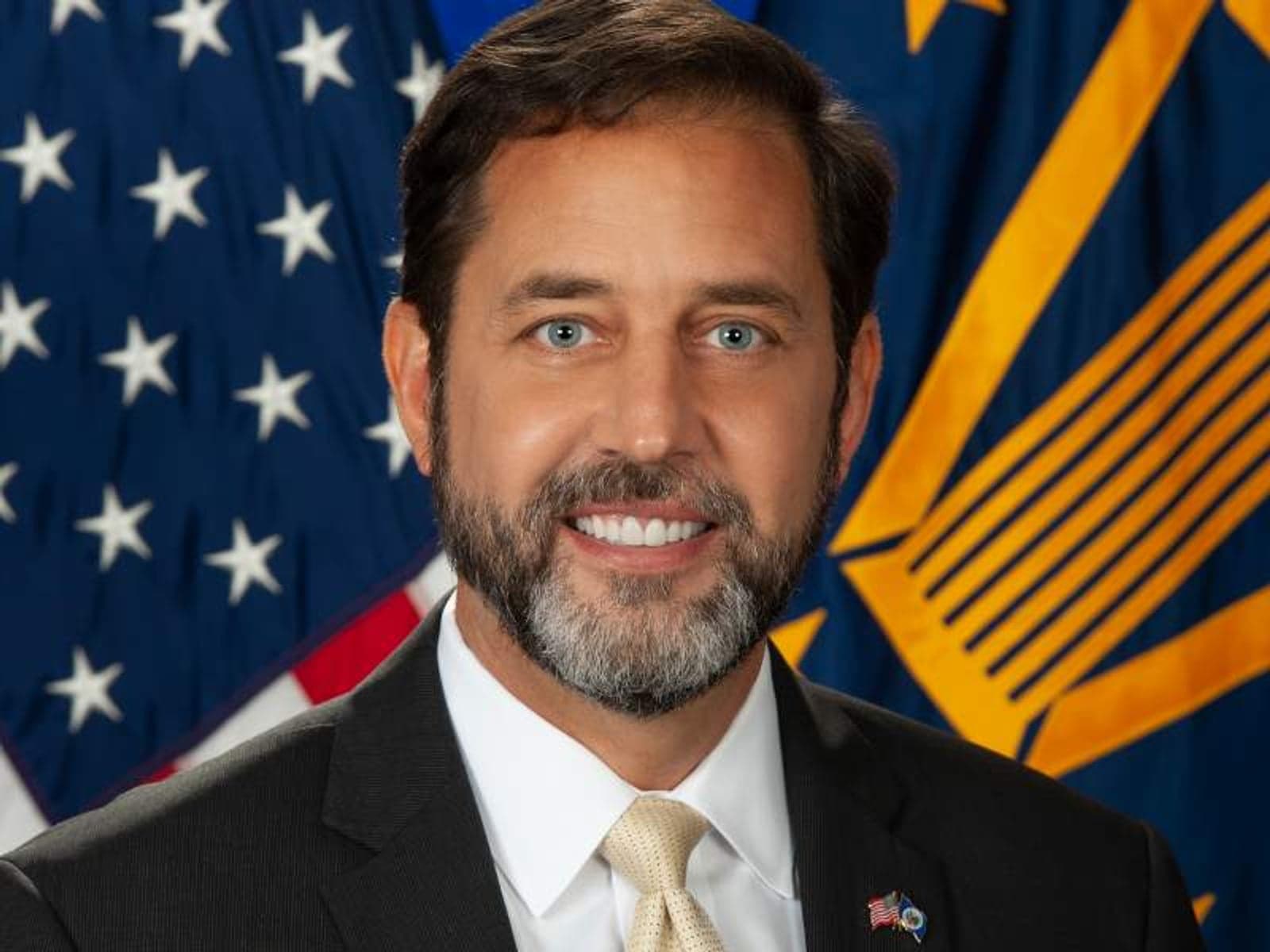
Julia Kramer sat down with Dr Richard Hartman to find out how he is applying his military, academic and private sector experience in his role as the Chief Innovation Officer in the Office of Energy Assurance in the US Air Force.
“Energy was never in my career playbook”, states Richard Hartman in the first few minutes of our interview. Not exactly the type of opening statement you would expect from someone speaking at Enlit Europe 2023 in Paris.
However, his statement doesn’t come as a surprise. In fact, it is exactly the reason why I wanted to sit down with Hartman for the first instalment of the Enlit Open Minds interview series, focussing on leaders bringing non-energy expertise to the sector.
Richard Hartman is the Chief Innovation Officer in the Office of Energy Assurance in the US Department of Air Force, and it is his first job in energy. He oversees identifying the energy needs and ensures energy resilience on all the US Air and Space Force bases. To reach these goals, he is working with academia, private industry and various government entities on finding and delivering innovative conventional and non-conventional solutions to get more on-base (clean) energy to increase mission resiliency.
Currently, he is particularly focusing on deploying Energy-as-a-Service, developing geothermal energy and exploring the potential of natural hydrogen.
When he took up this job in July 2022, Hartman may not have had any previous involvement in the energy sector, but he came with thirty years of executive experience in the public and private sector. From having C-suite roles at the Department of Defense and the Department of Veteran Affairs, to being a media start-up founder, an entrepreneur, and an Assistant Professor in Public Health.
Even though Hartman suggests that he would not “advise anyone to go through his career pathway”, he did learn many relevant lessons throughout this journey that support him in his current role and help him to tackle challenges in the energy sector.
Move at the speed of business in the public sector
“There are certain things that you learn when you are out in the private sector and you are hungry,” says Hartman, pointing to the sales principle of ‘always be closing (ABC)’ as an example. He believes that during his time in the private sector, he developed a dynamic mindset that enables him to approach big investors with an open mind, seeing the business opportunities that are available for them, and for us.
“In the private sector, you are always doing business development but that is not a skill set you learn in government because you are not a for-profit organisation… The skill sets that people like Kirk Phillips [Director of Office of Energy Assurance at United States Air Force] have had by being outside the government have been extremely beneficial. He is the one who says that we want to move at the speed of business.”
Step out of your fish tank
Hartman acknowledges that his current role within this energy department of government is unusual, because “you have to step out of your fish tank to be successful.”
He is referring to his required collaboration with third-party key players in the private industry, research and innovation projects and other government entities. Stepping out of your fish tank is not something that comes naturally in many government departments, Hartman believes. “Most people in government or the military are within their own world.”
Think beyond technology, think holistically
To familiarise himself with the energy sector, Hartman said that he started by reading many books. For example, Gretchen Bakke’s book The Grid: The Fraying Wires Between Americans and Our Energy Future, gave him relevant insights. His book selection has a clear focus though.
According to Hartman, a holistic perspective is required to be successful because of the complexity of the energy marketplace. “We have policy, we have regulation, we have over 3000 utilities in the United States, we have three grids in North America, we have 50 states, and everyone does something different.”
To tackle that issue, Hartman created a Venn Diagram for the organisation. “In that diagram, I look at the needs, that's the most important thing. Our focus is on energy resilience, so that is going to be the driving factor when it comes to technology, but also the engagement of people in financing those goals and creating contracts to achieve them.”
Hartman asserts that people have to ask questions and develop relationships to make the public-private partnerships work and finding the place where needs overlap, is where you’ll find success for everyone.
Government is diversity
If there is one thing that Hartman realized during his time in different positions in the military, it would be the fact that the military has often been “in many places, either socially or technologically, at the tip of the spear.”
He considers this a huge advantage and believes it applies to, for example, the current emphasis on diversity within the private sector workplaces.
“A lot of people ask why diversity is important or what your perspective or experience is. Within the government, you work in a diverse setting. In the government or the military, it’s diverse just by its structure.”
He acknowledges that it certainly wasn’t always like that, but he sees it as an advantage and believes the private sector can learn from this.
Realise that you are shaping the future leaders
In his capacity as an Assistant Professor at Georgetown University and George Washington University, Hartman’s main responsibility was teaching the students. This allowed him to understand that he was helping to develop the foundations for the future. “It’s about realizing that you are shaping future leaders,” said Hartman.
Having said that, Hartman emphasized that he made it always clear to his students that he would teach them the foundations, but then he would teach them the real world. “The book is important, you need to have that theoretical knowledge to get the foundations, but the real world is different. Then it is about engagement and dealing with personalities,” he said.
Train young people in skill sets, just like the military does
Hartman is concerned about the fact that energy is not made sexy enough to attract enough young talent. He believes that this is where utilities can take a page out of the US military’s playbook.
“One of the things the US military does very well is training young people in transferable skills. We start them as an apprentice, then they become a journeyman and lastly a skilled craftsmen.”
During Hartman’s time in the special operations community, he learned the mantra ‘we learn, we do, we teach’. He believes that utilities and community colleges need to embrace a similar model to address the workforce challenges the energy sector is facing.
Related tags
Latest content
+1
Why connection and confidence are key for women in engineering
The engineering profession is evolving rapidly and requires collaboration, creativity, and the inclusion of perspectives that reflect the world we’re designing for. That’s where team culture and diversity play a central role.
- Guest/partner contributor
- 23/06/2025