Why interoperability will define Europe’s energy transition
Enlit Editorial Team
Posted on: 16 December 2025
Trilliant President Jim Madej reveals his recipe for decarbonising and digitising energy while ensuring affordability and reliability.
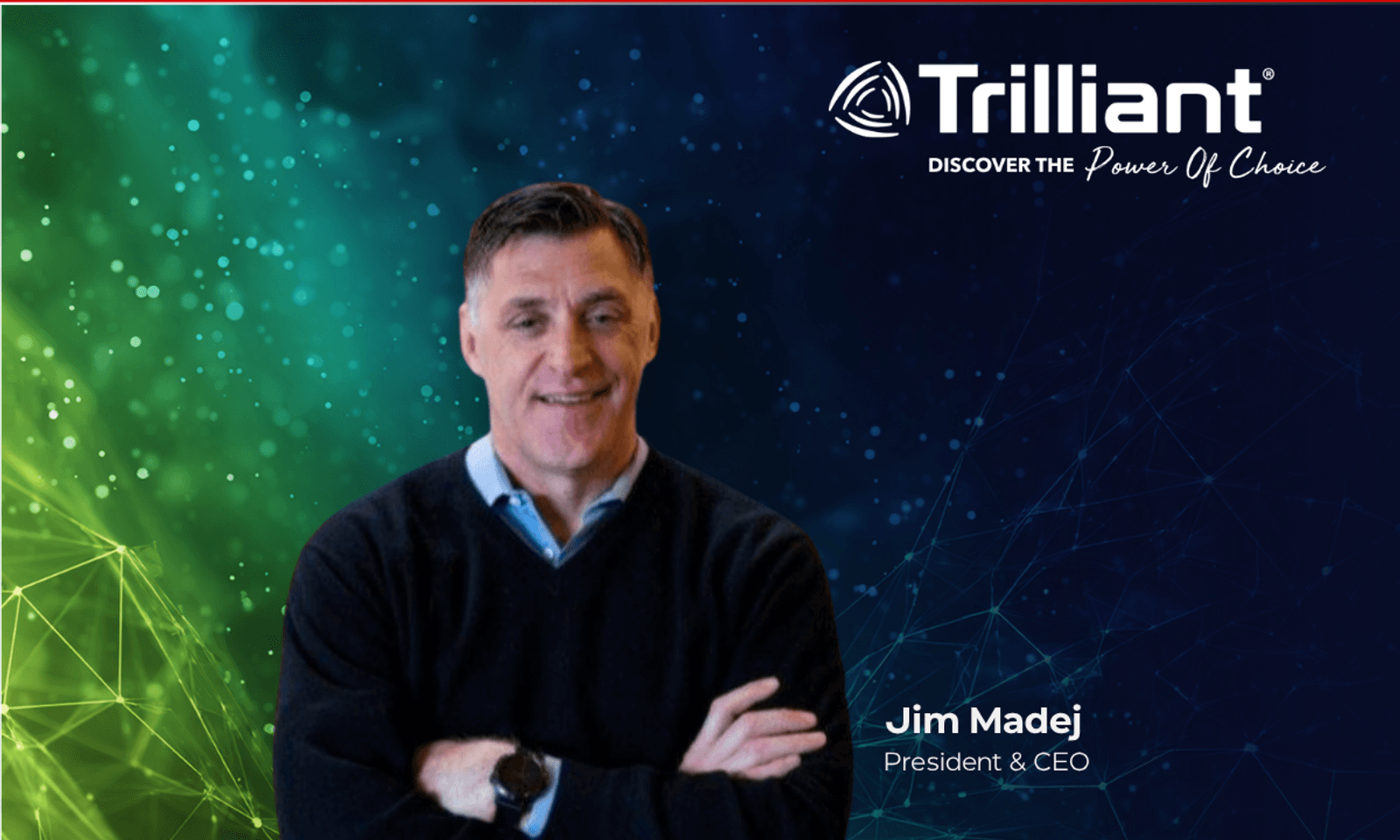
Europe’s energy transition is accelerating, but turning ambition into delivery remains a challenge. Jim Madej, President and Chief Executive of Trilliant, explains why interoperability, shared data and practical collaboration are critical to building a resilient, competitive energy system by 2030.
How does the European energy sector turn shared ambition into collaborative action?
Europe’s energy ambition is clear: decarbonise and digitise energy while ensuring affordability and reliability. Turning that ambition into collaborative action requires three practical enablers: interoperability, data sharing and partnership-driven implementation.
Trilliant helps utilities translate ambition into results by serving as the connective force that binds diverse technologies into adaptive, interoperable architecture, through advanced metering, grid automation, DER integration and AI-enabled analytics.
Our approach reduces integration friction and enables utilities, regulators, technology partners and communities to co-create outcomes, not just projects.
With real partnership at the centre, we work with utilities to establish shared data frameworks that allow stakeholders to act on the same signals. We also emphasise modular roll-outs that fit existing infrastructure, avoiding rip-and-replace and making collaboration practical. In other words, Trilliant’s role is to help utilities deliver what works today, while building an adaptable foundation that scales for tomorrow.
What does Europe need to do to deliver competitive, resilient energy by 2030?
For Europe, competitiveness and resilience hinge on three imperatives: grid digitalisation, distributed flexibility and customer-centred engagement.
Trilliant supports these imperatives by enabling real-time, reliable connectivity across meters, sensors and grid devices. Our solutions reduce complexity, adapt to existing systems without disruption, and create the digital backbone utilities need to orchestrate renewables, storage, EVs and flexible loads.
Europe must scale interoperable communications and data platforms that accelerate outage detection, predictive maintenance, and demand-side management. Trilliant’s adaptable architecture helps utilities unify data across legacy and next-generation technologies, enabling analytics and automation that drive resilience and cost-effectiveness.
Finally, competitiveness depends on customer trust and participation. Trilliant empowers utilities with the data transparency and control signals necessary to engage customers in time-of-use pricing, energy efficiency, and flexibility services, creating a more resilient and balanced energy system, and one that works for everyone.
It’s 2030: what does Europe’s energy mix look like?
Europe’s energy mix is renewables-led, highly distributed and increasingly electrified. Wind and solar will continue to grow, supported by flexible gas, hydro, storage and interconnections. On the demand side, heat pumps, EVs, and industrial electrification will rise significantly, creating both new loads and new opportunities for flexibility.
This future only works with an intelligent, responsive grid. Trilliant’s role is to provide the data-driven connective tissue that links meters, sensors, DERs and control platforms in real time. That means accurate, secure telemetry, low-latency communications, and interoperable integration across device classes and vendor ecosystems.
Because our solutions scale for tomorrow, utilities can manage a complex portfolio – dispatching flexibility, optimising distribution networks, and maintaining reliability – without sacrificing affordability. With Trilliant, utilities don’t just see a cleaner 2030; they operate it with confidence.
Is there another industry vertical which has vital lessons for the energy sector?
Telecommunications offer a powerful blueprint. Telcos have mastered scalable, interoperable networks that support billions of devices, variable traffic, and evolving standards. The lesson is simple: open, modular, and standards-driven architectures accelerate innovation and avoid lock-in.
Trilliant draws on its strong network communications solutions by embracing interoperability, compatibility, and scalability. In practice, that enables faster deployments, lower total cost of ownership, and continuous upgrades; something that the energy transition requires.
Another lesson from telecoms is that customer experience matters. As energy becomes more interactive – think EV smart charging, dynamic rates, and behind-the-meter resources – utilities must deliver intuitive, reliable services. Trilliant’s data-first approach gives utilities the insight and control to design CX that makes participation easy and valuable.
What is the biggest workforce issue for the energy transition?
The most urgent challenge is reskilling for digital operations. The energy transition is as much a data transition as a generation transition. Utilities need teams that can navigate OT/IT convergence, cybersecurity, AI and analytics and interoperable platforms. These skills are critical for integrating renewables, managing distributed resources and ensuring grid resilience.
Recruiting matters, but the pace of change means existing teams must adapt quickly. Retention is equally important, and employees stay when they see purpose and progress. Organisations that provide clear pathways for learning and demonstrate how digital tools improve reliability and empower communities will keep talent engaged.
Ultimately, success depends on building a workforce that is digitally fluent, agile, and ready to leverage innovation.
The lesson is simple: open, modular and standards-driven architectures accelerate innovation and avoid lock-in.
Is the energy sector making the most of the current AI tech?
Not yet. AI can drive predictive maintenance, outage prediction, loss detection, DER optimisation, and personalised customer experience. But AI is only as effective as the data fabric underneath it.
By innovating on our end and targeting processes within the grid that allow AI to scale, Trilliant will enable utilities to realise AI’s promise by providing secure, high-quality, real-time data streams from across the grid edge. Our platform’s interoperability ensures that meters, sensors, and distributed assets feed consistent, reliable data to AI models, ultimately reducing bias, increasing accuracy, and accelerating deployment.
With Trilliant’s flexible solutions, utilities can layer on analytics and control to automate dispatch, prioritise maintenance, or tailor customer programmes.
How do you see the role of AI supporting/enabling your own customer experience strategy?
In the energy sector, CX means engagement, transparency and empowerment. AI elevates CX by turning data into personalised insights, proactive alerts, and clear, actionable recommendations that help customers save money and lower emissions.
Trilliant supports this transformation by ensuring utilities have timely, trusted data about usage and grid conditions. As data connectivity grows, a utility can use AI that delivers real-time bill forecasts, appliance-level insights, peak-shaving recommendations and tailored efficiency programmes.
Our focus is not on flashy features but on solutions that fit and last. When customers see that their utility’s digital services are accurate, intuitive, and useful, participation and engagement rise.
You might be interested in: Hybrid connectivity is the customer-centric future of utility communications
What sustainability practice in your organisation are you most proud of? And how have you reduced your personal carbon footprint?
At Trilliant, we’re proud of how our solutions enable utilities to integrate renewables, optimise networks, and reduce emissions, all while avoiding rip-and-replace. Every time a utility adapts existing systems instead of replacing them wholesale, we help save materials, cut costs, and accelerate sustainability.
Our approach aligns with the UN Sustainable Development Goals by enabling smarter grids, improving energy efficiency, and fostering customer participation in demand flexibility. Sustainability is embedded in how we design technology and collaborate with partners to deliver measurable outcomes like improved reliability and reduced impact.
We also emphasise lasting partnerships that deliver measurable outcomes: improved grid reliability, smarter demand management, and customer participation in efficiency and flexibility. Sustainability for us is embedded in how we design technology and collaborate with customers every day.
What are the biggest challenges facing energy leaders today?
Energy leaders face a multidimensional challenge: AMI 2.0 and infrastructure modernisation; hybrid communication networks and edge intelligence; and AI transformation and data-centric operations.
Trilliant addresses these challenges with adaptable, interoperable solutions rooted in real partnership. We help utilities reduce complexity, unify data streams, and deploy capabilities that deliver reliability, flexibility, and customer engagement. Our focus on solutions designed to fit ensures that modernisation happens without disruption, so leaders can invest confidently and demonstrate progress quickly.
How are your industry experts addressing these challenges, and what conversations did you have regarding them at Enlit Europe?
At Enlit Europe, discussions focused on practical strategies for accelerating the energy transition. Our experts shared real-world case studies and frameworks that help utilities:
- Digitise the grid edge with interoperable communications and data models that connect meters, sensors, distributed energy resources, and automation.
- Deploy scalable flexibility by using accurate telemetry and secure control to orchestrate storage, EVs, and responsive loads.
- Operationalise AI and analytics—from loss detection to predictive maintenance—by building a trustworthy data foundation.
These conversations emphasised moving beyond theory to actionable steps that improve reliability, efficiency, and sustainability.
If you had a magic wand, what is one thing you would implement today?
After asking for a golf putter that never misses, I would implement universal interoperability across the energy ecosystem - devices, platforms, and markets – so every asset can connect, communicate, and coordinate securely and consistently. This single change would unlock rapid innovation, lower costs, and dramatically improve resilience.
While there’s no magic wand, achieving interoperability is possible through open standards, collaborative frameworks, and technology that adapts to existing systems. The future of energy depends on connectivity that fits and lasts, enabling utilities and partners to modernise without disruption and avoid vendor lock-in.
Related tags
Latest in Digitalisation
All articlesPartner content
+1
Digital water management: Empowering utilities with scientific decision-making
As urban water distribution networks continue to expand and water resource management becomes increasingly complex, water utilities are facing growing operational challenges.
- Guest/partner contributor
- 03/07/2026