Why power-to-heat could help end industry's love affair with gas
Pamela Largue
Posted on: 15 May 2025
Alex Robertson of ENERGYNEST believes power-to-heat technology holds genuine promise for Europe’s pathway to industrial decarbonisation.

Alex Robertson, newly-appointed chief executive of ENERGYNEST, believes power-to-heat technology is more than just hot hair and holds genuine promise for Europe’s pathway to industrial decarbonisation and shift away from gas.
This has not always been his firm conviction, however.
After a 15-year career at Vestas, Roberston decided to change direction, venturing into the unknown, yet attractive, territory of storage.
"I have only been at ENERGYNEST for a few months, but when I started, I was trying to get to grips with this whole topic of power-to-heat. I have to say there were days when I thought 'this isn't going to work, gas is just so cheap and so easy and electricity is so complex'."
Now Robertson is feeling much more optimistic and also knows why his initial perception was wrong. "I was making a mistake when I first looked at this problem, and the mistake was that I am going to switch 100 cent from gas to 100 per cent electrification. That today looks like a daunting task but - we don't need to start at 100%: we can start at 30 per cent. And getting from gas to electricity for the first 30 per cent, that we can do."
Have you read?
Green steel: How hydrogen and electric ironmaking drive innovation
Electrification key to decarbonising heavy industry says Coolbrook CEO
Why power to heat
Robertson states that decarbonising heat is critical to the energy transition and power-to-heat is a viable option for large industrials looking to electrify and decarbonise.
"I think [power-to-heat] should be more popular: industrial heat consumption is an absolutely massive portion of our global emissions."
He explains that in terms of exajoules - that is, the temperature ranges of 100-500 degrees Celsius - industrial heat requires 29 exajoules of primary energy.
"If you think about how much focus and attention around the world is given to electrification and transport, I would say there is currently probably one per cent of that amount of attention faced on decarbonising industrial heat and its almost as big a sector.
"I think this is the next big area where we can find emissions that can be relatively cheaply abated."
When Roberston joined ENERGYNEST, he was surprised to learn how much heat is used in manufacturing processes - heat which primarily comes from gas. "I can see why the whole sector is in love with gas," he says, adding that shifting away from gas will require a fundamental mindset shift.
How to end the love affair with gas
"For many companies, the person who purchases the gas is the same person who purchases the toilet roll - it's not considered a strategic part of their business."
Their sole focus is on manufacturing and doing it well, he says, and gas is a means to that end.
However, slowly but surely, says Robertson, more companies are realising they are not just energy consumers, they are participants in the energy market.
"There's a big cultural shift happening," he says, that is resulting in energy provision and procurement being given priority status.
Also of interest:
Energy Transitions podcast: Bringing industrial flexibility to market
"Actually, energy procurement is key to the future competitiveness of these plants. Forward-looking companies cannot afford to not be experts in energy procurement and decarbonisation.
"They know full well that in the next 10 years this is going to be electrified and they're starting to say maybe we want to start getting experience in this on the front end instead of the backend when we are the last to join the party."
Weighing the cost of electrification
Robertson acknowledges that there is cost involved, as well as new skills, investment and a robust strategic focus needed to realise decarbonisation goals.
He drills down into the cost, a key factor influencing how factories priorities their energy procurement.
"Electricity is currently more expensive than gas for providing heat if you just turn electricity into heat. You have to do something smart to get around this."
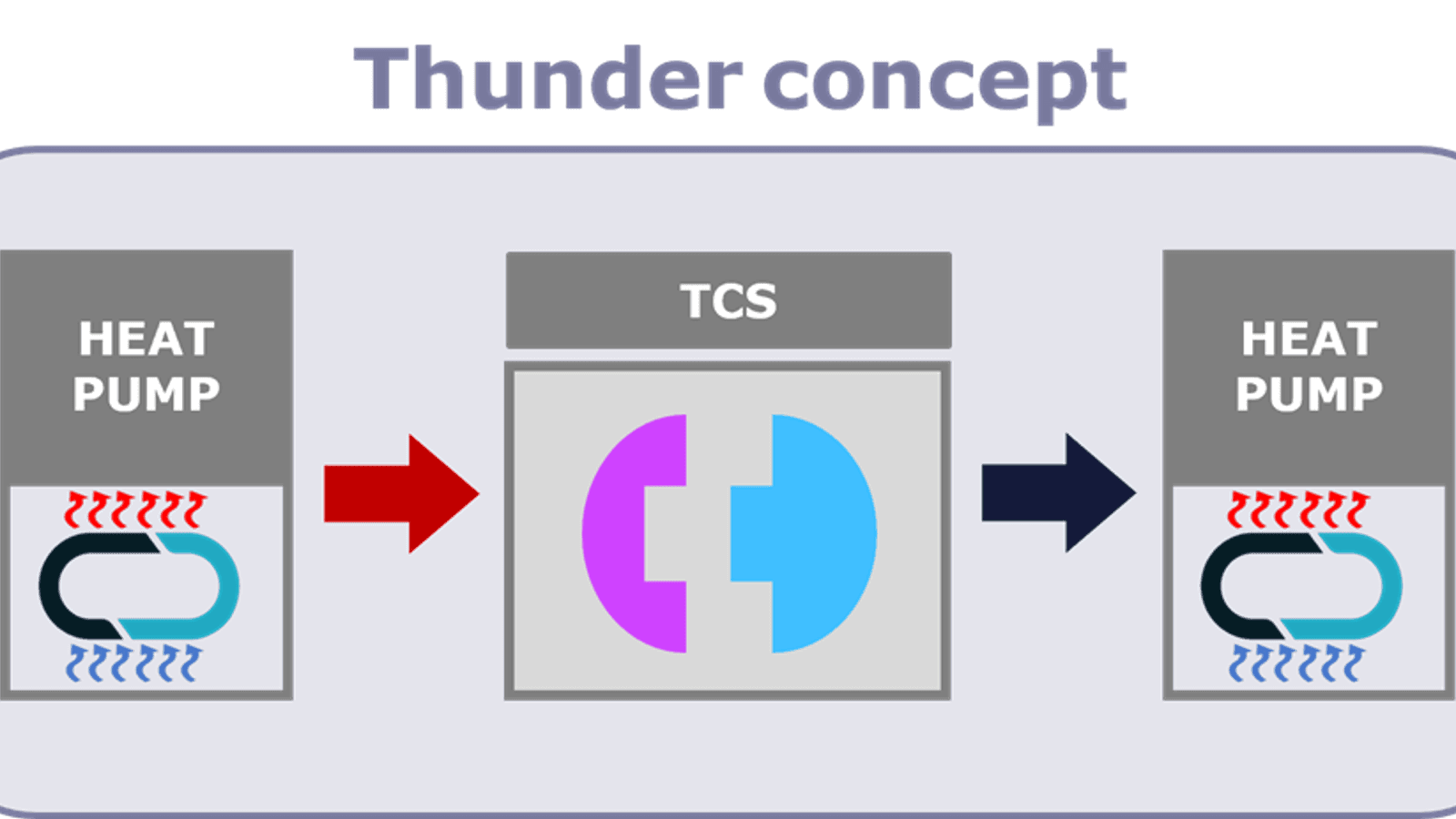
One option, says Robertson, is using heat pump, which is especially applicable for the lower end of the temperature range.
For the higher temperature ranges, the ideal solution is to only use electricity when it's cheap, and as long as there's a sufficient renewables penetration, explains Robertson, there will be hours of cheaper electricity.
In the case of ENERGYNEST's thermal storage solution, heat is generated with an e-heater that heats up thermal oil. The oil is pumped through a special concrete block, and it heats up the concrete block. Energy is then stored in hot concrete.
Robertson says: "As long as your end product is heat, then the right place in the value chain to store that energy is as heat and not as electricity in a battery."
"It's far cheaper and more efficient to store energy as heat rather than to store it in electrochemical batteries."
Robertson expects to see the innovation potential of power-to-heat realised when the mindset shift finally happens.
He says this will be when energy is no longer seen as "a necessary evil" and instead is viewed as " that I don't want to spend too much time thinking about, but I expect it to always be there, to I am an active participant in the electricity market, this is "an opportunity to make money while balancing the grid: that will be what drives the transition from gas to electrification."
Read more: Mission Possible: Tracking Europe’s industrial decarbonisation
Electrification as critical for European competitiveness
Roberston believes that getting Europe to be a leader in electrification is critically important for the future competitiveness of the continent.
He emphasises the hurdles that need to be overcome in this regard. Firstly, there is a tendency of industry not to want to change and a tendency for government to want to protect industry
This can result in poor government policy, even with the right intentions, and "actually results in those same industries losing their competitive advantage..."
We need to push industry and provide incentives to go electric, suggests Roberston.
"Every company that consumes energy needs to busy themselves with the task of preparing and moving along a journey to electrification. Any policy that protects energy consuming companies in Europe from having to look at this is not helping anybody."
"Industries that put their hands over their ears and pretend it isn't happening will ultimately become irrelevant and fail."
For more insights, listen to the whole conversation with Alex Roberston in this episode of the Energy Transitions podcast.