Why repowering wind farms is a win-win for companies and communities
Yusuf Latief
Posted on: 12 November 2025
ContourGlobal’s Bernard Haider shares lessons on how repowering provides a faster, more streamlined route to increase power capacity on wind farms.
When it comes to expanding renewable generation, most developers still think in terms of new projects. But in Austria, ContourGlobal is proving that one of the fastest ways to add clean power is to reuse what already exists.
Ten years ago, ContourGlobal acquired seven wind farms from Raiffeisen Wien/NÖ and has been operating them in Austria ever since.
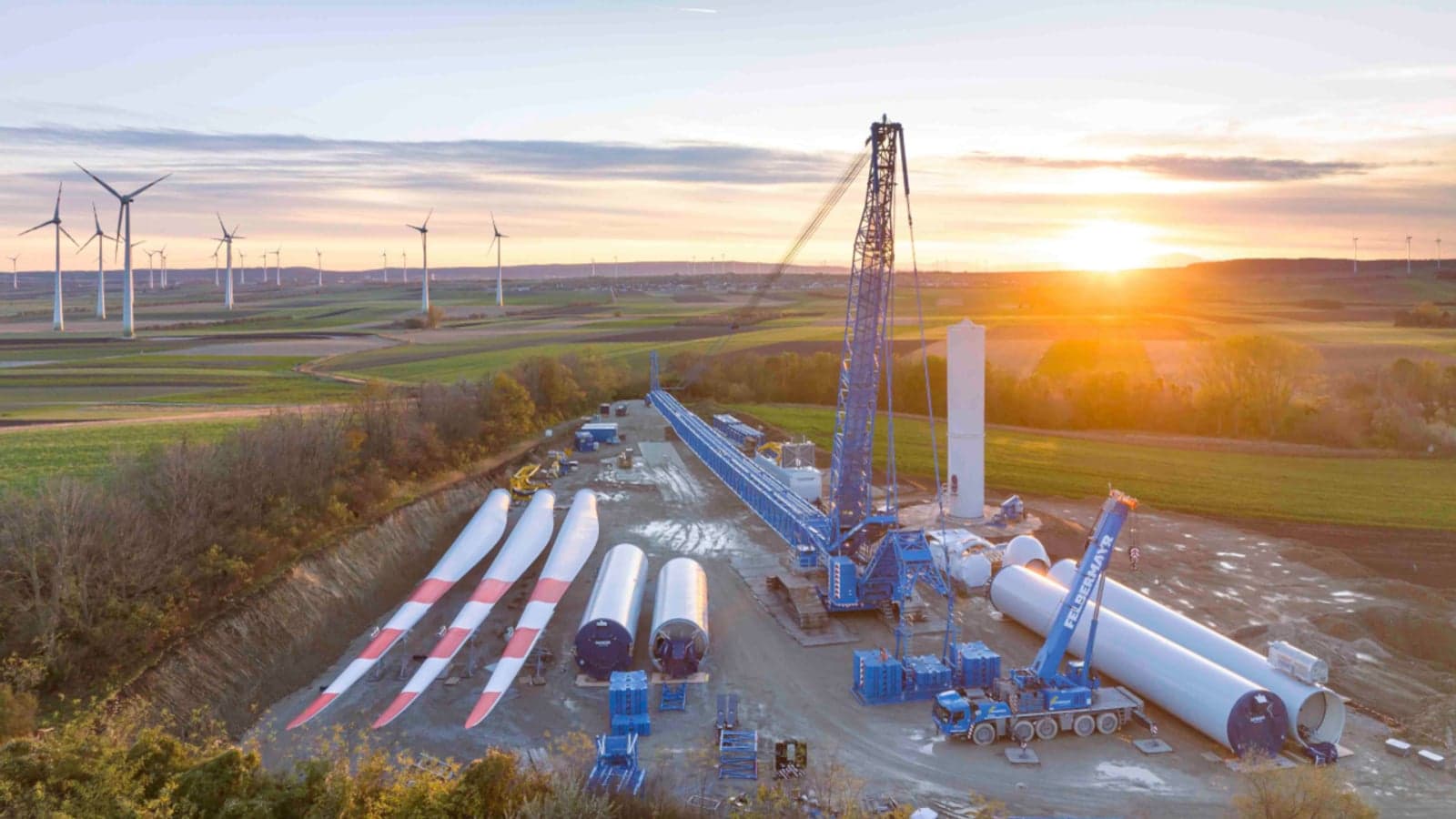
To boost their output, the company has been repowering the farms, replacing ageing wind turbines with modern, high-capacity models — without touching a single new hectare of land.
This approach has reduced the number of turbines in use for ContourGlobal by 19% over a decade, while increasing their average yearly energy production by 66% during the same period.
“Repowering is much faster,” said Bernhard Haider, ContourGlobal’s manager in Austria.
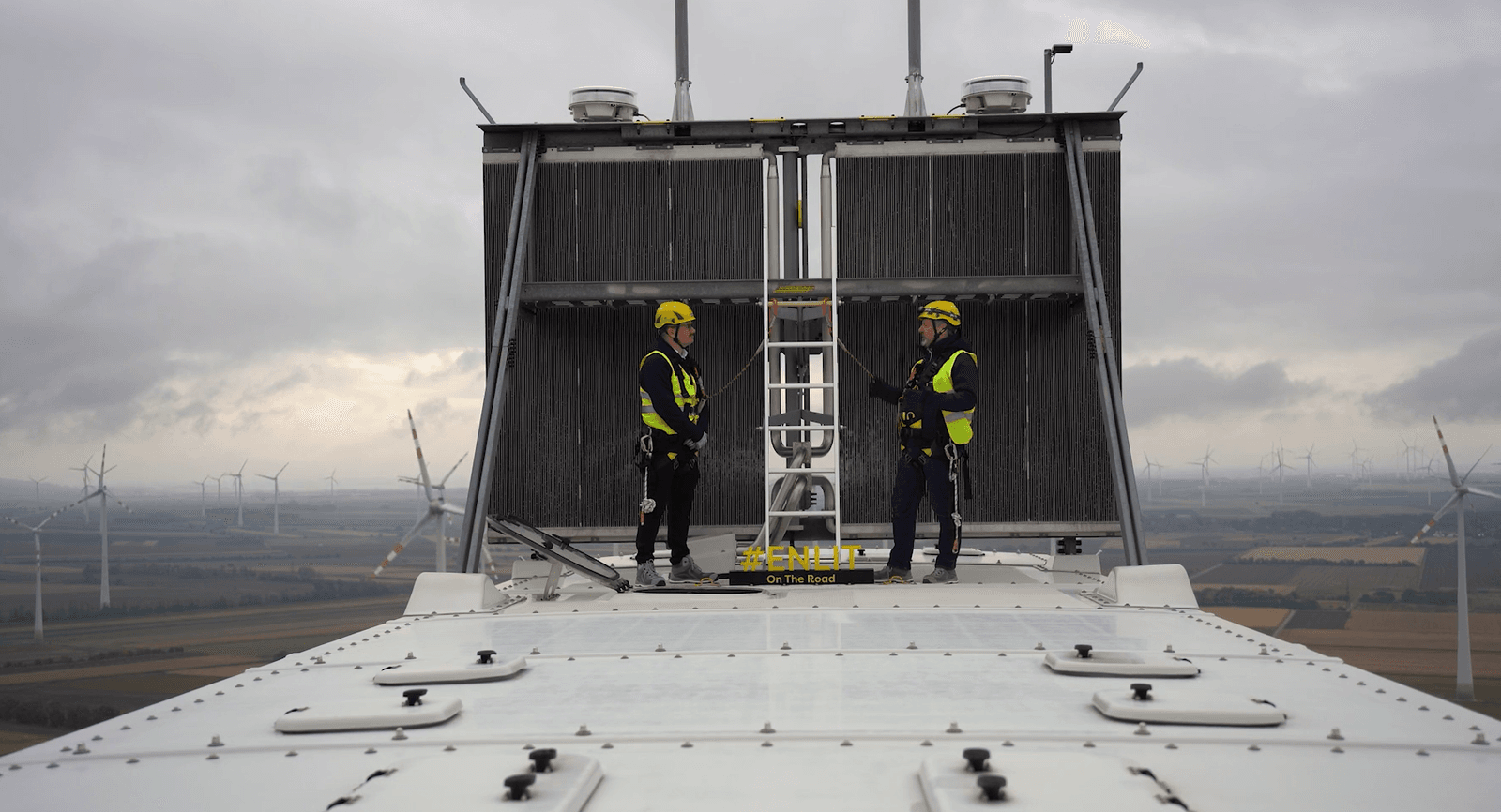
Haider, discussing the process from the top of a turbine in the company’s 29.3MW/81GWh Scharndorf wind farm, explained some of the key benefits.
“You already have the land secured, you have the commitment of the communities, you have a permitted zone: so, you don’t have to start from scratch.”
Tripling output without starting over
ContourGlobal’s decision-making process for repowering first comes down to an economic decision:
“You have to calculate… at the time that the old support scheme expires, what will be the power forward curve? What are the power forward prices? What will be the turbine cost at that time?
“Either you repower immediately after the old scheme expires, or you wait until the end of the technical lifetime of the turbines," which can be 20 to 25 years.
The results from repowering are significant. According to Haider, through this process, using the same site and land, capacity can triple or even quadruple.
Over the past five years, the company has renewed around 40 turbines and has another 40 in line for repowering. Each replacement uses the same permitted zone and local infrastructure — avoiding two to three years of new-project permitting.
More from Enlit on the Road Austria:
How intelligent flexibility can make renewables more profitable
How viable is e-mobility in Austria as a source of power grid flexibility?
The grid — the biggest bottleneck
Repowering may be faster, but it’s not necessarily easier. The largest hurdle, says Haider, is grid capacity.
With connecting newer tech turbines with higher capacity, more space is needed on the power grid. “The grid capacity and the grid access, that’s the big challenge.”
The solution lies in early, transparent coordination. Grid operators should be notified up to five years in advance of their repowering plans so they can factor new capacity into network expansion and substation upgrades. This way, says Haider, “locks it in their planning… on the distribution grid level. Then you have to go higher on the transmission grid level as well.”
Storage co-location is now the hype for wind parks and also solar parks because everyone wants to use the constrained grid capacity as much as possible.
This requires a lot of lobbying, to ensure that regional and federal politicians understand the benefits of repowering. Discussions are then also needed with regulatory authorities, who set the grid fees.
“So it's a very complex political technical discussion with all the many [different] stakeholders.”
Another key solution to the grid capacity constraint, adds Haider, is that of co-location alongside energy storage.
"Storage co-location is now the hype for wind parks and also solar parks because everyone wants to use the constrained grid capacity as much as possible."
Haider adds that the company is assessing for each wind park location the option of co-locating with storage so that they can sell stored power when needed and when prices become high. “Storage is a very important element we consider now in each of our sites.”
As turbine technology grows in size and weight, so too do the logistical challenges of transporting and installing them.
“As the equipment becomes bigger, heavier, you need different kinds of road access and roads than you had in the past. The crane pads have to be structured in a completely different manner and then you have to convince people that they look at something different now. It’s not a hundred meters high anymore, it’s 200 metres high.”
People are used to it. The municipality is used to it. We didn’t face any single issue…of the repowering sites with the people.
Community acceptance already won
In a market where local opposition can stall projects for years, repowering offers a rare advantage: acceptance is already in place.
“That’s one of the big beauties of repowering,” says Bernhard. “People are used to it. The municipality is used to it. We didn’t face any single issue of the repowering sites with the people.”
That familiarity also underpins sustainability. ContourGlobal reuses or relocates nearly all dismantled turbines, ensuring the environmental footprint remains minimal. “We demolished 40/50 turbines already. All of them, with the exception of one, were reused; were rebuilt somewhere else in the world. So it's a very sustainable business.”
Watch the rest of the video for Bernard Haider’s lessons to developers looking to do the same as well as how Danube River-found skeletal remains, possible dating back to the Roman Empire, impacted the company’s planning.
Live at Enlit Europe: Antonio Cammisecra, Chief Executive Officer of ContourGlobal, will be on stage during Enlit Europe for a live Energy Transitions Podcast: Diary of an IPP.
Join Cammisecra in Bilbao, Spain, to learn more about how ContourGlobal has implemented a strategic pivot to maximise current market opportunities and mitigate risks facing IPPs.