Will gas be the bridge to Southeast Asia's decarbonised future?
Yusuf Latief
Posted on: 8 September 2025
To learn more about the use of gas as a ‘bridge’ to the net zero scenario in Southeast Asia, Yusuf Latief spoke to Jeff Benoit of PSM.

To learn more about the use of gas as a ‘bridge’ to the net zero scenario in Southeast Asia, Yusuf Latief spoke to Jeff Benoit, Vice President of Clean Energy Solutions at PSM, to gather his insights.
As much as we would like to dive headfirst into a decarbonised future, the complexities of reaching net zero require a nuanced approach, especially when considering the intermittency of renewables and continued supply chain constraints worldwide; Southeast Asia is no exception.
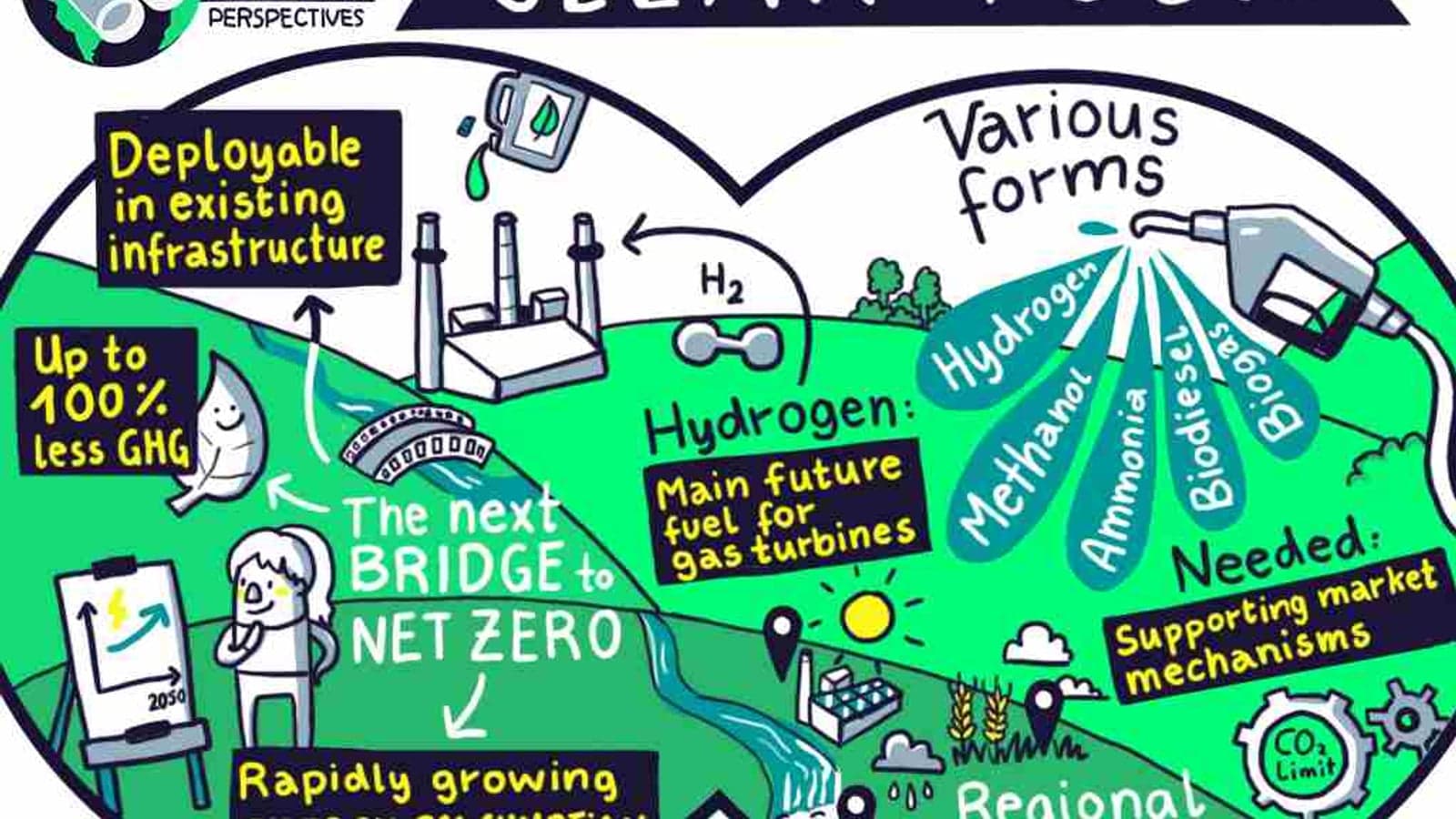
But perhaps gas can act as a bridge?
For Benoit, this is most certainly the case.
How important is gas as a transition fuel?
We have seen over the past decade that countries in Southeast Asia, such as Vietnam as well as Malaysia and Thailand, have had a tremendous introduction of large-scale natural gas power plants offsetting coal.
In terms of how important it is, especially as a future fuel, it’s time dependent.
There will be a critical need to augment the intermittency and the ‘less-than-uniform’ introduction of renewable power sources with the capabilities of turbines, which is what's going to use the natural gas. This is going to be very important over the next decades.
I'm a bit of a pragmatic idealist - we need to get to net zero and we will have to get there through methods that will transition us as quickly, as practically, and as affordably as possible.
When it comes to Asia's decarbonisation journey of thermal assets, what are the key considerations?
Getting the balance right between decarbonisation and affordability needs to be addressed - the transition from coal to natural gas is going to be key.
Countries like Qatar, the United States and Australia are building out their natural gas exports, which means we're beginning to see a broader global supply, which will provide a level of certainty, at least in terms of price.
With that comes the infrastructure required in various countries to be able to accept it.
There are multiple ways of securing that, but the key consideration is availability, price certainty to allow a transition from coal to natural gas, and a recognition that these gas plants eventually will need to be viewed as complementary to a broadening acceptance of intermittent renewables.
It's already happened in many other markets and now we're beginning to see this transition in Southeast Asia.
Have you read:
Navigating the energy transition in Southeast Asia
Mitsubishi Power’s Akihiro Ondo on gas in Asia’s future energy mix
Are there any tech breakthroughs that will be critical to the sustainable fuel value chain?
When we look at the region here for sustainable fuels, there are two avenues that I see. One is on the electrolytic side - we still have a far way to go. Just to give a benchmark, typically an electrolyser today is somewhere around 50KWh/kg of hydrogen to produce.
There's a pathway to where that could be halved. That is one of the challenges from an electrolytic standpoint.
Where I see natural gas coming into play is with the technologies, not only for carbon capture and sequestration, but also a technology known as methane pyrolysis.
This is one of the areas which can not only accelerate sustainable fuels, it can also accelerate and reduce the ‘bridge’ for gas as decarbonisation.
If we're able to, through pyrolysis, crack natural gas into black carbon and hydrogen, then we could identify uses for black carbon other than tyre manufacturing or road media.
The ability to investigate how we can create use of the carbon as graphite is one of the core technology breakthroughs that will address a lot of the issues with the use of natural gas for the use of hydrogen.
We'll then also begin to fill that pipeline of infrastructure that's required for sustainable fuels.
Jeff Benoit will be presenting during two sessions at this year's Enlit Asia in Bangkok, Thailand, from 9-11 September:
On 9 September:
Gas Turbine Power Generation with Refinery Off Gas, Hydrogen and Ammonia– Pragmatic Retrofit Upgrades to Accelerate the Clean Energy Transition
On 10 September:
Achieving the Perfect Blend - An Ecosystem Approach in Advancing Sustainable Fuels
How do we build robust and resilient supply chains for these fuels?
Resiliency has a number of different connotations.
To me, it means developing a reliable technology so that if there is a problem with it, you can put it back into service relatively quickly.
It’s the definition for power generation, for the transmission and distribution system. It comes in when the question is asked: if something happens, how quickly can I get the power back on?
That being said, there a number of things to mention. Firstly, the supply chain needs to be local.
If we think about robustness – to me, it’s an immediacy issue.
Robustness and resiliency go together, but immediacy goes back to having local supply chains.
What’s also important is recognising that these local supply chains don't need to be perfect.
I'd rather have imperfect action than perfect inaction, and I think that's part of me being the pragmatic idealist - you need to put something in place to first prove that it can be done, then show it to those who are perhaps a bit more pessimistic.
Don't be fixated on the absolute business case, but rather recognise the mechanisms that are available in Southeast Asia: abundant natural resources, growing economies, a growing industry as well as a recognition that they want to be part of resolving the negative and deleterious impacts of climate change.
All of the elements, to put the cosmic tumblers in place, in Southeast Asia are there.
And when it comes to cross-border cooperation, it’s really hard to do today, with the way the industry’s set up.
That being said, hopefully, areas for such cooperation could be between Thailand and Malaysia. I see the power companies and energy companies beginning to reach out and help in that particular type of regard.
From a diversity standpoint, everything is there. All of the ingredients for the recipe are there. It's just the structure and the desire to drive it, and I think the desire is there as well.
We just need to find where that first or second ecosystem can begin to germinate.